
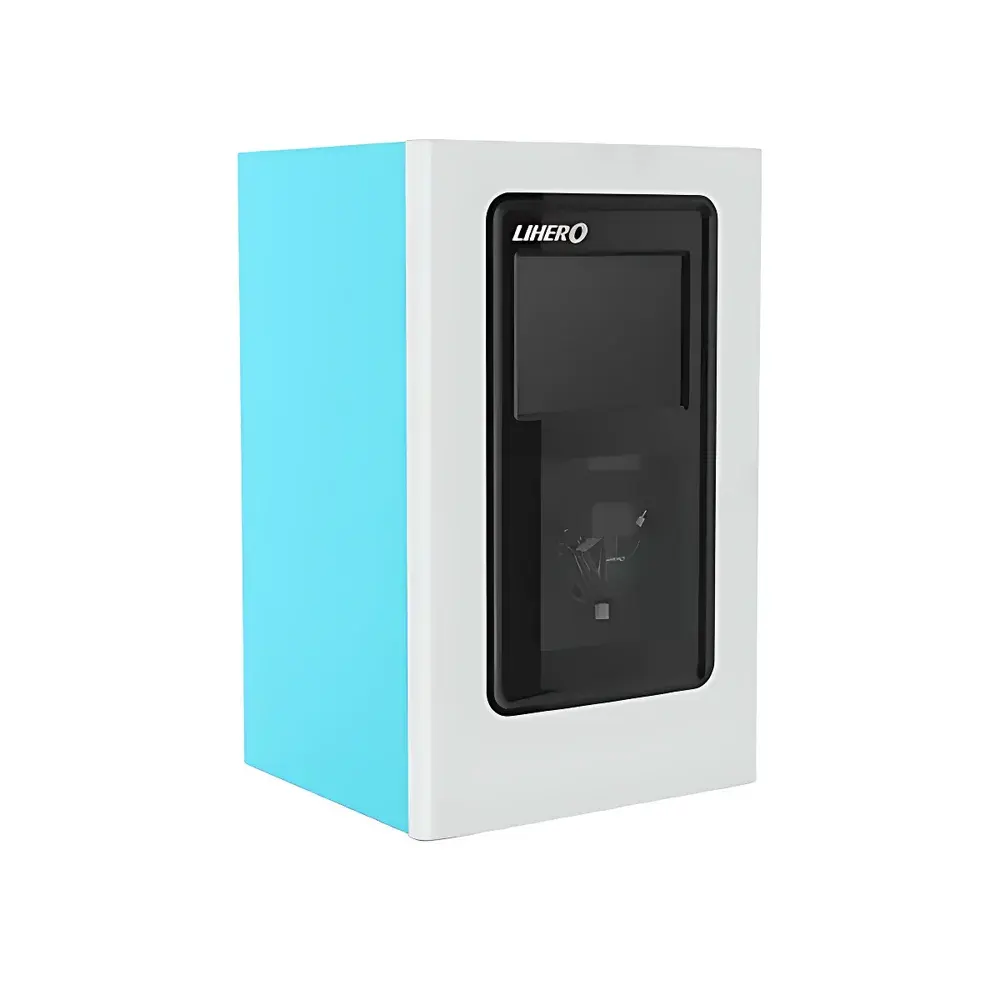
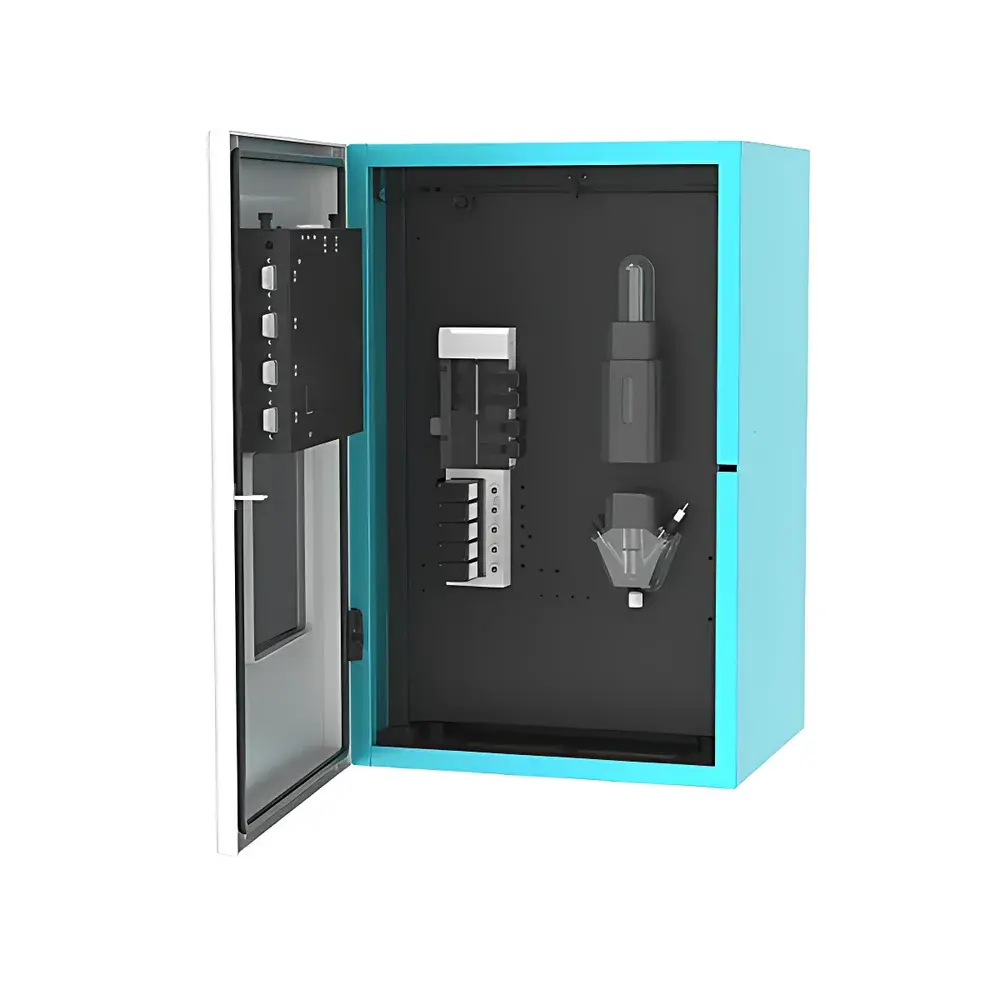
Lihero LFEC-2006 Online Heavy Metals Analyzer for Water Quality
| Brand | Lihero |
|---|---|
| Model | LFEC-2006 |
| Detection Principle | Anodic Stripping Voltammetry (ASV) |
| Measurement Parameters | Zn, Cd, Pb, Cu, As, Hg, Tl |
| Analysis Time | ≤15 min per sample |
| Electrode Options | Solid Glassy Carbon or Gold Electrode |
| Tl Method | Differential Three-Electrode ASV |
| Tl Range | 0–100 µg/L |
| Integrated UV Digestion Module | Yes |
| Calibration Method | Standard Comparison (Single-Point) |
| Reagent Shelf Life | ≥6 months |
| Reagent Consumption | Low, Non-Toxic, Mercury-Free |
| Installation Type | Online, Continuous Monitoring |
| Origin | Hunan, China |
| Compliance Context | Designed for ISO 17294-2, EPA Method 7000B, and ASTM D3559/D5173 compatibility |
Overview
The Lihero LFEC-2006 Online Heavy Metals Analyzer is an electrochemical instrumentation platform engineered for continuous, real-time monitoring of trace heavy metal concentrations in surface water, drinking water sources, wastewater effluents, and industrial process streams. It operates on the principle of Anodic Stripping Voltammetry (ASV), a highly sensitive and selective electroanalytical technique widely accepted in regulatory and research laboratories for sub-ppb quantification of redox-active metals. Unlike conventional colorimetric or ICP-based systems, the LFEC-2006 performs in-situ electrodeposition followed by controlled oxidative stripping—enabling discrimination between co-deposited species through distinct peak potentials. Its design specifically mitigates intermetallic interference (e.g., Zn–Cd or Pb–Cu alloy formation during deposition) via optimized waveform protocols and dynamic potential control, thereby ensuring high reproducibility across multi-element analysis without cross-talk artifacts.
Key Features
- Mercury-free operation: Utilizes solid-state glassy carbon or gold working electrodes—eliminating health, safety, and disposal concerns associated with mercury film electrodes.
- Integrated UV digestion subsystem: Enables oxidation of organically bound or colloidal forms of As(III), Hg(II), and Tl(I) prior to electrochemical detection, expanding speciation coverage while maintaining system autonomy.
- Rapid cycle time: Full quantitative analysis—including sampling, digestion (if required), preconcentration, stripping, and data reporting—is completed within ≤15 minutes, supporting near-real-time compliance tracking.
- Standard comparison calibration: Implements single-point reference measurement instead of multi-point calibration curves, reducing standard solution consumption by >80% and minimizing drift-related recalibration frequency.
- Low reagent footprint: Consumes <50 µL per analysis; all reagents are non-hazardous, biodegradable, and compliant with OECD 301 series biodegradability standards—ensuring zero secondary contamination risk to sampled matrices.
- Robust architecture: IP65-rated enclosure with corrosion-resistant fluidic pathways; designed for unattended operation in outdoor kiosks, pumping stations, and municipal water intake facilities.
Sample Compatibility & Compliance
The LFEC-2006 accepts raw water samples with turbidity ≤100 NTU and total suspended solids ≤50 mg/L. It is validated for direct analysis of filtered (0.45 µm) or UV-digested samples per EPA Method 7000B guidelines. The analyzer meets functional equivalency requirements outlined in ISO 17294-2 (Water quality — Inductively coupled plasma mass spectrometry — Part 2: Determination of selected elements including heavy metals) when applied to regulated analytes. Its audit trail functionality—including timestamped method parameters, electrode status logs, and raw voltammogram archives—supports GLP/GMP-aligned data integrity frameworks. While not FDA 21 CFR Part 11-certified out-of-the-box, the system’s software architecture permits integration with third-party electronic lab notebook (ELN) platforms that provide full electronic signature and change-control capabilities.
Software & Data Management
Embedded firmware supports dual-mode operation: autonomous scheduled monitoring (with configurable intervals from 15 min to 24 h) and manual trigger mode via local HMI or remote Modbus TCP/RTU interface. All voltammetric scans are stored in open-format .CSV and native .ASV binary files, enabling post-acquisition reprocessing using vendor-provided desktop software (Lihero AnalyzeSuite v3.2+). Data export includes peak current values, half-wave potentials, baseline-corrected integrals, and internal QC flags (e.g., electrode fouling index, signal-to-noise ratio <10). Optional cloud connectivity enables secure TLS 1.2 transmission to centralized SCADA or LIMS environments, with configurable alarm thresholds and SMS/email notification triggers for exceedance events.
Applications
- Regulatory compliance monitoring at drinking water intakes per WHO Guidelines for Drinking-water Quality (GDWQ) and EU Directive 2020/2184 limits for Pb (<10 µg/L), Cd (<5 µg/L), and Hg (<1 µg/L).
- Effluent surveillance in electroplating, mining leachate, and semiconductor fabrication plants where Tl and As require sub-µg/L detection capability.
- Early-warning systems for accidental spills or illegal discharge events in watershed protection zones.
- Research-grade validation of passive sampling devices (e.g., DGT gels) through rapid field-truthing of time-integrated metal concentrations.
- Supporting ISO 5667-3 field sampling protocols by providing on-site verification prior to laboratory submission.
FAQ
What electrode materials are supported, and how do they affect detection limits?
The LFEC-2006 offers interchangeable glassy carbon and gold microdisk electrodes. Gold provides superior sensitivity for Hg and Tl (detection limit: 0.05 µg/L), while glassy carbon delivers optimal performance for Zn, Cd, and Pb (detection limit: 0.1 µg/L). Electrode selection is software-configurable and does not require hardware modification.
Is UV digestion mandatory for all analytes?
UV digestion is recommended for As, Hg, and Tl to ensure complete oxidation of reduced or organometallic species. For Zn, Cd, Cu, and Pb in clarified freshwater matrices, direct analysis without digestion achieves equivalent accuracy.
How is calibration traceability maintained without multi-point curves?
Each analysis uses a certified reference material (CRM) spike at a single concentration level. Traceability is anchored to NIST SRM 1643e (Trace Elements in Natural Water) or equivalent national metrology institute standards, with documented uncertainty budgets included in the calibration certificate.
Can the system operate in harsh outdoor environments?
Yes—the analyzer is rated IP65, features wide-temperature-range electrolyte reservoirs (−5 °C to 45 °C), and includes anti-fouling flow cell geometry optimized for variable flow rates (10–200 mL/min).
Does the instrument support remote diagnostics and firmware updates?
Remote SSH access and over-the-air (OTA) firmware updates are available via secure enterprise VPN or LTE modem connection, subject to customer network policy configuration.







