
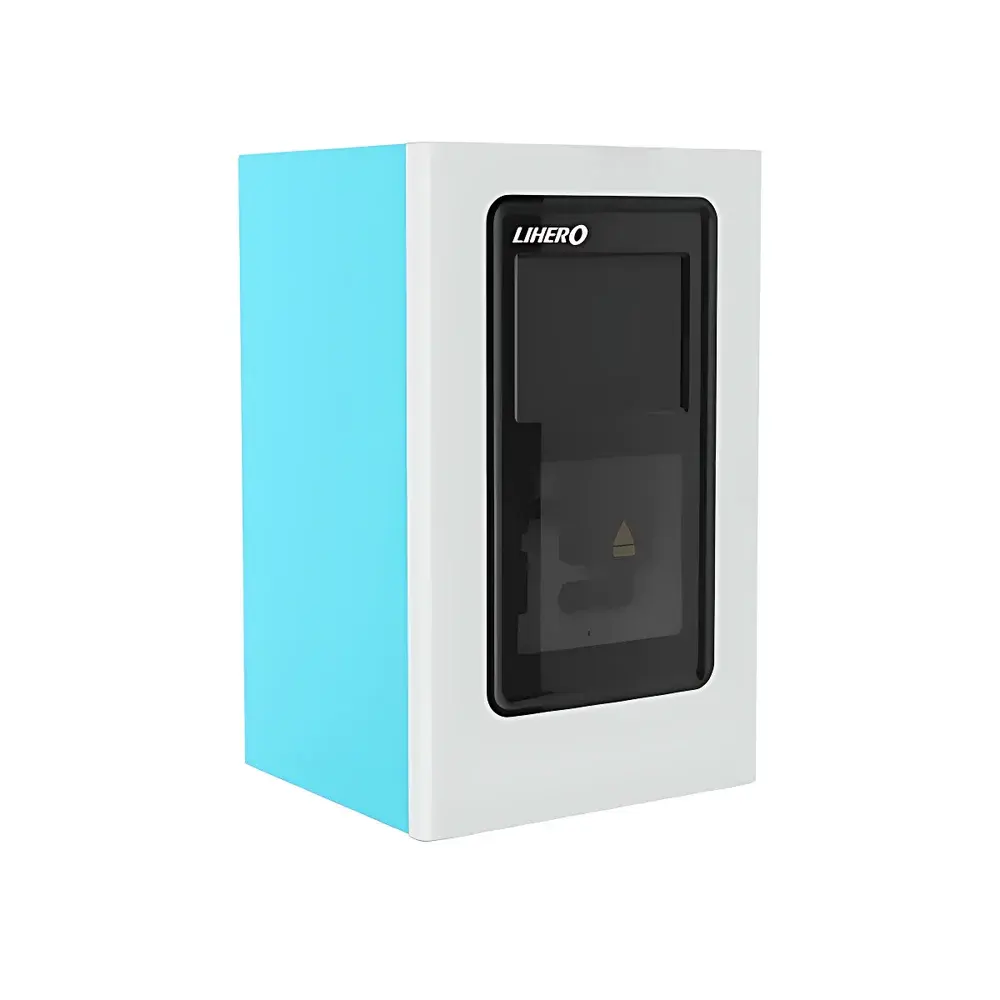
Lihero LFS-2002 Series Online Heavy Metals Analyzer for Water Quality
| Brand | Lihero |
|---|---|
| Origin | Hunan, China |
| Manufacturer Type | Authorized Distributor |
| Country of Manufacture | China |
| Model | LFS-2002 Series |
| Instrument Type | Online Analyzer |
| Measurement Principle | UV-Vis Spectrophotometry |
| Detectable Parameters | Total Chromium, Arsenic, Hexavalent Chromium, Mercury, Iron, Manganese, Nickel, Antimony, Silver, Copper, Aluminum, Zinc, Lead |
| Compliance | HJ/T 212–2017 (China Environmental Monitoring Data Transmission Protocol) |
| Communication Interfaces | RS-232, RS-485, RJ-45 Ethernet |
| Safety | Insulation Resistance ≥20 MΩ (between Power Input and Chassis) |
| Control | Remote Operation & Bidirectional Data Exchange |
| Calibration & QC Functions | Standard Sample Verification, Zero/Span Checks, Auto-Curve Calibration, Spike Recovery Test, Automatic Cleaning & Calibration, Range Switching |
Overview
The Lihero LFS-2002 Series Online Heavy Metals Analyzer is an industrial-grade, spectrophotometric water quality monitoring system engineered for continuous, unattended measurement of trace heavy metal concentrations in surface water, wastewater effluent, drinking water sources, and industrial process streams. Utilizing validated UV-Vis spectrophotometric detection principles—aligned with standard methods such as EPA Method 200.7 (ICP-OES reference), ISO 11969 (spectrophotometric determination of metals), and Chinese environmental standards (e.g., HJ 484–2009 for mercury, HJ 636–2012 for total chromium)—the analyzer performs quantitative analysis by measuring absorbance at specific wavelengths following colorimetric reactions with selective reagents. Its modular architecture enables field-configurable parameter selection without hardware modification, supporting up to 13 regulated analytes—including total Cr, As, Cr(VI), Hg, Fe, Mn, Ni, Sb, Ag, Cu, Al, Zn, and Pb—within a single instrument footprint. Designed for deployment in municipal water plants, industrial discharge monitoring stations, and ecological surveillance networks, the LFS-2002 operates under ambient temperature conditions (5–40 °C) with IP65-rated enclosure protection, ensuring long-term stability in outdoor or semi-outdoor environments.
Key Features
- Modular Parameter Flexibility: Reagent cartridge-based assay modules allow rapid switching between heavy metal parameters via software-selectable protocols—no physical disassembly or recalibration required between analyte changes.
- Comprehensive Quality Control Suite: Integrated QC routines include zero-point verification, span verification, standard sample calibration, automatic working curve generation, and spike recovery assessment—all executed autonomously per user-defined schedule (e.g., daily or per-sample batch).
- Intelligent Operational Autonomy: Features automated line flushing, reaction cell cleaning, multi-point calibration, and dynamic range switching based on real-time signal response—minimizing manual intervention and optimizing detection sensitivity across low-ppb to mid-ppm concentration ranges.
- Robust Fault Diagnostics & Alarming: Monitors critical subsystems (pump performance, reagent level, optical path integrity, temperature stability) and triggers configurable alarms for hardware faults, out-of-range signals, invalid data patterns, or consumables depletion—with event logging and timestamped remote notification support.
- Secure Embedded Architecture: Runs on a deterministic real-time embedded OS with protected memory allocation; power input isolation meets IEC 61000-4-5 surge immunity requirements, and chassis insulation resistance exceeds 20 MΩ at 500 V DC.
Sample Compatibility & Compliance
The LFS-2002 accepts raw or filtered aqueous samples with turbidity ≤10 NTU and suspended solids <50 mg/L. It accommodates standard 1/4" PTFE or PVDF fluidic tubing and integrates seamlessly with existing sample pretreatment units (e.g., auto-filtration, pH adjustment, digestion modules). All analytical procedures adhere to national regulatory frameworks including China’s HJ/T 377–2007 (water quality monitoring instrument technical requirements) and HJ/T 212–2017 (data transmission protocol for environmental monitoring systems). While not certified under EU WFD or US EPA CWA compliance pathways, its measurement traceability aligns with ISO/IEC 17025–2017 laboratory practice guidelines when operated within defined validation parameters and routine QC verification intervals.
Software & Data Management
Instrument control, method configuration, and data visualization are managed through Lihero’s proprietary WebHMI platform—accessible via secure HTTPS over Ethernet (RJ-45) or serial interfaces (RS-232/RS-485). The software supports dual-mode operation: local touchscreen interface (optional 7″ LCD panel) and remote supervisory access using industry-standard Modbus TCP or custom XML-based HJ/T 212 packet structures. Audit trails record all calibration events, parameter changes, alarm triggers, and maintenance logs with immutable timestamps. Data export formats include CSV, PDF reports, and OPC UA-compatible tags for integration into SCADA, DCS, or centralized EMS platforms. Firmware updates are performed over-the-air with cryptographic signature verification to ensure integrity.
Applications
- Continuous compliance monitoring of industrial effluent discharge points (e.g., electroplating, mining, battery manufacturing)
- Early-warning surveillance in river basins and reservoirs subject to upstream contamination risks
- Performance verification of wastewater treatment plant tertiary polishing units
- Source water protection programs for municipal drinking water intakes
- Research-grade longitudinal studies requiring high-frequency temporal resolution of metal speciation trends
FAQ
Does the LFS-2002 meet international certification standards such as ISO 9001 or CE?
The instrument complies with GB/T 19001–2016 (equivalent to ISO 9001:2015) for design and manufacturing quality management. CE marking is not applicable, as it is classified under China’s Class II environmental monitoring equipment regulatory framework.
Can the system be integrated with third-party SCADA or cloud-based IoT platforms?
Yes—via standardized HJ/T 212–2017 data packets over TCP/IP or Modbus RTU/ASCII over RS-485; API documentation and protocol specifications are provided under NDA.
What is the typical maintenance interval for reagent replacement and system cleaning?
Reagent cartridges require replacement every 30–90 days depending on sampling frequency and matrix complexity; automatic cleaning cycles occur every 2–4 hours during active operation.
Is digestion required for total metal measurements such as total chromium or total arsenic?
Yes—onboard or external acid digestion (e.g., HNO₃/H₂SO₄ reflux or microwave-assisted) must precede analysis for total metal quantification; the LFS-2002 performs only post-digestion colorimetric detection.
How is data security ensured during remote transmission?
All network communications use TLS 1.2 encryption; local storage employs write-protected flash memory with cyclic overwrite policies aligned with GLP data retention best practices.







