
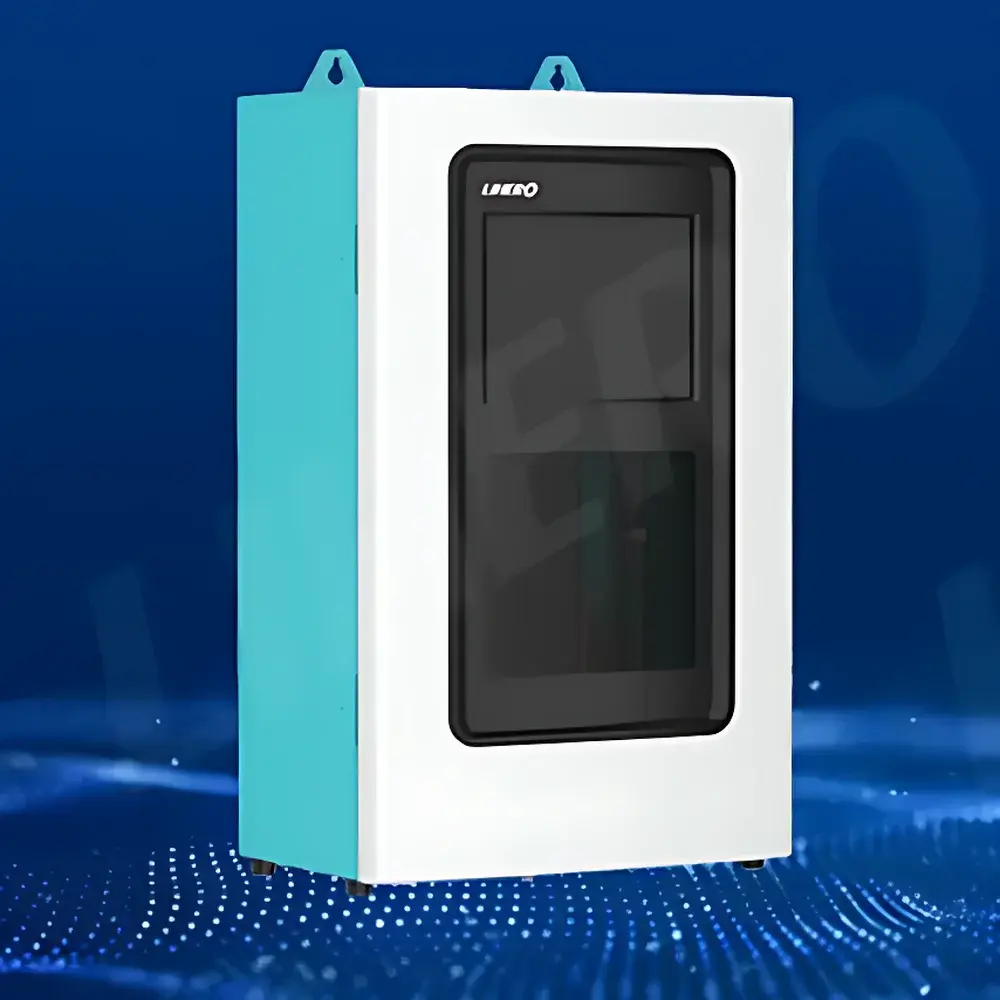
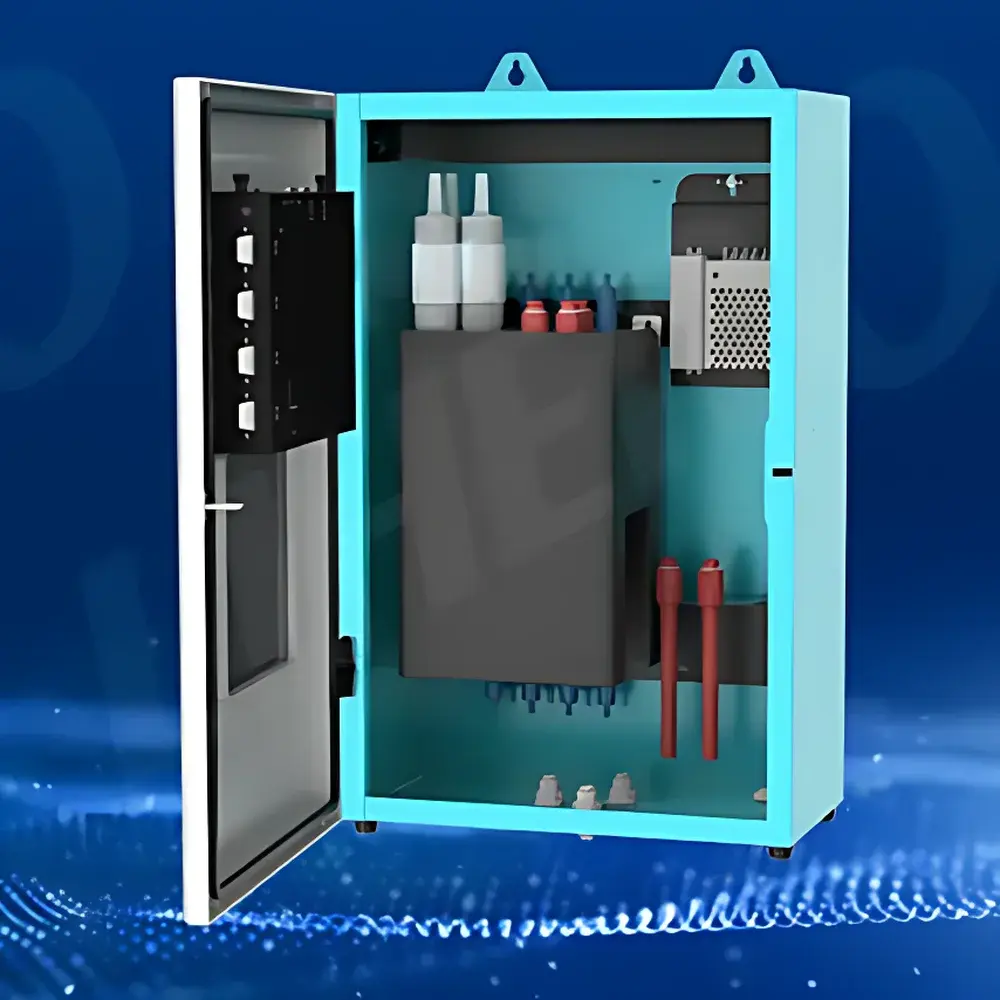
Lihero PWP600 Multi-Parameter Online Water Quality Analyzer
| Brand | Lihero |
|---|---|
| Model | PWP600 |
| Origin | Hunan, China |
| Instrument Type | Online Water Quality Analyzer |
| Measurable Parameters | Conductivity, Free Chlorine, Ammonia Nitrogen, Turbidity, pH, TDS, Temperature, Optional 3 Additional Electrode-Based Parameters |
| Compliance | CJ/T 271–2017 |
| Output Interface | RS485 Modbus RTU |
| Connectivity | Integrated IoT SIM Card for Cloud Data Transmission |
| Maintenance | Auto-cleaning (bubble-assisted free chlorine sensor, self-defoaming & self-draining turbidity module) |
| Power Consumption | Low |
| Design | Modular “5+3” Architecture |
| Reagent-Free Operation | Yes |
| Typical Sensor Service Life | ≥24 months |
Overview
The Lihero PWP600 Multi-Parameter Online Water Quality Analyzer is an engineered solution for continuous, real-time monitoring of critical physicochemical parameters in potable water distribution systems. Based on direct electrochemical and optical sensing principles—potentiometric pH measurement, amperometric free chlorine detection, conductometric conductivity and TDS determination, nephelometric turbidity quantification, and precision thermistor-based temperature compensation—the PWP600 delivers stable, traceable data across diverse hydraulic environments. It is specifically designed for deployment at raw water intakes, drinking water treatment plant effluents, distribution network endpoints, and secondary water supply terminals. Its architecture adheres to the metrological and procedural requirements defined in CJ/T 271–2017, China’s industry standard for online water quality analyzers used in urban water supply systems, ensuring regulatory alignment for municipal utilities, environmental protection agencies, and public health laboratories.
Key Features
- Modular “5+3” sensor configuration: Standard integration of five core sensors—turbidity, pH, conductivity/TDS, temperature, and free chlorine—with three additional electrode slots for expandable parameter coverage (e.g., ammonia nitrogen, dissolved oxygen, ORP, or nitrate).
- Autonomous maintenance system: Free chlorine sensor employs bubble-assisted surface cleaning—eliminating mechanical wipers and preventing fouling from colloids, calcium carbonate scale, iron oxide deposits, and biofilm without consumables or manual intervention.
- Turbidity module incorporates integrated de-fogging optics and active air-pulse de-foaming with self-drainage capability, maintaining optical path integrity under variable flow and high-suspended-solid conditions.
- Reagent-free operation across all standard parameters: No chemical dosing, zero liquid waste generation, and minimal calibration drift—reducing operational overhead and environmental footprint.
- Low-power embedded design with integrated LTE-M/NB-IoT IoT module: Enables secure, encrypted cloud telemetry via MQTT or HTTP(S) protocols; supports remote firmware updates, diagnostic logging, and configuration management.
- RS485 Modbus RTU interface with open register mapping: Facilitates seamless integration into SCADA, DCS, or BMS platforms without proprietary middleware.
Sample Compatibility & Compliance
The PWP600 is validated for use with potable water matrices meeting WHO Guidelines for Drinking-water Quality and GB 5749–2022 (China’s National Standard for Drinking Water). It operates reliably across turbidity ranges up to 100 NTU, pH 4–10, conductivity 0–2000 µS/cm, free chlorine 0.02–5.0 mg/L, and temperature 0–45 °C. All sensor modules comply with IP68 submersion rating and are constructed from food-grade 316L stainless steel and PEEK housings. The analyzer meets electromagnetic compatibility requirements per GB/T 17626 series (IEC 61000-4), and its data acquisition firmware implements timestamped audit trails aligned with GLP principles. While not FDA 21 CFR Part 11 certified out-of-the-box, its data export structure (CSV/JSON with digital signature metadata) supports validation for regulated environments upon site-specific qualification.
Software & Data Management
Data from the PWP600 is transmitted in near real time (≤15-second intervals configurable) to a secure, ISO 27001-compliant cloud platform. The web-based dashboard provides live parameter visualization, historical trend analysis, customizable alarm thresholds (email/SMS push), and automated PDF report generation compliant with CJ/T 271–2017 reporting templates. Raw sensor values—including raw mV outputs, temperature-compensated readings, and diagnostic flags (e.g., “cleaning cycle active”, “signal saturation”)—are retained for ≥180 days. API access enables integration with enterprise LIMS or water asset management systems. Local edge storage (microSD) ensures data continuity during network outages, with automatic resync upon reconnection.
Applications
- Continuous compliance monitoring at water treatment plant discharge points per GB 5749–2022 and local environmental bureau mandates.
- Early warning detection of contamination events in municipal distribution networks—particularly free chlorine decay anomalies indicating biofilm regrowth or pipe corrosion.
- Performance verification of point-of-use (POU) and secondary water supply systems in high-rise buildings and hospitals.
- Long-term trend analysis for source water quality assessment in reservoirs and groundwater wells.
- Supporting digital twin development for smart water grid initiatives through high-frequency, spatially distributed sensor node deployment.
FAQ
Does the PWP600 require routine reagent replacement?
No. All standard parameters—including free chlorine, pH, conductivity, turbidity, and temperature—are measured using solid-state or membraneless electrochemical/optical sensors. No reagents, buffers, or carrier solutions are consumed during normal operation.
Can the instrument operate offline without cloud connectivity?
Yes. Onboard microcontroller retains full autonomous measurement capability and stores data locally for up to 30 days. Cloud sync resumes automatically once network connectivity is restored.
Is calibration traceable to national standards?
Calibration procedures follow CJ/T 271–2017 Annex B guidelines. Users may perform two-point calibration using NIST-traceable reference standards (e.g., pH 4.01/7.00 buffers, KCl conductivity standards, formazin-based turbidity standards). Calibration logs include operator ID, timestamp, and reference values.
What is the expected service life of the free chlorine sensor?
Under typical municipal water conditions (pH 6.5–8.5, residual chlorine 0.2–2.0 mg/L), the amperometric free chlorine sensor demonstrates ≥24 months of stable performance with ≤5% span drift—verified by quarterly verification checks per CJ/T 271–2017 Section 7.3.
How is sensor fouling mitigated in high-turbidity or hard-water applications?
The bubble-cleaning mechanism operates every 2–4 hours (user-configurable) for the free chlorine sensor, while the turbidity module initiates air-pulse cleaning and drain cycles based on optical signal attenuation thresholds—both strategies validated in field trials across Hunan Province’s limestone-rich groundwater systems.
Related Products







