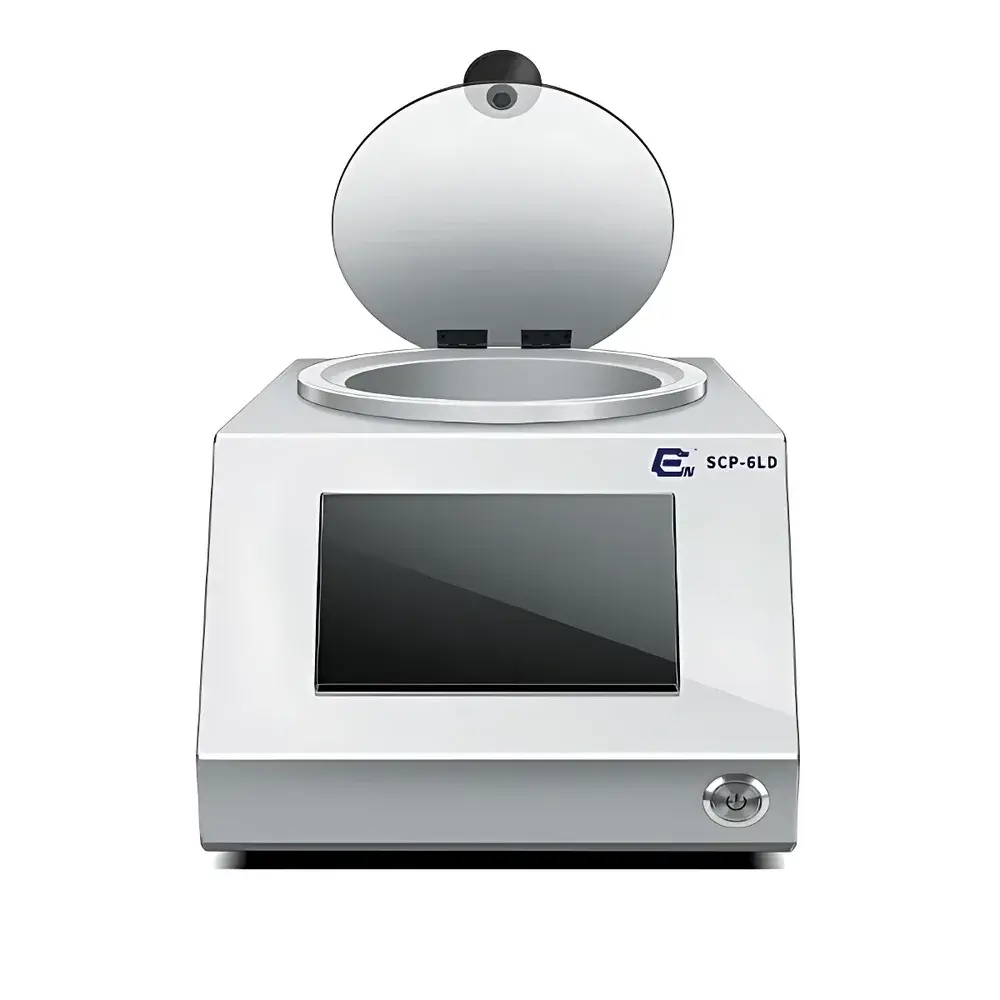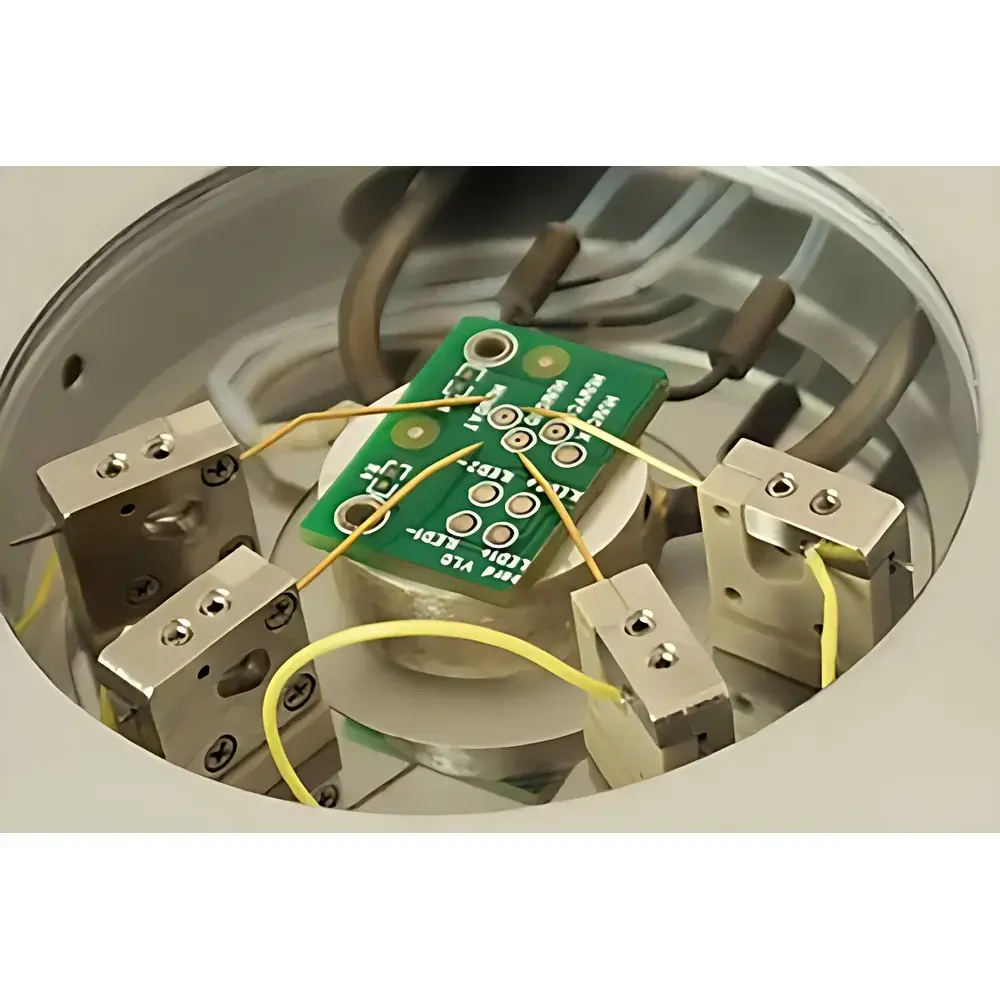
Linkam LTS420E-P Electrode-Integrated Large-Area Heating and Cooling Stage
| Brand | Linkam |
|---|---|
| Origin | United Kingdom |
| Model | LTS420E-P |
| Temperature Range | Ambient to +420 °C (with optional cryogenic cooling to −196 °C) |
| Electrode Configuration | Integrated dual-electrode system |
| Temperature Control Accuracy | ±0.01 °C |
| Temperature Stability | <0.01 °C |
| Optical Aperture Diameter | 2.4 mm |
| Sample Translation Range (X–Y) | 15 × 15 mm |
| Active Sample Area | 53.5 × 43 mm |
| Compatible Substrates | Standard 76 × 26 mm microscope slides or φ16 mm coverslips |
| Heating Rate | 0.1–50 °C/min |
| Minimum Working Distance (Objective/Condenser) | 6.0 mm / 13.2 mm |
| Stage Dimensions | 160 × 80 × 24 mm |
Overview
The Linkam LTS420E-P is an electrode-integrated large-area thermal stage engineered specifically for in situ electro-optical characterization of functional thin-film materials—particularly liquid crystals, ferroelectrics, organic semiconductors, and phase-change materials—under precisely controlled temperature and electrical bias conditions. Unlike conventional hot/cold stages, the LTS420E-P incorporates a fully insulated, symmetric dual-electrode architecture embedded directly within the stage’s thermally regulated sample chamber. This enables direct application of DC or low-frequency AC electric fields across samples mounted on conductive substrates (e.g., ITO-coated glass cells), while maintaining high optical transparency and thermal fidelity. The stage operates on the Peltier-assisted resistive heating principle, with optional liquid nitrogen cooling capability extending its operational range from −196 °C to +420 °C. Its sealed environmental chamber supports controlled-atmosphere experiments—including vacuum, dry nitrogen, argon purging, or regulated humidity—ensuring reproducible measurement conditions essential for semiconductor process development and fundamental condensed-matter research.
Key Features
- Integrated dual-electrode system with gold-plated contacts and low-noise shielded cabling, compatible with standard source-measure units (SMUs) and lock-in amplifiers
- High-precision temperature control via PID-regulated programmable temperature controller (PTC), delivering ±0.01 °C accuracy and sub-millikelvin stability over extended dwell periods
- Optimized optical path: 2.4 mm central aperture with anti-reflective coated sapphire window; minimal thermal gradient across the 53.5 × 43 mm active sample zone
- Mechanically stable XY translation stage (15 × 15 mm travel) with micrometer-driven fine positioning and repeatable alignment for sequential multi-point measurements
- Gas-tight chamber with standardized Swagelok fittings and pressure-rated O-ring seals, rated for operation up to 1 bar differential pressure
- Modular mechanical interface: precision-machined dovetail mount and kinematic alignment pins for rapid, repeatable integration with polarizing microscopes, Raman systems, or ellipsometers
- Thermally isolated electrode feedthroughs prevent parasitic heat leakage and ensure uniform thermal distribution during simultaneous electrical stimulation
Sample Compatibility & Compliance
The LTS420E-P accommodates standard microscopy substrates—including 76 × 26 mm glass slides and φ16 mm circular coverslips—as well as custom-designed LC cells with 5 µm capillary gaps. Conductive glass substrates (e.g., FTO, ITO) are directly contactable via spring-loaded electrodes, eliminating need for wire bonding or silver paste. All materials in contact with the sample chamber comply with ISO 10993-5 (cytotoxicity) and RoHS Directive 2011/65/EU. The stage meets electromagnetic compatibility requirements per EN 61326-1:2013 and carries CE marking for laboratory instrumentation. Its design supports GLP-compliant workflows through traceable temperature calibration (NIST-traceable Pt100 sensor) and audit-ready logging when paired with Linkam’s TC125 software.
Software & Data Management
Control and synchronization are managed via Linkam’s TC125 software suite (Windows-based), which supports multi-parameter scripting—including ramp/soak profiles, real-time voltage biasing, and synchronized acquisition triggers for external detectors (e.g., CCD cameras, photodiodes, or impedance analyzers). Temperature and voltage logs are timestamped and stored in HDF5 format, enabling metadata-rich post-processing in Python, MATLAB, or Origin. The software complies with FDA 21 CFR Part 11 requirements when deployed with electronic signature modules and role-based access controls. Optional LabVIEW and Python SDKs permit integration into automated metrology platforms used in semiconductor fab QA/QC environments.
Applications
- In situ observation of nematic–isotropic, smectic–nematic, and ferroelectric phase transitions under electric field modulation
- Electro-optic coefficient (r33, r13) mapping of polymer-dispersed liquid crystal (PDLC) films
- Thermal hysteresis and switching kinetics analysis of cholesteric pitch tuning in reflective displays
- Defect dynamics imaging in organic field-effect transistor (OFET) active layers during gate-bias stress testing
- Crystallization onset and grain growth monitoring in metal halide perovskites under controlled ambient and bias conditions
- Validation of thermal management strategies for next-generation micro-LED pixel architectures
FAQ
Can the LTS420E-P be used under vacuum?
Yes—the chamber is rated for static vacuum down to 10−3 mbar using standard turbomolecular pumping systems. Optional vacuum-compatible electrode feedthroughs are available upon request.
What is the maximum allowable voltage between electrodes?
The standard configuration supports up to ±200 V DC or peak AC. High-voltage variants (up to ±1 kV) are available with reinforced insulation and creepage distance engineering.
Is the stage compatible with confocal or multiphoton microscopes?
Yes—its compact footprint (160 × 80 × 24 mm), shallow profile, and 6.0 mm objective working distance enable integration with most upright and inverted confocal platforms, provided appropriate adapter plates are used.
How is temperature calibration performed?
Each unit ships with a factory-calibrated Pt100 sensor traceable to NPL (UK) standards. Users may perform field verification using a calibrated reference thermometer inserted into the auxiliary sensor port.
Does the stage support humidity control?
Humidity regulation requires integration with an external humidity generator (e.g., Vötsch VHC series) and mass flow controller; the LTS420E-P provides sealed gas inlet/outlet ports and pressure monitoring capability to facilitate such configurations.