
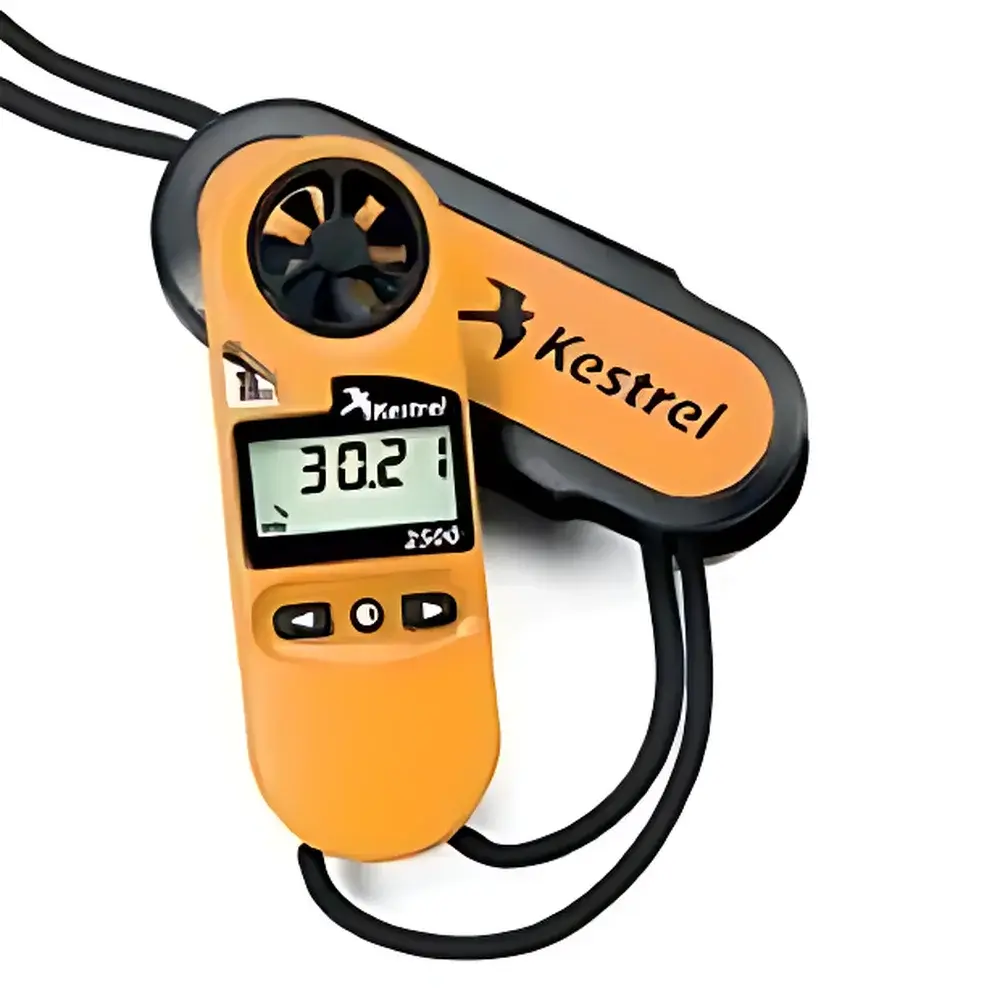
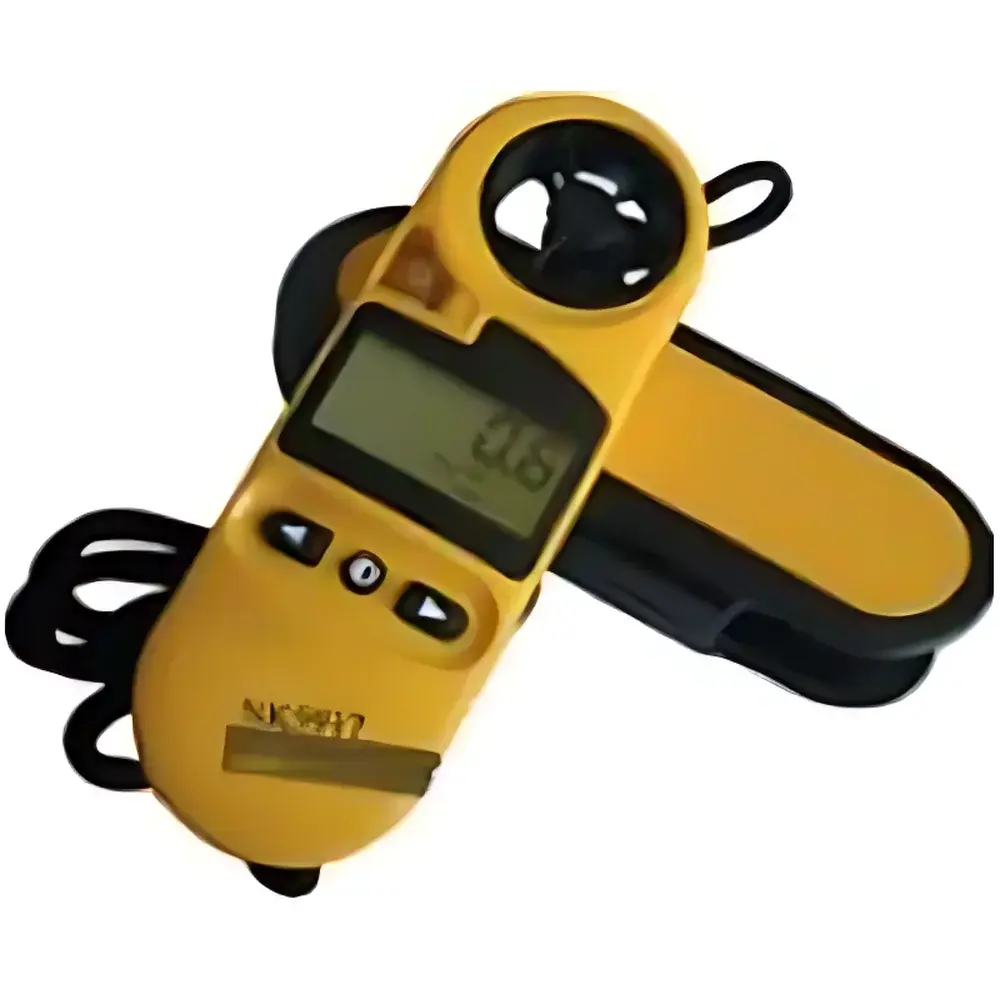
Lovibond NK5917 Waterproof Portable Anemometer & Environmental Weather Meter
| Brand | Lovibond (Tintometer) |
|---|---|
| Origin | United Kingdom |
| Model | NK5917 |
| IP Rating | IP67 |
| Wind Speed Range | 0.4–60.0 m/s |
| Temperature Range | −45.0 to +125.0 °C |
| Barometric Pressure Range | 300.0–1100.0 hPa |
| Altitude Range | −2000 to +9000 m |
| Display | 4-digit LCD with green backlight |
| Response Time | 1 second |
| Power | CR2032 coin cell (300 h typical life) |
| Compliance | CE, NIST-traceable calibration options available |
| Dimensions | 122 × 42 × 18 mm |
| Weight | 65 g |
Overview
The Lovibond NK5917 Waterproof Portable Anemometer & Environmental Weather Meter is a field-deployable, multi-parameter environmental measurement instrument engineered for precision, durability, and operational simplicity in demanding outdoor and emergency-response conditions. Based on proven cup-and-vane anemometry principles—employing a 1-inch diameter precision-balanced impeller with sapphire jewel bearings—the device delivers high-reproducibility air velocity measurements across five engineering units (m/s, ft/min, km/h, mph, knots, Beaufort scale). Integrated thermal isolation and sealed thermistor-based temperature sensing (US Patent 5939645) enable accurate ambient, water, and snow surface temperature readings. A temperature-compensated silicon piezoresistive barometric sensor (US Patent 5783753) provides calibrated pressure data used to compute altitude and wind chill index per the NOAA 2001 Wind Chill Temperature Index methodology. Designed for compliance with international field measurement standards—including ISO 7726 for thermal environments and ASTM D5485 for portable anemometer performance—the NK5917 serves as a primary tool for environmental health and safety professionals, meteorological technicians, industrial hygienists, and first responders requiring rapid, traceable, and rugged environmental data acquisition.
Key Features
- IP67-rated enclosure ensuring full protection against dust ingress and immersion in 1 m of water for up to 30 minutes
- Single-chip microprocessor architecture enabling low-power operation, intuitive graphical user interface, and real-time parameter display with green-backlit 4-digit LCD (0.36″ character height)
- Simultaneous real-time measurement of wind speed, ambient temperature, barometric pressure, altitude, and wind chill index—all updated every 1 second
- Patented sapphire-bearing impeller with documented angular response stability: ±1% at 5°, ±2% at 10°, ±3% at 15° incidence; <1% calibration drift after 100 hours at 7 m/s (16 mph)
- Auto-shutdown after 45 minutes of inactivity; low-battery indicator; CR2032 coin-cell power with ~300-hour typical service life (backlight usage dependent)
- On-device storage of last measured value for each parameter; no external memory required for basic field use
- Field-serviceable design: replaceable impeller (NK30801) and dedicated calibration tools support long-term metrological integrity
Sample Compatibility & Compliance
The NK5917 is validated for direct measurement in ambient air, freshwater surfaces, and snowpacks—enabled by its thermally isolated, hermetically sealed temperature probe assembly. Its wind speed measurement conforms to ISO 16825:2015 (anemometers for occupational hygiene) and aligns with OSHA Technical Manual Section III: Chapter 2 guidance for airflow assessment. Barometric pressure output meets IEC 61260-1:2014 Class 2 tolerances for portable pressure transducers. All factory calibrations are NIST-traceable, and documentation supports GLP-compliant recordkeeping. CE marking confirms conformity with EU Directive 2014/30/EU (EMC) and 2014/35/EU (LVD). While not FDA 21 CFR Part 11 certified out-of-box, audit trails generated via optional PC interface (NK PN-0830) may be configured to meet ALCOA+ data integrity requirements under GxP frameworks when deployed in regulated environmental monitoring programs.
Software & Data Management
Data export is supported via RS-232 serial interface using the optional NK PN-0830 PC interface kit, which includes Windows-compatible software for time-stamped data logging, trend visualization, and CSV export. The software enables manual or automated download of stored sessions, configurable sampling intervals (1–60 s), and annotation of measurement context (e.g., location ID, operator initials, event type). No proprietary cloud platform is required; raw ASCII data streams are fully parseable for integration into LIMS or custom analytics pipelines. Firmware updates are performed locally via serial command protocol—no internet dependency. Audit trail functionality (user login, parameter change logs, calibration event timestamps) is implemented at the application layer and complies with ISO/IEC 17025:2017 clause 7.7.1 for data management systems.
Applications
- Industrial ventilation validation and HVAC commissioning per ASHRAE Standard 111
- Outdoor occupational exposure assessment in construction, mining, and wind energy sectors
- Emergency response meteorological screening during hazardous material incidents or wildfire operations
- Environmental site assessments requiring concurrent wind, temperature, and pressure profiling
- Educational field studies in atmospheric science, geography, and environmental engineering curricula
- Calibration verification and cross-checking of fixed-site weather stations
FAQ
What is the maximum recommended wind speed for continuous operation?
Continuous measurement above 27 m/s (60 mph) is not advised due to accelerated impeller wear; sustained exposure may compromise bearing integrity and require replacement (NK30801).
Can the NK5917 measure wind direction?
No—this model measures scalar wind speed only. Directional capability requires integration with a separate vane sensor or upgrade to a multi-sensor mast system.
Is field recalibration possible without returning to a lab?
Yes—zero-wind offset and temperature reference checks can be performed in situ using certified reference sources; full multi-point calibration requires authorized service centers.
How does altitude calculation account for local pressure gradients?
Altitude is derived from sea-level-referenced pressure using the International Standard Atmosphere (ISA) model; users may input local QNH for improved accuracy in aviation or surveying applications.
Does the device comply with FDA or EPA regulatory reporting requirements?
While not pre-certified for submission to FDA or EPA databases, its NIST-traceable calibration records, timestamped outputs, and audit-ready data export format support defensible use in regulatory submissions when accompanied by documented SOPs and chain-of-custody procedures.
Related Products







