
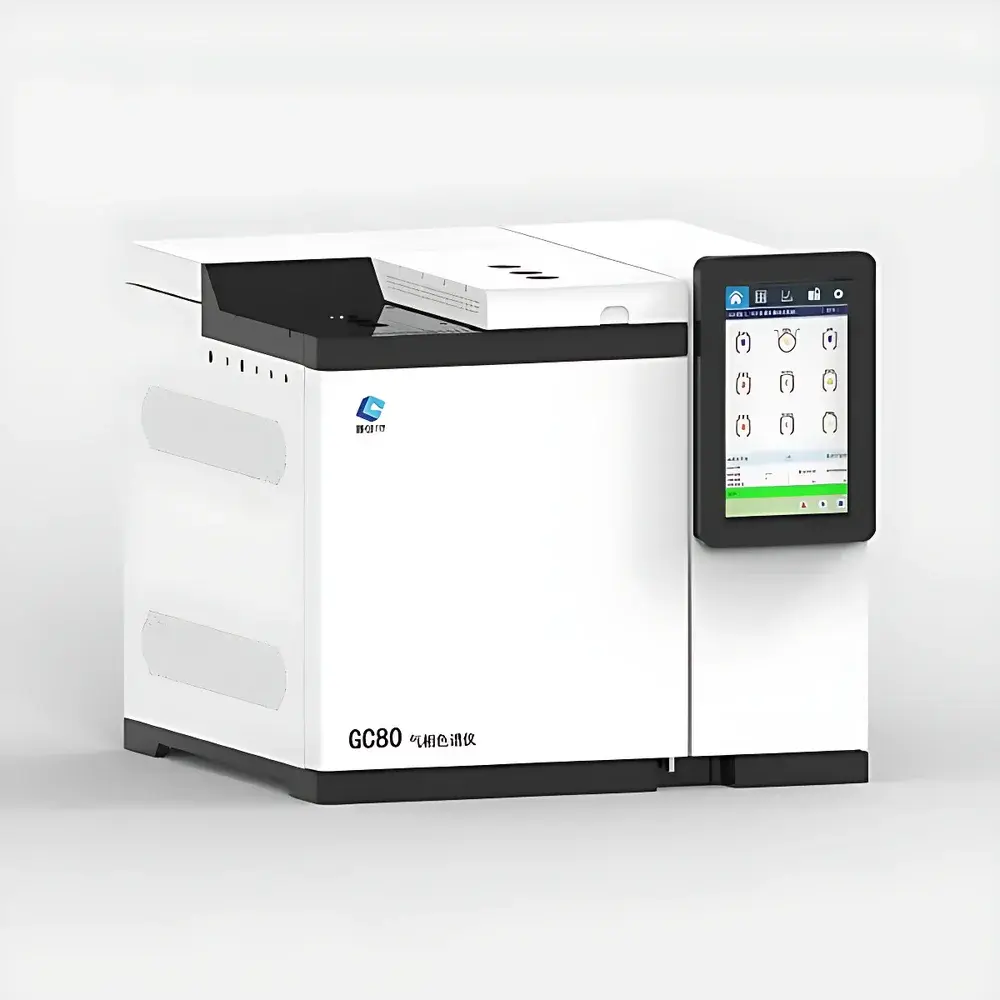
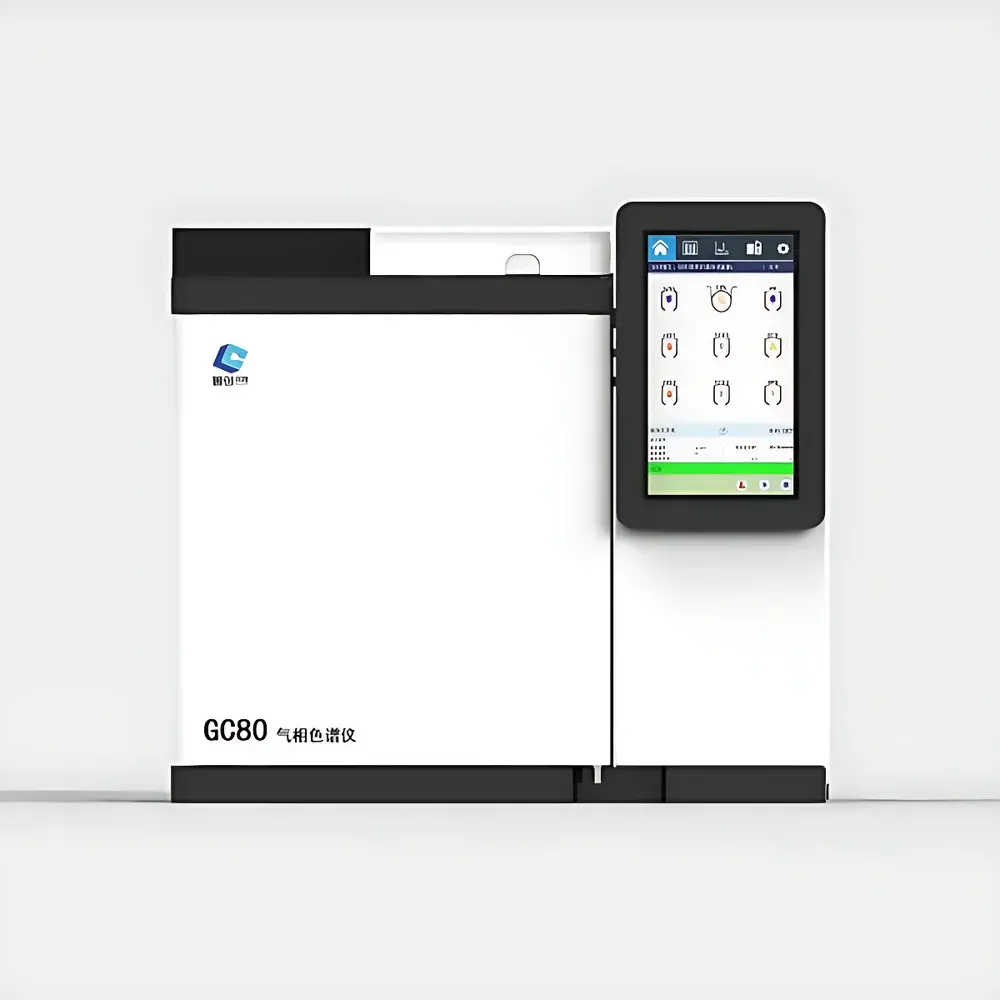
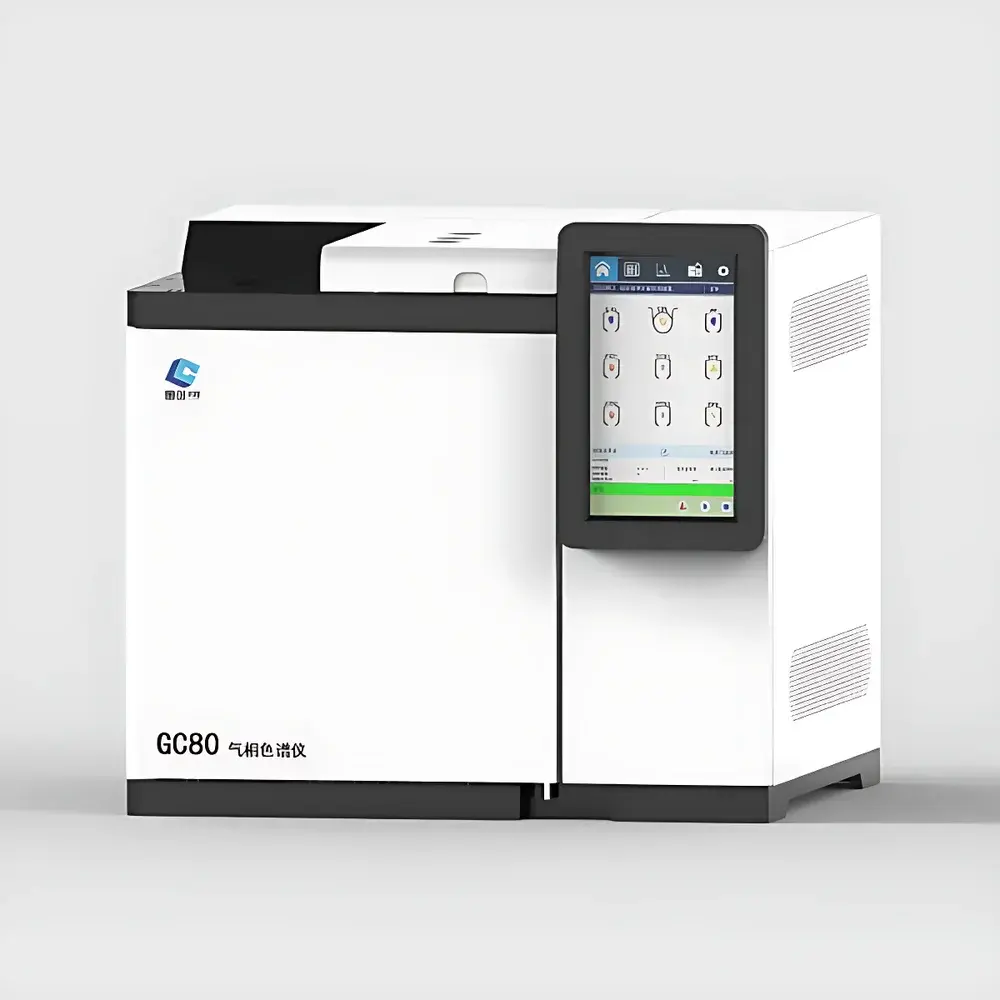
Luchuang GC80 Fully Computer-Controlled Gas Chromatograph with Integrated Electronic Pressure Control (EPC) System
| Brand | Luchuang |
|---|---|
| Origin | Shandong, China |
| Manufacturer Type | Direct Manufacturer |
| Instrument Type | Laboratory Gas Chromatograph |
| Model | GC80 |
| Temperature Control Range | 20–450 °C |
| Maximum Ramp Rate | 0–60 °C/min |
| Cooling Rate | 1 °C/min (from 300 °C to 100 °C in ≤3.5 min at 25 °C ambient) |
| Carrier Gas Flow Range | 0–1200 mL/min |
| Carrier Gas Pressure Range | 0–1000 psi |
| Injector Max Operating Temperature | 450 °C |
| Injector Pressure Setting Range | 0–1000 psi |
| Injector Total Flow Setting Range | 0–1000 mL/min |
| EPC Precision | ±0.001 psi (pressure), ±0.001 mL/min (flow) |
| Programmed Temperature Vaporizing (PTV) Support | Yes |
| Max Temperature Ramping Steps | 99 |
| Max Hold Time per Step | 6000 min |
| Temperature Stability | ±0.01 °C |
| Temperature Uniformity | ±1% (100–350 °C) |
Overview
The Luchuang GC80 is a fully computer-controlled laboratory gas chromatograph engineered for high-precision, method-driven analysis in petrochemical and industrial quality control laboratories. Built on a robust dual-microprocessor architecture, it implements true bidirectional instrument control—enabling real-time parameter adjustment, method synchronization, and remote diagnostics via Ethernet or Wi-Fi connectivity. Its core separation performance relies on precise thermal management and digitally regulated carrier gas dynamics governed by an integrated Electronic Pressure Control (EPC) and Electronic Flow Control (EFC) system. This architecture ensures reproducible retention times, consistent peak shapes, and trace-level detection across diverse volatile and semi-volatile organic compounds—including hydrocarbons, oxygenates, sulfur species, halogenated compounds, and organophosphorus analytes. Designed for compliance-critical environments, the GC80 supports audit-ready operation under GLP and GMP frameworks when paired with validated chromatography data systems (CDS).
Key Features
- 10-inch capacitive color touchscreen interface with intuitive, icon-driven navigation—supports full method development, sequence definition, and real-time chromatogram viewing without external PC dependency.
- Advanced thermal management system featuring optimized heat-sink geometry and dual-zone oven insulation, achieving ±0.01 °C temperature stability and uniformity within ±1% across 100–350 °C.
- Full EPC/EFC implementation across all gas channels: carrier (He, H₂, N₂), make-up, split, purge, and detector gases—with pressure resolution of 0.001 psi and flow resolution of 0.001 mL/min.
- Modular injector design supporting up to three simultaneous inlets; compatible with split/splitless, PTV, on-column, and cool-on-column configurations—six inlet options available for method flexibility.
- Multi-detector capability: accommodates up to four independently controlled detectors (FID, TCD, ECD, FPD, NPD) in any combination—including dual-FID, dual-TCD, or hybrid configurations for parallel detection strategies.
- IoT-enabled remote operation: real-time status monitoring, method upload/download, and live chromatogram streaming via secure web-based interface compliant with TLS 1.2 encryption.
Sample Compatibility & Compliance
The GC80 is validated for routine analysis of complex hydrocarbon matrices per ASTM D3606, D5186, D6730, and ISO 6974 series standards. Its high-temperature injector (up to 450 °C) and oven (450 °C) enable robust handling of heavy ends, polyaromatics, and thermally labile compounds. The TCD module supports single-column, dual-column, and capillary-column configurations with dual post-column makeup gas routing. All detectors meet or exceed sensitivity thresholds defined in USP , EP 2.2.27, and ICH Q2(R2) for method validation. Data integrity safeguards include electronic signatures, user access levels (admin/operator/auditor), and audit trail logging aligned with FDA 21 CFR Part 11 requirements when used with compliant CDS software.
Software & Data Management
The GC80 operates with Luchuang ChromaLink™ CDS—a Windows-based platform supporting automated calibration, peak integration using iterative deconvolution algorithms, multi-component quantitation with internal standard correction, and customizable report generation (PDF, CSV, XML). Raw data files adhere to ANDI/NetCDF format for cross-platform compatibility. Software features include forced reprocessing, baseline correction history tracking, and method version control. For enterprise integration, the system provides OPC UA and RESTful API endpoints for LIMS and MES interoperability. All audit trails are immutable, timestamped, and exportable for regulatory submission.
Applications
- Petrochemical QA/QC: gasoline oxygenate analysis (MTBE, ETBE), benzene/toluene/xylenes (BTX) profiling, diesel aromatic content determination.
- Refinery process stream monitoring: C₁–C₅ hydrocarbon distribution, sulfur compound speciation (e.g., mercaptans, sulfides), and olefin saturation assessment.
- Environmental testing: EPA Method 8021B (halogenated hydrocarbons), 8015M (petroleum hydrocarbons), and 8270D (semivolatiles) compliance screening.
- Pharmaceutical residual solvent analysis per ICH Q3C guidelines using headspace-GC/FID configuration.
- Food safety: pesticide residue screening (GC-ECD/GC-FPD), flavor compound profiling (GC-MS ready interface), and packaging migration studies.
FAQ
Does the GC80 support method transfer from legacy Agilent or Shimadzu systems?
Yes—ChromaLink™ includes built-in method conversion utilities that map temperature programs, flow parameters, and detector settings between major vendor platforms, minimizing revalidation effort.
Can the EPC system maintain stable flow during rapid oven temperature ramps?
Yes—the EPC firmware dynamically compensates for viscosity changes in carrier gas during ramping, ensuring constant linear velocity and retention time reproducibility across 0–60 °C/min gradients.
Is the FID detector compatible with hydrogen carrier gas?
Yes—the GC80’s FID supports H₂ as both carrier and fuel gas, with optimized jet design and flame stabilization circuitry to ensure signal stability and low noise (<2×10⁻¹⁴ A).
What cybersecurity protocols are implemented for remote access?
All remote connections require TLS 1.2 encryption, two-factor authentication, and session timeout after 15 minutes of inactivity—fully documented in the system security manual per ISO/IEC 27001 Annex A.8.2.
How is detector maintenance tracked and scheduled?
ChromaLink™ logs detector usage hours, filament burnout events, and gas consumption trends; it generates preventive maintenance alerts based on configurable thresholds and historical failure rate models.
Related Products






