Magnesium Metal (Mg) High-Purity Reference Material for Laboratory and Thin-Film Deposition Applications
| Brand | Hefei Kejing |
|---|---|
| Origin | Anhui, China |
| Manufacturer Type | Authorized Distributor |
| Country of Origin | PRC |
| Model | Mg Metal |
| Pricing | Available Upon Request |
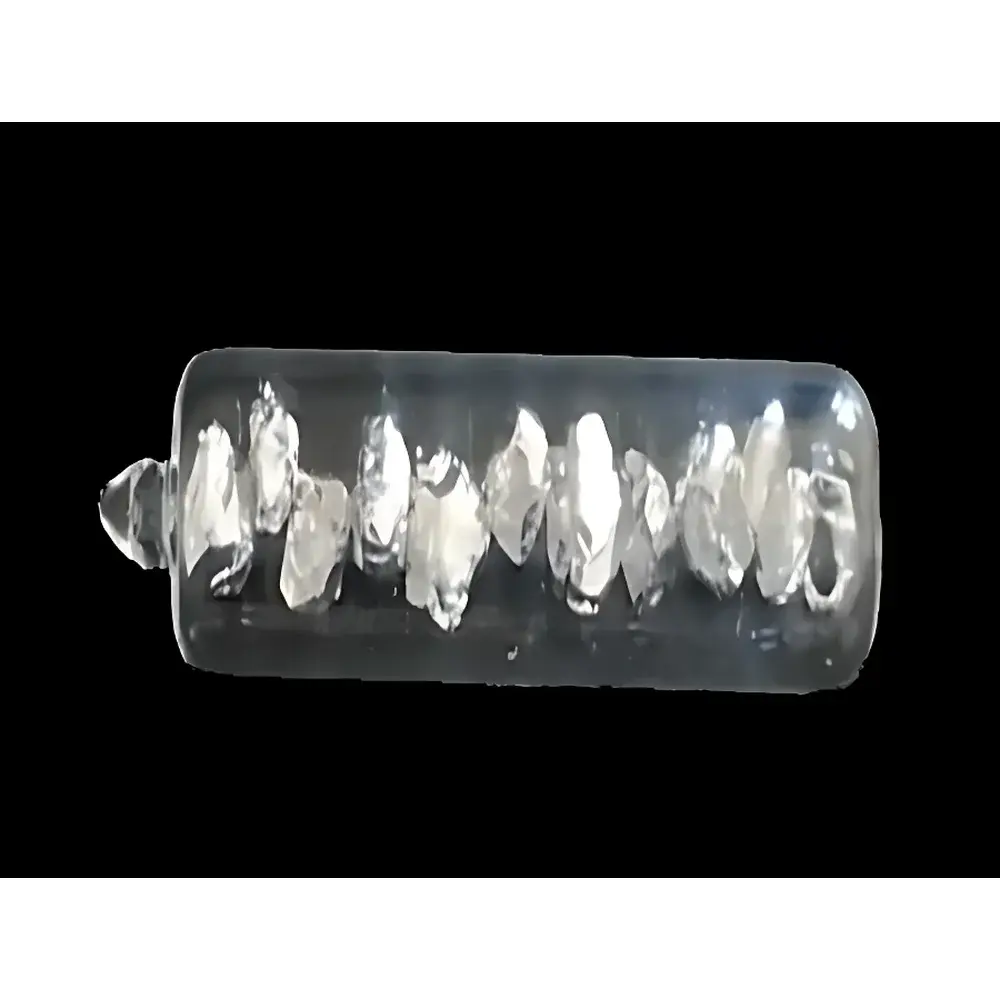
| Form | Granules & Solid Blocks |
| Dimensions | Blocks 100 × 100 × 20 mm |
| Purity | 3N5 to 5N (99.95%–99.999%) |
| Packaging | Class 1000 Cleanroom-Processed, Sealed in Class 100 Cleanroom Bags |
| Storage Requirement | Vacuum-Sealed Environment Recommended to Prevent Oxidation |
Overview
Magnesium metal (Mg) is a lightweight, silvery-white alkaline earth metal widely employed in materials science research, thin-film physical vapor deposition (PVD), alloy development, and calibration reference applications. This high-purity Mg material—supplied as precisely dimensioned solid blocks or uniformly sized granules—is engineered for reproducible performance in controlled laboratory and vacuum-based processing environments. Its low density (1.74 g/cm³), high thermal conductivity (~156 W/m·K), and favorable sputtering yield make it suitable for magnetron sputtering targets, thermal evaporation sources, and reactive metallization studies. The intrinsic reactivity of magnesium necessitates stringent handling protocols; all batches are processed in ISO Class 1000 cleanrooms and sealed in ISO Class 100 cleanroom-grade polyethylene/aluminum-laminated bags to minimize surface oxidation prior to use.
Key Features
- Controlled physical form options: Rectangular solid blocks (100 × 100 × 20 mm) for stable mounting in e-beam crucibles or resistive heating fixtures; spherical or near-spherical granules (8–15 mm nominal diameter) optimized for consistent feed rate in continuous thermal evaporation systems.
- Traceable purity grades ranging from 3N5 (99.95%) to 5N (99.999%), with certified elemental impurity profiles available upon request—including limits for Fe, Cu, Ni, Pb, and Al per ASTM E1479 and ISO 11885 methodologies.
- Surface oxide layer thickness minimized through inert-atmosphere handling and vacuum-packaging; typical native oxide thickness ≤ 2 nm as verified by X-ray photoelectron spectroscopy (XPS) on representative samples.
- Batch-specific Certificate of Analysis (CoA) includes mass spectrometry data (ICP-MS), oxygen/nitrogen/hydrogen content (LECO analysis), and dimensional verification reports.
- Compliant with general laboratory safety requirements per OSHA 1910.1200 and GHS hazard classification for flammable solids (UN 1418, Packing Group II).
Sample Compatibility & Compliance
This Mg metal is compatible with standard high-vacuum deposition systems (base pressure ≤ 5 × 10⁻⁷ Torr), gloveboxes operating under argon (O₂/H₂O < 1 ppm), and inert-gas purged sample storage cabinets. It meets the baseline material specifications referenced in ASTM F2627 (Standard Specification for Magnesium Metal for Use in Biomedical Implants) for non-implantable research analogs, and aligns with ISO 8549-2:2021 regarding metallic reference material traceability. While not intended for direct FDA-regulated medical device manufacturing, its documented purity and packaging integrity support GLP-compliant experimental workflows where elemental contamination control is critical.
Software & Data Management
No embedded firmware or software interface is associated with this passive reference material. However, full digital documentation—including CoA PDFs, batch-specific LECO/ICP-MS datasets, and cleanroom processing logs—is provided via secure download link upon order fulfillment. All analytical records adhere to ALCOA+ principles (Attributable, Legible, Contemporaneous, Original, Accurate, Complete, Consistent, Enduring, Available) and may be integrated into institutional LIMS platforms using standard CSV or PDF import protocols.
Applications
- Target material for DC/RF magnetron sputtering of Mg-based thin films (e.g., MgB₂ superconductors, MgO barrier layers, biodegradable Mg alloys).
- Source material in thermal evaporation systems for optical coatings, OLED anode interlayers, and model system studies of Mg oxidation kinetics.
- Calibration standard in X-ray fluorescence (XRF) and energy-dispersive X-ray spectroscopy (EDS) quantification workflows.
- Feedstock for arc-melting or induction skull melting of Mg–Li, Mg–Al–Zn, and Mg–RE (rare earth) alloy ingots under protective atmospheres.
- Reference substrate for surface science investigations including UPS, LEED, and in situ STM under ultra-high vacuum conditions.
FAQ
Is this Mg metal suitable for electron-beam evaporation?
Yes—blocks are machined to fit standard water-cooled copper hearths; granules exhibit uniform melting behavior under focused e-beam heating. Recommend pre-melting degassing at 650 °C under 1 × 10⁻⁵ Torr for optimal film stoichiometry.
What is the maximum recommended storage duration under vacuum?
When maintained at ≤1 × 10⁻² mbar vacuum with desiccant, shelf life exceeds 24 months without measurable oxide growth beyond 5 nm.
Can I request custom dimensions or purity certification?
Custom machining (e.g., discs, rods, or wire forms) and third-party ISO/IEC 17025-certified purity reports are available upon formal inquiry and subject to minimum order quantity.
Does the packaging meet USP particulate matter requirements?
While not pharmaceutical-grade, the Class 100 cleanroom bag construction satisfies ISO 14644-1 Class 5 airborne particle limits (<3,520 particles ≥0.5 µm/m³), appropriate for semiconductor and advanced materials R&D.
Is MSDS/SDS documentation provided?
Yes—a GHS-compliant Safety Data Sheet compliant with Regulation (EC) No. 1907/2006 (REACH) and OSHA HazCom 2012 is delivered electronically with every shipment.
Related Products