
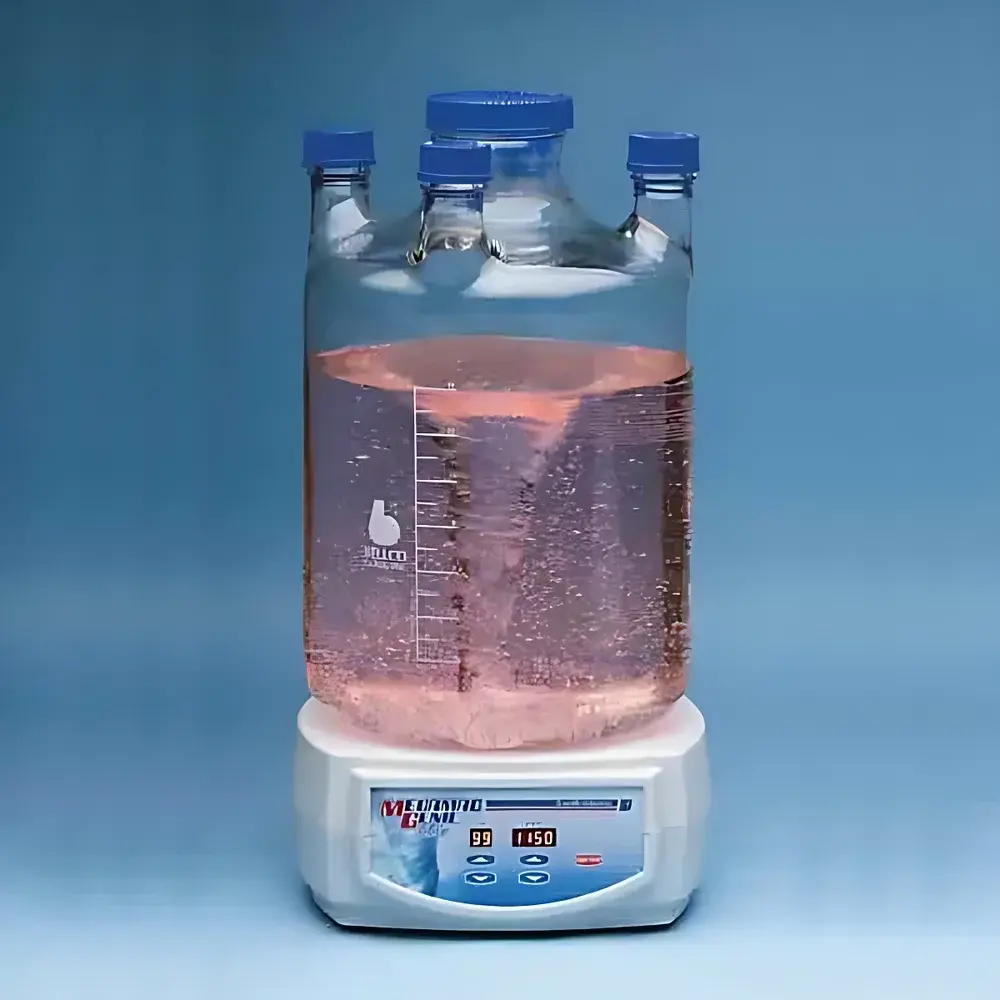
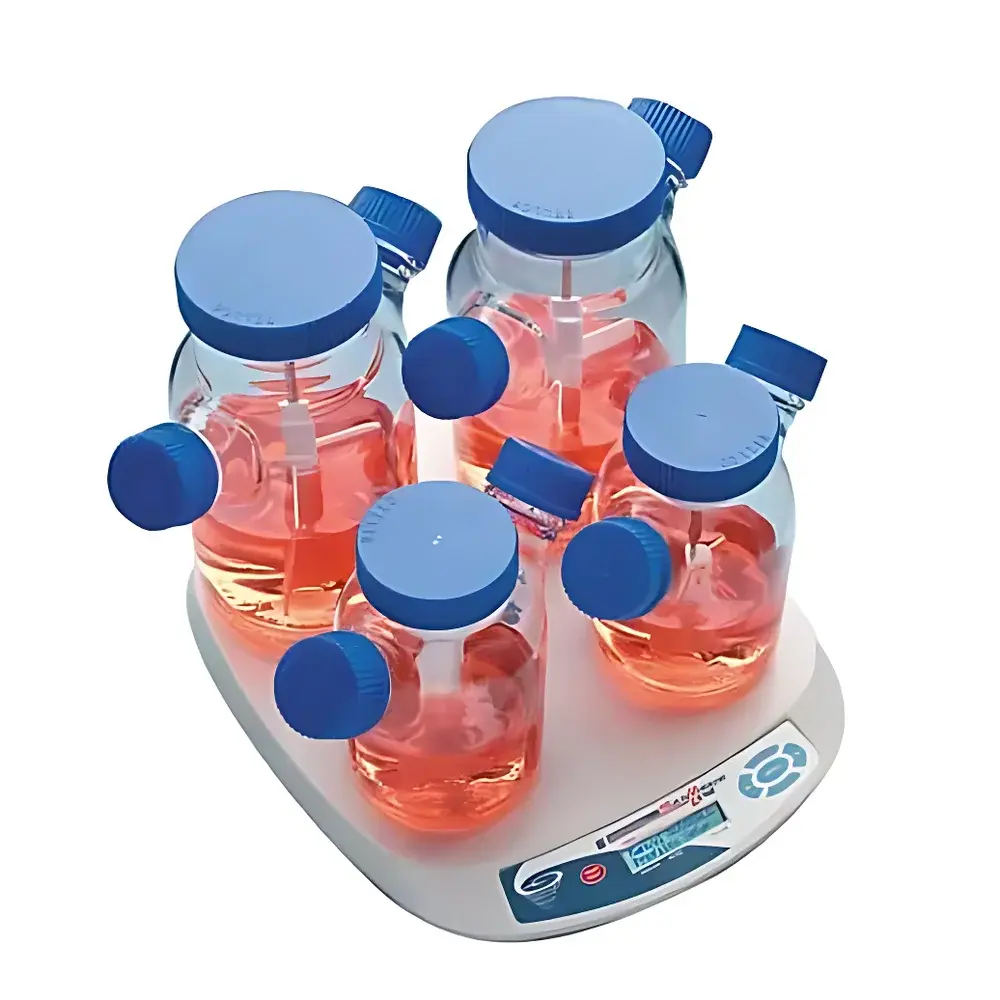
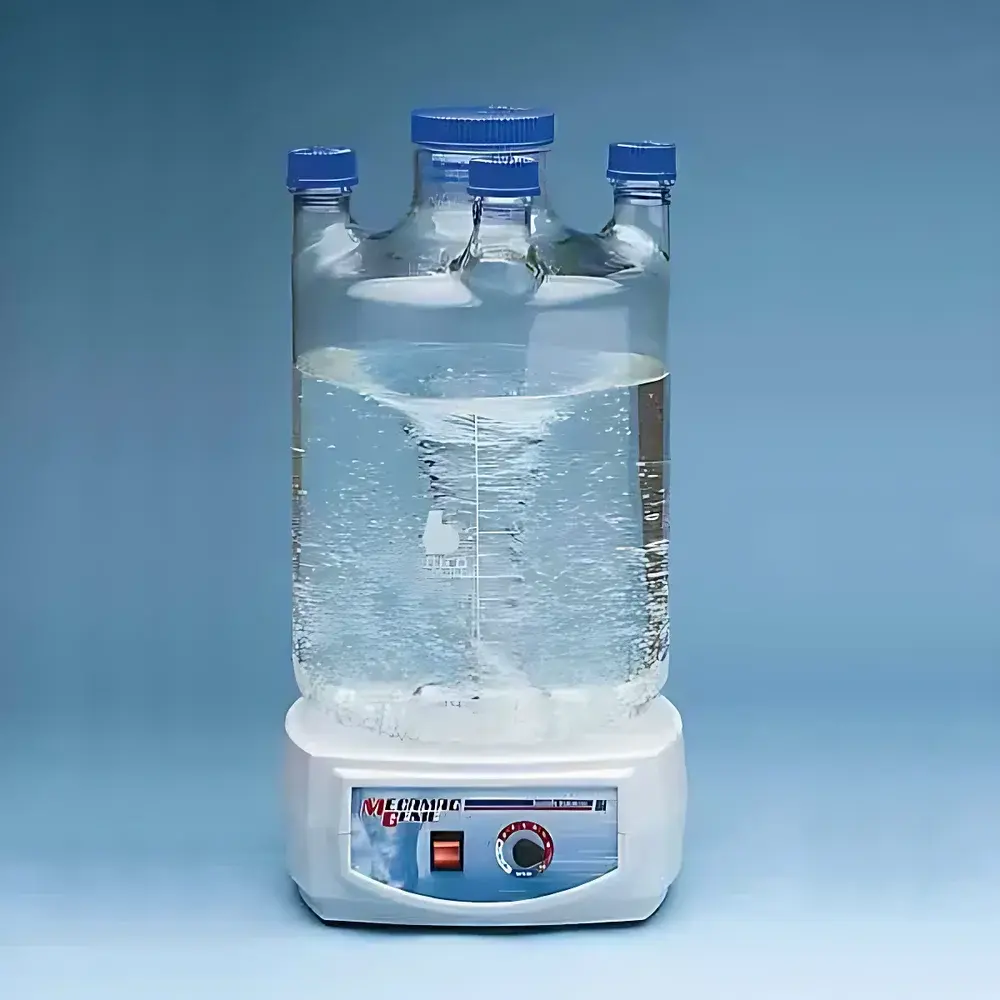
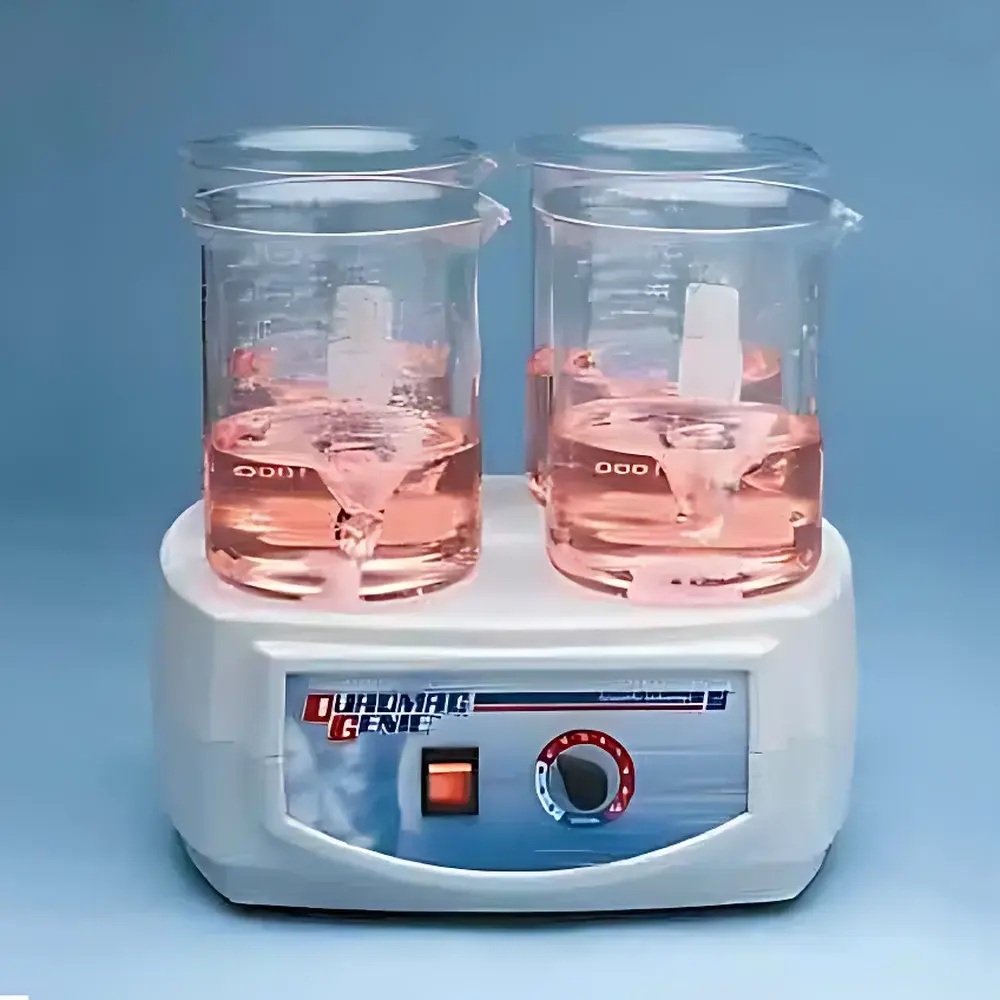
MegaMag Genie SI-3002 MultiMagstir Genie Programmable 4-Position Magnetic Stirrer
| Origin | USA |
|---|---|
| Manufacturer Type | Authorized Distributor |
| Origin Category | Imported |
| Model | SI-3002 |
| Instrument Type | Magnetic Stirrer |
| Speed Range | 10–1300 RPM |
| Control | Digital, Programmable (4 independent channels) |
| Max. Volume per Position | 2 L |
| Timer Range | 1–99 min or continuous operation |
| Housing Material | Impact-resistant ABS/Polycarbonate |
| Motor Type | Vortex-Genie–derived brushless DC motor |
| Footing | Non-slip silicone feet |
| Operating Environment | Compatible with cold rooms and incubators (4–40 °C ambient) |
| Compliance | CE, RoHS, UL-listed power supply |
| Display | Dual-line LED (RPM + timer) |
| Resolution | 10 RPM step adjustment |
| Dimensions (L×W×H) | 31 × 31 × 13 cm |
| Panel Size | 31 × 31 mm |
Overview
The MegaMag Genie SI-3002 MultiMagstir Genie is a programmable, four-channel magnetic stirrer engineered for reproducible, high-throughput mixing in regulated laboratory environments. Unlike conventional single-position stirrers, the SI-3002 implements independent digital control over each of its four stirring positions—enabling parallel processing of up to four samples under identical or individually optimized conditions. Its core operating principle relies on precisely modulated rotating magnetic fields generated by high-efficiency brushless DC motors, coupled with proprietary QuadMag rare-earth magnet assemblies. These magnets deliver exceptional torque retention even at low speeds and in viscous media (e.g., glycerol-water mixtures, polymer solutions, or cell culture matrices), ensuring consistent vortex formation and homogeneous dispersion without stir bar ejection or orbital drift. Designed for integration into QC labs, bioprocessing workflows, and method development suites, the SI-3002 supports both routine benchtop use and extended unattended operation within temperature-controlled enclosures—including refrigerated chambers and CO₂ incubators—thanks to its thermally stable housing and non-slip base.
Key Features
- Four independent stirring channels with fully programmable speed and timer settings per position
- Rare-earth QuadMag magnet system delivering >1.8 N·cm torque at 200 RPM—optimized for viscous and dense suspensions
- Digital LED interface showing real-time RPM and countdown timer; 10-RPM resolution for fine-grained speed calibration
- Vortex-Genie–derived motor architecture ensures low vibration, minimal heat generation, and >50,000-hour operational lifetime
- Chemically resistant ABS/polycarbonate chassis with integrated non-slip silicone feet—certified for static stability at inclinations ≤2°
- UL-listed 24 V DC power supply with overcurrent and thermal shutdown protection
- Programmable timer range: 1–99 minutes or continuous mode; auto-shutdown upon completion
- Operating ambient range: 4–40 °C and 20–80% RH non-condensing—validated for use inside standard laboratory incubators and cold rooms
Sample Compatibility & Compliance
The SI-3002 accommodates standard laboratory vessels including borosilicate glass beakers (50 mL–2 L), polypropylene centrifuge tubes (up to 50 mL), and custom reaction vials fitted with PTFE-coated stir bars (lengths 15–40 mm). It maintains consistent rotational stability across viscosities from 1 mPa·s (aqueous buffer) to ≥10,000 mPa·s (40% w/w methylcellulose solution), provided appropriate stir bar geometry and vessel aspect ratio are selected. The instrument complies with IEC 61010-1:2010 for electrical safety in laboratory equipment, carries CE marking per Directive 2014/30/EU (EMC) and 2011/65/EU (RoHS), and meets UL 61010-1 requirements for North American markets. Its firmware supports audit-ready operation when used in GLP/GMP contexts: all parameter changes are logged with timestamp and channel ID in non-volatile memory, aligning with FDA 21 CFR Part 11 data integrity expectations for electronic records.
Software & Data Management
While the SI-3002 operates as a standalone unit without PC connectivity, its embedded microcontroller maintains a local event log accessible via front-panel navigation. Each entry records channel number, setpoint RPM, timer duration, start/stop timestamps, and any fault codes (e.g., overload detection, motor stall). Logs persist across power cycles and retain up to 256 entries—sufficient for weekly review in quality-assurance audits. For laboratories requiring centralized monitoring, optional RS-232-to-USB adapters (sold separately) enable serial output of real-time RPM and status flags to third-party LIMS or SCADA systems using ASCII protocol (9600 baud, N-8-1). No proprietary software or drivers are required.
Applications
- Parallel dissolution testing of solid dosage forms per USP and Ph. Eur. 2.9.3
- Buffer equilibration and reagent homogenization in HPLC and LC-MS sample preparation workflows
- Cell suspension maintenance during transfection protocols and bioreactor inoculum expansion
- Enzyme kinetics assays requiring precise, low-shear mixing across multiple replicates
- Standardization of viscosity reference standards (ISO 2555, ASTM D1200) using calibrated stir bars
- Preparation of nanoparticle dispersions where shear history directly impacts agglomerate size distribution
FAQ
Can the SI-3002 be used inside a CO₂ incubator?
Yes—the unit’s sealed electronics, wide ambient operating range (4–40 °C), and non-outgassing housing materials have been validated for continuous operation in standard humidified CO₂ incubators.
What stir bar sizes are recommended for optimal performance at 2 L volume?
For 2 L beakers, use elliptical PTFE-coated stir bars measuring 35–40 mm in length and 8–10 mm in diameter; avoid cylindrical bars above 25 mm due to reduced torque coupling.
Does the timer function pause or reset when power is interrupted?
No—the timer is not battery-backed; interruption resets the countdown. However, the last-used RPM setting per channel is retained in EEPROM.
Is calibration traceable to NIST standards?
RPM accuracy is factory-verified against a NIST-traceable optical tachometer (±1% full scale); calibration certificates are available upon request with additional lead time.
Can all four positions run at different speeds simultaneously?
Yes—each channel has independent speed and timer controls, allowing heterogeneous protocols such as gradient mixing or staggered reaction initiation.



