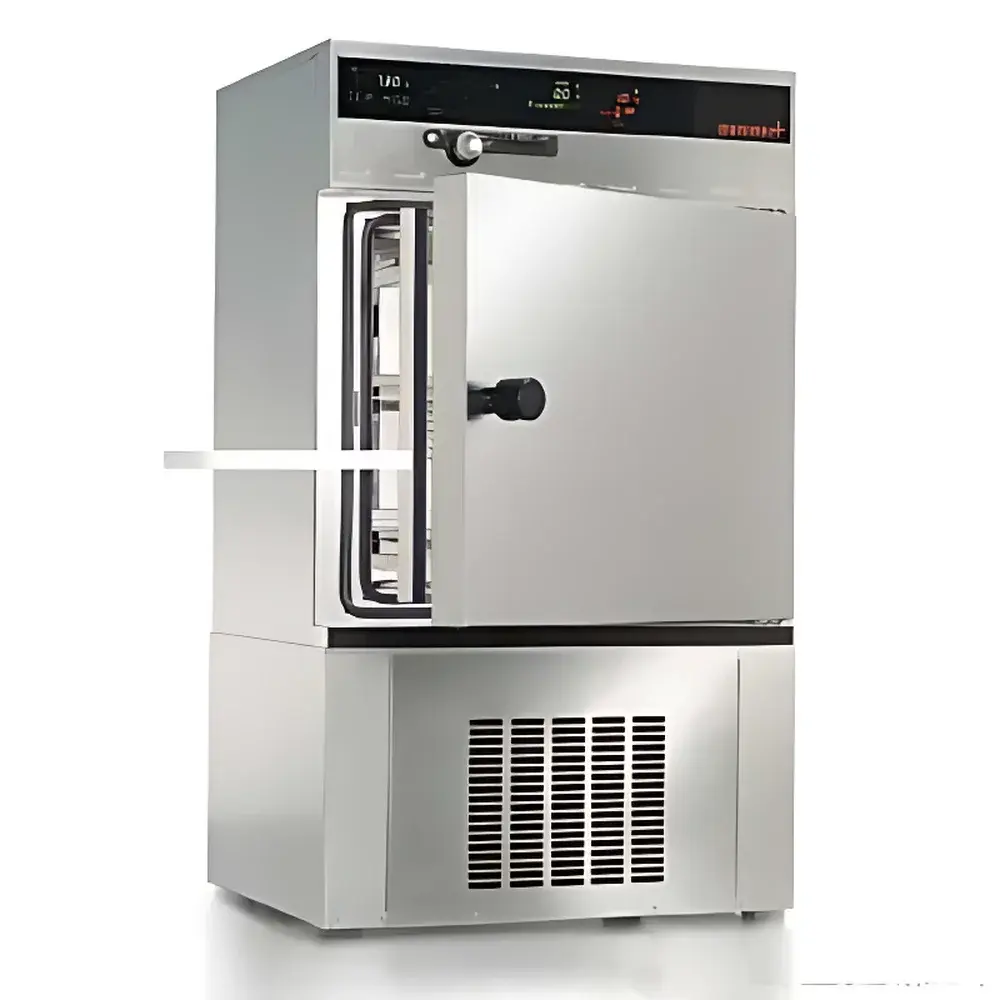
Memmert ICP400 Refrigerated Biochemical Incubator
| Brand | MEMMERT |
|---|---|
| Origin | Germany |
| Model | ICP400 |
| Temperature Range | 0–60 °C |
| Interior Volume | 53 L |
| Temperature Uniformity | ±0.3 °C (at 10–37 °C) |
| Temperature Stability | ±0.1 °C (over time) |
| Control Resolution | 0.1 °C |
| Construction | Stainless Steel (Interior & Exterior) |
| Door | Double-layer (Tempered Glass Inner + Stainless Steel Outer) |
| Air Circulation | Adjustable Forced Convection (10% increments) |
| Heating/Cooling System | Compressor-based Gas-jacketed Thermal Regulation |
| Controller | P-type Digital PID with Programmable Ramp/Soak Profiles |
| Compliance | CE Marked, GLP-Ready, ISO 13485-aligned Design |
| Interfaces | RS232, Parallel Printer Port |
| Software | Celsius® PC Control & Data Logging Suite |
| Calibration | Supplied with 10 °C and 37 °C Certificate of Calibration |
| Safety | Overtemperature & Overcooling Protection, Door Open Alarm, Self-diagnostic System |
Overview
The Memmert ICP400 Refrigerated Biochemical Incubator is a precision-engineered, compressor-cooled laboratory incubation system designed for applications requiring stable, low-temperature control in life science research, pharmaceutical quality control, and clinical diagnostics. Utilizing a gas-jacketed thermal regulation architecture—distinct from direct evaporator contact—the ICP400 maintains sample integrity by eliminating condensation, desiccation, and humidity-induced artifacts. This design ensures that temperature gradients remain minimal across the entire 53 L chamber while preserving ambient moisture levels critical for cell culture, enzyme assays, and microbial growth studies. The unit operates within a validated range of 0 °C to 60 °C, with digital P-type PID control enabling dynamic response during both heating and cooling phases. Its thermally isolated double-door configuration—featuring an inner tempered glass panel and outer stainless steel shell—minimizes radiant heat exchange and external contamination ingress, supporting long-term experiments involving light-sensitive or thermolabile specimens.
Key Features
- Gas-jacketed temperature regulation system ensures rapid thermal equilibration and eliminates internal dehumidification effects commonly observed in direct-coil refrigerated units.
- Double-layer door construction: optically clear inner glass panel enables non-invasive visual monitoring without compromising thermal stability or sterility.
- Adjustable forced-air convection system with 10% incremental control over fan speed—optimizable for delicate suspension cultures or high-density plate stacks.
- P-type digital controller with ramp/soak programming, real-time deviation alarms, and automatic defrost cycle management extending operational longevity.
- Full stainless steel chamber and exterior (AISI 304), electropolished and passivated for corrosion resistance, cleanability, and compliance with ISO 14644-1 Class 5 cleanroom-compatible maintenance protocols.
- Integrated safety architecture includes independent overtemperature/overcooling cutoffs, door-open detection with audible alert, and self-diagnostics logged to internal memory.
Sample Compatibility & Compliance
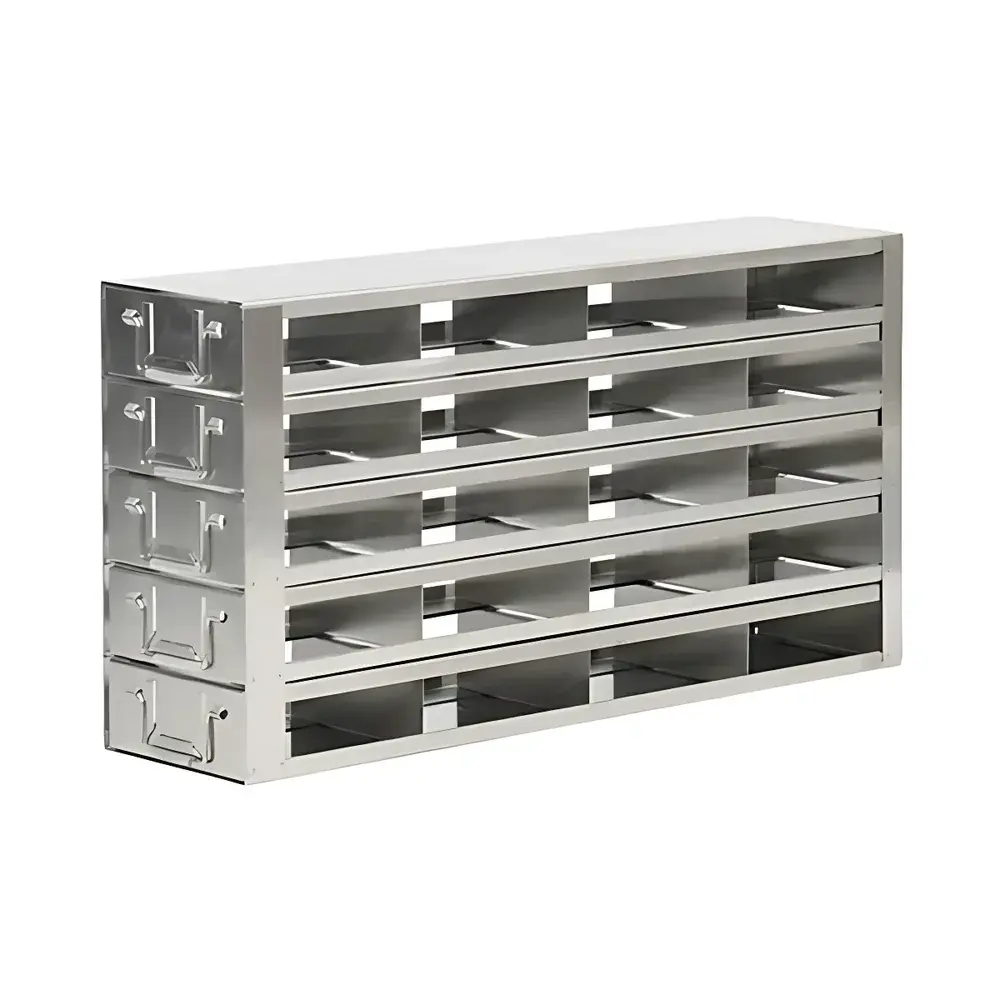
The ICP400 accommodates standard microbiological and cell culture formats—including Petri dishes, multiwell plates (6–96-well), Erlenmeyer flasks (up to 2 L), and roller bottles—on up to four adjustable stainless steel shelves (two supplied, two optional). Its uniform temperature distribution (±0.3 °C at 10–37 °C per DIN EN 61000-4-3 validation methodology) meets requirements for USP , ISO 20387:2018 (biobanking), and ASTM E122-22 (precision estimation in controlled environments). The unit is CE-marked and designed in alignment with IEC 61010-1 for laboratory equipment safety. Calibration certificates traceable to national standards (10 °C and 37 °C) are provided; optional IQ/OQ documentation packages support GxP validation under FDA 21 CFR Part 11 and EU Annex 11 when used with Celsius® software audit trails.
Software & Data Management
Celsius® software (v5.0+) enables full remote operation via RS232 interface—including setpoint scheduling, real-time graphing, alarm history export (CSV/PDF), and automated report generation. All parameter changes, deviations, and system events are timestamped and stored in a tamper-resistant internal log with capacity for >10,000 entries. Optional chip card reader and login memory module allow user-specific access rights and protocol locking—essential for multi-user GLP laboratories. Data exports comply with ALCOA+ principles (Attributable, Legible, Contemporaneous, Original, Accurate, Complete, Consistent, Enduring, Available) and integrate with LIMS platforms through standardized ASCII or Modbus RTU protocols.
Applications
- Low-temperature microbial cultivation (e.g., psychrophilic bacteria, lactic acid starters)
- Enzyme kinetics and protein stability studies conducted below ambient conditions
- Long-term storage of sensitive reagents, antibodies, and primary cell isolates
- Environmental simulation for ecotoxicology and biodegradation testing (OECD 301 series)
- Pre-incubation conditioning of biosensors and diagnostic assay components
- Controlled cooling steps in hybridization and nucleic acid purification workflows
FAQ
What is the difference between the ICP and IPP series?
The ICP series uses a compressor-based gas-jacketed system optimized for broad-range precision (0–60 °C), whereas the IPP series employs thermoelectric (Peltier) cooling suited for energy-efficient, quiet operation within a narrower range (5–60 °C) and smaller footprints.
Does the ICP400 require external ventilation or condensate drainage?
No. Its sealed gas-jacket design eliminates internal condensation and does not require floor drains or dedicated exhaust ducting—ideal for benchtop deployment in shared lab spaces.
Can Celsius® software be used for 21 CFR Part 11 compliance?
Yes—when deployed with user authentication, electronic signatures, and audit trail archiving enabled, Celsius® satisfies core technical requirements for electronic records and signatures in regulated environments.
Is the chamber humidity controlled?
The ICP400 maintains passive humidity retention via its gas-jacketed insulation and sealed construction; active humidification is not integrated but may be supplemented externally using validated chamber-mounted modules.
What validation support is available for GMP environments?
Memmert provides factory-verified IQ/OQ templates, calibration certificates, and traceable sensor verification reports—compatible with vendor-supervised qualification services upon request.