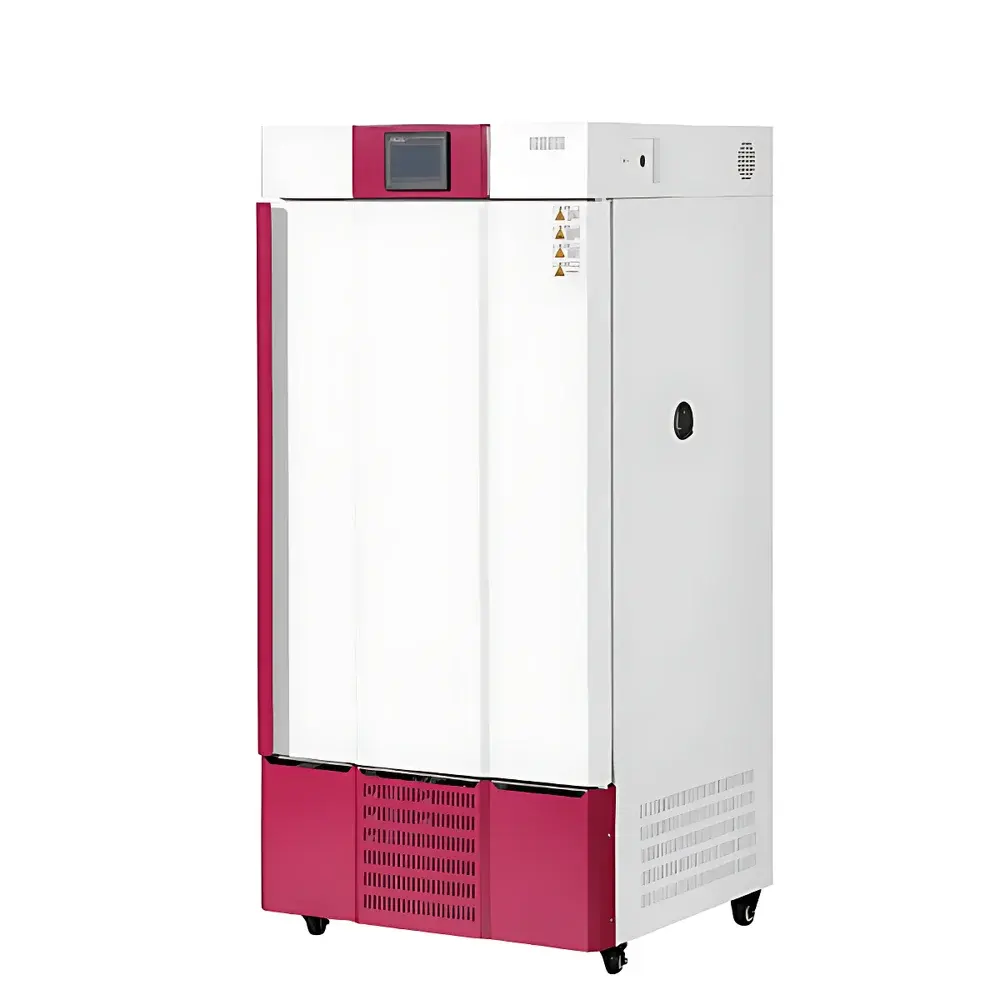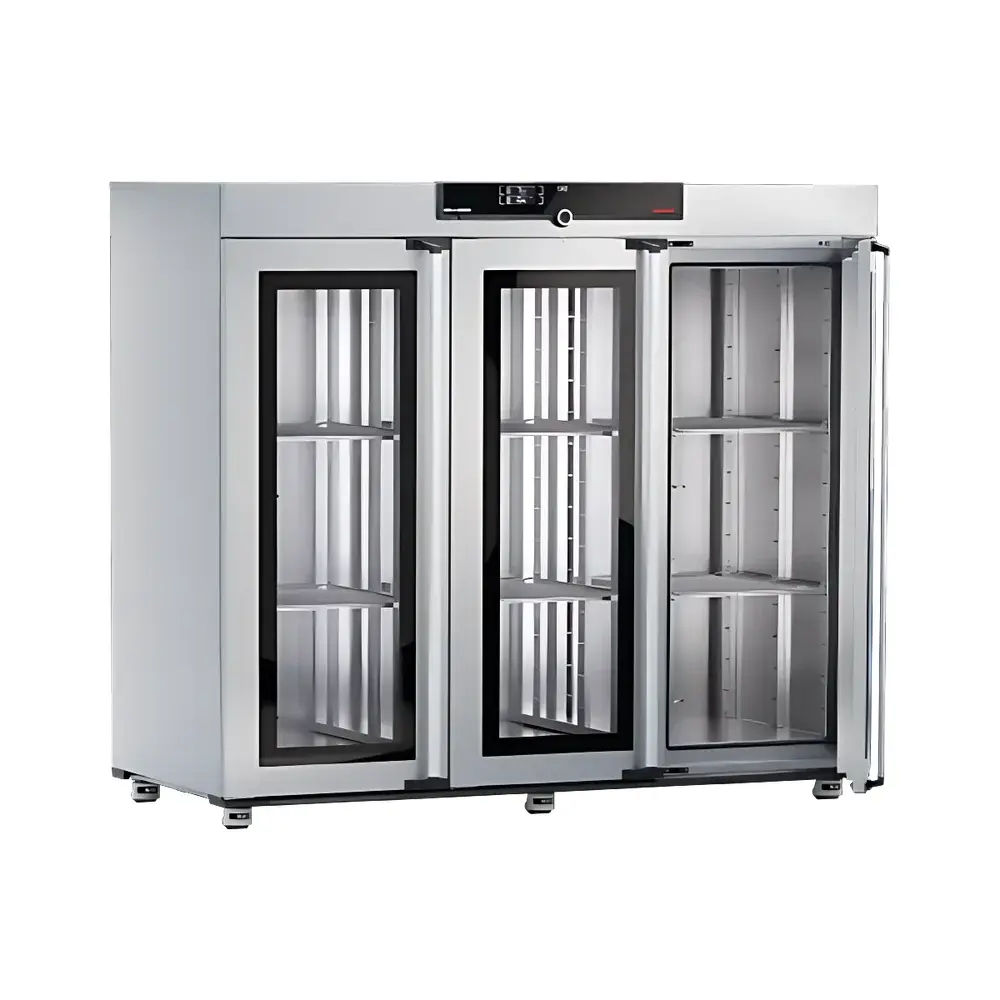
Memmert IPP2200eco Low Temperature Incubator (Single-Display Model)
| Brand | Memmert |
|---|---|
| Origin | Germany |
| Manufacturer Type | Original Equipment Manufacturer (OEM) |
| Product Category | Imported Instrument |
| Model | IPP2200eco |
| Cooling Method | Peltier Thermoelectric Cooling |
| Temperature Range | 0 °C to 70 °C |
Overview
The Memmert IPP2200eco Low Temperature Incubator is an engineered solution for precise, energy-efficient temperature control in life science laboratories. Unlike conventional compressor-based incubators, the IPP2200eco employs solid-state Peltier thermoelectric modules for bidirectional thermal regulation—enabling both heating and active cooling within a single, compact chamber. This technology operates on the principle of the Peltier effect: when direct current passes through junctions of dissimilar semiconductors, heat is absorbed at one junction and released at the other, allowing reversible thermal transfer without refrigerants or moving mechanical parts. The system delivers stable, uniform temperature environments across its full operational range (0 °C to 70 °C), with exceptional stability (±0.1 °C typical) and homogeneity (±0.3 °C at 37 °C, measured per DIN 12880). Its design eliminates internal condensation—a common challenge in humidified or sub-ambient incubation—by confining all condensate formation to external heat-sink surfaces, preserving sample integrity and minimizing maintenance.
Key Features
- Peltier-based thermoelectric cooling and heating: No compressors, no CFC/HCFC refrigerants, no oil lubrication—fully compliant with EU F-Gas Regulation (EU) No 517/2014 and RoHS directives.
- Energy efficiency: Up to 90% lower power consumption versus equivalent compressor-driven units during active cooling cycles, verified per IEC 62301 standby power testing protocols.
- Ultra-low vibration & acoustic noise: <35 dB(A) at 1 m distance; ideal for sensitive applications including insect rearing, cell culture on soft substrates, and microplate-based assays requiring mechanical stability.
- Forced-air convection with tangential fan: Ensures rapid thermal equilibration (<15 min from 23 °C to 4 °C) and optimal temperature uniformity across the entire 220 L chamber volume.
- Single high-resolution TFT display with intuitive menu navigation: Real-time monitoring of setpoint, actual temperature, elapsed time, and system status—including Peltier module health diagnostics.
- Robust stainless steel interior (AISI 304) with rounded corners and seamless welds: Supports routine decontamination using ethanol, hydrogen peroxide vapor (HPV), or validated autoclave-compatible cleaning agents.
Sample Compatibility & Compliance
The IPP2200eco accommodates standard laboratory vessels—including Petri dishes, multiwell plates, flasks, and glass vials—without interference from internal airflow turbulence or thermal gradients. Its condensation-free operation ensures compatibility with moisture-sensitive biological samples (e.g., primary neuronal cultures, fungal spore germination studies, and cryopreserved cell recovery protocols). The unit complies with essential international standards for laboratory equipment safety and performance: EN 61010-1 (electrical safety), EN 61326-1 (EMC), and DIN 12880 Part 1 (incubator performance testing). It supports GLP-compliant workflows through optional data logging (via RS232/USB interface) and meets foundational requirements for ISO/IEC 17025-accredited labs conducting temperature validation per EURACHEM/CITAC Guide CG4.
Software & Data Management
While the IPP2200eco operates autonomously via its embedded controller, it integrates seamlessly into centralized lab infrastructure through standard serial communication (RS232) and USB virtual COM port. Optional Memmert LabSoft software enables remote parameter setting, real-time data streaming (temperature only), and export of timestamped CSV logs for audit trails. All recorded data include device ID, operator ID (if entered), and calibration certificate reference—supporting traceability under FDA 21 CFR Part 11 when deployed with appropriate user access controls and electronic signature protocols. Firmware updates are performed via USB stick, ensuring long-term compliance with evolving cybersecurity best practices (IEC 62443-3-3).
Applications
- Low-temperature microbiological cultivation (e.g., psychrotrophic bacteria, lactic acid starters, and cold-adapted yeasts).
- Controlled-temperature storage of reagents, antibodies, and enzyme solutions requiring stability between 2 °C and 8 °C.
- Insect and arthropod rearing where mechanical vibration compromises developmental synchrony or mating behavior.
- Pre-incubation conditioning of biosensors, microfluidic chips, and electrochemical assay platforms.
- Temperature profiling in pharmaceutical stability testing (ICH Q1A–Q1E), particularly for intermediate condition assessments (e.g., 5 °C ± 3 °C).
- Supporting ISO 11133:2014-compliant microbiology lab quality systems through documented thermal performance verification.
FAQ
Does the IPP2200eco require external water supply or drainage for condensate management?
No. Condensate forms exclusively on external Peltier heat sinks and is passively evaporated—no plumbing, drip trays, or manual draining is required.
Can the unit maintain temperatures below ambient without supplemental air conditioning?
Yes. The Peltier system achieves stable sub-ambient operation down to 0 °C even in rooms up to 30 °C, provided ambient humidity remains below 70% RH and ventilation around rear heat sinks is unobstructed.
Is the IPP2200eco suitable for GMP-regulated environments?
It supports GMP-aligned operations when paired with Memmert’s IQ/OQ documentation package, third-party calibration services, and validated data logging configurations meeting Annex 11 requirements.
What is the maximum load capacity for uniform temperature performance?
Full chamber uniformity specifications apply up to 80% volumetric loading with standard labware; performance validation is recommended for custom rack configurations.
How frequently does the unit require preventive maintenance?
Annual inspection of fan operation, heat sink cleanliness, and door gasket integrity is recommended; no scheduled lubrication or refrigerant servicing is necessary due to solid-state design.
Related Products