
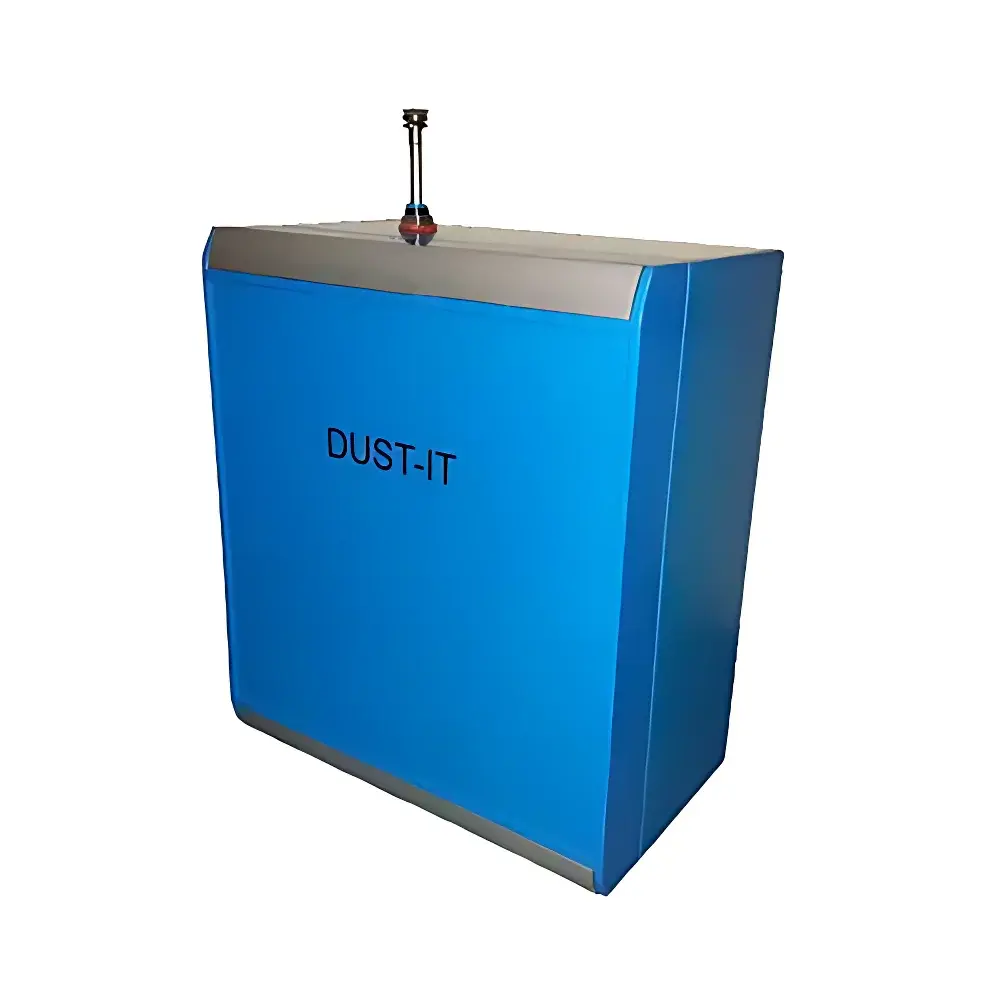
Unitec DUST-IT2 Fine Particulate Matter Sensor
| Brand | UNITEC |
|---|---|
| Origin | Italy |
| Model | DUST-IT2 |
| Measurement Principle | Optical Light Scattering |
| Measured Parameters | PM₁₀ / PM₂.₅ |
| Measurement Range | 0–2000 µg/m³ |
| Sampling Flow Rate | 2 L/min |
| Detection Limit | 1 µg/m³ |
| Flow Stability | 95% |
| Operating Temperature | −20 to +50 °C |
| Operating Humidity | 0–95% RH |
| Enclosure Material | Anodized Aluminum |
| Dimensions (W×H×L) | 200 × 297 × 121 mm |
| Weight | ~4 kg |
| IP Rating | IP33 |
| Power Supply | 100–240 V AC, 0.7 A, 50–60 Hz (optional 12 V DC, 2.1 A) |
| Communication Interfaces | RS485 (Modbus RTU), optional 4–20 mA output or integrated WLAN module |
Overview
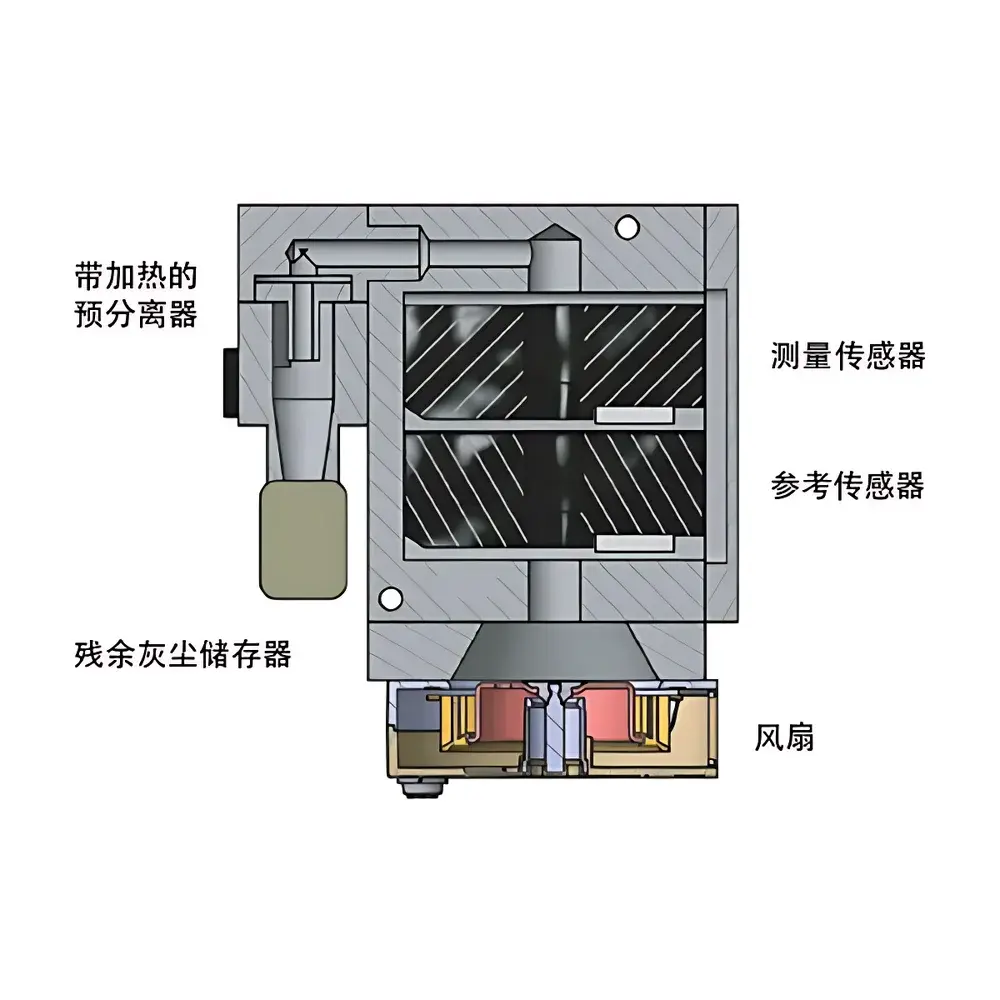
The Unitec DUST-IT2 is a compact, field-deployable fine particulate matter sensor engineered for continuous, real-time monitoring of airborne PM₂.₅ and PM₁₀ mass concentrations in ambient air. It operates on the principle of optical light scattering—where particles suspended in an airflow intercept a calibrated light beam, generating scattered photons proportional to particle size distribution and concentration. The sensor incorporates a precisely regulated sampling system: an integrated fan draws ambient air at a stable flow rate of 2 L/min through a stainless-steel inlet tube, followed by electrostatic precipitation to remove residual charge and minimize signal drift. A dual-stage pre-separator ensures physical fractionation of coarse and fine fractions—enabling independent, simultaneous quantification of PM₁₀ and PM₂.₅ without cross-sensitivity. Unlike filter-based gravimetric methods, the DUST-IT2 delivers rapid response (<60 s T₉₀), high temporal resolution, and suitability for unattended long-term deployment in urban, industrial, and roadside monitoring networks.
Key Features
- Simultaneous dual-channel measurement of PM₂.₅ and PM₁₀ mass concentrations with trace-level sensitivity (detection limit: 1 µg/m³)
- Electrostatic precipitator with integrated high-voltage module for automatic zero-point verification and reference calibration—ensuring long-term baseline stability
- Rugged anodized aluminum housing (IP33-rated) optimized for outdoor installation in variable climatic conditions (−20 to +50 °C, 0–95% RH)
- Low-noise, energy-efficient sampling fan maintaining ±5% flow stability over time (95% flow consistency across operating range)
- Modular optical path design with twin sensor modules—each containing dual photodetectors for redundancy and signal validation
- Flexible connectivity: standard RS485 Modbus RTU interface; optional 4–20 mA analog output or embedded IEEE 802.11 b/g/n WLAN for wireless mesh networking
- Compact footprint (200 × 297 × 121 mm) and lightweight construction (~4 kg) enabling rapid mounting on poles, rooftops, or existing environmental station infrastructure
Sample Compatibility & Compliance
The DUST-IT2 is designed for ambient air sampling in accordance with EN 12341:2014 (ambient air quality—measurement of PM₁₀ and PM₂.₅) and ISO 25597:2015 (air quality—performance criteria for optical particle counters). Its pre-separation geometry and cut-point performance align with the WHO-recommended aerodynamic diameter definitions for thoracic (PM₁₀) and respirable (PM₂.₅) fractions. The device supports routine QA/QC procedures including automated zero checks, span verification using NIST-traceable aerosol generators, and internal diagnostic logging. While not certified as a reference method per EU Directive 2008/50/EC, it meets the data quality objectives (DQOs) for indicative monitoring under Annex II, making it suitable for trend analysis, hotspot identification, and regulatory support applications where high spatial density and cost-efficiency are prioritized.
Software & Data Management
Data acquisition and configuration are managed via Unitec’s open-protocol architecture. Modbus RTU enables seamless integration into SCADA, BMS, or centralized environmental data platforms (e.g., EPA AirNow, AQICN, or custom GIS dashboards). Optional WLAN firmware supports MQTT or HTTP(S) push protocols for cloud ingestion, with TLS 1.2 encryption and configurable reporting intervals (1–60 min). Internal non-volatile memory logs operational parameters—including flow rate, temperature, humidity, sensor health status, and calibration timestamps—for audit-ready traceability. Firmware updates are delivered OTA (over-the-air), and all configuration changes are logged with user ID and timestamp to satisfy GLP-aligned record-keeping requirements.
Applications
- Urban air quality monitoring networks—especially high-density node deployments for hyperlocal pollution mapping
- Industrial fence-line monitoring for compliance with local emission limits and community exposure assessment
- Construction site dust management systems with real-time threshold alerts and automated suppression control triggers
- Educational and citizen science projects requiring robust, low-maintenance instrumentation with standardized outputs
- Indoor air quality (IAQ) baselines in schools, hospitals, and public buildings when deployed with optional temperature/humidity compensation
- Mobile monitoring platforms (e.g., vehicle-mounted or drone-integrated systems) leveraging its compact size and low power consumption
FAQ
Does the DUST-IT2 require periodic filter replacement or consumables?
No—the sensor uses a maintenance-free optical detection path and electrostatic precipitation. Only routine external cleaning of the inlet and optical window is recommended every 3–6 months depending on ambient dust load.
Can it be used indoors without modification?
Yes—its low acoustic signature (<35 dB(A)) and absence of radioactive sources or hazardous materials make it safe for indoor use. Optional dew-point heating maintains consistent sample conditioning under high-humidity conditions.
How is traceability ensured during calibration?
Zero-point verification is performed automatically using the internal electrostatic precipitator; span calibration is conducted externally using ISO 12103-1 A2 test dust or polydisperse PSL aerosols traceable to NIST SRM 1963.
Is the device compliant with FDA 21 CFR Part 11 for regulated environments?
While not validated for pharmaceutical cleanroom applications, its audit log, user-access controls, and electronic signature-ready firmware support adaptation to Part 11–aligned workflows upon customer-specific qualification.
What is the expected service life under continuous operation?
Rated for >5 years MTBF (mean time between failures) with scheduled biannual functional verification—supported by Unitec’s global service network and spare parts availability for critical components (fan, optical module, HV board).
Related Products







