
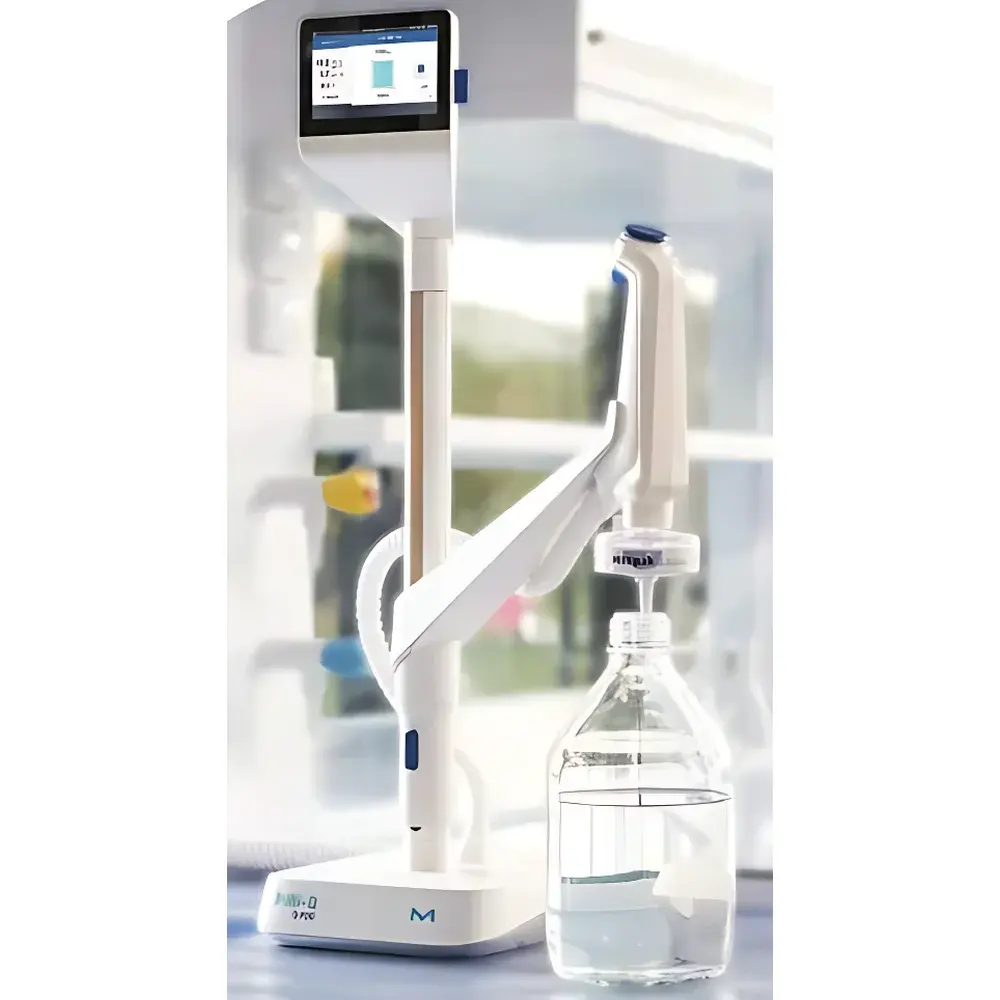
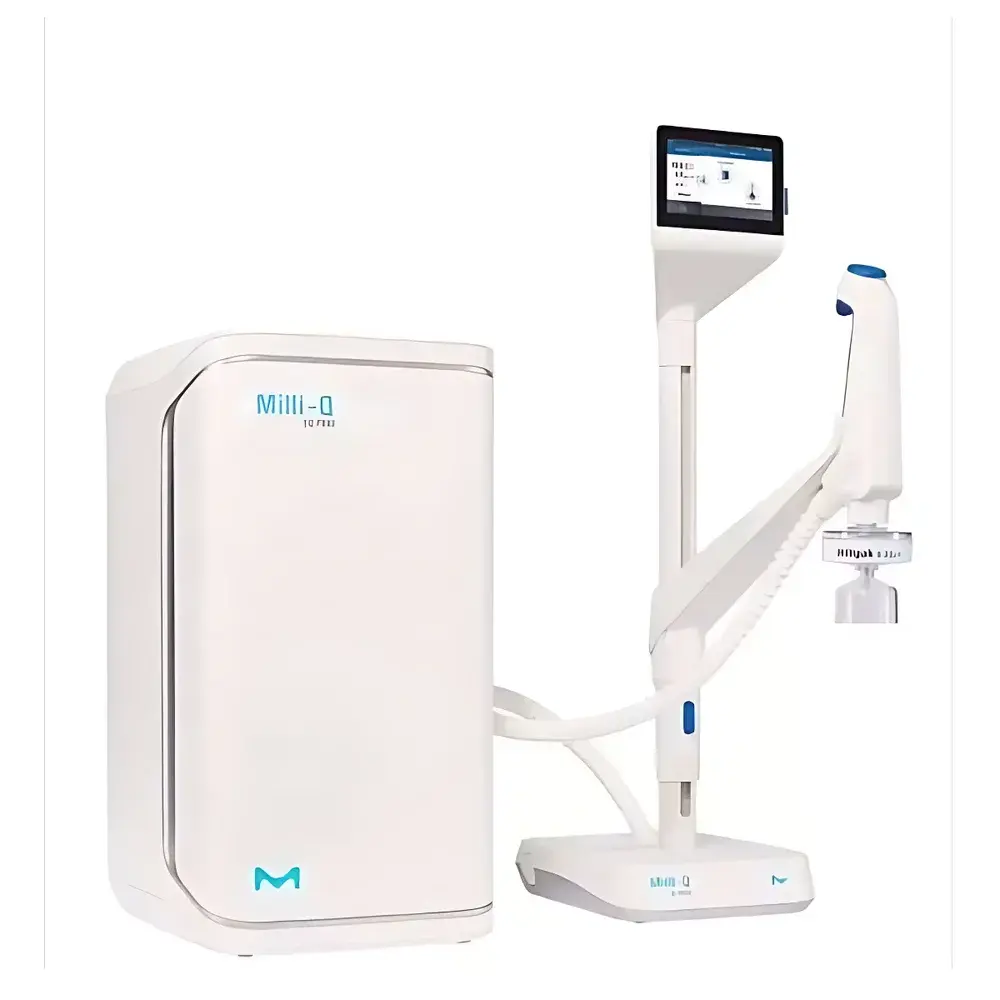
Merck Milli-Q IQ 7000 Ultra Pure Water System
| Brand | Merck |
|---|---|
| Origin | Germany |
| Manufacturer Type | Authorized Distributor |
| Product Category | Imported |
| Model | Milli-Q IQ 7000 |
| Pure Water Grade | Type I (ASTM D1193-20) |
| Resistivity | 18.2 MΩ·cm at 25 °C |
| Heavy Metals & Soluble Silica | < 0.1 ppb |
| Total Organic Carbon (TOC) | ≤ 2 ppb (typical ≤ 5 ppb) |
| Microbial Count | < 0.001 CFU/mL |
| Endotoxins | < 0.001 EU/mL |
| Particles (>0.1 µm) | Zero particles > 0.22 µm per 100 mL |
Overview
The Merck Milli-Q IQ 7000 Ultra Pure Water System is a fully integrated, modular laboratory water purification platform engineered to deliver consistent, trace-contaminant-free Type I ultrapure water compliant with ASTM D1193-20, ISO 3696:1987, and CLSI EP22-A guidelines. It operates on a multi-stage purification architecture combining pre-treatment (Elix-generated feedwater), dual-wavelength UV photooxidation (185/254 nm), electrodeionization (EDI), and final polishing via patented IPAK Quanta and IPAK Meta mixed-bed ion exchange cartridges incorporating Jetpore® resin technology. Real-time, in-line monitoring is performed by a high-precision 0.01 cm⁻¹ cell constant resistivity sensor (±0.1 °C temperature compensation) and an A10 TOC analyzer with sub-ppb detection capability. The system is designed for continuous, unattended operation in regulated environments requiring full auditability, including GLP, GMP, and FDA 21 CFR Part 11–compliant data integrity.
Key Features
- Q-POD Smart Dispensing Arm with intuitive, tablet-style touchscreen interface supporting gesture-based navigation and real-time display of resistivity, TOC, temperature, and flow rate
- Programmable dispensing modes: volumetric (0.1–9999 mL), timed (0.1–9999 s), and dropwise (0.01 mL increments) with automatic endpoint detection
- Integrated A10 TOC monitor with UV/persulfate oxidation and NDIR detection, calibrated per USP and EP 2.2.44
- IPAK Quanta/Quanta+ cartridges featuring IQo ion exchange media—33% less resin volume vs. prior generation while achieving sub-ppb ion removal kinetics
- Automated consumables management with RFID-tagged cartridges, predictive lifetime estimation, and step-by-step guided replacement via visual prompts
- Wall-mountable main unit with flexible tubing routing (custom lengths up to 3 m), enabling compact footprint optimization in space-constrained labs
Sample Compatibility & Compliance
The Milli-Q IQ 7000 is validated for use with Elix-generated Type II water as feedstock—a requirement to achieve specified performance metrics. Its output meets or exceeds the strictest international standards for analytical-grade water: resistivity ≥18.2 MΩ·cm (25 °C), TOC ≤2 ppb, endotoxin <0.001 EU/mL, and bacterial count <0.001 CFU/mL. All sensors—including the resistivity probe, PT1000 temperature sensor, and A10 TOC module—are factory-calibrated and traceable to NIST standards. The system supports IQ/OQ/PQ documentation packages aligned with ISO/IEC 17025, USP , and EU GMP Annex 15. Built-in system suitability testing protocols satisfy USP (resistivity), USP (TOC), and EP 2.2.44 requirements without external instrumentation.
Software & Data Management
The embedded IQ Connect software provides full 21 CFR Part 11 compliance through role-based user authentication (up to 100 configurable profiles), electronic signatures, and immutable audit trails for all critical events—including dispense logs, parameter changes, alarm acknowledgments, cartridge swaps, and firmware updates. Every dispense event records timestamp, volume, user ID, resistivity/TOC values at point-of-use, and environmental conditions. Reports are exportable in PDF or CSV format via USB flash drive; historical data retention spans ≥5 years with optional cloud backup integration. Daily quality summaries, weekly usage trends, and cost-allocation reports (by user or project ID) support operational transparency and budget accountability in shared-core facilities.
Applications
This system serves as the primary ultrapure water source for high-sensitivity analytical workflows where background interference must be eliminated: HPLC and UHPLC mobile phase preparation, LC-MS and GC-MS solvent formulation, ICP-MS sample dilution, ELISA and PCR reagent preparation, cell culture media supplementation, and semiconductor wafer rinsing. Its low endotoxin and particle content make it suitable for monoclonal antibody purification buffers and vaccine formulation steps governed by ICH Q5C and Q5D. The Q-POD arm’s dropwise mode enables precise volumetric delivery for calibration standard preparation and gravimetric analysis—eliminating intermediate transfer steps that risk contamination.
FAQ
What feedwater quality is required to achieve stated specifications?
Elix-generated Type II water (≥15 MΩ·cm, TOC ≤30 ppb) is mandatory; municipal tap or RO-only feed will not yield specified resistivity or TOC performance.
Does the system support remote monitoring and alerts?
Yes—via optional Ethernet/Wi-Fi connectivity and Merck’s LabManager Cloud platform, enabling real-time status dashboards, predictive maintenance notifications, and centralized fleet management across multi-site laboratories.
How often must the IPAK cartridges be replaced?
Cartridge lifetime depends on feedwater quality and daily usage volume; typical service intervals range from 6–12 months under standard lab conditions, with automated alerts triggered when residual capacity falls below 10%.
Is validation documentation included with the system?
Yes—the base package includes IQ/OQ templates, MP (Maintenance Procedure) guidelines, PQ protocol examples, and certificates of conformance for all onboard sensors and consumables.
Can the Q-POD arm be installed at distances exceeding 2 meters from the main unit?
Custom-length tubing kits (up to 3 m) are available with reinforced, low-diffusion PFA lines and integrated cable management sleeves to preserve water quality and ensure mechanical stability.
Related Products



