
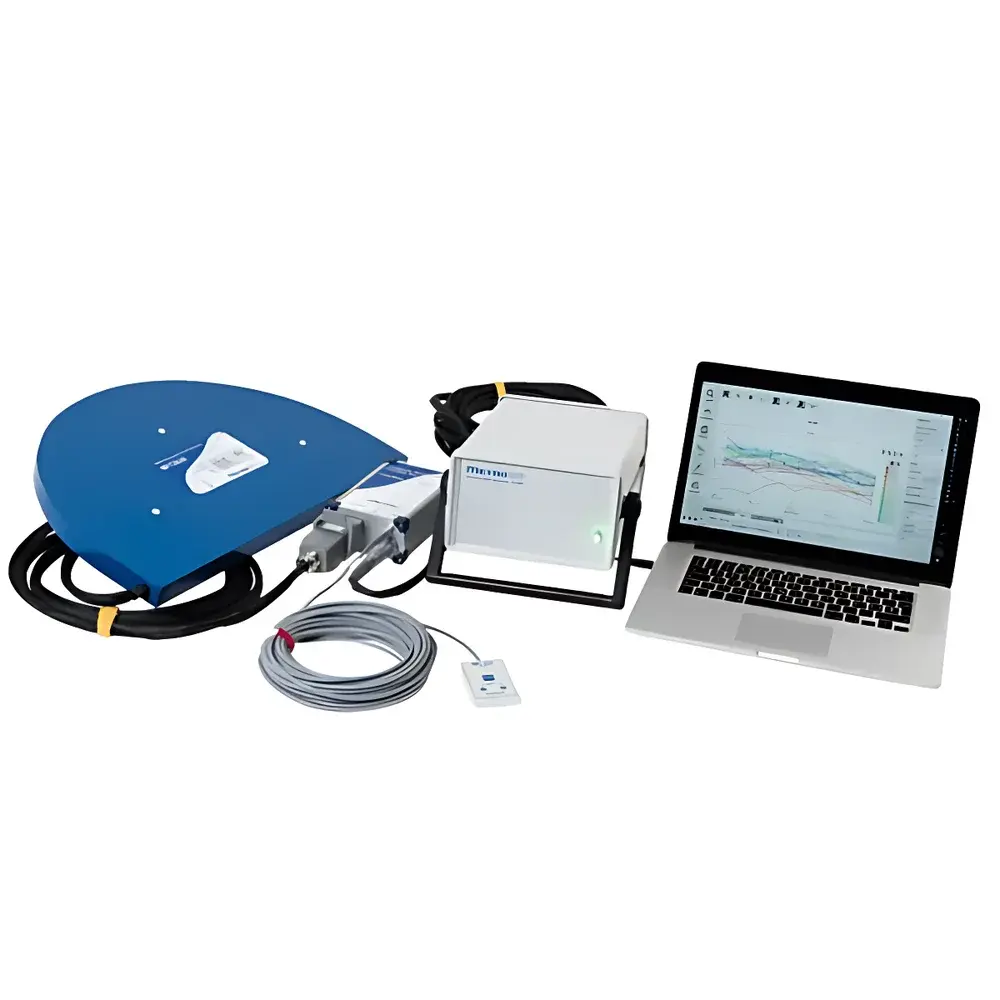
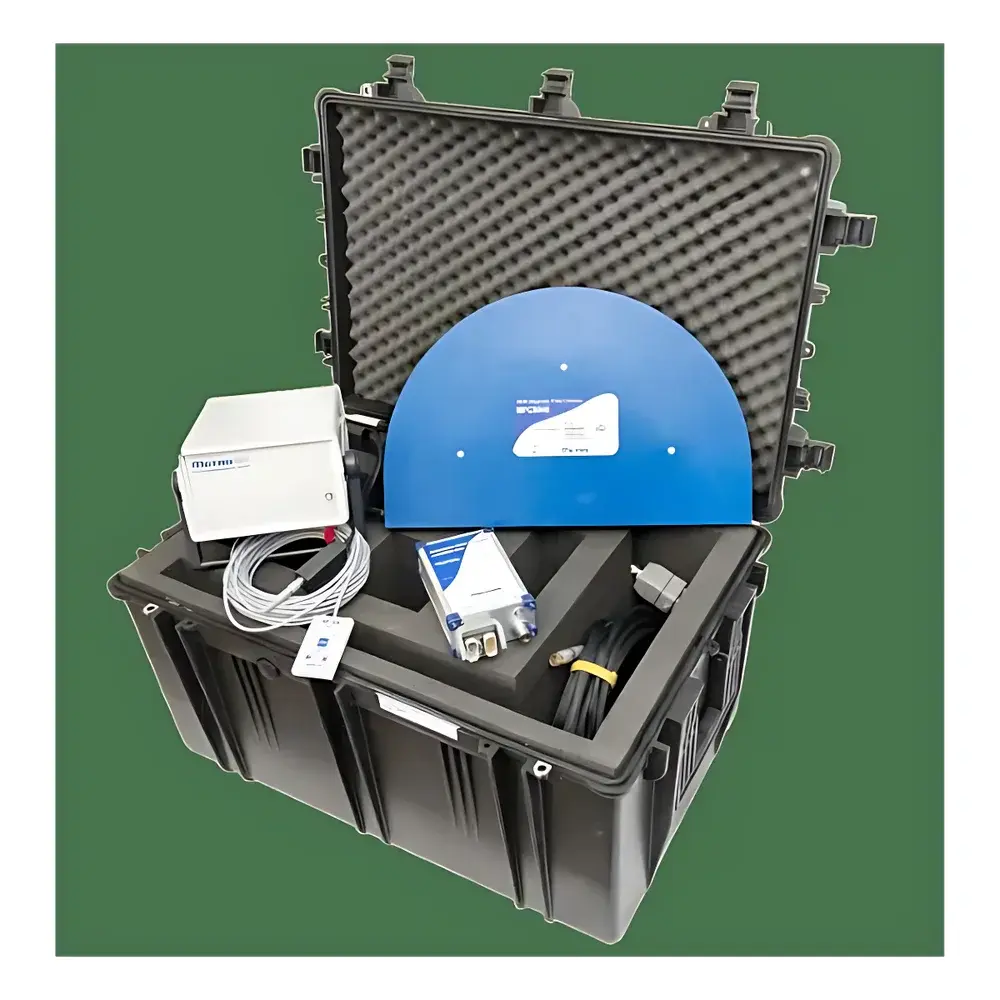
Metrolab MFC2046 MRI Magnetic Field Camera
| Brand | Metrolab |
|---|---|
| Model | MFC2046 |
| Type | NMR-based Magnetic Field Mapping System |
| Measurement Principle | Pulsed Proton NMR |
| Resolution | < 0.01 ppm (in uniform 1.5 T and 3.0 T fields, typical) |
| Mapping Time | 5 s per angular position (typical, parameter-dependent) |
| Simultaneous Readout | Full array (up to 255 sensors) |
| Operating Temperature | 10–40 °C |
| Power Supply | 100–240 VAC, 50/60 Hz, 50 VA |
| Frequency Range | 1 MHz – 1.1 GHz |
| Absolute Accuracy | ±5 ppm (temperature-independent) |
| Gradient Capability | >1000 ppm/cm |
| Single-Point Measurement Rate | up to 33 Hz |
| Max. Ambient Field for Electronics | < 0.2 T |
| Max. Ambient Field for Amplifier (FCA7046) | < 1 T |
| Probe Positioning Accuracy | < ±0.3 mm |
| Inter-probe Normalization | ≤ ±0.2 ppm |
| DSV Coverage | 100–600 mm (MFC9046) |
| Minimum Bore Diameter | 20 mm (MFC9146) |
| Cable Length | 4 m |
| Interface | USB-TMC, Ethernet (VXI-11), IEEE 488.2 |
| Software | MFCtool v10 (Windows 7+) |
| API | Full system control via programmable interface |
| Probe Tuning | Single-frequency per probe array |
| Wide-Range Probe Option | Dynamic range 1–3× that of standard array probes |
| Field Range Accuracy (Array) | ±3% (typical) |
Overview
The Metrolab MFC2046 MRI Magnetic Field Camera is a high-precision, pulsed proton nuclear magnetic resonance (NMR)-based field mapping system engineered for quantitative spatial characterization of static magnetic fields in MRI and NMR magnet systems. Unlike conventional Hall-effect or fluxgate magnetometers, the MFC2046 leverages the intrinsic linearity and temperature independence of the proton Larmor frequency—governed by the fundamental relation f = γHB, where γH is the gyromagnetic ratio of hydrogen (42.577478518 MHz/T)—to deliver absolute field measurements traceable to atomic constants. This principle enables metrological-grade accuracy (±5 ppm) without calibration drift over time or ambient temperature variation. Designed as the successor to the MFC3045, the MFC2046 extends operational flexibility across a broader frequency spectrum (up to 1.1 GHz, corresponding to ~30 T for protons), supports larger diameters of spherical volume (DSV) up to 600 mm, and accommodates narrow-bore NMR spectrometers with apertures as small as 20 mm. Its architecture integrates synchronized multi-sensor acquisition, real-time signal processing, and deterministic timing—making it suitable for both routine QA/QC field homogeneity verification and advanced R&D applications requiring sub-millimeter spatial fidelity and ppm-level temporal stability.
Key Features
- Pulsed NMR measurement engine delivering absolute field values with ±5 ppm accuracy, independent of thermal drift or sensor aging
- Simultaneous readout from up to 255 NMR probes within a single array—enabling full-field mapping in seconds rather than hours
- Sub-0.3 mm mechanical probe positioning accuracy and ≤ ±0.2 ppm inter-probe normalization—critical for high-fidelity gradient and shim validation
- Dual-mode operation: high-speed single-point monitoring (up to 33 Hz) and comprehensive volumetric mapping (5 s per angular step, typical)
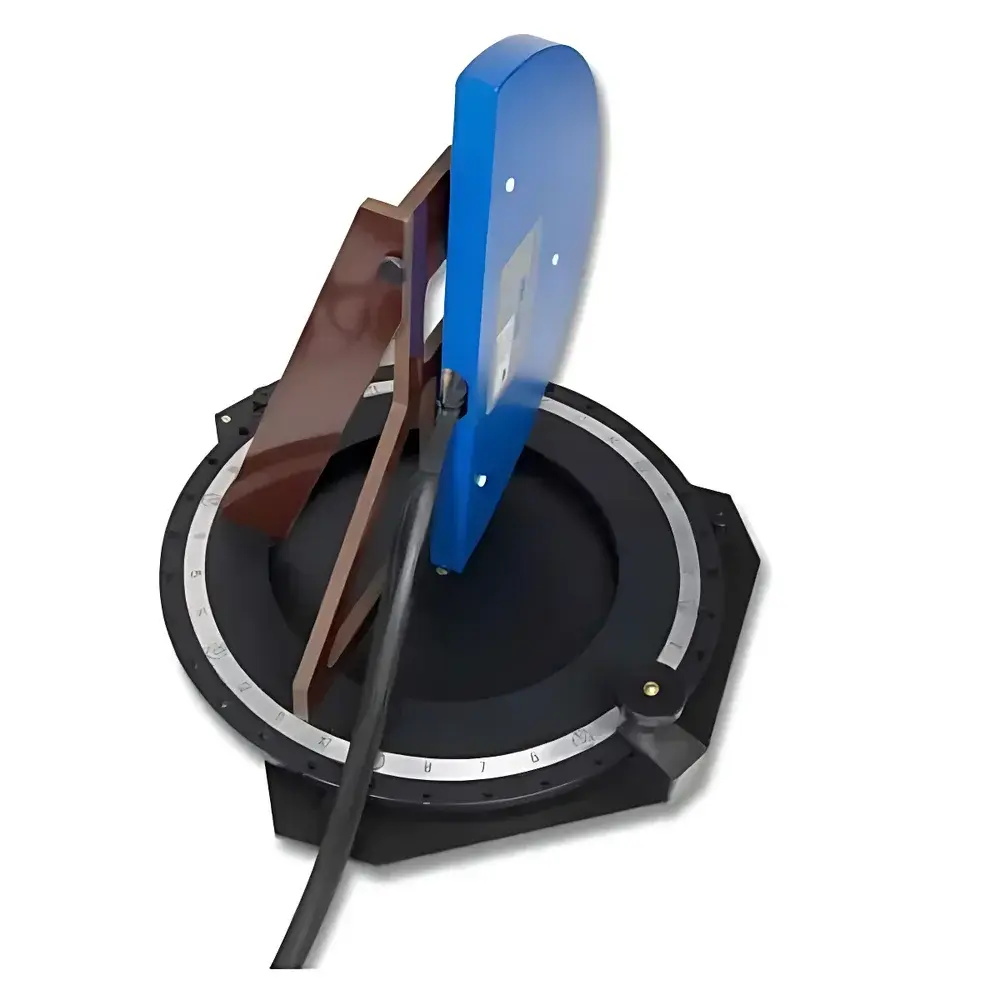
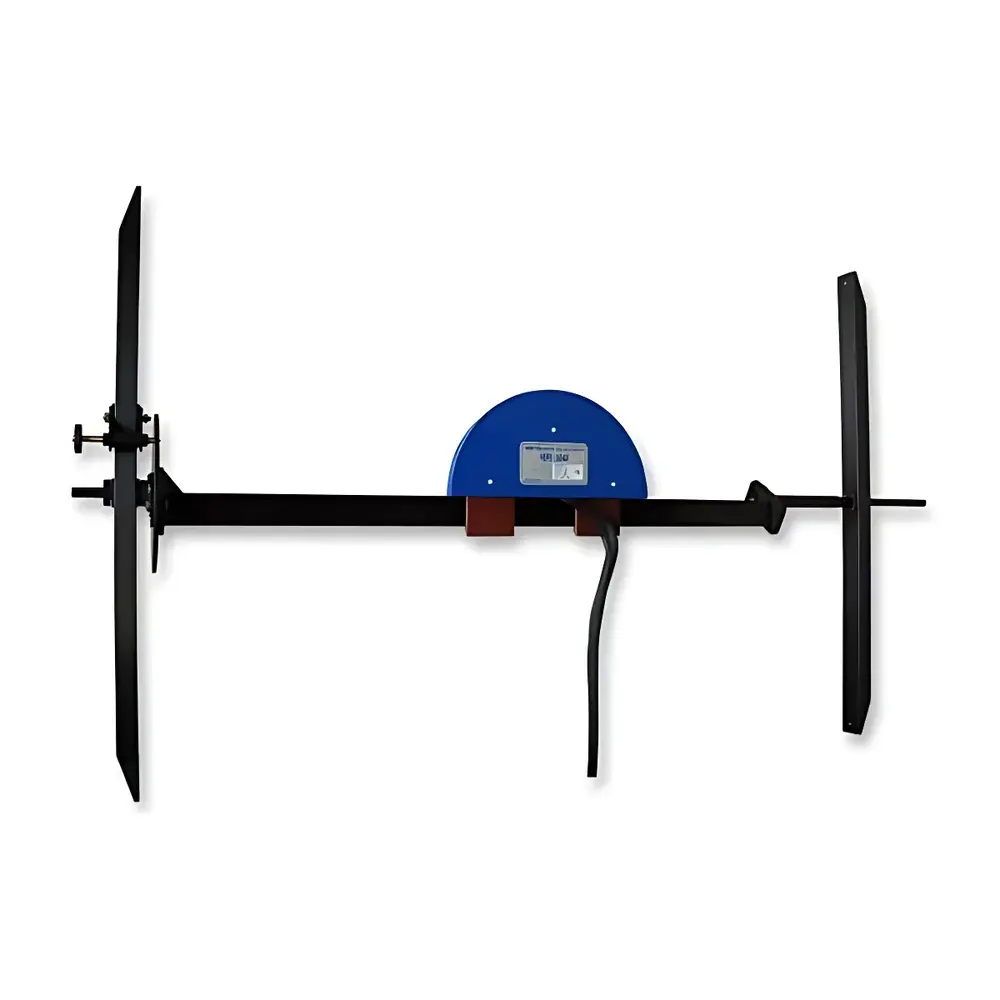
- Modular probe array design (MFC9046/MFC9146) with customizable geometry, including horizontal (MFC3039) and vertical (MFC3040/ADP) mounting solutions for solenoid and dipole magnets
- FCA7046 field amplifier optimized for operation in ambient fields up to 1 T, enabling integration inside magnet yokes or near cryostat shields
- Standard USB-TMC and Ethernet (VXI-11 compliant) interfaces with full IEEE 488.2 support—ensuring compatibility with automated test benches and GLP/GMP-compliant lab networks
Sample Compatibility & Compliance
The MFC2046 is validated for use in clinical and preclinical MRI magnet qualification (per IEC 62464-1), NMR spectrometer shimming (ASTM D7761), and accelerator magnet commissioning (IEEE Std 181). Its NMR-based methodology satisfies requirements for traceability under ISO/IEC 17025:2017 when operated within specified environmental limits (10–40 °C, non-condensing). The system supports audit-ready data capture—including timestamped raw FID waveforms, processed field maps, and metadata logs—with optional digital signature and electronic record retention aligned with FDA 21 CFR Part 11 Annex 11 expectations. Probe arrays are constructed from non-magnetic, low-outgassing materials (e.g., PEEK, titanium, ceramic) to ensure compatibility with ultra-high vacuum and cryogenic environments typical of superconducting magnet facilities.
Software & Data Management
MFCtool v10 provides a task-driven, GUI-based workflow for field mapping, drift analysis, ramp profiling, and harmonic decomposition. All functions—including search, lock, map, and normalize—are accessible via intuitive menus or programmatically through a documented C/C++/Python API. Real-time visualization includes 2D contour plots, 3D isosurface rendering, spherical harmonic coefficient export (up to order 12), and Tesla/MHz unit switching. Measurement files (.mfc) store calibrated field values, probe coordinates, temperature logs, and instrument configuration—structured for direct import into MATLAB, Python (NumPy/Pandas), or commercial finite-element solvers (e.g., COMSOL, ANSYS Maxwell). Data integrity is enforced via SHA-256 checksums, write-once filesystem options, and configurable auto-backup to network drives.
Applications
- End-to-end homogeneity verification of MRI main magnets (1.5 T, 3.0 T, 7.0 T) across clinical DSVs (e.g., 40 cm, 50 cm)
- Shim coil current optimization and harmonic error quantification in high-resolution NMR spectrometers
- Time-resolved field drift monitoring during magnet ramp-up, quench recovery, or thermal stabilization cycles
- Gradient coil performance validation—including linearity, eddy current compensation, and spatial encoding fidelity
- Commissioning and periodic requalification of particle accelerator dipoles, quadrupoles, and insertion devices
- Research into persistent current effects, flux creep, and cryostat-induced field distortions in LTS/HTS magnet systems
FAQ
What NMR nucleus does the MFC2046 measure?
The system operates exclusively on the proton (¹H) NMR signal from water-based reference samples embedded in each probe.
Can the MFC2046 map fields in real time during magnet ramping?
Yes—its 33 Hz single-point acquisition rate and programmable trigger synchronization enable dynamic field tracking during controlled current ramps.
Is probe calibration required before each measurement?
No—probe arrays are factory-normalized and thermally compensated; absolute accuracy relies solely on the invariant proton gyromagnetic ratio.
Does the system comply with FDA 21 CFR Part 11 for electronic records?
When deployed with configured audit trails, electronic signatures, and secure storage policies, MFCtool v10 meets core technical requirements for Part 11 compliance.
What is the minimum bore size supported for NMR spectrometer mapping?
The MFC9146 probe array is designed for magnets with internal bores ≥20 mm diameter, with custom miniaturized variants available upon request.
How is spatial registration achieved across multiple probe arrays?
Mechanical fixtures (e.g., MFC3039, MFC3040/ADP) provide repeatable, kinematic mounting; coordinate transformations are applied in software using fiducial markers and laser-tracked reference points.





