
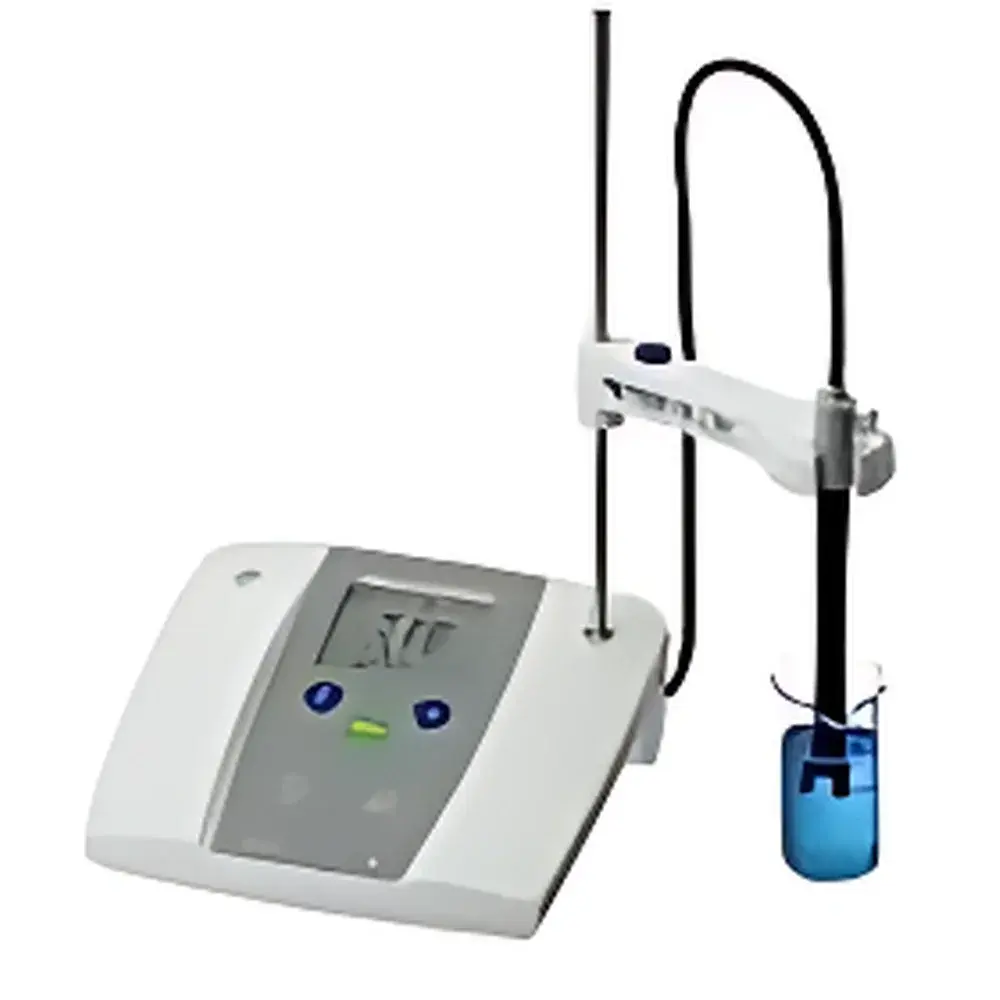
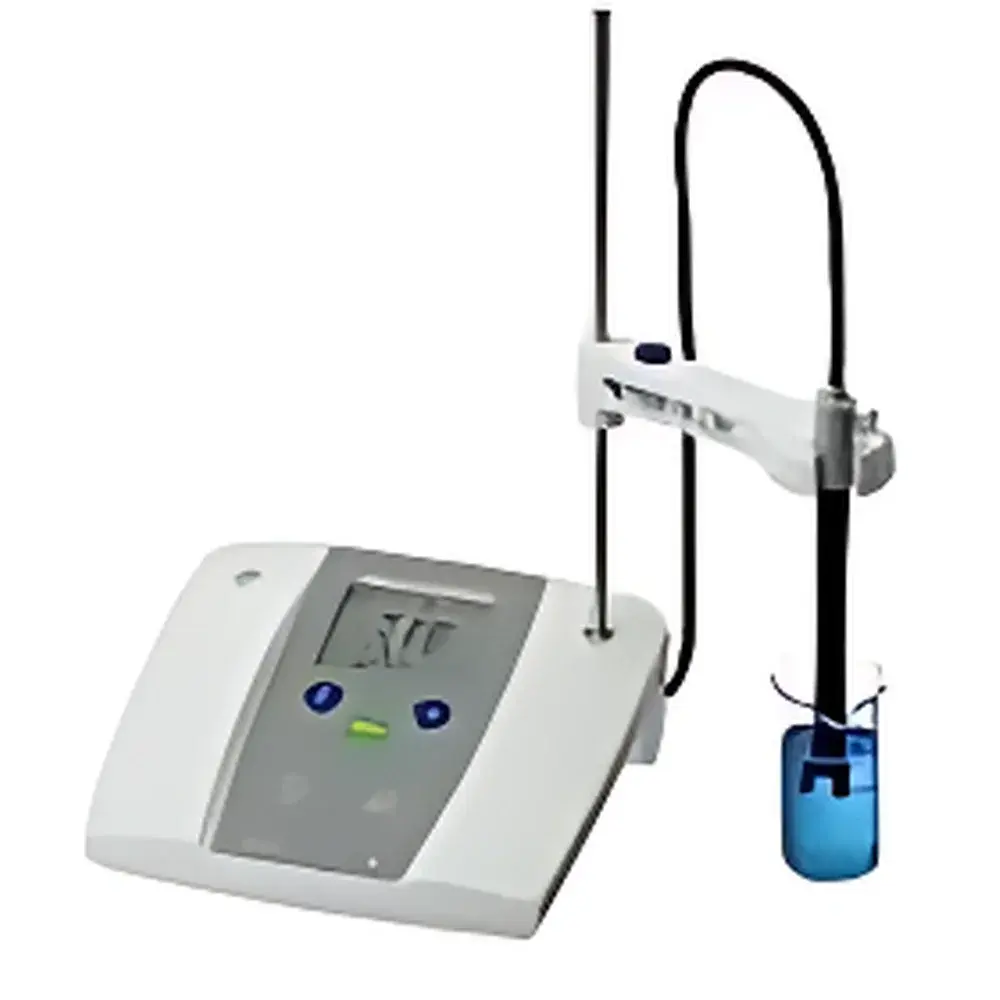
METTLER TOLEDO FE30 FiveEasy+ Conductivity Meter with TDS Measurement
| Brand | METTLER TOLEDO |
|---|---|
| Origin | Switzerland |
| Model | FE30 / FE30K |
| Instrument Type | Benchtop |
| Parameter Types | Conductivity, TDS, Salinity, Resistivity, Temperature |
| Measurement Range | 0.00 µS/cm – 199.9 mS/cm (equivalent to 0.00 mg/L – 199.9 g/L TDS) |
| Resolution | Automatic, 0.01 µS/cm to 0.1 mS/cm (conductivity) |
| Accuracy | ±0.5% of reading |
| Calibration Solutions | Standardized US-type conductivity standards (e.g., 84 µS/cm, 1413 µS/cm, 12.88 mS/cm) |
| Temperature Compensation | Linear, with selectable reference temperature (15–25 °C default) |
| Compliance | Designed per IEC 61010-1 for laboratory electrical safety |
Overview
The METTLER TOLEDO FE30 FiveEasy+ Conductivity Meter is a benchtop electrochemical instrument engineered for precise, repeatable measurement of electrical conductivity, total dissolved solids (TDS), salinity, and resistivity in aqueous solutions. Based on the fundamental principle of conductance measurement—where an alternating current is applied across two or four electrodes to determine solution resistance—the FE30 delivers reliable results across a wide dynamic range (0.00 µS/cm to 199.9 mS/cm). Its architecture integrates a stable AC excitation circuit, low-noise analog signal conditioning, and digital signal processing optimized for minimizing polarization effects and electrode fouling artifacts. Designed for routine quality control, environmental monitoring, and academic teaching laboratories, the FE30 operates under standardized electrochemical protocols aligned with ASTM D1125 and ISO 7888, ensuring traceability and inter-laboratory comparability.
Key Features
- Intuitive five-button interface with dedicated keys for measurement start/stop, calibration access, and mode selection—enabling rapid operation without menu navigation.
- Auto-endpoint detection with visual and audible confirmation, reducing operator dependency and improving measurement reproducibility.
- Automatic range switching and adaptive resolution: displays 0.01 µS/cm at low-conductivity levels and up to 0.1 mS/cm at high-conductivity ranges, maintaining optimal signal-to-noise ratio.
- Linear temperature compensation with user-selectable reference temperatures (15 °C, 20 °C, or 25 °C), supporting compliance with regulatory reporting requirements where temperature normalization is mandated.
- Built-in self-diagnostic routines—including electrode impedance check and sensor connectivity verification—provide real-time feedback during setup and calibration.
- Large backlit LCD screen simultaneously shows primary parameter (e.g., conductivity), secondary value (e.g., TDS), measured temperature, endpoint status, and system alerts—enhancing workflow efficiency in multi-user lab environments.
Sample Compatibility & Compliance
The FE30 is validated for use with deionized water, tap water, wastewater effluents, brine solutions, pharmaceutical buffers, and food-grade electrolytes. It accommodates standard two-electrode cells (e.g., LE703) as well as optional InLab® line sensors for enhanced stability in viscous or particulate-laden samples. All calibrations are performed using NIST-traceable US-type conductivity standards (84 µS/cm, 1413 µS/cm, and 12.88 mS/cm), ensuring metrological consistency. The instrument’s hardware and firmware architecture support Good Laboratory Practice (GLP) workflows: each measurement stores timestamp, operator ID (via manual entry), electrode serial number, calibration history, and temperature—all accessible via USB export. While the FE30 itself does not include 21 CFR Part 11 electronic signature functionality, exported CSV files are compatible with LIMS integration and internal audit documentation.
Software & Data Management
Data output is facilitated through a standard USB-A port, enabling direct transfer of measurement logs and calibration reports to Windows-based PCs. Exported files follow comma-separated value (CSV) format, structured with columns for date/time, parameter value, unit, temperature, electrode ID, and calibration status. No proprietary software installation is required—data can be imported into Excel, LabArchives, or ELN platforms without conversion. For laboratories requiring automated reporting, the FE30’s consistent ASCII output protocol allows integration with custom Python or LabVIEW scripts for batch processing and statistical analysis (e.g., control charting per ISO 9001 Annex A.4). Firmware updates are delivered via downloadable HEX files from METTLER TOLEDO’s official support portal, ensuring continued alignment with evolving IEC and RoHS directives.
Applications
- Environmental testing: Monitoring conductivity and TDS in surface water, groundwater, and treated effluent per EPA Method 120.1 and ISO 7888.
- Pharmaceutical manufacturing: Verifying purified water (PW) and water for injection (WFI) conductivity against USP limits during routine QC release testing.
- Food & beverage QA: Assessing salt content in brines, syrups, and dairy products via TDS correlation calibrated against gravimetric reference methods.
- Academic instruction: Teaching core electrochemical concepts—including Kohlrausch’s law, cell constant determination, and temperature coefficient effects—in undergraduate chemistry and environmental science labs.
- Industrial process control: Spot-checking rinse water quality in semiconductor cleaning lines or electroplating baths where ionic contamination must remain below 10 µS/cm thresholds.
FAQ
What conductivity standards are recommended for FE30 calibration?
US-type standards (84 µS/cm, 1413 µS/cm, and 12.88 mS/cm) are factory-prequalified and traceable to NIST SRM 3198. Other certified standards may be used if their uncertainty is ≤±0.2% and they conform to ASTM D1125 Annex A1.
Can the FE30 measure resistivity directly?
Yes—the instrument calculates and displays resistivity (Ω·cm or MΩ·cm) in real time using the inverse relationship ρ = K × R, where K is the cell constant (entered manually or stored with the electrode) and R is measured resistance.
Is temperature compensation mandatory during measurement?
No—it can be disabled for raw resistance acquisition—but linear compensation is enabled by default to ensure comparability across varying ambient conditions, particularly in regulated environments.
How often should the LE703 electrode be recalibrated?
Daily calibration is recommended for critical applications; otherwise, verification before each analytical session—or at least once per shift—is sufficient when operating within stable environmental conditions and using fresh, uncontaminated standards.
Does the FE30 support four-electrode conductivity measurement?
No—the FE30 is designed exclusively for two-electrode (inductive or contact-type) configurations. Four-electrode capability requires higher-tier models such as the SevenCompact™ series.




