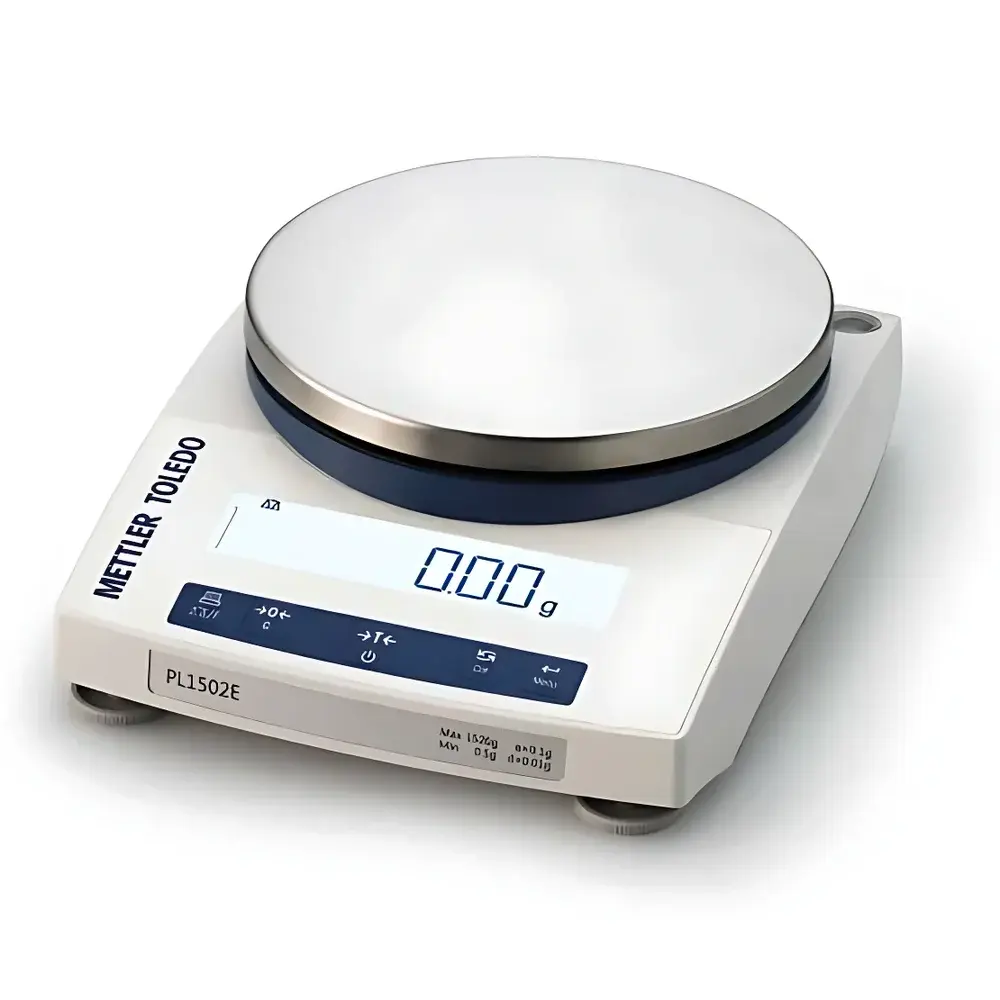
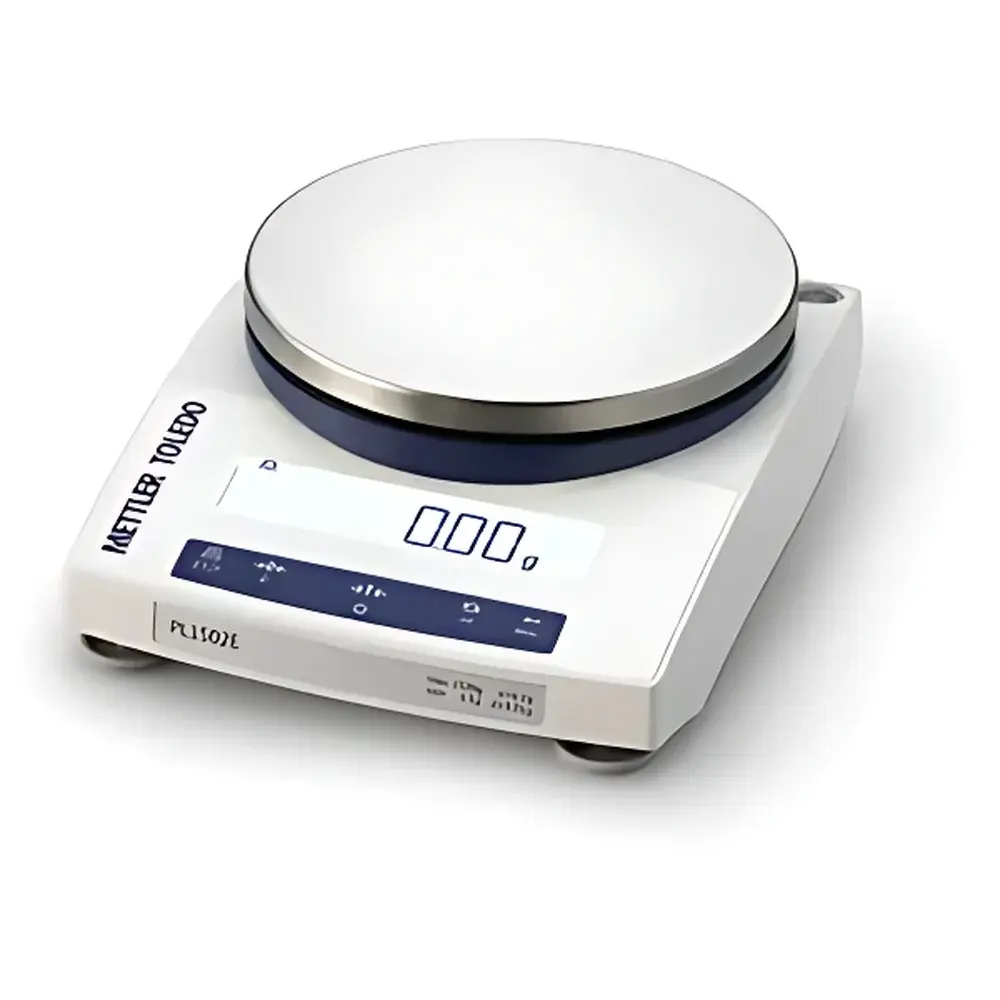
METTLER TOLEDO PL602E Portable Precision Balance
| Brand | METTLER TOLEDO |
|---|---|
| Origin | Switzerland |
| Model | PL602E |
| Maximum Capacity | 620 g |
| Readability | 0.01 g |
| Repeatability (typ.) | 0.007 g |
| Minimum Weight (USP <41>, 0.1% tolerance, typ.) | 14 g |
| Stabilization Time | 2 s |
| Pan Diameter | 160 mm |
| Dimensions (H×W×D) | 67 × 194 × 225 mm |
| Housing Material | ABS/PC |
| Display | Backlit LCD |
| Interface | RS232 (integrated) |
| Power Supply | Battery-operated (optional) |
| Calibration | External |
| Compliance | USP <41> compliant for minimum weight verification |
| Application Modes | 9 built-in weighing functions |
Overview
The METTLER TOLEDO PL602E is a compact, battery-powered precision balance engineered for reliable field and laboratory use where portability, robustness, and traceable measurement performance are essential. Designed within the PL-E series, it employs electromagnetic force compensation (EMFC) technology — the industry-standard transduction principle for high-stability analytical and precision balances — to deliver consistent, drift-resistant results under variable environmental conditions. With a maximum capacity of 620 g and readability of 0.01 g (10 mg), the PL602E meets the performance criteria for Class II precision balances per OIML R 76-1 and ISO 9001-compliant weighing processes. Its lightweight ABS/PC housing, integrated backlit LCD with large-digit display, and rapid 2-second stabilization time enable seamless operation in quality control labs, warehouse receiving areas, educational settings, and on-site industrial audits — without dependency on mains power.
Key Features
- Electromagnetic force compensation (EMFC) sensor architecture ensuring long-term stability and minimal thermal drift
- Backlit LCD display with high-contrast, large-font digits optimized for low-light or high-glare environments
- Integrated RS232 interface for direct connection to serial printers or legacy data acquisition systems
- External calibration capability using certified weights (e.g., Class M2 or better), supporting documented calibration procedures per ISO/IEC 17025 requirements
- Nine pre-programmed application modes including parts counting, percentage weighing, density determination (with optional kit), checkweighing, and animal/dynamic weighing
- Battery operation option enabling uninterrupted use during mobile inspections or temporary lab setups
- Compact footprint (194 × 225 × 67 mm) and ergonomic design for tabletop or transportable deployment
- USP validated minimum weight of 14 g (at k=2, U=1%), providing auditable compliance for pharmaceutical and GMP-regulated applications
Sample Compatibility & Compliance
The PL602E accommodates samples up to 620 g on its 160 mm diameter stainless steel pan, suitable for solid materials, packaged goods, powders, and small assemblies. Its repeatability of 0.007 g (typ.) ensures statistical confidence in repeated measurements required by ASTM E899 and ISO 11352 for balance qualification. While the unit itself does not carry CE, UKCA, or FDA 510(k) certification as a medical device, its metrological performance aligns with regulatory expectations for non-automatic weighing instruments used in GLP, GMP, and ISO 13485 environments. The external calibration workflow supports full traceability to national standards (e.g., NIST, PTB), and the RS232 output enables integration into validated electronic record systems when paired with appropriate audit-trail-capable software per 21 CFR Part 11.
Software & Data Management
Data output is managed exclusively via the built-in RS232 port, transmitting ASCII-formatted weight values with configurable baud rates (default 9600). No proprietary software is bundled; however, the protocol is compatible with standard terminal emulators (e.g., Tera Term), laboratory information management systems (LIMS), and custom Python/Node.js scripts for automated logging. For regulated environments, users must implement their own validation protocols for data capture, storage integrity, and user access control — as the balance lacks onboard memory, electronic signature, or encrypted transmission capabilities. Optional Bluetooth modules (sold separately) extend connectivity to tablets or PCs running METTLER TOLEDO’s LabX Lite client, though full LabX functionality requires higher-tier models.
Applications
- Raw material receipt inspection in pharmaceutical and chemical manufacturing facilities
- Inventory reconciliation and component counting in electronics assembly lines
- Calibration verification of pipettes and volumetric glassware in QC laboratories
- Field-based environmental sampling where stable AC power is unavailable
- Teaching laboratories requiring durable, intuitive instrumentation for undergraduate metrology courses
- Food production line checks for portion control and labeling compliance (e.g., EU Regulation 1169/2011)
- Documentation support for ISO 9001 internal audits through printed weight records
FAQ
Is the PL602E suitable for USP compliance in pharmaceutical weighing?
Yes — its verified minimum weight of 14 g (k=2, U=1%) satisfies USP criteria for routine weighing tasks when operated under controlled environmental conditions and calibrated with traceable weights.
Does the balance include internal calibration or require external weights?
It supports external calibration only; no motorized internal calibration mechanism is present. Users must supply certified calibration masses meeting OIML R 111 Class M2 or better.
Can the RS232 output be configured for automatic print-on-stabilize mode?
Yes — via DIP-switch settings or command-line configuration, the balance can trigger immediate serial output upon weight stabilization, eliminating manual keypresses during high-throughput workflows.
What is the battery life under typical usage conditions?
With standard alkaline batteries, continuous operation lasts approximately 40 hours; battery life extends significantly in auto-off mode with adjustable timeout (1–60 minutes).
Is the PL602E compliant with ISO/IEC 17025 for accredited testing laboratories?
While the instrument itself is not accredited, its metrological specifications and external calibration pathway fully support implementation within an ISO/IEC 17025 quality system — provided calibration certificates, uncertainty budgets, and operational procedures are maintained per Clause 6.4 and Annex A.3.