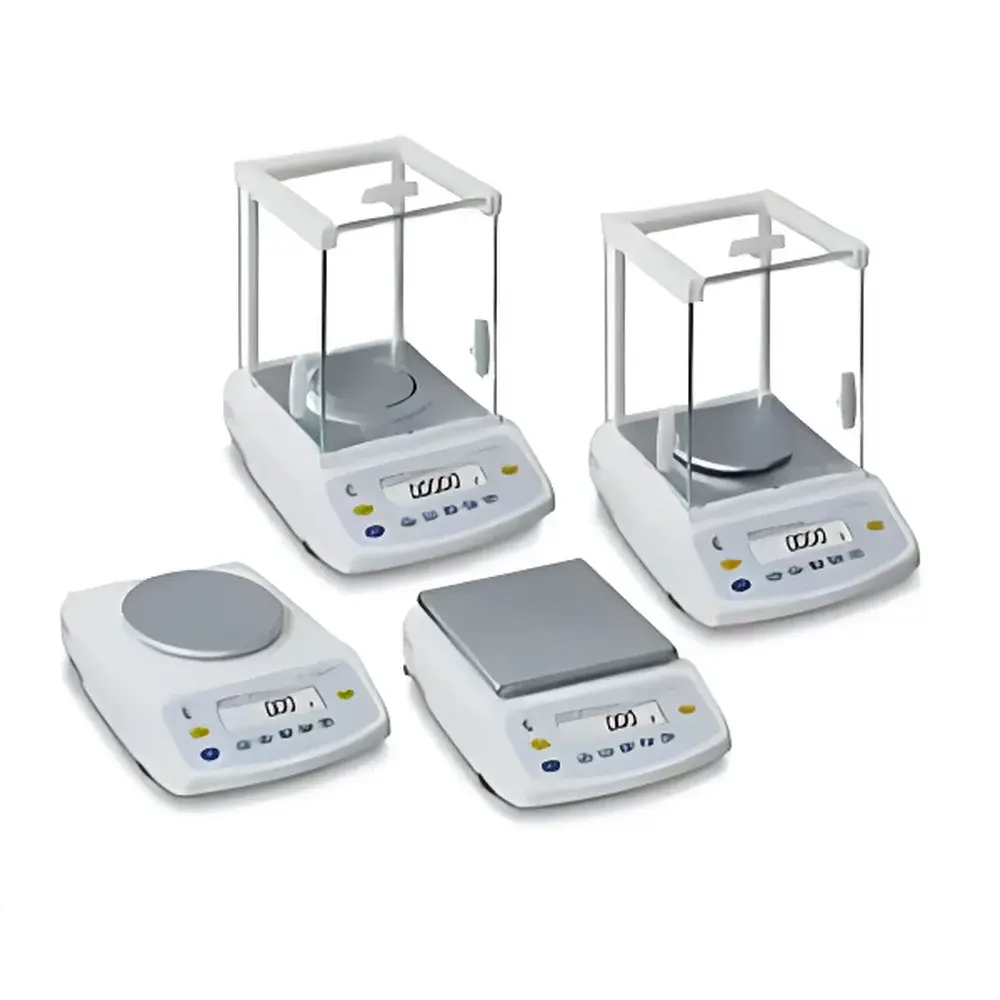
Sartorius BSA224S-CW Advanced Analytical Balance with Internal Calibration, 0.1 mg Readability
| Brand | Sartorius |
|---|---|
| Origin | Shanghai, China |
| Model | BSA224S-CW |
| Maximum Capacity | 220 g |
| Readability | 0.1 mg |
| Repeatability | ±0.1 mg |
| Linearity | ±0.2 mg |
| Pan Size | 90 mm diameter |
| Calibration | Fully Automatic Internal Calibration (CW variant) |
| Compliance | GLP-compliant data output, RS232 interface, ISO/IEC 17025 traceable operation |
| Environmental Compensation | Dynamic temperature compensation |
| Mechanical Design | Monolithic dual-lever sensor architecture, anti-static coated glass draft shield (5-sided), front-mounted level indicator, underhook weighing capability |
Overview
The Sartorius BSA224S-CW is a high-precision analytical balance engineered for laboratories requiring consistent 0.1 mg readability and metrological reliability in routine and regulated environments. Built upon Sartorius’ monolithic single-transducer architecture, it employs a 40 MHz microcontroller (MC1) and surface-mount technology (SMT) for enhanced signal stability and reduced thermal drift. Its measurement principle relies on electromagnetic force compensation (EMFC), where the restoring force required to maintain equilibrium of the weighing pan is directly proportional to the sample mass — ensuring linearity, low hysteresis, and long-term stability. The BSA224S-CW is specifically designed for applications demanding compliance with Good Laboratory Practice (GLP), ISO/IEC 17025, and pharmacopeial standards (e.g., USP , EP 2.1.3). Its fully automatic internal calibration system—activated via scheduled intervals or manual trigger—uses a built-in reference weight traceable to national standards, eliminating operator dependency and minimizing downtime between calibrations.
Key Features
- Automatic internal calibration (CW version): Integrated motor-driven calibration mass ensures traceable, repeatable recalibration without external weights or manual intervention.
- Five-sided anti-static glass draft shield: Minimizes electrostatic interference and air turbulence while providing unobstructed visibility and ergonomic access.
- Dual-lever monolithic sensor design: Delivers high mechanical rigidity, improved shock resistance, and superior long-term repeatability (≤ ±0.1 mg).
- Dynamic temperature compensation: Continuously adjusts for thermal gradients across the sensor and housing to maintain accuracy across ambient fluctuations (10–30 °C operating range).
- GLP-compliant data management: RS232 serial interface supports direct connection to printers or LIMS; all printouts include date/time stamp, balance ID, calibration status, and operator ID fields.
- Underhook weighing capability: Enables density determination, magnetic susceptibility testing, and large-volume sample measurement using suspended fixtures.
- Intuitive dual-tare keys (left/right): Accommodates diverse user preferences and workflow ergonomics without compromising operational speed.
- Comprehensive application modes: Includes parts counting, percentage weighing, animal weighing (dynamic averaging), formulation, net/gross summation, and density calculation with direct g/cm³ readout.
Sample Compatibility & Compliance
The BSA224S-CW accommodates standard laboratory samples ranging from fine powders and crystalline APIs to small metallic components and biological specimens. Its 90 mm stainless steel weighing pan and optimized airflow design support stable measurement of low-density or static-prone materials. The balance meets requirements for ISO 9001-certified quality systems and supports audit-ready workflows under FDA 21 CFR Part 11 when integrated with compliant software (e.g., Sartorius LabX™). All calibration and adjustment events are automatically logged with timestamps and user identification—enabling full traceability for GMP/GLP audits. The instrument complies with electromagnetic compatibility (EMC) standards IEC 61326-1 and safety standard IEC 61010-1.
Software & Data Management
The BSA224S-CW features a standardized RS232 interface compatible with Sartorius’ LabX™ software for centralized instrument control, automated report generation, electronic signature support, and role-based user management. Raw data export includes metadata such as environmental conditions (if connected to optional sensors), calibration history, and uncertainty estimates per EURACHEM/CITAC guidelines. Local display logs up to 999 weighing records with time/date stamps, and configurable auto-print settings ensure immediate hardcopy documentation aligned with SOPs. Optional USB-to-RS232 adapters enable connectivity with modern PCs lacking legacy serial ports.
Applications
This balance is routinely deployed in pharmaceutical QC labs for active pharmaceutical ingredient (API) assay, excipient blending verification, and tablet weight uniformity testing per USP . It serves academic research groups conducting gravimetric analysis, catalyst loading quantification, and nanomaterial synthesis yield determination. In food safety labs, it supports moisture content analysis (AOAC 950.46), ash residue quantification, and nutritional labeling compliance. Environmental testing facilities use it for filter weighing in particulate matter (PM₂.₅/PM₁₀) analysis (EPA Method 201A), while chemical manufacturers rely on its repeatability for high-value intermediate batching and stoichiometric reagent dispensing.
FAQ
What does “CW” signify in the model number BSA224S-CW?
The “CW” suffix denotes the internal calibration configuration, indicating that the balance is equipped with a motorized, built-in calibration weight and fully automated calibration routines.
Is the BSA224S-CW suitable for ISO/IEC 17025 accredited testing?
Yes — when operated within specified environmental conditions and maintained per Sartorius’ calibration schedule, its performance characteristics (repeatability, linearity, eccentricity) satisfy the metrological requirements for accredited testing laboratories.
Can this balance perform density determination?
Yes — using the optional density kit and built-in density application, users can directly calculate solid or liquid density in g/cm³ by entering reference fluid density and performing two sequential weighings (in air and submerged).
Does the balance support user-accessible calibration adjustment?
No — internal calibration parameters are factory-locked; only certified service technicians may perform sensor-level adjustments following ISO 17025 procedures and documented traceability protocols.
How frequently should internal calibration be performed?
Sartorius recommends initiating internal calibration at power-on, after significant ambient temperature shifts (>2 °C), and at user-defined intervals (e.g., every 2 hours in high-precision workflows); the balance also supports time-based or event-triggered scheduling via LabX.