
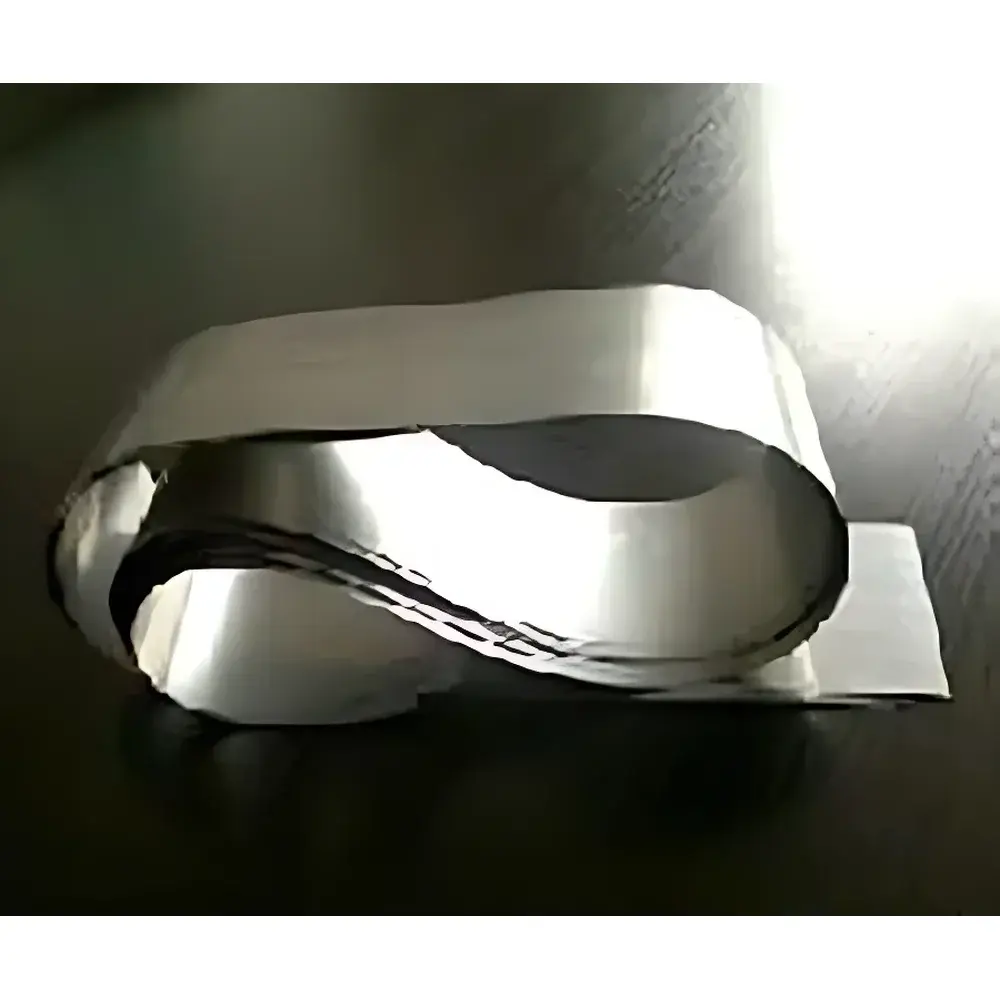
Mg Foil for Quartz Crystal Microbalance (QCM) Applications –合肥科晶
No specifications available.
Overview
Mg Foil is a high-purity metallic thin film substrate specifically engineered for use in quartz crystal microbalance (QCM) systems and electrochemical sensing platforms. As a lightweight structural metal with exceptional specific strength, high damping capacity, and favorable electrochemical reactivity, magnesium serves as an ideal working electrode material or mass-sensitive deposition layer in real-time, label-free monitoring of interfacial processes—including thin-film growth, adsorption kinetics, corrosion initiation, and ion intercalation. This foil is fabricated via precision rolling and surface finishing to ensure dimensional stability, uniform thickness, and minimal surface oxide variability—critical parameters for reproducible QCM frequency shift (Δf) and dissipation (ΔD) measurements under controlled inert or vacuum environments.
Key Features
- High purity (>99.9% Mg, equivalent to 3N grade), minimizing trace-element-induced baseline drift in sensitive mass-loading experiments
- Precisely controlled thickness of 0.1 mm (100 µm), optimized for mechanical integrity during electrode mounting and thermal cycling
- Consistent width (100 mm) and length (1000 mm) enabling standardized cutting for custom QCM electrode fabrication or multi-sample comparative studies
- Surface finish: fine-ground and single-side polished—reducing surface roughness (Ra < 0.4 µm) to enhance interfacial contact uniformity and minimize scattering artifacts in acoustic wave propagation
- Vacuum-sealed packaging in Class 100 cleanroom bags within Class 1000 cleanroom environment, ensuring low particulate and moisture contamination prior to use
- Chemically compatible with standard QCM sensor holders, sputtering fixtures, and three-electrode electrochemical cells
Sample Compatibility & Compliance
This Mg foil is intended for research-grade applications in controlled laboratory settings and is not certified for clinical or GMP-regulated manufacturing. Its physical and chemical properties align with ASTM B958-19 (Standard Specification for Magnesium Alloy Sheet and Plate) for general metallurgical consistency. Due to magnesium’s high reactivity with moisture, oxygen, and acidic vapors, handling must follow ISO 8502-3:2017 (Preparation of steel substrates before application of paints and related products) best practices for reactive metal surfaces—i.e., glove-box transfer under argon or nitrogen atmosphere, immediate use after opening, and avoidance of ambient exposure exceeding 30 seconds. Storage compliance requires adherence to NFPA 484 (Standard for Combustible Metals), including segregation from oxidizers, halogens, and chlorinated solvents per SDS guidelines.
Software & Data Management
While Mg foil itself is a passive consumable, its integration into QCM-D (Quartz Crystal Microbalance with Dissipation monitoring) or electrochemical QCM (EQCM) systems enables time-resolved gravimetric analysis. When used with instruments compliant with FDA 21 CFR Part 11 (e.g., Biolin QSense, Sartorius Octet QCM, or CH Instruments EQCM platforms), raw frequency and dissipation data generated during Mg-based film deposition or dissolution can be archived with full audit trail, user authentication, and electronic signature support. Data export formats include CSV and HDF5, facilitating downstream processing in MATLAB, Python (SciPy/Pandas), or OriginLab for modeling mass–viscoelastic coupling using the Sauerbrey equation or Voigt-based viscoelastic inversion algorithms.
Applications
- In situ monitoring of Mg anode passivation layer formation in non-aqueous Li-ion or Mg-ion battery electrolytes
- Real-time quantification of hydrogen absorption/desorption kinetics on Mg surfaces for solid-state hydrogen storage research
- Study of biopolymer (e.g., chitosan, alginate) adsorption and conformational changes at Mg–electrolyte interfaces
- Corrosion inhibitor evaluation via QCM-D detection of protective film nucleation on Mg alloys under simulated physiological or marine conditions
- Template-assisted electrodeposition of Mg-based intermetallics (e.g., Mg2Ni, Mg2Cu) for catalytic or thermoelectric thin films
- Calibration reference material for QCM sensitivity verification across multiple harmonics (5–25 MHz)
FAQ
Is this Mg foil suitable for direct use as a QCM electrode without further metallization?
Yes—its high conductivity (resistivity ~4.45 µΩ·cm at 20 °C) and surface polish allow direct electrical contact via spring-loaded or clamped electrode holders. However, for aqueous electrochemical QCM, a thin Au or Pt current collector layer is recommended to prevent rapid oxidation.
What is the maximum recommended exposure time to ambient air before performance degradation?
No more than 60 seconds under dry (<20% RH), room-temperature conditions. For quantitative work, transfer directly from sealed bag to glove box (<0.1 ppm O2/H2O) is mandatory.
Can this foil be annealed prior to use?
Yes—annealing at 300–350 °C for 1–2 hours under high-purity Ar flow reduces dislocation density and improves crystallinity, which enhances QCM signal stability during extended measurement cycles.
Does the product comply with RoHS or REACH regulations?
As a pure elemental metal foil with no added substances, it falls outside the scope of RoHS restrictions. Full REACH SVHC screening documentation is available upon request for institutional procurement compliance.
Is custom thickness or alloy composition available?
合肥科晶 offers OEM services for Mg–Al, Mg–Zn, and Mg–Y alloy foils (thickness range: 25–500 µm; purity up to 4N), subject to minimum order quantities and lead time confirmation.




