
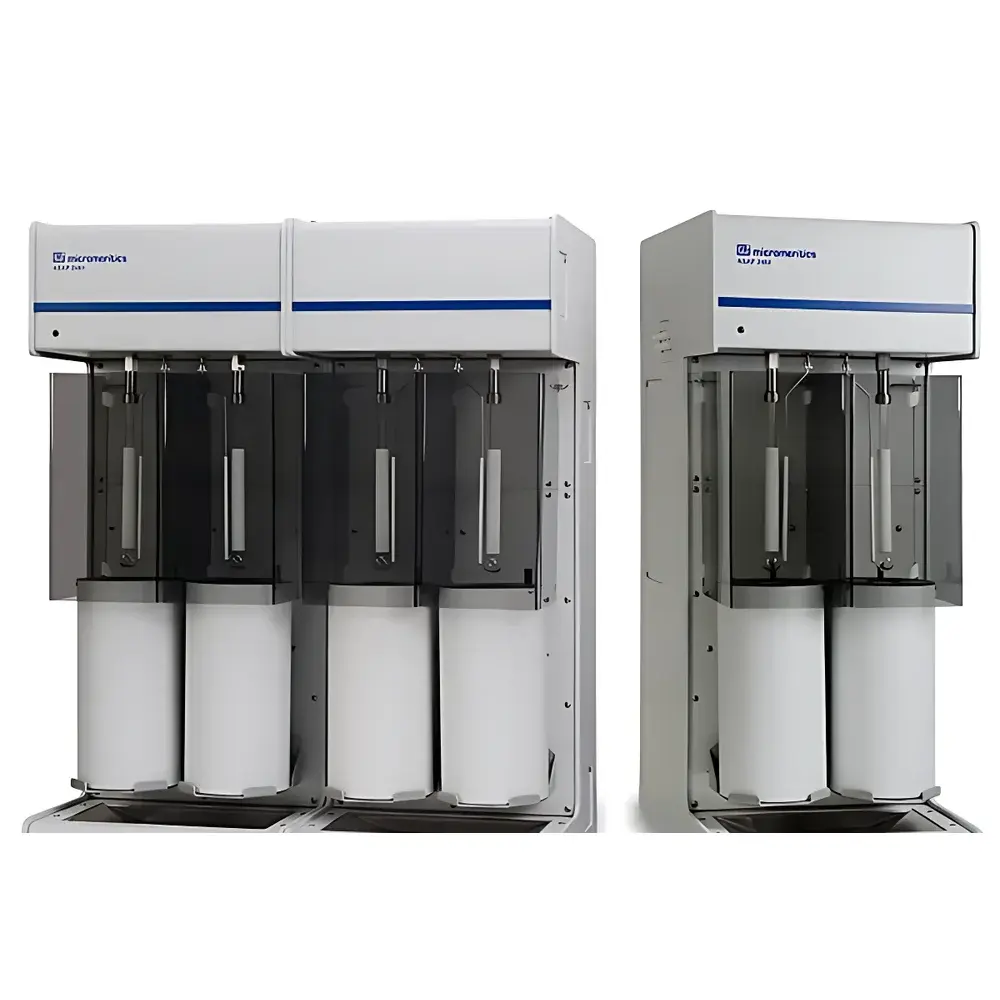
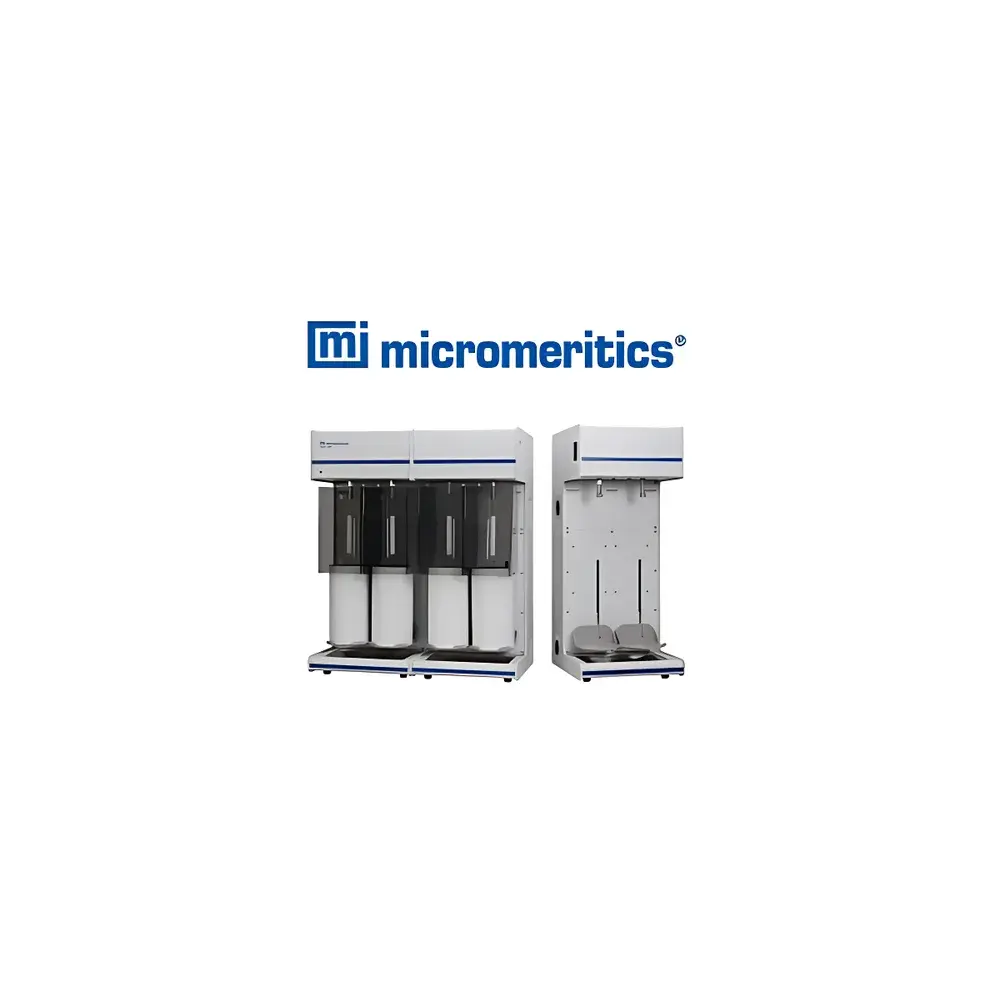
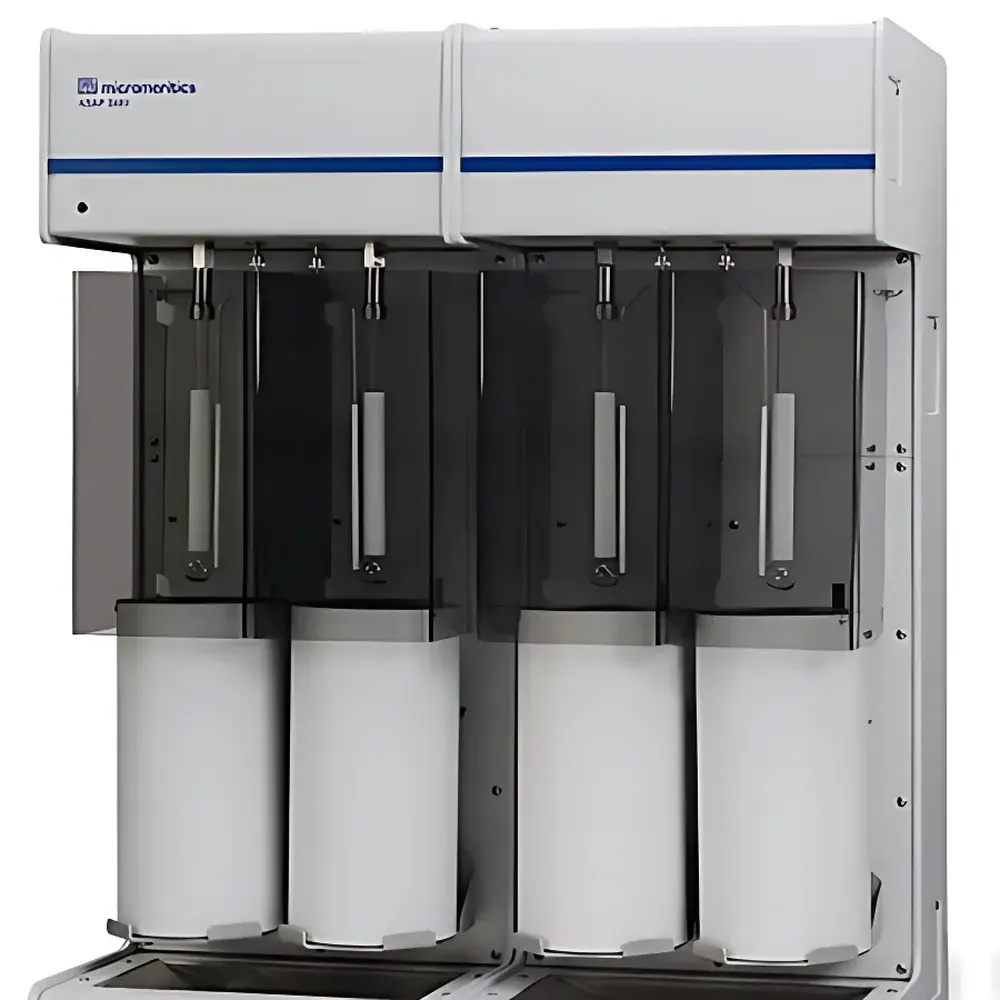
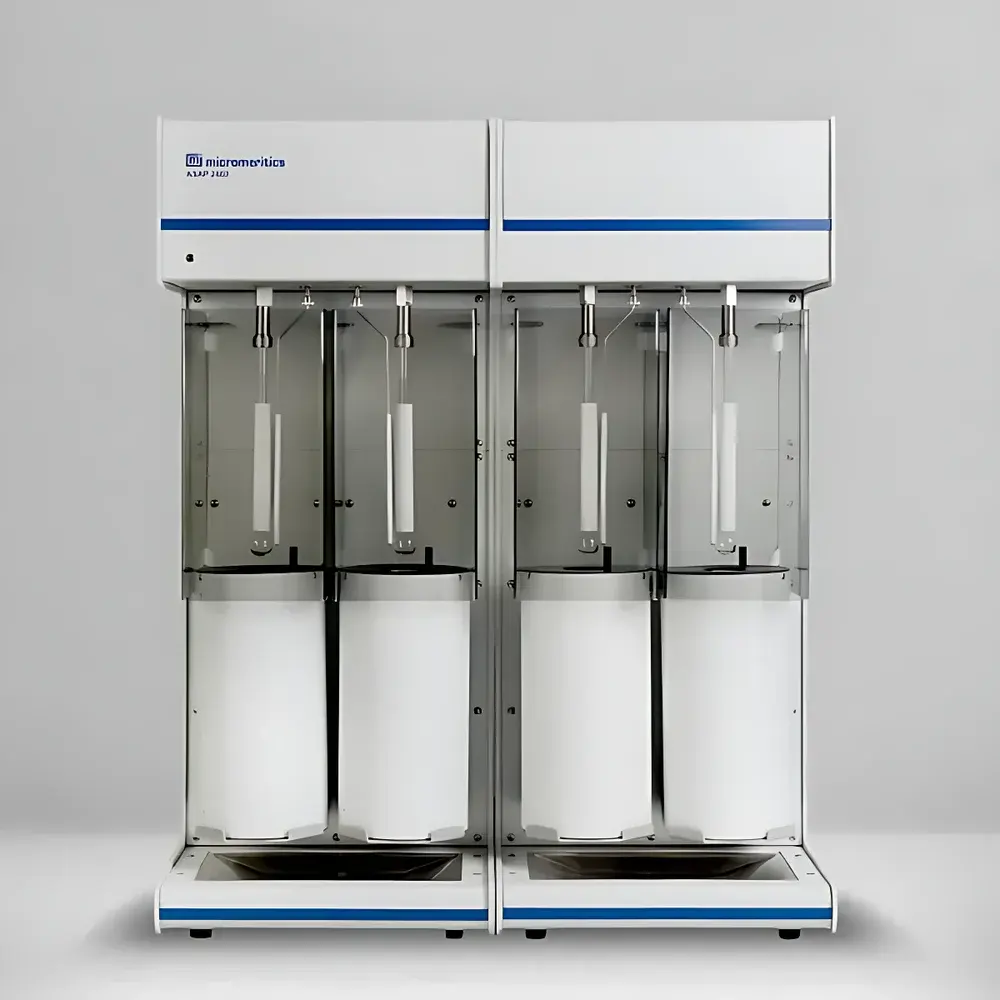
Micromeritics ASAP 2460 Multi-Station Expandable Automated Surface Area and Porosimetry Analyzer
| Brand | Micromeritics |
|---|---|
| Origin | USA |
| Model | ASAP 2460 |
| Configuration | Dual-Station Base Module (Expandable to 4- or 6-Station) |
| Gas Dosing | Servo-Valve Controlled Quantitative Gas Injection & Evacuation |
| Gas Inlets | 5 Total (Including Dedicated Free-Space Measurement Inlet) |
| Analysis Duration Without Refill | Up to 60 h |
| BET Surface Area Throughput | 6 Samples in ≤30 min (with Two Expansion Modules) |
| Software Platform | MicroActive v4.x |
| Theoretical Models Supported | BET, Langmuir, t-Plot, DFT, NLDFT |
| Optional Configurations | Low-Surface-Area (Kr) Mode (10 mmHg Transducer), Micropore Mode (1 mmHg Transducer, Enhanced Low-Pressure Resolution, Compatible with N₂, Ar, CO₂, H₂) |
| Compliance Framework | Designed for GLP/GMP-aligned workflows |
Overview
The Micromeritics ASAP 2460 Multi-Station Expandable Automated Surface Area and Porosimetry Analyzer is a high-precision gas adsorption instrument engineered for rigorous characterization of specific surface area, pore size distribution, total pore volume, and porosity across solid and powdered materials. It operates on the fundamental principles of physical gas adsorption—primarily nitrogen at 77 K—combined with rigorous thermodynamic modeling of monolayer formation, multilayer condensation, and capillary condensation within porous networks. The system implements volumetric (manometric) measurement methodology, where precise quantification of gas uptake and desorption is achieved via servo-controlled dosing valves, high-stability pressure transducers, and calibrated free-space determination. Its modular architecture enables seamless scalability from a dual-station base unit to a fully integrated six-station configuration, supporting both sequential and parallel analysis without compromising measurement integrity or calibration traceability.
Key Features
- Modular station expansion: Start with a dual-station master module and add up to two identical dual-station expansion modules—achieving four- or six-station capacity while maintaining independent thermal and pressure control per station.
- Uninterrupted long-duration operation: Capable of continuous analysis for up to 60 hours on a single liquid nitrogen fill, eliminating manual intervention during extended isotherm acquisition.
- High-throughput BET analysis: Six samples can be processed for standard BET surface area in under 30 minutes when operating at full six-station capacity with optimized equilibration protocols.
- Precision gas delivery architecture: Five dedicated gas inlets—including one reserved exclusively for free-space calibration—enable flexible gas selection (N₂, Ar, CO₂, H₂, Kr) and robust blank correction.
- Advanced transducer options: Standard configuration includes high-accuracy pressure sensors; optional low-surface-area mode integrates a 10 mmHg transducer for Kr adsorption at 77 K; micropore-optimized mode employs a 1 mmHg transducer with enhanced resolution below 10⁻⁵ P/P₀ for rigorous sub-2 nm pore characterization.
- Real-time system diagnostics: Integrated instrument monitoring dashboard provides live visualization of valve actuation status, temperature stability, pressure drift, and maintenance alerts—supporting proactive system validation.
Sample Compatibility & Compliance
The ASAP 2460 accommodates a broad range of sample types—including metal–organic frameworks (MOFs), activated carbons, catalysts, zeolites, silica gels, pharmaceutical excipients, battery electrode materials, and geological powders—within standardized 6–9 mm glass sample tubes. Sample degassing is performed under programmable vacuum and temperature control (up to 400 °C), with optional turbomolecular pumping for moisture- or volatile-sensitive materials. The platform complies with internationally recognized standards including ASTM D3663 (BET surface area), ISO 9277 (surface area by gas adsorption), and IUPAC recommendations for physisorption data reporting. When deployed with documented IQ/OQ protocols and configured with audit-trail-enabled MicroActive software, the system supports regulatory submissions under FDA 21 CFR Part 11 and EU Annex 11 requirements for computerized systems used in GMP environments.
Software & Data Management
MicroActive software v4.x serves as the unified interface for instrument control, real-time data acquisition, and advanced post-processing. Its graphical environment allows direct manipulation of isotherm segments—users interactively select data ranges for BET linearization, t-plot extrapolation, or NLDFT kernel application without scripting. All models (BET, Langmuir, t-plot, DFT, NLDFT) are implemented with embedded uncertainty propagation, and model selection is guided by statistical metrics including regression R², residual distribution, and confidence intervals. Reports are fully customizable: users preview layouts containing summary tables, parameter plots, raw isotherms, and overlay comparisons (e.g., N₂ + Hg intrusion up to 25 curves). Data export adheres to ASTM E1382-compliant formats (.csv, .txt, .pdf), and raw measurement files (.asap) retain full metadata—including timestamped valve states, temperature logs, and pressure transducer calibrations—for full traceability.
Applications
This analyzer is routinely employed in catalyst development labs to correlate surface area loss with sintering behavior after thermal aging; in battery R&D to quantify electrode coating porosity and its impact on Li⁺ ion transport resistance; in pharmaceutical formulation to assess amorphous content and moisture-induced surface restructuring; and in carbon capture material screening to evaluate CO₂ uptake capacity against micropore volume and narrow pore size distribution. Its ability to integrate Kr-based low-surface-area analysis enables accurate characterization of dense ceramics and highly graphitized carbons (<0.1 m²/g), while the micro-pore configuration supports rigorous evaluation of ultramicroporous frameworks (e.g., H₂ storage MOFs) using Ar at 87 K or CO₂ at 273 K.
FAQ
What gases can be used with the ASAP 2460, and how are they selected?
The system supports N₂ (77 K), Ar (77 K or 87 K), CO₂ (273 K), H₂ (77 K), and Kr (77 K) via five independently controllable gas inlets. Gas selection is defined during method setup in MicroActive and verified by automated leak-check and purge sequences prior to analysis.
How does the system ensure reproducibility across expanded stations?
Each station features individual pressure transducers, temperature sensors, and calibrated dead-volume manifolds. All modules undergo factory calibration against NIST-traceable standards, and inter-station variance is validated per ASTM D6567 using certified reference materials such as SRM 1990 (silica gel).
Is the software compliant with 21 CFR Part 11 for regulated environments?
Yes—when installed with electronic signature capability, audit-trail logging, and role-based access controls enabled, MicroActive v4.x meets core technical requirements of 21 CFR Part 11. Full compliance requires site-specific validation documentation and procedural controls.
Can mercury porosimetry data be directly compared with ASAP 2460 results?
Yes—the software supports overlay of up to 25 external datasets, including mercury intrusion curves. Users align pore size axes using consistent models (e.g., Washburn vs. Kelvin equation) and generate combined reports showing complementary macropore/mesopore (Hg) and micropore/mesopore (gas adsorption) contributions.
What maintenance is required to sustain long-term accuracy?
Recommended quarterly verification includes transducer zero/balance checks, valve response time validation, and free-space calibration using certified reference volumes. Annual recalibration by Micromeritics-certified engineers is advised for GLP/GMP applications.



