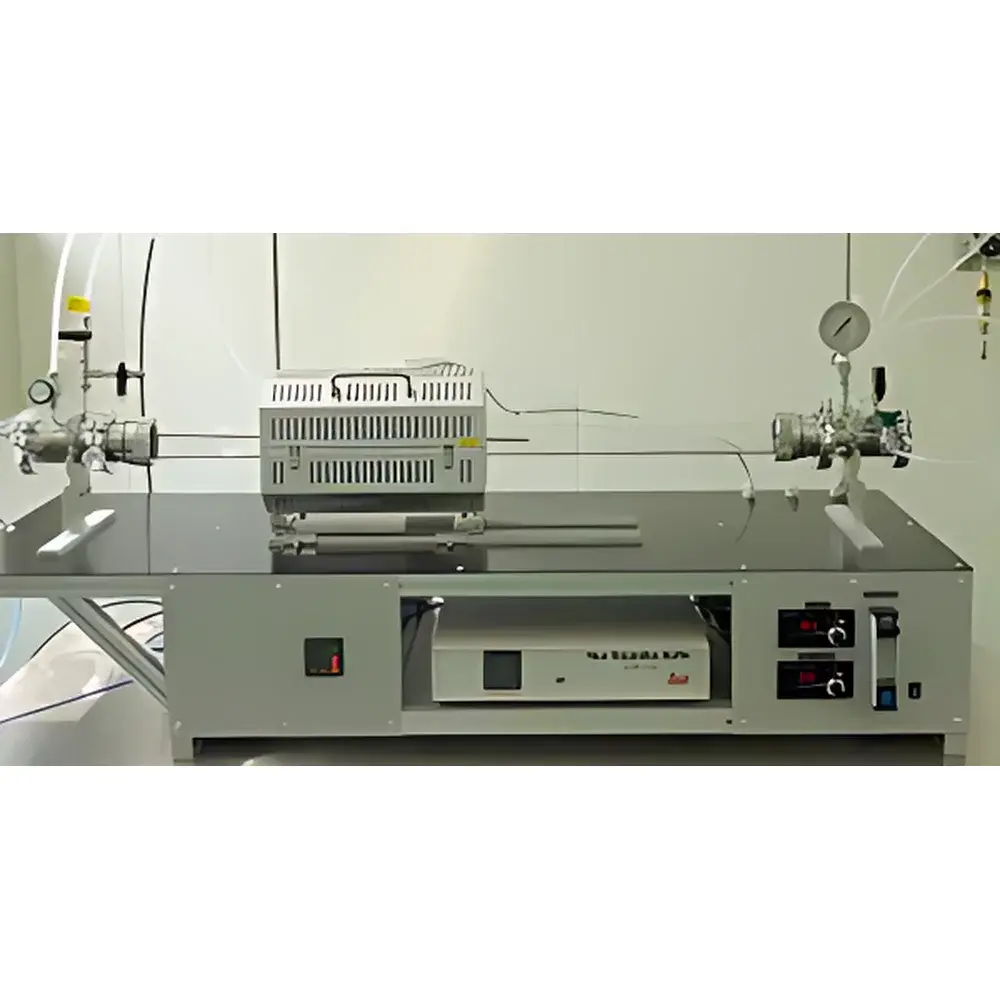
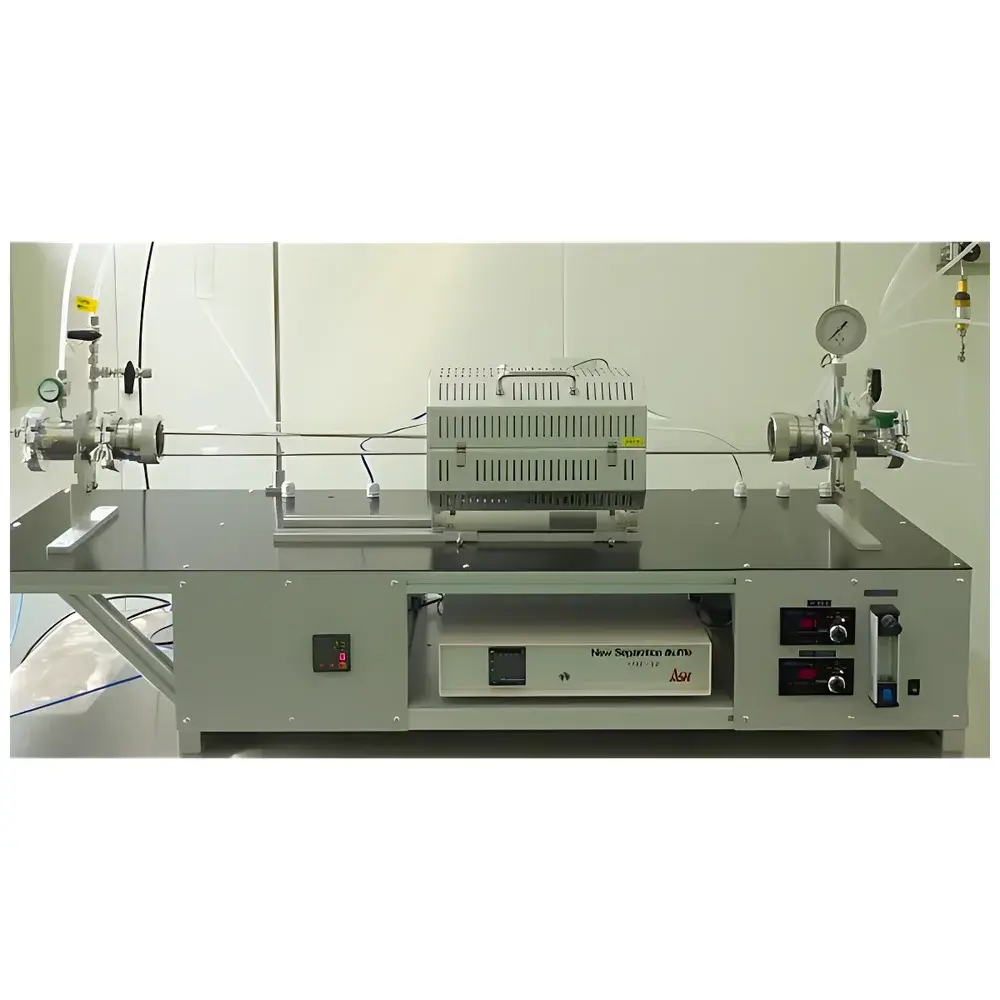
Microphase MPCVD-Graphene Microwave Plasma Chemical Vapor Deposition System
| Brand | Microphase |
|---|---|
| Origin | Japan |
| Model | MPCVD-Graphene |
| Heating Method | Hot-Wall |
| Deposition Gases | C₂H₂, C₂H₄, or CH₄ |
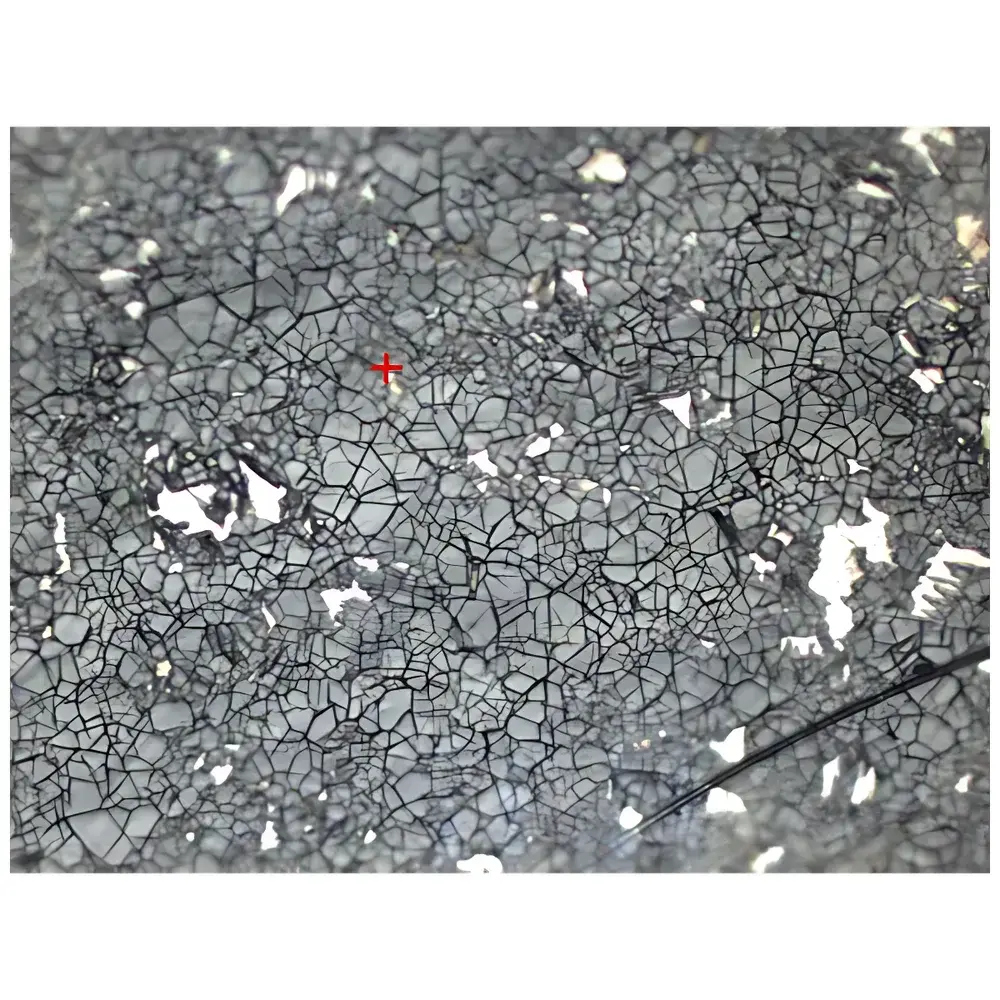
| Deposited Materials | Graphene Films, Carbon Nanotubes |
| Base Vacuum | Adjustable |
| Operating Pressure | MFC-Controlled |
| Quartz Tube Dimensions | OD 50 mm × ID 46 mm × L 1200 mm |
| Heating Zone | Ø60 mm × L260 mm |
| Max Temperature | 1200 °C |
| Usable Temp Range | 400–1100 °C |
| Temperature Control | Programmable PID |
| Gas Channels | 3 (hydrocarbon, H₂, Ar) |
| Vacuum Pump | Rotary Vane, 20 L/min |
| Sample Temperature Monitoring | Direct Thermocouple |
| Cooling Mechanism | Manual 300 mm Sliding Furnace |
| Overall Dimensions | W1400 × H1000 × D500 mm |
Overview
The Microphase MPCVD-Graphene is a purpose-engineered microwave plasma chemical vapor deposition (MPCVD) system designed for the controlled synthesis of high-quality monolayer and few-layer graphene films, as well as vertically aligned carbon nanotubes (CNTs) and related sp²-carbon nanostructures. Unlike conventional thermal CVD systems, this platform integrates microwave plasma excitation with precise hot-wall heating architecture to enable low-temperature, high-yield growth on catalytic substrates—primarily Cu and Ni foils—without requiring ultra-high vacuum infrastructure. The system operates under precisely regulated partial pressures (via mass flow controllers), allowing tunable plasma density and radical generation kinetics critical for nucleation control and domain size optimization. Developed in collaboration with Japan Science and Technology Agency (JST), the design emphasizes reproducibility, thermal stability, and process transparency—key requirements for academic research, materials development labs, and semiconductor process prototyping.
Key Features
- Hot-wall microwave plasma reactor: Uniform thermal environment with integrated 2.45 GHz microwave coupling; minimizes thermal gradients across substrate surface during plasma-assisted decomposition of hydrocarbon precursors.
- Manually actuated sliding furnace mechanism: Enables rapid lateral displacement (300 mm) of the quartz tube relative to the plasma zone, facilitating controlled quenching—critical for suppressing multilayer carbon overgrowth and stabilizing single-layer graphene domains on Ni/Cu catalysts.
- Direct-in situ sample temperature monitoring: Type-K thermocouple mounted adjacent to substrate holder provides real-time, non-radiative temperature feedback independent of furnace wall readings—essential for correlating growth kinetics with actual surface conditions.
- Triple-gas delivery system: Independently controlled MFCs for hydrocarbon precursor (CH₄, C₂H₄, or C₂H₂), reducing gas (H₂), and inert carrier (Ar); supports both reduction-activated and hydrogen-free growth protocols per ASTM E3082-17 guidelines for carbon nanomaterial synthesis.
- Integrated vacuum architecture: Rotary vane pump (20 L/min) achieves base pressure <10⁻² mbar; compatible with optional turbomolecular pumping for sub-10⁻⁵ mbar operation required for defect-sensitive epitaxial graphene studies.
- Programmable PID temperature controller: Supports multi-step ramp/soak profiles with ±1 °C stability over 400–1100 °C range; logging enabled for GLP-compliant process documentation.
Sample Compatibility & Compliance
The MPCVD-Graphene accommodates standard 10–25 mm square or circular metal foils (Cu, Ni, Co, Fe), Si/SiO₂ wafers with catalytic thin films, and insulating substrates pre-coated with transition-metal nanoparticles. Substrate holders are machined from high-purity graphite to minimize contamination and ensure uniform RF field distribution. All wetted components comply with SEMI F57 standards for semiconductor tool materials. The system meets mechanical safety requirements per IEC 61000-6-2 (EMC immunity) and IEC 61000-6-4 (EMC emission). Vacuum and gas handling subsystems conform to ISO 27429:2015 for laboratory-scale CVD equipment. Optional audit trail logging and user-access controls support FDA 21 CFR Part 11 readiness when paired with validated third-party SCADA software.
Software & Data Management
While the base configuration employs a standalone digital PID controller with analog I/O, the system includes RS-485 and USB interfaces for integration with LabVIEW™, MATLAB®, or Python-based automation frameworks. Process parameters—including microwave power, gas flows, chamber pressure, and thermocouple voltage—are timestamped and exportable in CSV or HDF5 format. Optional firmware upgrade enables automated sequence execution, alarm-triggered emergency venting, and real-time Raman signal synchronization via TTL trigger output—facilitating correlative in-situ optical characterization per ISO/IEC 17025 methodology requirements.
Applications
- Growth optimization of transfer-free graphene on Cu foils for flexible electronics and transparent conductive electrodes.
- Controlled synthesis of vertically aligned CNT forests for thermal interface materials and field-emission cathodes.
- Fundamental studies of plasma-surface interaction mechanisms during sp²-carbon nucleation (e.g., CHₓ radical adsorption, H-etching dynamics).
- Process development for heterostructure integration—e.g., graphene/h-BN, graphene/MoS₂—using sequential plasma treatments without breaking vacuum.
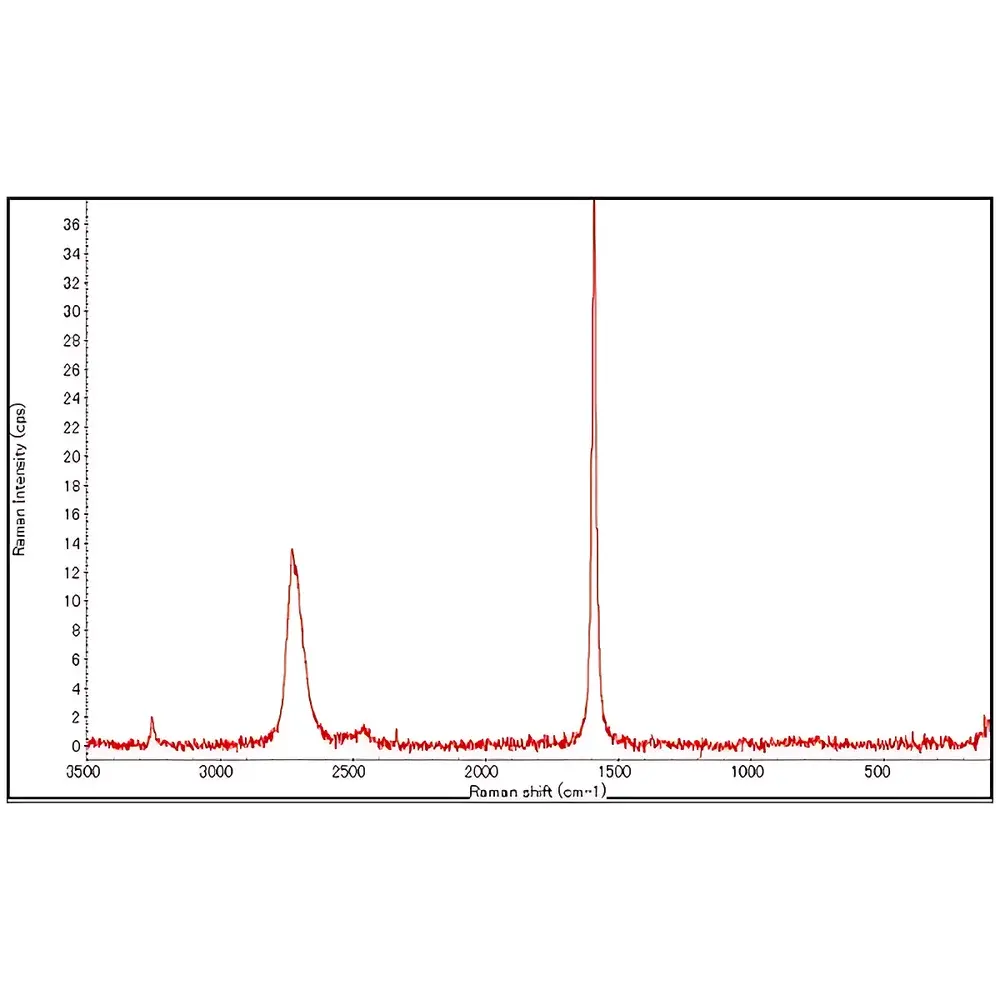
- Calibration reference material production for Raman spectroscopy labs (validated by characteristic 2D/G peak intensity ratios and full-width-at-half-maximum metrics).
FAQ
What plasma frequency does the system operate at?
The system uses a fixed-frequency 2.45 GHz magnetron source compliant with ISM band regulations.
Can the system be upgraded to include automatic furnace translation?
Yes—motorized linear stage integration (with position feedback and interlocked safety cutoff) is available as an OEM option.
Is remote monitoring supported out-of-the-box?
Basic telemetry (temperature, pressure, gas flows) is accessible via Modbus RTU; full web-based HMI requires optional IoT gateway module.
Does the quartz tube assembly meet ISO Class 5 cleanroom compatibility standards?
Quartz components are cleaned and certified to SEMI F21 specifications; full system qualification requires end-user cleanroom validation per ISO 14644-1.
What maintenance intervals are recommended for the microwave waveguide and coupling window?
Inspection every 500 operational hours; replacement advised after 2000 hours or upon visible discoloration or microcracking of the fused silica window.