
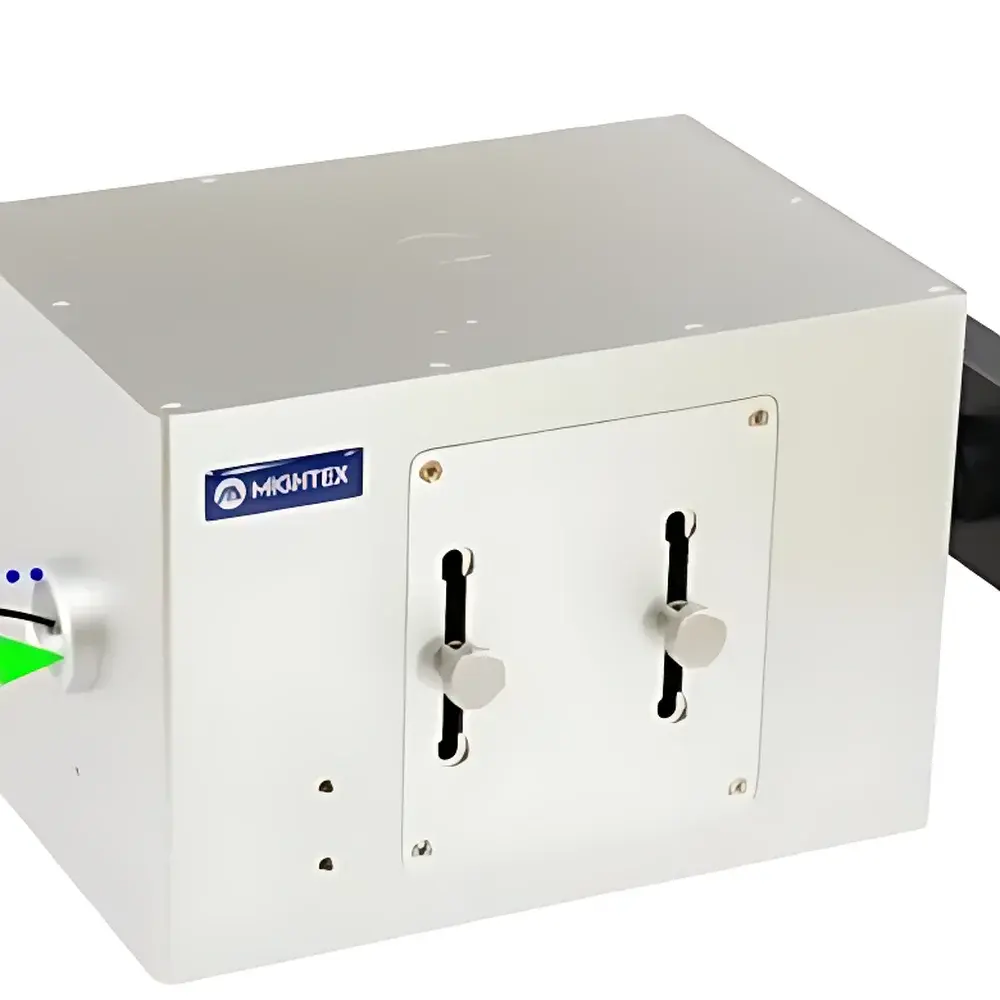
Mightex OASIS Implant for Freely Behaving Animal Optogenetics and Calcium Imaging
| Brand | Mightex |
|---|---|
| Origin | Canada |
| Model | OASIS Implant |
| Type | Reconfigurable Intracranial Optical Interface Platform |
| Compatibility | GRIN lens-coupled, SMA-fiber-integrated, C-mount camera-ready |
| Weight (headstage) | 0.7 g |
| Optical Path | Dual-mode (imaging + stimulation via shared imaging fiber) |
| Resolution | Single-cell level (dependent on GRIN lens & camera sensor) |
| Illumination Flexibility | Multi-wavelength, patterned (via Polygon400), widefield, or targeted |
| Software | Mightex OASIS Acquisition & Analysis Suite (synchronized behavioral integration, ΔF/F₀ extraction, cell segmentation, spike inference) |
Overview
The Mightex OASIS Implant is a modular, intracranial optical interface platform engineered for simultaneous, single-cell-resolution optogenetic stimulation and calcium imaging in freely behaving mammals. Unlike fixed-head or tethered systems, the OASIS Implant enables chronic, motion-robust interrogation of neural dynamics across deep brain structures (e.g., hippocampus, thalamus), cortical layers, and spinal cord regions—without restricting natural locomotion, social interaction, or complex behavioral paradigms. Its core architecture leverages a shared multimode imaging fiber to bidirectionally transmit excitation light *to* neural tissue and emitted fluorescence *from* genetically encoded calcium indicators (e.g., GCaMP) back to an external scientific camera. This dual-path optical design eliminates mechanical coupling between stimulation and detection optics, minimizing crosstalk and enabling true spatiotemporal independence between photostimulation patterns and imaging acquisition. The system operates on established principles of fiber-based miniscope interfacing and patterned optogenetics, supporting both widefield illumination and cellular-resolution photostimulation when integrated with the Mightex Polygon400 spatial light modulator.
Key Features
- Ultra-lightweight headstage (0.7 g) optimized for mice and small rodents, featuring precision GRIN lens alignment, focus-locking, and rotational stability during extended behavioral sessions.
- Dual reconfigurable illumination ports: one for epifluorescence excitation (via 3 mm liquid light guide), another compatible with Polygon400 for high-fidelity, pixel-addressable photostimulation patterns.
- Interchangeable filter cube holders (up to three per port) supporting multi-color calcium imaging (e.g., GCaMP + jRGECO1b) and orthogonal opsin activation (ChR2, ChrimsonR, NpHR).
- Standard SMA-905 and C-mount interfaces ensure compatibility with commercial multimode fibers (for photometry), high-quantum-efficiency sCMOS cameras, and third-party behavioral tracking systems.
- Scalable architecture: supports transition from fiber photometry → cellular-resolution widefield imaging → patterned single-cell optogenetics within the same implanted preparation.
- Low-loss, flexure-tolerant imaging fiber bundle rated for >6 months in vivo implantation under active behavioral load.
Sample Compatibility & Compliance
The OASIS Implant is validated for chronic use in adult C57BL/6, Thy1-GCaMP6, and Ai32 (ChR2-EYFP) transgenic mouse models, as well as rat preparations using custom GRIN lens configurations (0.5–1.0 mm diameter, 3–8 mm length). It complies with ISO 10993-1 (biological evaluation of medical devices) for implant-grade titanium and medical-grade silicone components. All optical materials meet RoHS and REACH requirements. The system supports GLP-aligned experimental workflows through timestamp-synchronized data acquisition across neural, behavioral, and stimulus channels—enabling traceable metadata logging required for preclinical neuroscience studies intended for regulatory submission (e.g., FDA IND-enabling neuropharmacology assays).
Software & Data Management
The bundled Mightex OASIS Acquisition & Analysis Suite provides native synchronization with TTL-triggered behavioral hardware (e.g., Med Associates operant chambers, Noldus EthoVision XT, DeepLabCut video streams) and supports HDF5-based storage for scalable, metadata-rich dataset archiving. Core modules include real-time ΔF/F₀ computation per segmented ROI, automated cell detection using adaptive thresholding and morphological filtering, spike inference via constrained nonnegative deconvolution (CNMF-E), and cross-modal event alignment (e.g., licking onset ↔ somatic Ca²⁺ transient latency). Export formats comply with BIDS-Opto standards and are interoperable with Python (Neo, SpikeInterface), MATLAB (Chronux, CaImAn), and Julia (CaImAn.jl). Audit trails, user authentication, and electronic signature support align with 21 CFR Part 11 readiness for regulated environments.
Applications
- Multi-region circuit mapping: Simultaneous optogenetic perturbation in nucleus accumbens while imaging prefrontal cortex ensembles during decision-making tasks.
- Cell-type-specific causal interrogation: Targeted silencing of PV⁺ interneurons in visual cortex during free-running navigation, correlated with layer-specific Ca²⁺ dynamics.
- Spinal cord plasticity studies: Longitudinal calcium imaging of dorsal horn neurons before/after peripheral nerve injury, combined with patterned optogenetic modulation of inhibitory interneurons.
- Behavioral state decoding: Closed-loop stimulation triggered by real-time detection of hippocampal sharp-wave ripples during sleep, with concurrent CA1 pyramidal cell imaging.
- Developmental neurobiology: Chronic imaging of dendritic spine turnover in adolescent mice during social enrichment, paired with regionally restricted optogenetic enhancement of BDNF signaling.
FAQ
Can the OASIS Implant be used for both photometry and cellular-resolution imaging in the same animal?
Yes—the platform’s modular fiber interface allows seamless transition between photometric mode (using standard SMA-coupled multimode fiber) and cellular imaging mode (using coherent imaging fiber coupled to GRIN lens), without requiring re-implantation.
Is the headstage compatible with standard stereotaxic surgery protocols?
Yes—it integrates directly with common skull-mounted baseplates (e.g., Doric, Inscopix) and accepts standard 0.5-mm-diameter GRIN lenses secured via dental cement and Kwik-Sil.
Does the software support batch processing of large-scale calcium datasets?
Yes—OASIS Analysis Suite includes CLI-enabled pipeline scripting (Python API) for distributed computing environments and automatic ROI registration across days using rigid/non-rigid motion correction.
What is the maximum number of independently addressable stimulation sites supported by the Polygon400 integration?
Up to 1,536 individually controllable pixels at 50 Hz frame rate, enabling subcellular targeting fidelity when aligned with high-magnification GRIN optics.
Are firmware updates and software patches provided post-purchase?
Yes—Mightex delivers quarterly feature updates and critical bug fixes via secure customer portal access; all versions maintain backward compatibility with existing experimental metadata schemas.
Related Products



