
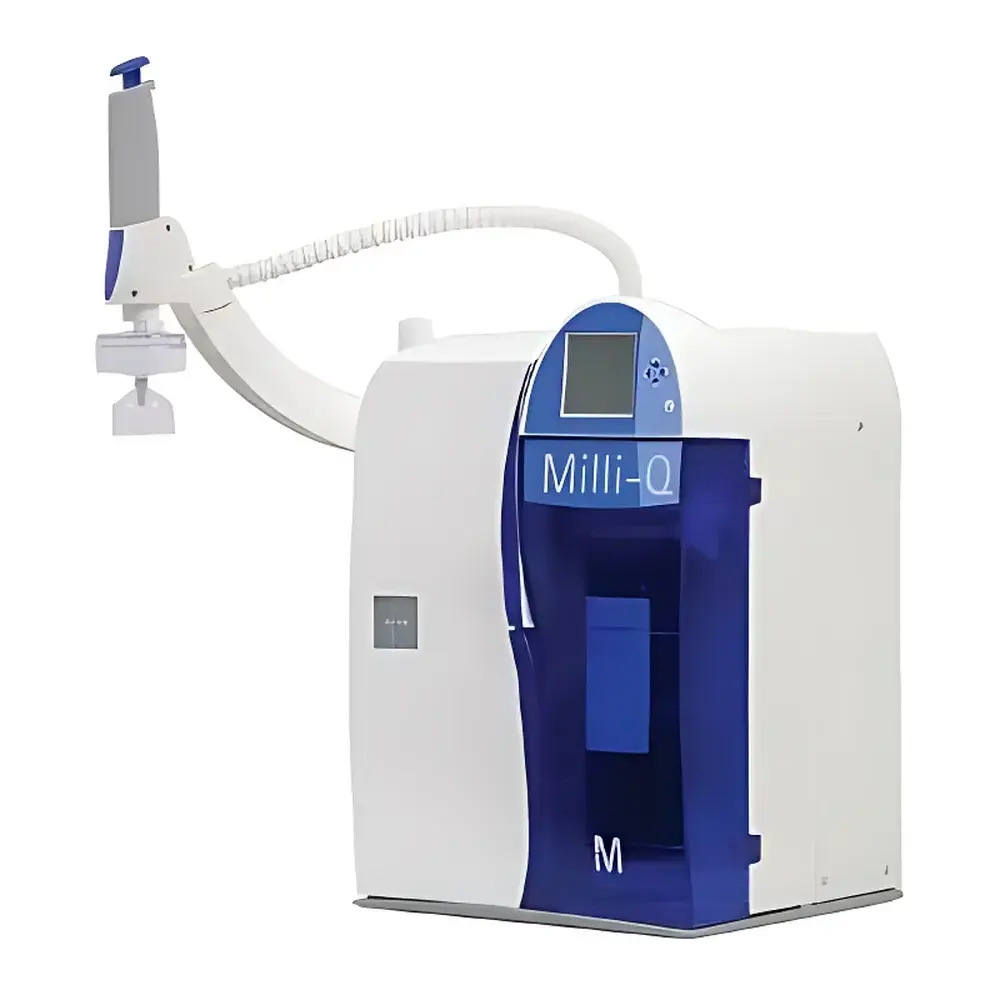
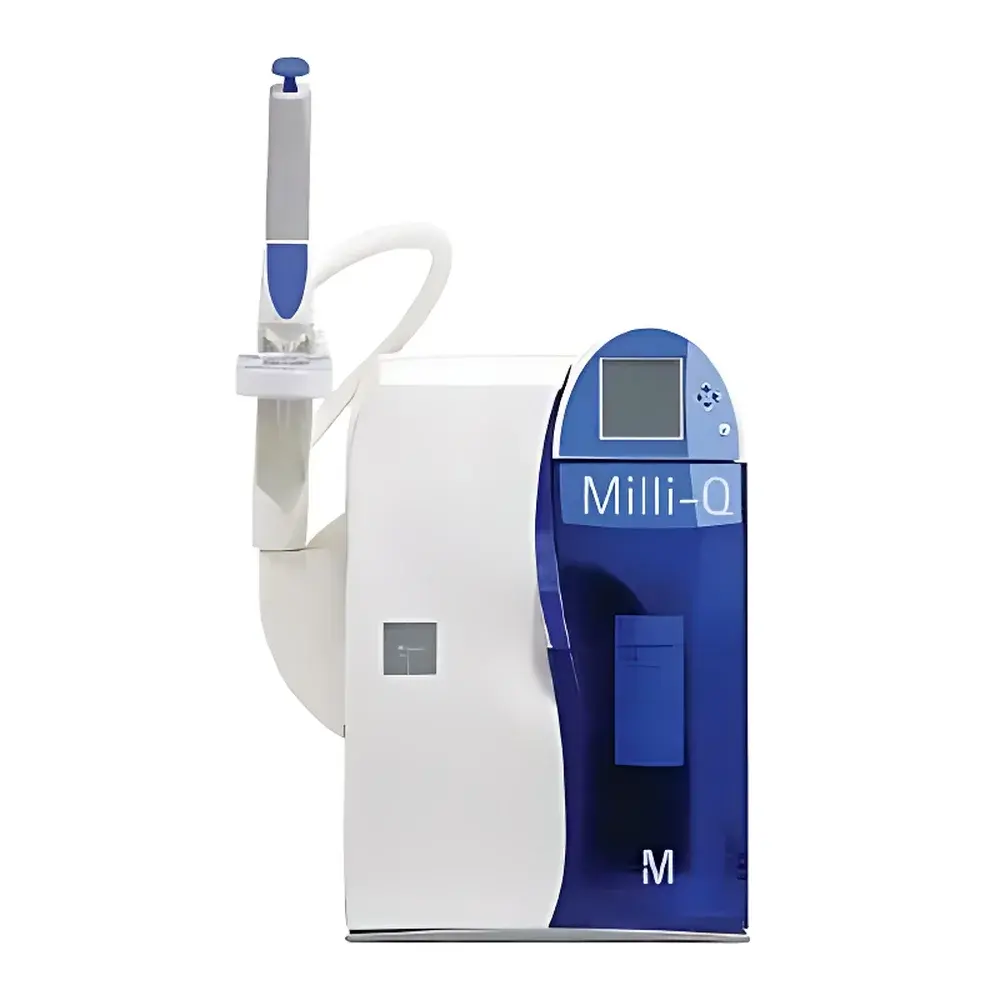
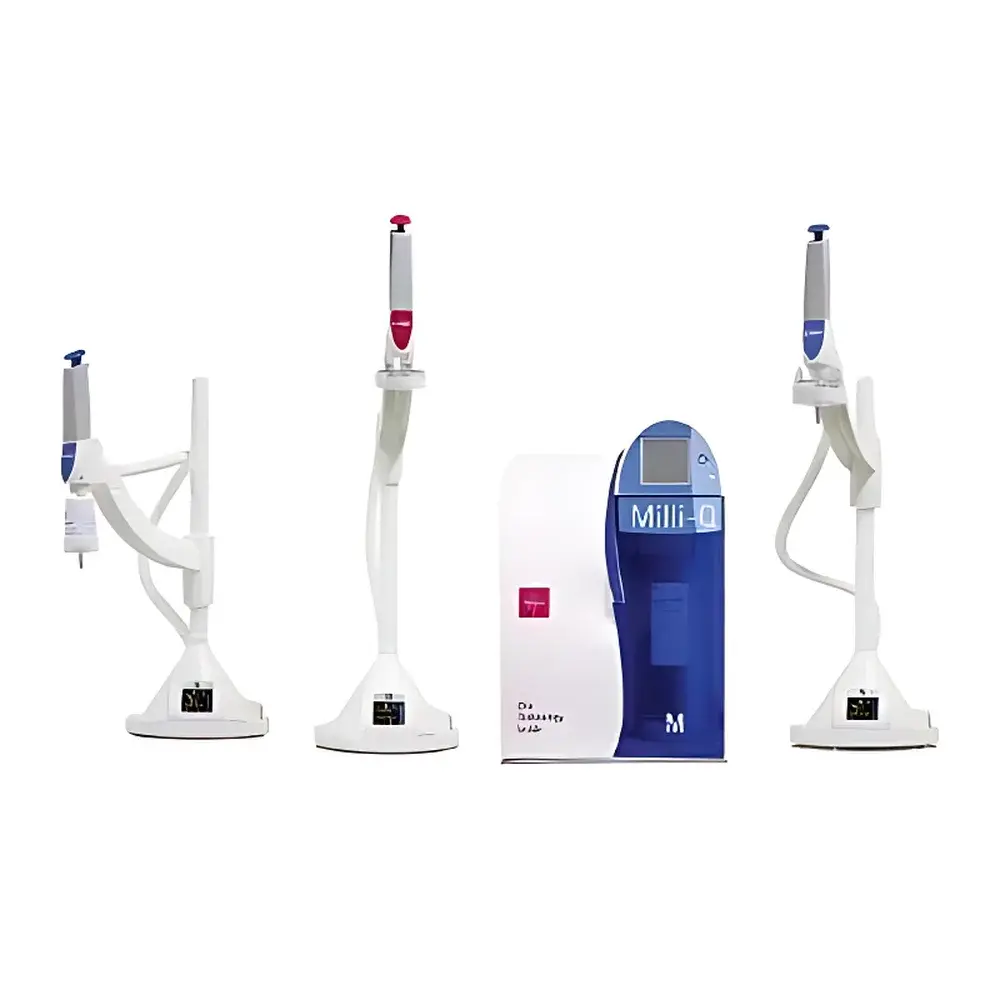
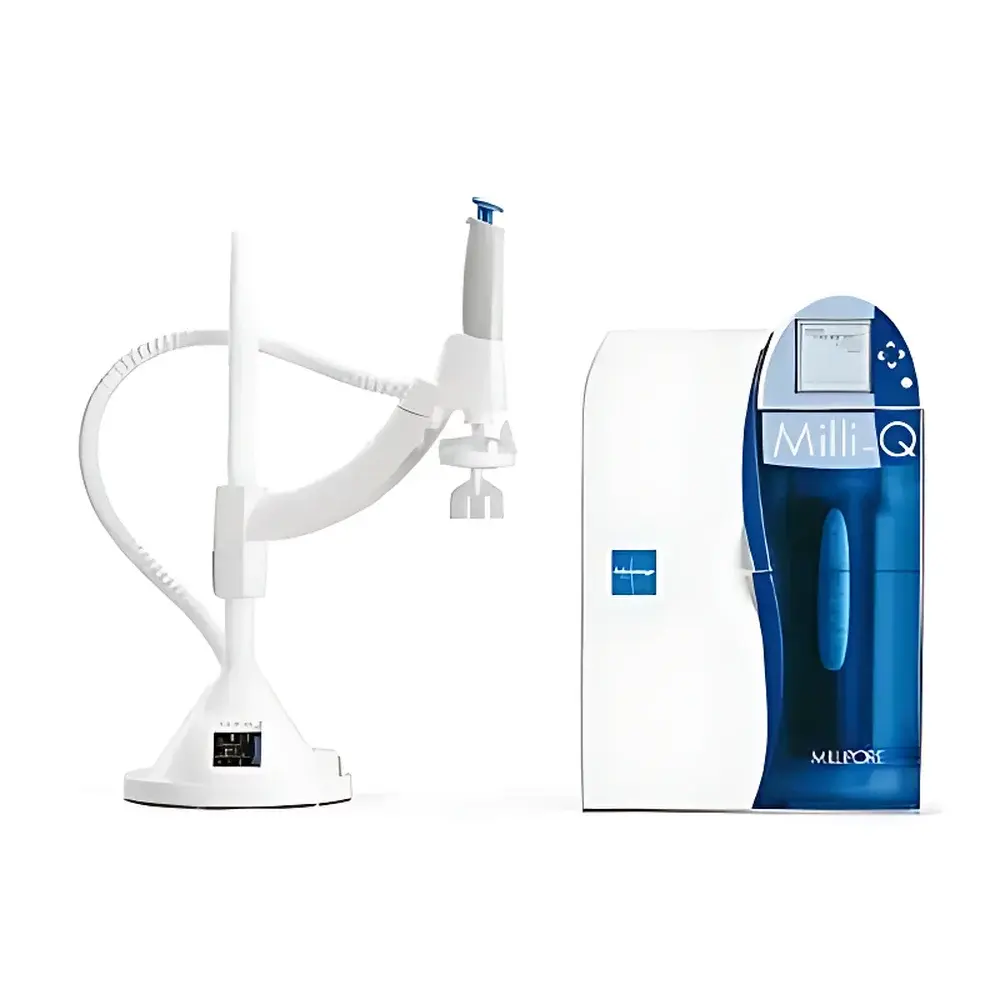
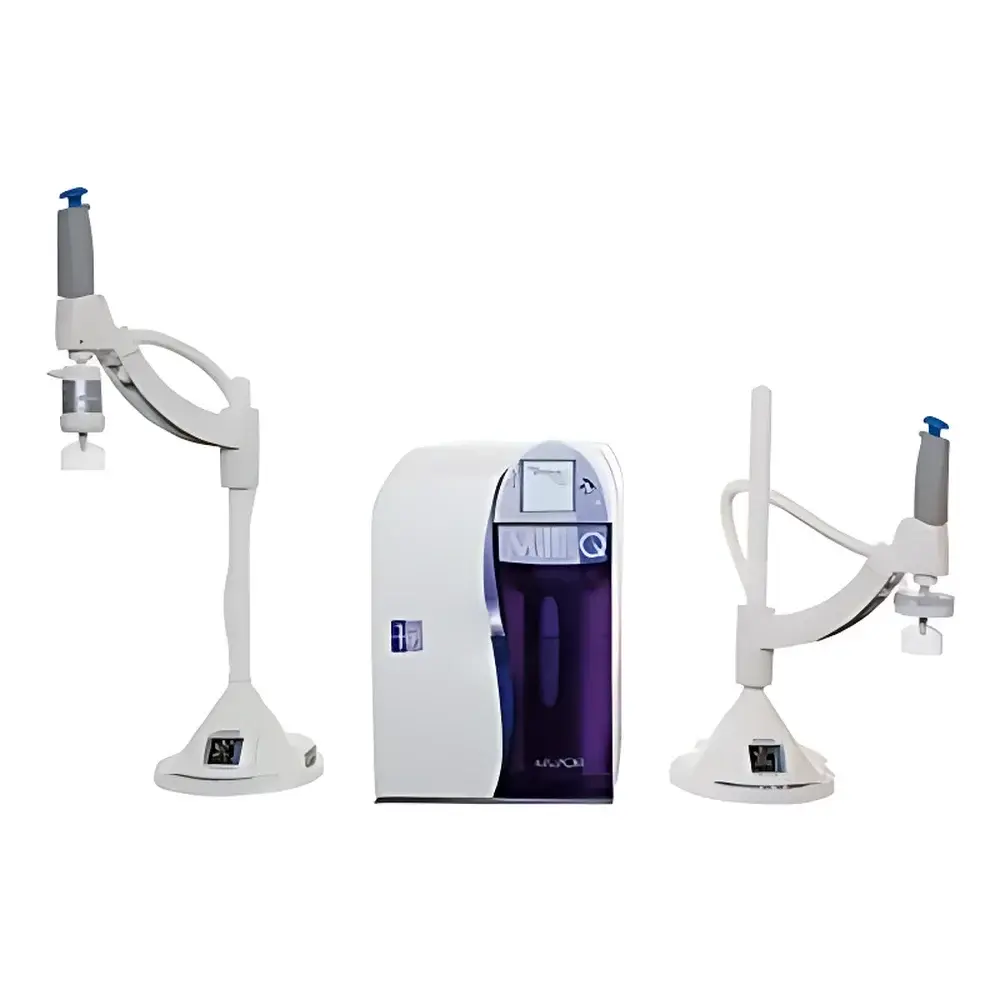
Millipore Milli-Q Reference Ultra Pure Water System
| Brand | Millipore |
|---|---|
| Origin | France |
| Model | Milli-Q Reference |
| Flow Rate | Adjustable from 50 to 2000 mL/min |
| Quantitative Dispensing Volume | 100 mL, then 250 mL–5 L (in 250 mL increments), 5–60 L (in 1 L increments) |
| Dispensing Accuracy | ±3% for volumes 250 mL–60 L |
| Coefficient of Variation (CV) | <3% for 250 mL–60 L |
| Resistivity | 18.2 MΩ·cm @ 25 °C (temperature-compensated) |
| Total Organic Carbon (TOC) | ≤5 ppb (μg/L) |
| Bacterial Count | <0.1 CFU/mL (with Millipak® Express 40 or Biopak® UF final filter) |
| Endotoxin | ≤0.001 EU/mL (with Biopak® UF) |
| RNase | <0.01 ng/mL (with Biopak® UF) |
| DNase | <4 pg/mL (with Biopak® UF) |
| UV Lamp | Dual-wavelength (185/254 nm) |
| Feed Water Requirement | Purified water with resistivity >1 MΩ·cm @ 25 °C and TOC <30 ppb |
Overview
The Millipore Milli-Q Reference Ultra Pure Water System is an engineered solution for laboratories requiring consistent, high-fidelity Type I ultrapure water compliant with ASTM D1193-20, ISO 3696:1987, CLSI EP21-A, and USP . It operates on a two-stage purification architecture: feed water—typically from an Elix or other pretreatment system delivering >1 MΩ·cm resistivity and <30 ppb TOC—is further polished via sequential ion exchange, dual-wavelength UV photo-oxidation (185 nm + 254 nm), and optional terminal ultrafiltration. The system delivers water meeting stringent specifications for molecular biology, HPLC, LC-MS, cell culture, and trace elemental analysis, with real-time monitoring of resistivity, TOC, temperature, and flow metrics embedded in its operational firmware.
Key Features
- Real-time, multi-parameter water quality monitoring: temperature-compensated resistivity (18.2 MΩ·cm @ 25 °C), non-compensated resistivity, TOC (≤5 ppb), and system pressure—all accessible via the integrated LCD interface or remote software.
- Ergonomic dispensing architecture: 75 cm flexible delivery arm enables deep access into wash sinks and tall glassware; foot pedal activation supports hands-free operation during sterile or time-sensitive workflows.
- Precision quantitative dispensing: programmable volume delivery from 100 mL up to 60 L in user-defined increments (250 mL steps up to 5 L; 1 L steps thereafter), with volumetric accuracy of ±3% and repeatability (CV) <3% across the full range.
- Dual-wavelength UV oxidation module: simultaneous 185 nm (for organic photolysis) and 254 nm (for microbial inactivation) irradiation ensures robust TOC reduction and bioburden control without chemical additives.
- Modular, service-intelligent consumables: Q-Gard T1 prefilter and Quantum TEX purification cartridge provide extended service life; resin capacity optimized for higher throughput and reduced cost-per-liter over system lifetime.
- Fully localized human-machine interface: intuitive Chinese-language touchscreen display with hierarchical menu navigation, event logging, and maintenance alerts aligned with GLP documentation requirements.
Sample Compatibility & Compliance
The Milli-Q Reference system is validated for compatibility with critical downstream applications including qPCR, NGS library preparation, electrophysiology, and ICP-MS sample dilution. Final water quality is contingent upon proper installation of certified terminal filters: Millipak® Express 40 (0.22 µm sterilizing-grade membrane) for general ultrapure use, or Biopak® ultrafilter (5 kDa MWCO) when endotoxin-, RNase-, and DNase-free water is required (e.g., stem cell culture, transfection, or single-cell sequencing). All performance claims are verified per ISO/IEC 17025-accredited test protocols and align with FDA 21 CFR Part 11 data integrity expectations when paired with Millipore’s optional LabManager software.
Software & Data Management
The system supports bidirectional communication via RS232 or Ethernet for integration into centralized lab informatics platforms. Optional LabManager software provides audit-trail-enabled data archiving—including timestamped resistivity/TOC trends, cartridge usage logs, dispensing history, and alarm events—structured to satisfy GMP/GLP electronic record retention mandates. All user actions (e.g., volume programming, filter replacement confirmation, calibration entries) are logged with operator ID, timestamp, and change justification fields. Data exports comply with CSV and PDF formats for regulatory submission readiness.
Applications
- Molecular biology: dsDNA/RNA synthesis, CRISPR reagent preparation, and low-background hybridization buffers.
- Chromatography & mass spectrometry: mobile phase preparation for UHPLC, LC-MS/MS, and IC, where sub-ppb ionic contamination and TOC must be controlled.
- Clinical diagnostics: calibration standard dilution for immunoassays and automated analyzers operating under CAP/CLIA guidelines.
- Materials science: nanoparticle dispersion media and semiconductor wafer rinse solutions requiring particle counts 0.2 µm).
- Pharmaceutical QC: compendial water testing (USP ) and excipient diluent preparation under ICH Q5C stability protocols.
FAQ
What feed water quality is required to achieve stated ultrapure water specifications?
Feed water must meet minimum resistivity >1 MΩ·cm @ 25 °C and TOC <30 ppb—typically supplied by an Elix or similar pretreatment system. Local municipal water variability necessitates site-specific feed assessment prior to installation.
Can the system operate without a terminal ultrafilter and still meet USP conductivity requirements?
Yes—resistivity and conductivity compliance is achieved at the point of generation; however, endotoxin, RNase, and DNase removal require Biopak® ultrafiltration as specified in USP , , and .
Is the quantitative dispensing function traceable for ISO/IEC 17025 calibration records?
Dispense accuracy (±3%) and repeatability (CV <3%) are factory-verified per ISO 8655-7 using gravimetric methods; certificates of conformance are provided with each system shipment.
How frequently must the Quantum TEX cartridge be replaced?
Replacement interval depends on feed water quality and daily usage volume; typical service life ranges from 6 to 12 months under standard laboratory conditions (≤200 L/day), with real-time resin exhaustion alerts displayed on the interface.
Does the system support 21 CFR Part 11-compliant electronic signatures?
When configured with LabManager software and network authentication (LDAP/Active Directory), role-based electronic signatures, audit trails, and secure user access controls fully satisfy 21 CFR Part 11 Subpart C requirements.



