
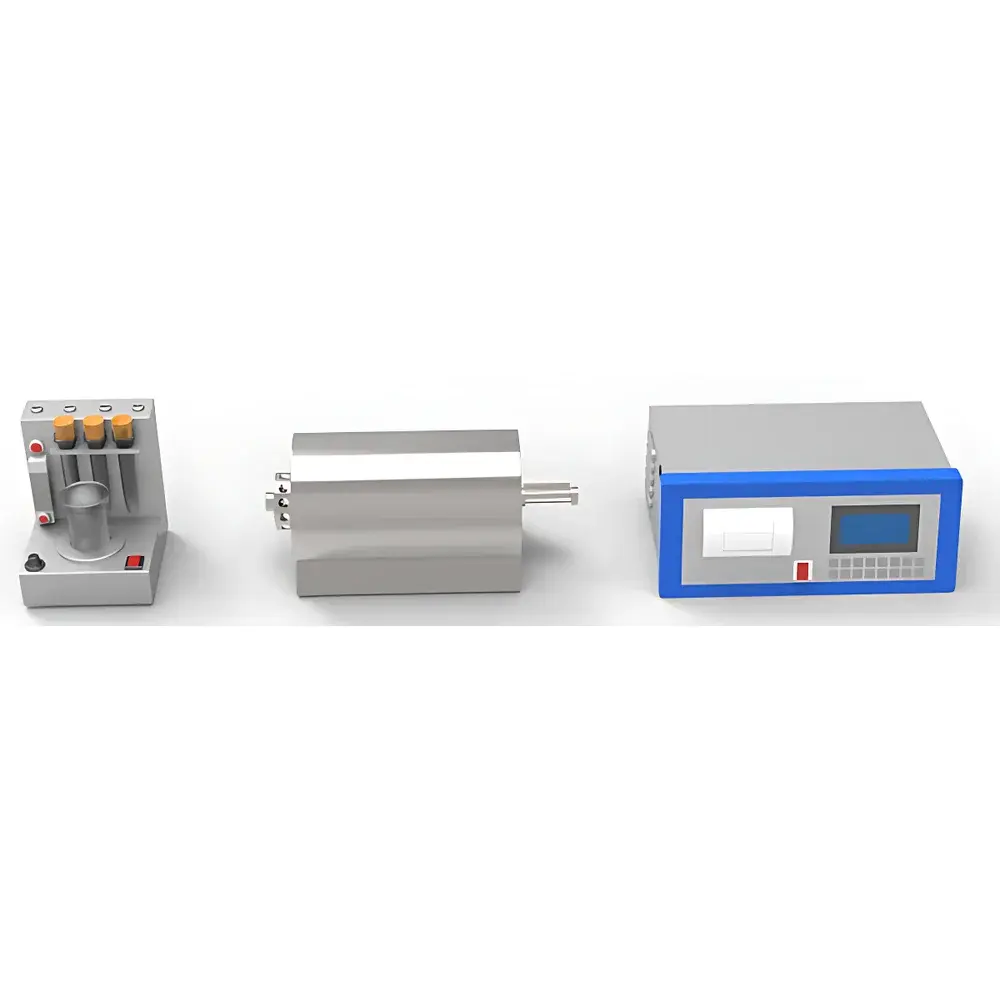
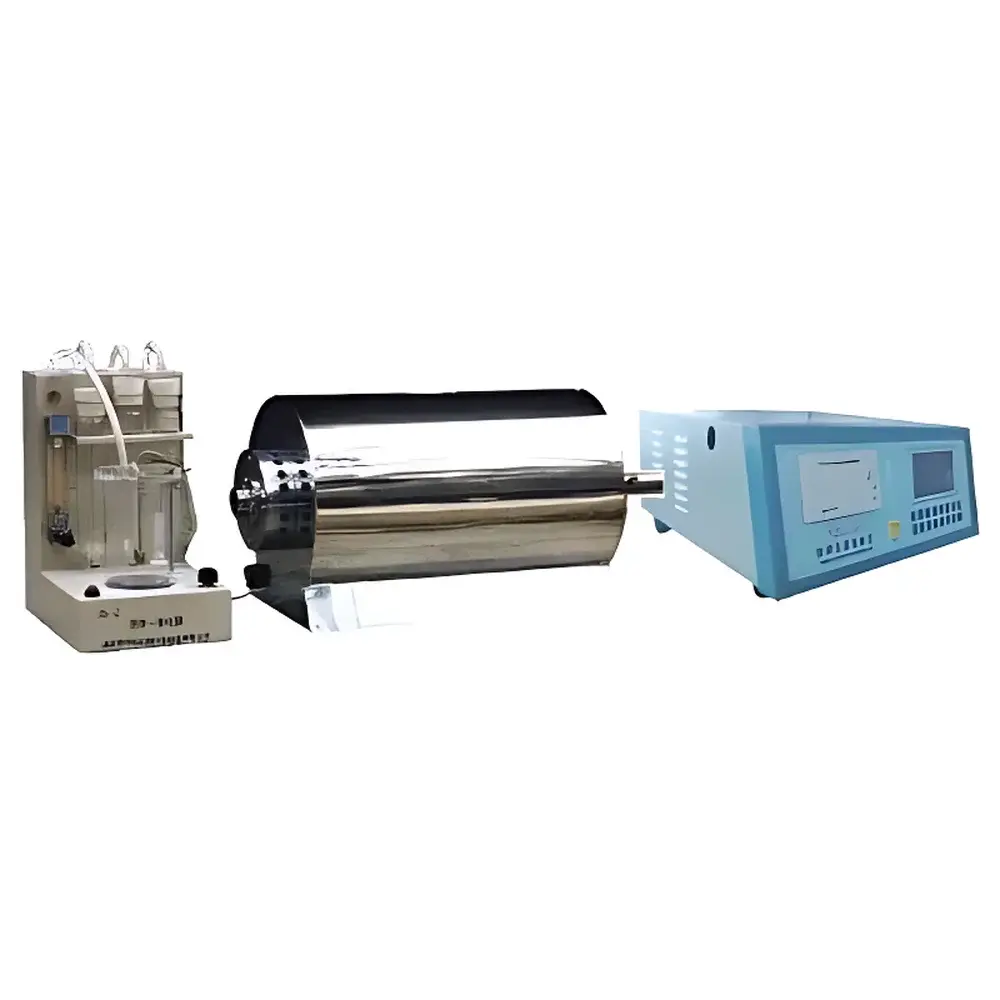
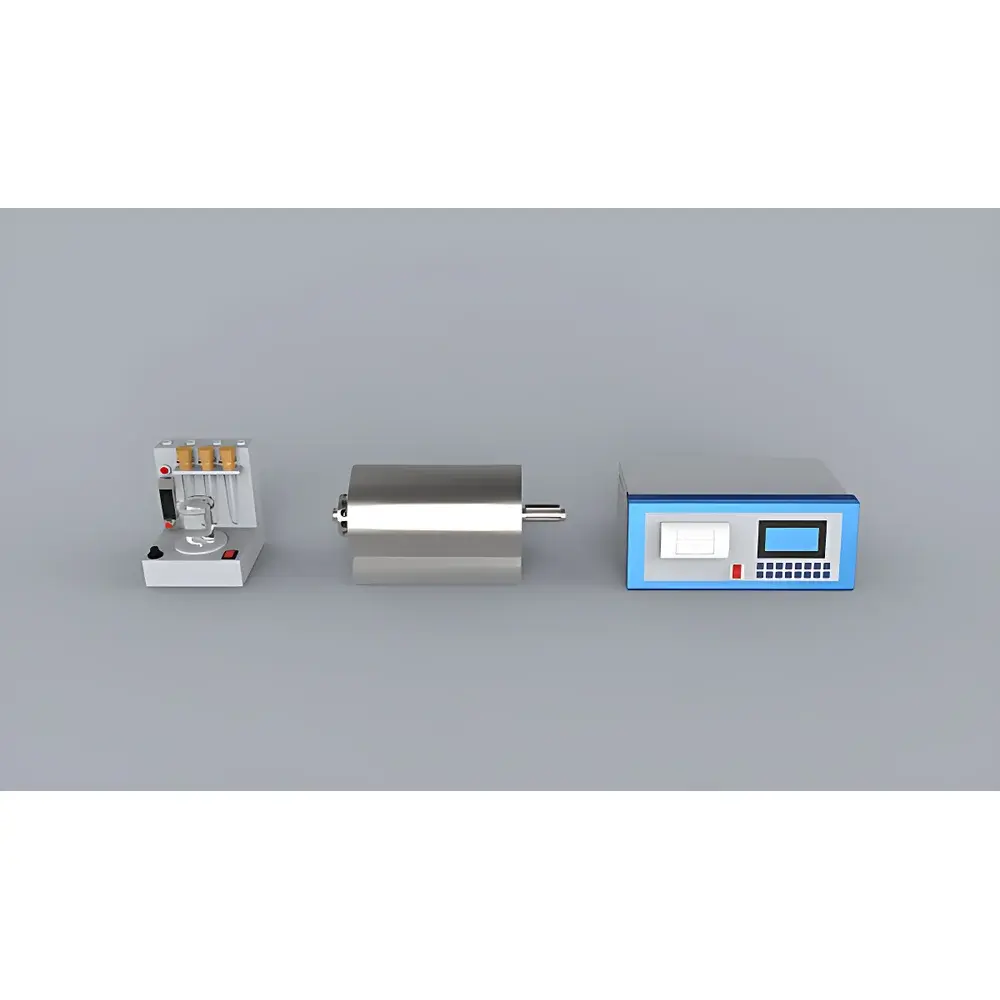
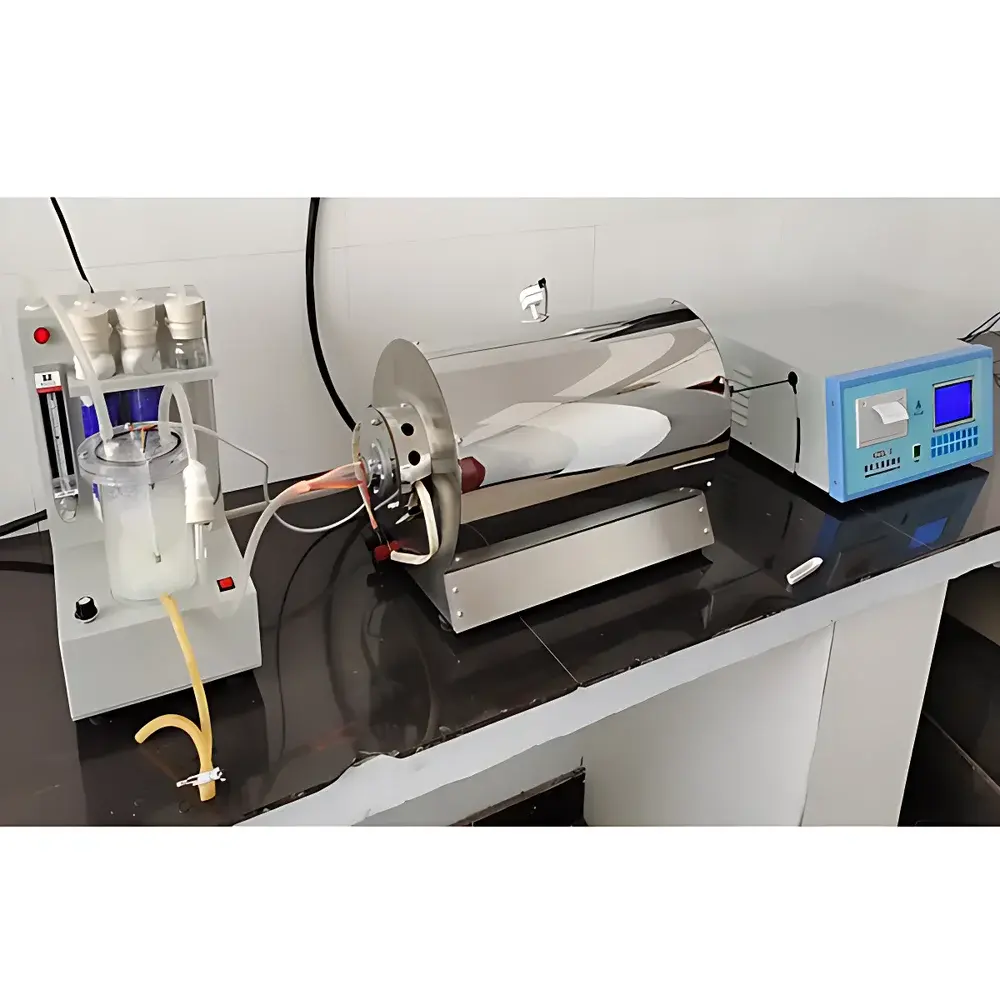
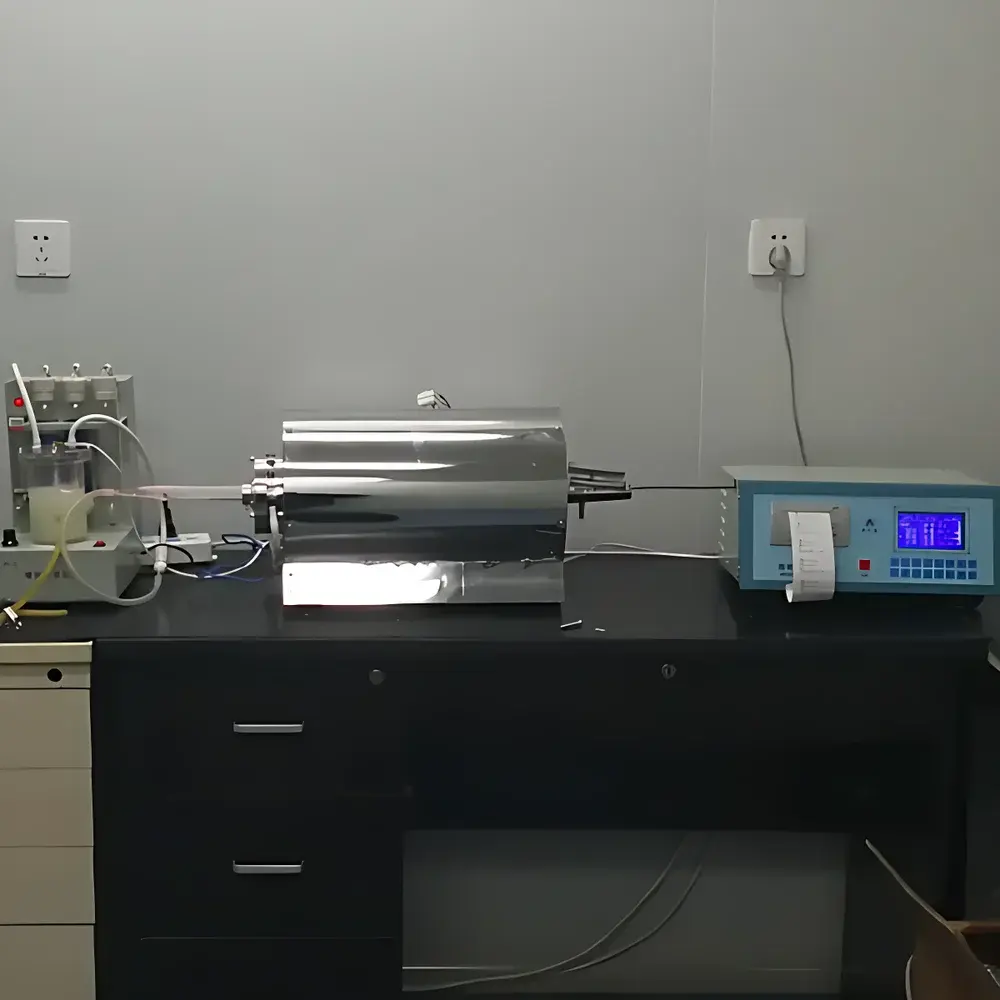
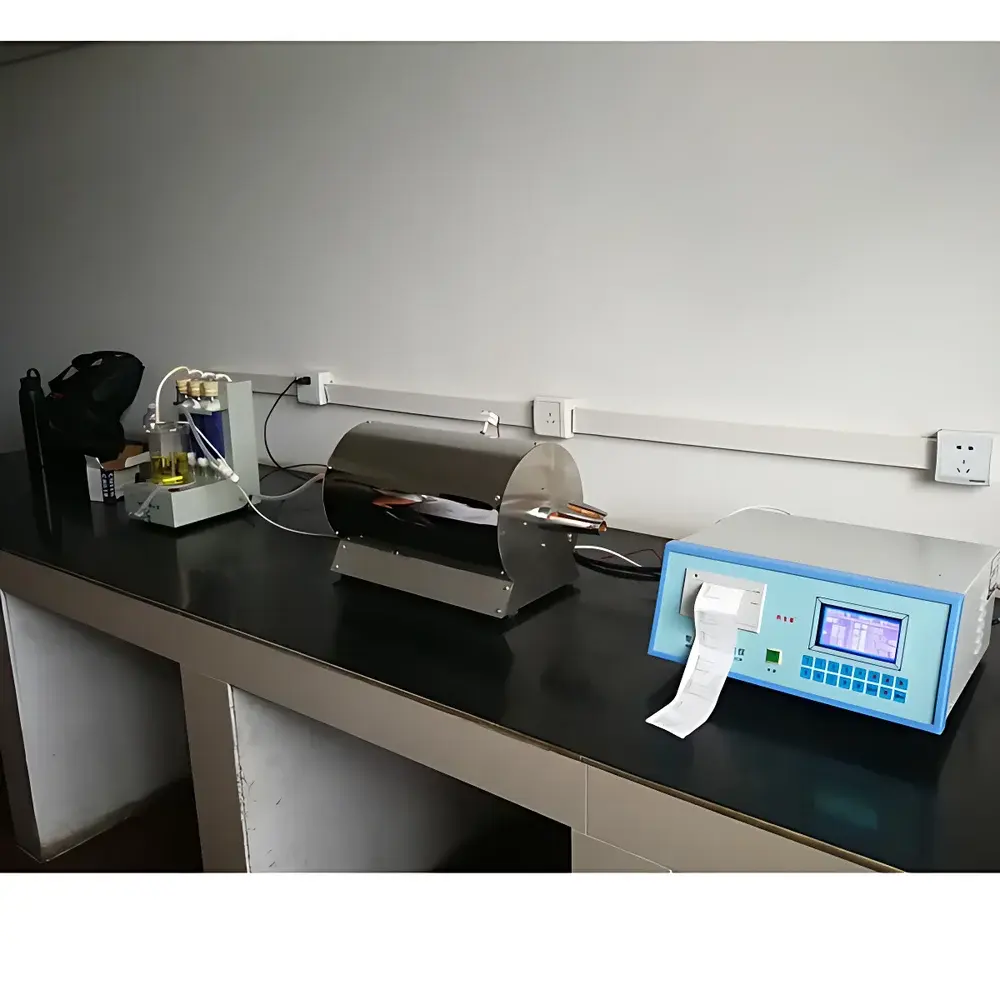
MingShen Science KZDL-8H Coulometric Sulfur Determinator
| Brand | MingShen Science |
|---|---|
| Origin | Henan, China |
| Manufacturer Type | Authorized Distributor |
| Country of Origin | China |
| Model | KZDL-8H |
| Pricing | USD 1,350 (FOB) |
| Measurement Principle | Coulometric Titration (ASTM D3177, GB/T 214, ISO 4299) |
| Sulfur Range | 0.1–40 wt% |
| Combustion Time | 3–9 min per sample |
| Furnace Temp Control | 1150 ± 5 °C (adjustable, SiC heating element, hot zone ≥90 mm) |
| Temperature Sensor Accuracy | Class 0.5 |
| Heating Rate | 25–30 °C/min (reaches 1200 °C in ~35 min) |
| Electrolytic Cell Volume | 450 mL (organic glass construction with sintered glass frit gas diffuser) |
| Stability | Stable operation within 60 seconds after power-on |
| Power Supply | 220 V ± 20 V AC, 50 Hz |
| Dimensions (mm) | Controller: 365 × 155 × 340 |
| High-Temp Furnace | 580 × 250 × 270 |
| Air Purifier Unit | 258 × 300 × 360 |
Overview
The MingShen Science KZDL-8H Coulometric Sulfur Determinator is a precision laboratory instrument engineered for the quantitative determination of total sulfur content in solid fuels and inorganic materials—including coal, coke, petroleum coke, iron ore, limestone, fly ash, and metallurgical slags—using standardized coulometric titration. Based on the electrochemical principle defined in GB/T 214–2007 (equivalent to ASTM D3177–19 and ISO 4299:1994), the instrument oxidizes sulfur-bearing compounds at high temperature (1150 ± 5 °C) in a controlled air stream, converting sulfur to SO₂, which is then absorbed into an acidic electrolyte solution (e.g., potassium iodide–potassium bromide–glacial acetic acid). The liberated iodine is quantified via controlled-potential coulometric titration, where the total charge passed (in coulombs) is directly proportional to sulfur mass according to Faraday’s law. This method delivers high reproducibility (RSD < 0.5% for replicate coal samples), minimal reagent consumption, and full compliance with regulatory testing requirements across coal trading, power generation QA/QC, and environmental emissions monitoring.
Key Features
- Microprocessor-based intelligent control system with real-time PID regulation of furnace current and dynamic endpoint detection
- Integrated modular architecture: air purification unit (electromagnetic pump, dual-stage desiccant dryer with silica gel, calibrated flowmeter), high-temperature tubular furnace (silicon carbide heating element, uniform hot zone ≥90 mm), and sealed organic-glass electrolytic cell (450 mL volume, sintered glass frit gas diffuser)
- Automatic electrolysis switch control prevents over-titration and extends electrode life
- Large backlit LCD display with Chinese/English bilingual interface and intuitive keypad navigation
- Rapid thermal stabilization: achieves operational stability within 60 seconds post-power-on
- Programmable combustion protocol: staged heating (500 °C pre-oxidation → ramp → 1150 °C hold for ≤9 min), optimized for complete sulfur release without charring or incomplete oxidation
- Self-diagnostic routines for airflow integrity, electrolyte conductivity, and endpoint signal fidelity
Sample Compatibility & Compliance
The KZDL-8H accommodates solid samples weighing 49.8–50.2 mg (precision balance required), typically loaded in ceramic crucibles overlaid with tungsten trioxide (WO₃) as a catalyst and combustion aid. It supports heterogeneous matrices including bituminous coal, anthracite, lignite, coal blends, desulfurized ash, and mineral concentrates. All measurement procedures conform to national and international standards: GB/T 214–2007 (China), ASTM D3177–19 (Standard Test Method for Total Sulfur in the Analysis Sample of Coal and Coke), ISO 4299:1994 (Solid Mineral Fuels — Determination of Total Sulfur — Coulometric Method), and EN 15197:2011 (Solid Biofuels — Determination of Total Sulfur Content). Data acquisition and instrument operation support GLP-compliant documentation; audit trails, user access logs, and electronic signature readiness align with internal QA frameworks. While not 21 CFR Part 11 certified out-of-box, the firmware architecture permits integration with validated LIMS environments requiring electronic record retention.
Software & Data Management
The embedded firmware implements deterministic real-time control over all hardware subsystems—furnace temperature profile, gas flow rate (adjustable 1000 ± 50 mL/min), stirrer speed (constant 1200 rpm), and electrolysis current (±0.1 mA resolution). Measurement data—including sample ID, mass, combustion time, integrated charge (C), calculated sulfur %, and endpoint voltage curve—are stored locally in non-volatile memory (≥1000 test records). USB port enables export of CSV-formatted reports compatible with Excel, Minitab, or laboratory information management systems (LIMS). No proprietary software installation is required; raw output files include timestamp, operator ID (manually entered), and instrument serial number for traceability. Calibration verification is performed using certified reference materials (CRMs) such as NIST SRM 1632e (Coal, 2.76 wt% S) or GBW(E) 130107 (Coal, 1.52 wt% S); calibration slope and intercept are retained per session.
Applications
This determinator serves core analytical functions across vertically regulated industries: coal procurement QA/QC laboratories verify contractual sulfur specifications prior to shipment; thermal power plants monitor feedstock compliance with emission permit limits (e.g., EPA MATS, EU IED); cement and steel producers assess raw material suitability for clinker production or blast furnace burden optimization; third-party inspection agencies (e.g., SGS, Bureau Veritas) perform independent verification for international trade settlements; and environmental testing labs quantify sulfur in fly ash leachates or stack emissions precursors. Its robustness, low maintenance footprint, and adherence to consensus methods make it suitable for routine high-throughput analysis in ISO/IEC 17025-accredited facilities.
FAQ
What sample preparation is required before analysis?
Coal samples must be homogenized by rotational mixing (not vertical shaking) in sealed containers, then weighed to 50.0 ± 0.2 mg in ceramic crucibles and covered with ~0.5 g WO₃ catalyst.
How often must the electrolyte be replaced?
Electrolyte should be refreshed after every 50–80 analyses or when baseline voltage drift exceeds ±5 mV during idle state; silica gel in the dryer requires regeneration weekly under continuous use.
Can the instrument operate unattended for batch analysis?
No—it is designed for single-sample sequential operation; automated sample changers are not supported. However, the microprocessor retains program settings across power cycles.
Is external calibration verification necessary?
Yes—daily verification using a CRM is mandatory per GB/T 214 and ISO/IEC 17025; calibration drift >2% relative requires recalibration with two-point standardization.
What safety precautions apply during operation?
The furnace surface exceeds 1000 °C during operation—access doors must remain closed; exhaust must be ducted externally due to SO₂ generation; gloves and eye protection are required during electrolyte handling and crucible loading.
Related Products






