
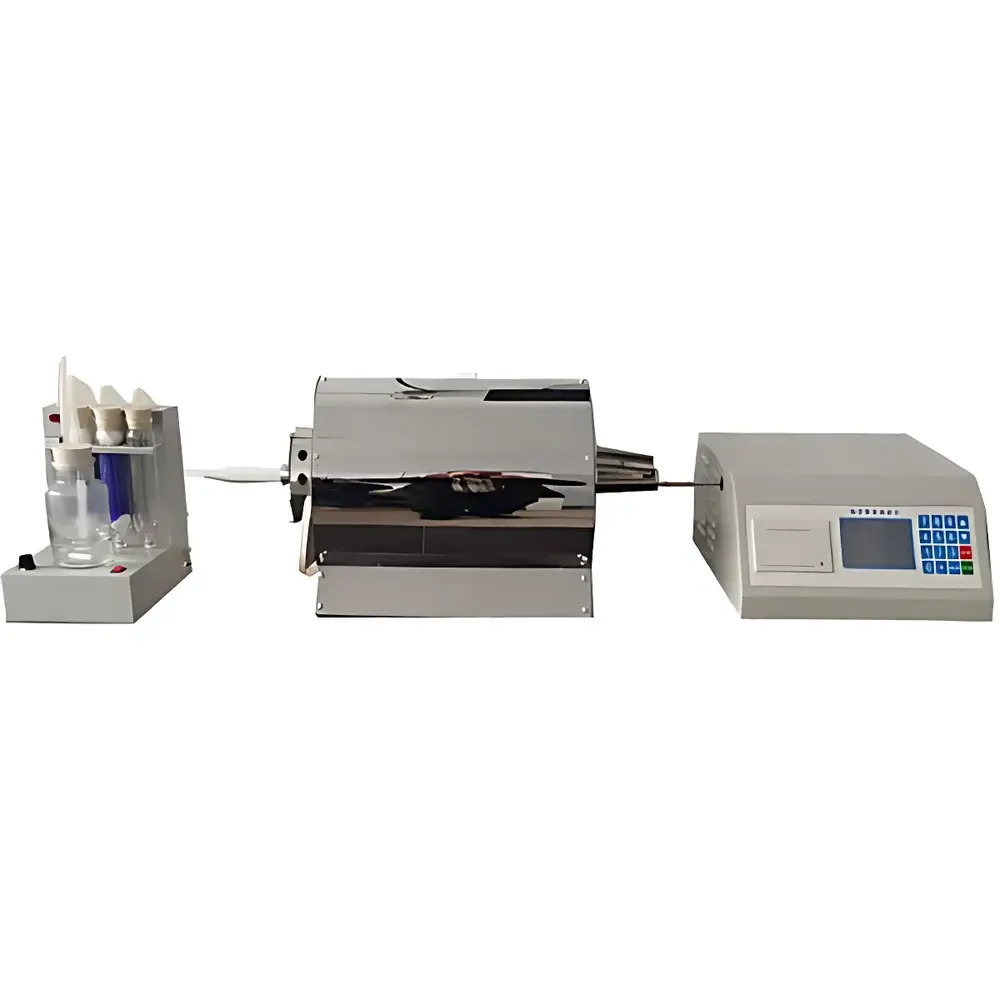
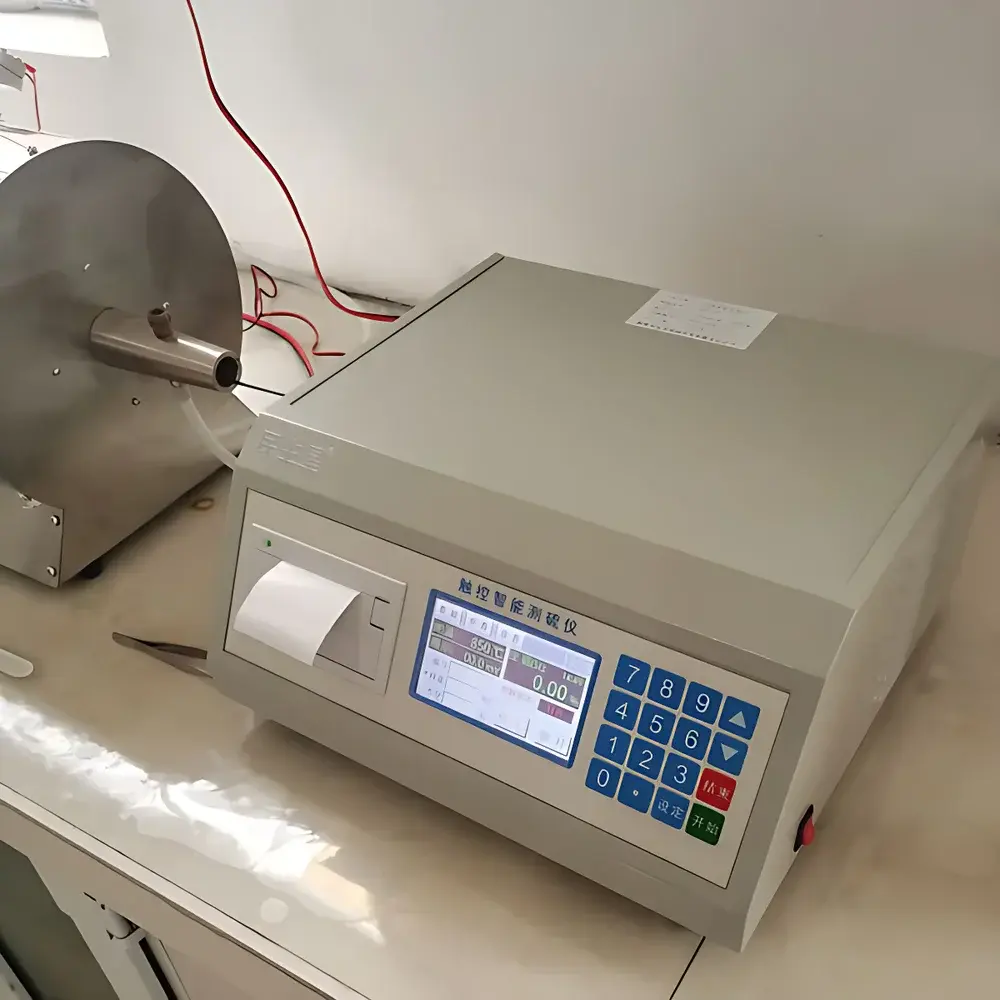
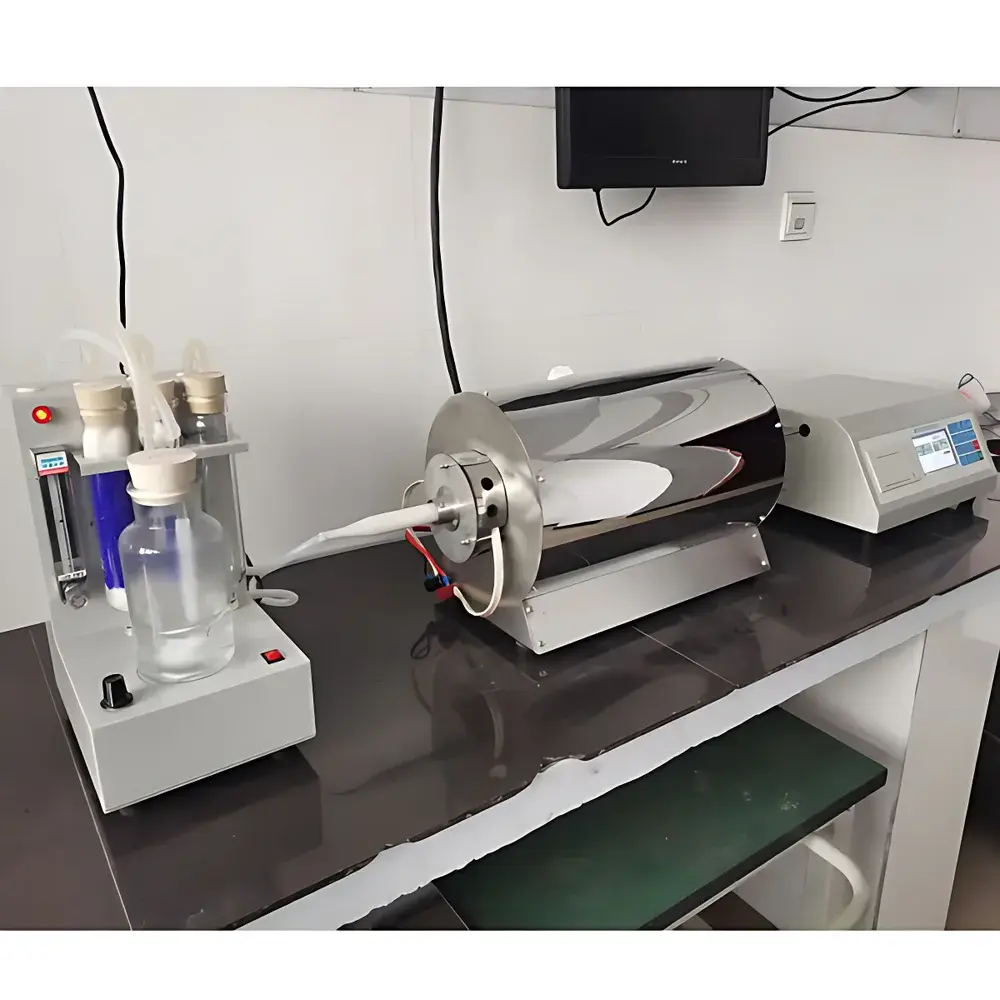
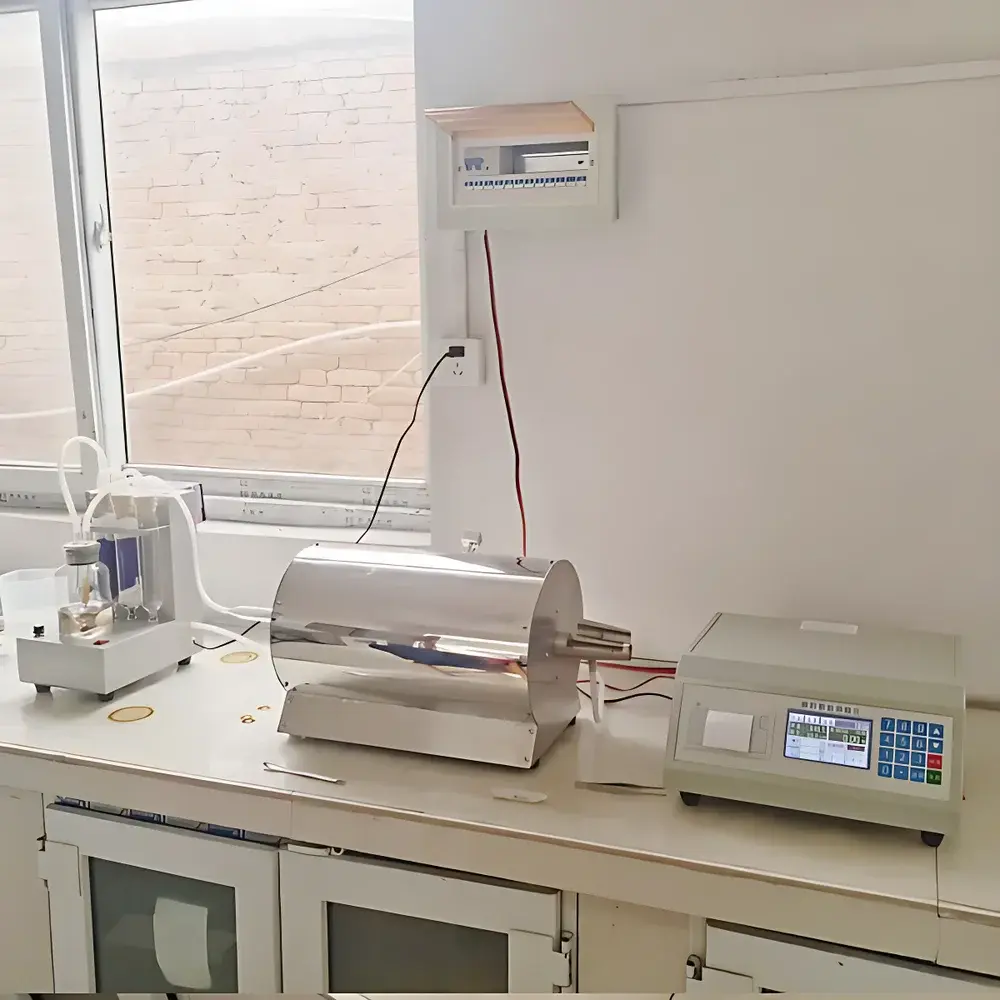
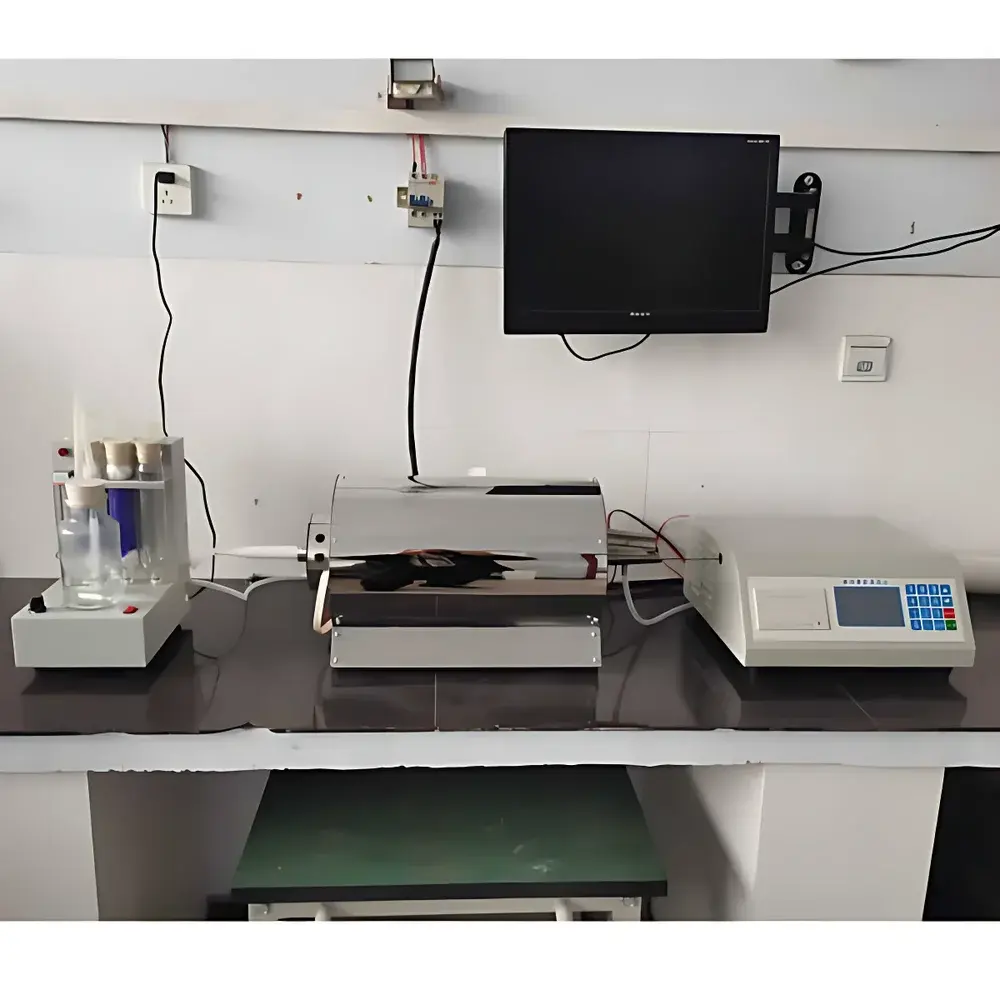
MingShen Science KZDL-9C Combustion-Based Sulfur Determinator for Pyrite and Concentrates
| Brand | MingShen Science |
|---|---|
| Origin | Henan, China |
| Manufacturer Type | Authorized Distributor |
| Country of Origin | China |
| Model | KZDL-9C |
| Measurement Principle | Combustion-Iodometric Titration (Dry Colorimetric Method per GB/T 2462–1996) |
| Power Supply | 220 V ±20 V, 50 Hz |
| Max. Power Consumption | ≤2.5 kW |
| Sulfur Range | 0.01–99.99 wt% |
| Resolution | 0.01 wt% |
| Temperature Control Range | 300–1300 °C |
| Temp. Display Range | Ambient to 1300 °C |
| Temp. Resolution | 1 °C |
| Target Temp. Setpoint Accuracy | ±5 °C at 1150 °C |
| Heating Time | ~25 min to reach 1150 ±5 °C |
| Sample Positioning | Dual-Hall Element Driven Multi-Stage Auto-Sampling |
| Furnace Design | Horizontal High-Temperature Tube Furnace |
| Dimensions (L×W×H, mm) | Controller: 370×350×170 |
| Furnace | 580×250×270 |
| Purifier | 180×245×300 |
| Net Weight | Controller 5 kg, Furnace 15 kg, Purifier 4 kg |
| Compliance | GB/T 2462–1996, ASTM D4294 (referenced methodology), ISO 8754 (equivalent combustion principle) |
Overview
The MingShen Science KZDL-9C Combustion-Based Sulfur Determinator is a dedicated analytical instrument engineered for precise quantification of total sulfur and effective sulfur content in pyrite ores, sulfur concentrates, and related mineral feedstocks used in metallurgical and chemical processing. It operates on the principle of high-temperature combustion followed by iodometric titration—commonly referred to as the “dry colorimetric method” per Chinese national standard GB/T 2462–1996. In this method, a weighed sample is combusted in a controlled oxygen-rich atmosphere within a horizontal silicon carbide (SiC) tube furnace maintained at 1150 ±5 °C. The evolved sulfur dioxide (SO₂) is absorbed in a standardized potassium iodide–potassium bromide solution, and the resulting iodine is back-titrated with sodium thiosulfate. The endpoint is detected either potentiometrically or via colorimetric change, enabling direct calculation of sulfur mass fraction. The KZDL-9C integrates microprocessor-based thermal management, dual-Hall element-driven sample positioning, and adaptive current regulation to ensure stable furnace performance across variable SiC tube resistance, thereby maintaining measurement reproducibility across long-term operation.
Key Features
- Adaptive silicon carbide (SiC) tube current regulation—dynamically adjusts heating current based on real-time resistance monitoring to prevent thermal overshoot or sluggish response during ramp-up or steady-state operation.
- Dual-Hall element positional feedback system enables programmable multi-stage sample introduction, supporting both high-sulfur (>10%) and fast-analysis (<5 min) protocols without mechanical recalibration.
- Horizontal furnace architecture ensures uniform axial temperature distribution and stable isothermal zone formation—critical for complete oxidation of refractory sulfides such as marcasite and pyrrhotite.
- Integrated voice feedback system with adjustable volume provides audible confirmation of analysis completion, error conditions (e.g., incomplete combustion, low absorbent volume), and result output—enhancing operator situational awareness in noisy industrial lab environments.
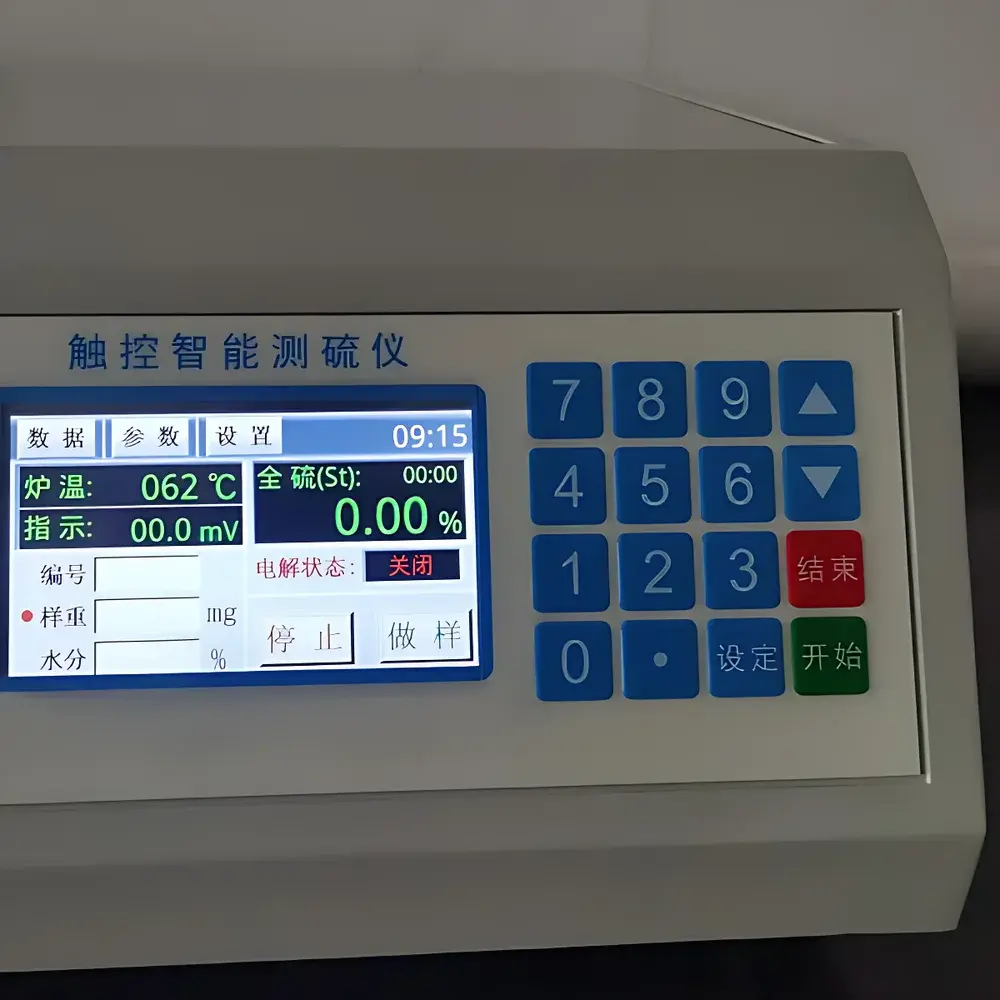
- Touchscreen interface with Chinese character display and membrane keypad support allows dual-mode operation; all parameters—including pre-decomposition time (up to 999 s), decomposition time (up to 999 s), target temperature, and titration threshold—are fully configurable.
- Temperature control range spans 300–1300 °C with 1 °C resolution and ±5 °C accuracy at operational setpoints, validated per internal calibration routines traceable to NIST-certified reference materials.
Cold-welded SiC tube terminal connections eliminate arcing risks and extend heater lifetime under repeated thermal cycling between ambient and 1300 °C.
Sample Compatibility & Compliance
The KZDL-9C is optimized for solid mineral samples with particle size ≤0.2 mm and moisture content <2 wt%, including raw pyrite, roasted calcines, flotation concentrates, and synthetic sulfur-bearing standards. It complies with GB/T 2462–1996 for effective sulfur determination in sulfur ores and is methodologically aligned with ASTM D4294 (standard test method for sulfur in petroleum and petroleum products by energy-dispersive X-ray fluorescence spectroscopy) and ISO 8754 (petroleum products—determination of sulfur content—oxidative combustion followed by potentiometric titration). While not FDA 21 CFR Part 11–compliant out-of-the-box, audit trails for method parameters, calibration logs, and result exports can be manually archived to meet GLP/GMP documentation requirements in quality-controlled metallurgical laboratories.
Software & Data Management
The embedded firmware supports non-volatile storage of up to 200 analysis records, each containing sample ID, date/time stamp, temperature profile summary, titration volume, calculated sulfur %, and operator code. Results are displayed numerically on-screen and may be exported via RS-232 serial interface to external LIMS or spreadsheet applications. No proprietary software installation is required; raw data files follow ASCII-delimited format compatible with common laboratory informatics platforms. Calibration verification is performed using certified sulfur reference materials (e.g., SRM 1632c Coal, NIST) with acceptance criteria defined per GB/T 2462–1996 repeatability limits (R = 0.15% absolute for sulfur >5%).
Applications
- Quality control of pyrite feedstock entering sulfuric acid production plants.
- Grade verification of sulfur concentrates prior to smelting or roasting operations.
- Effective sulfur assay for process optimization in beneficiation circuits involving magnetic separation or froth flotation.
- Regulatory reporting for environmental compliance (e.g., SO₂ emission forecasting based on ore sulfur content).
- Routine analysis in coal preparation plants where pyritic sulfur contributes significantly to total sulfur burden.
- Research applications in mineralogical studies evaluating sulfur speciation stability under thermal treatment.
FAQ
What sulfur species does the KZDL-9C measure?
It measures total sulfur (including pyritic, sulfate, and organic forms) when operated in full-combustion mode, and effective sulfur (predominantly pyritic sulfur) under controlled low-temperature pre-decomposition per GB/T 2462–1996.
Is the instrument suitable for coal analysis?
Yes—though primarily designed for pyrite and concentrates, it meets ASTM D3177 and ISO 334 requirements for total sulfur in coal when configured with appropriate calibration curves and ash correction protocols.
Does the system require daily recalibration?
No—routine verification using certified reference materials every 10–20 samples is sufficient; the adaptive current control and cold-welded terminals minimize drift-related recalibration needs.
Can the KZDL-9C interface with laboratory information management systems (LIMS)?
Yes—via RS-232 serial output using ASCII protocol; custom parsing scripts are typically implemented at the host LIMS level to ingest sample ID, result, and timestamp fields.
What maintenance intervals are recommended for the SiC tube furnace?
Under normal use (≤10 samples/day), visual inspection every 3 months and resistance measurement every 6 months are advised; typical service life exceeds 18 months with proper purge gas flow and ash trap maintenance.






