
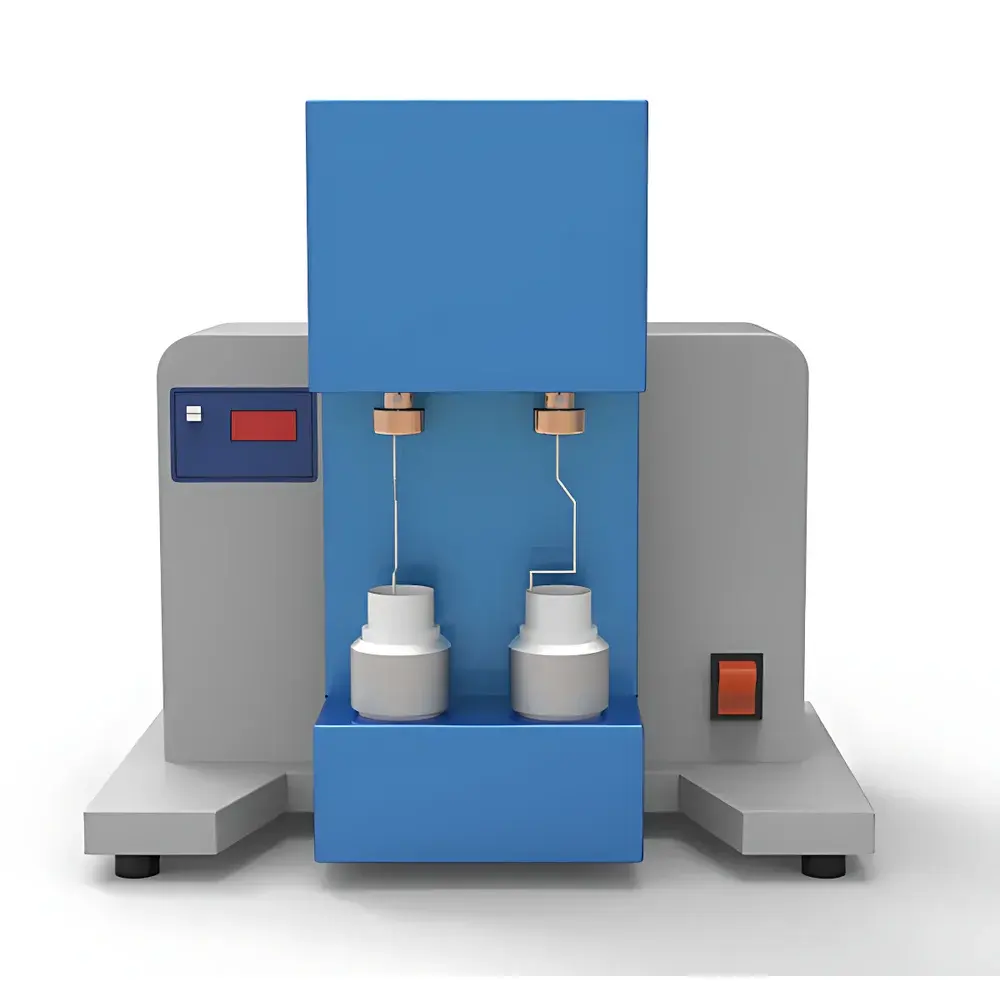
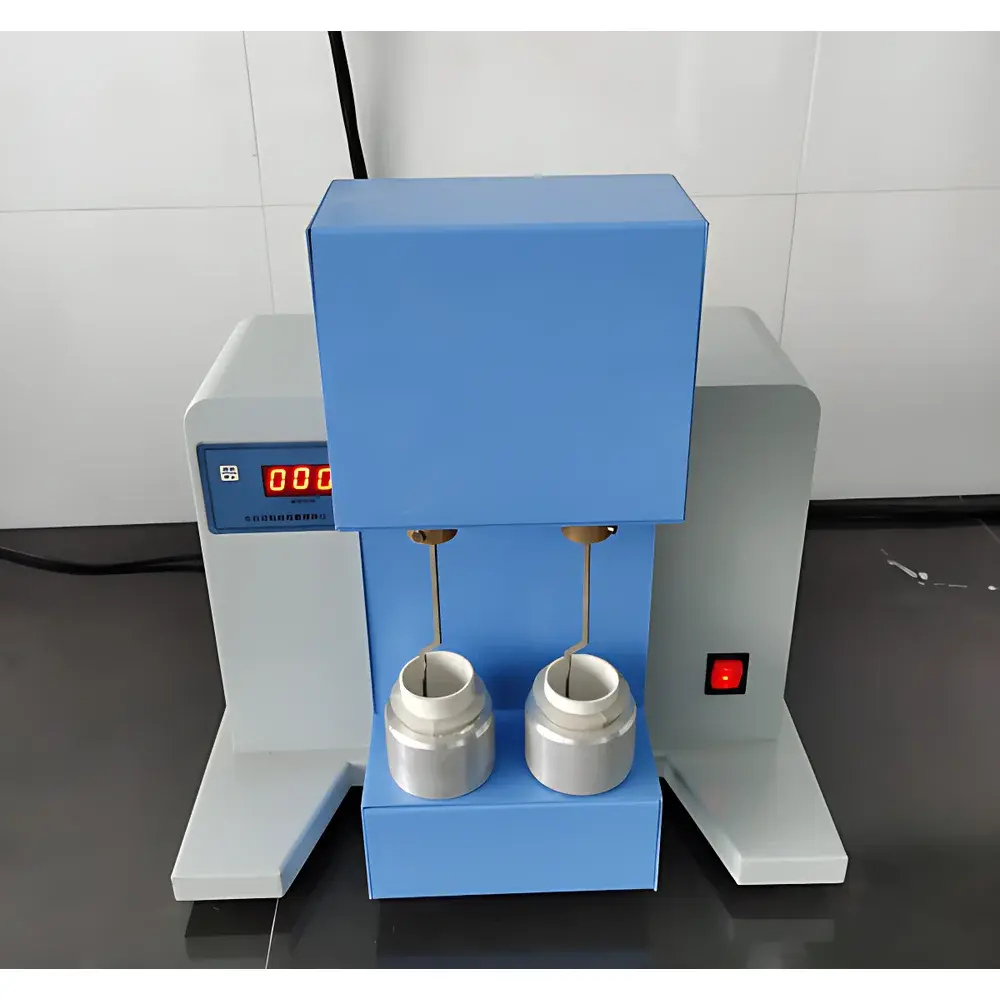
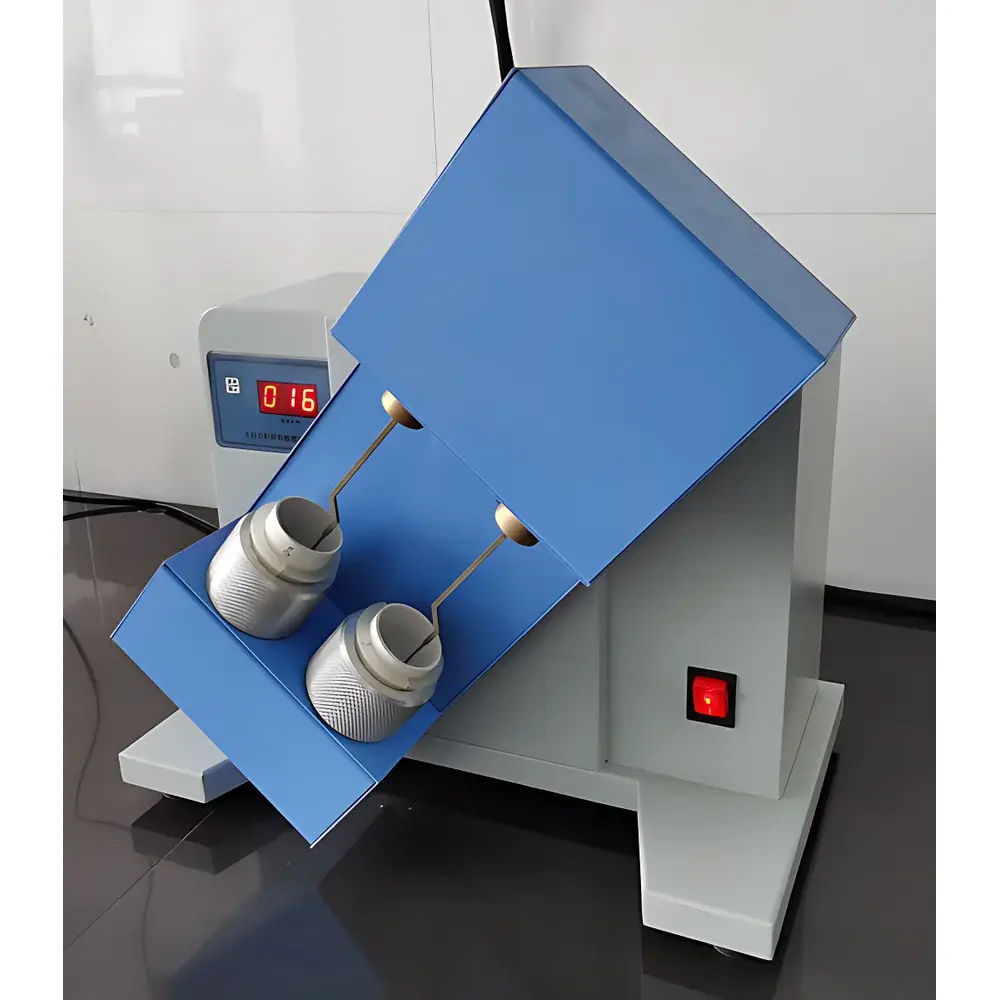
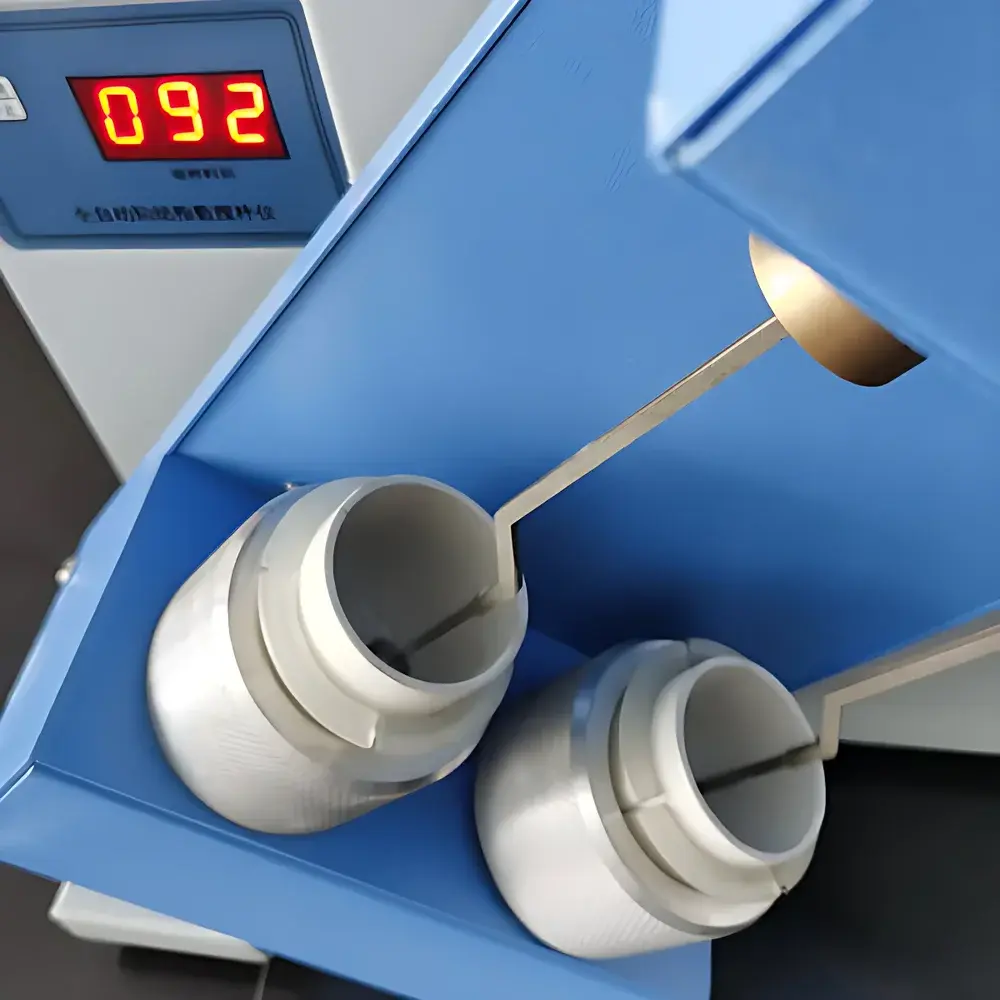
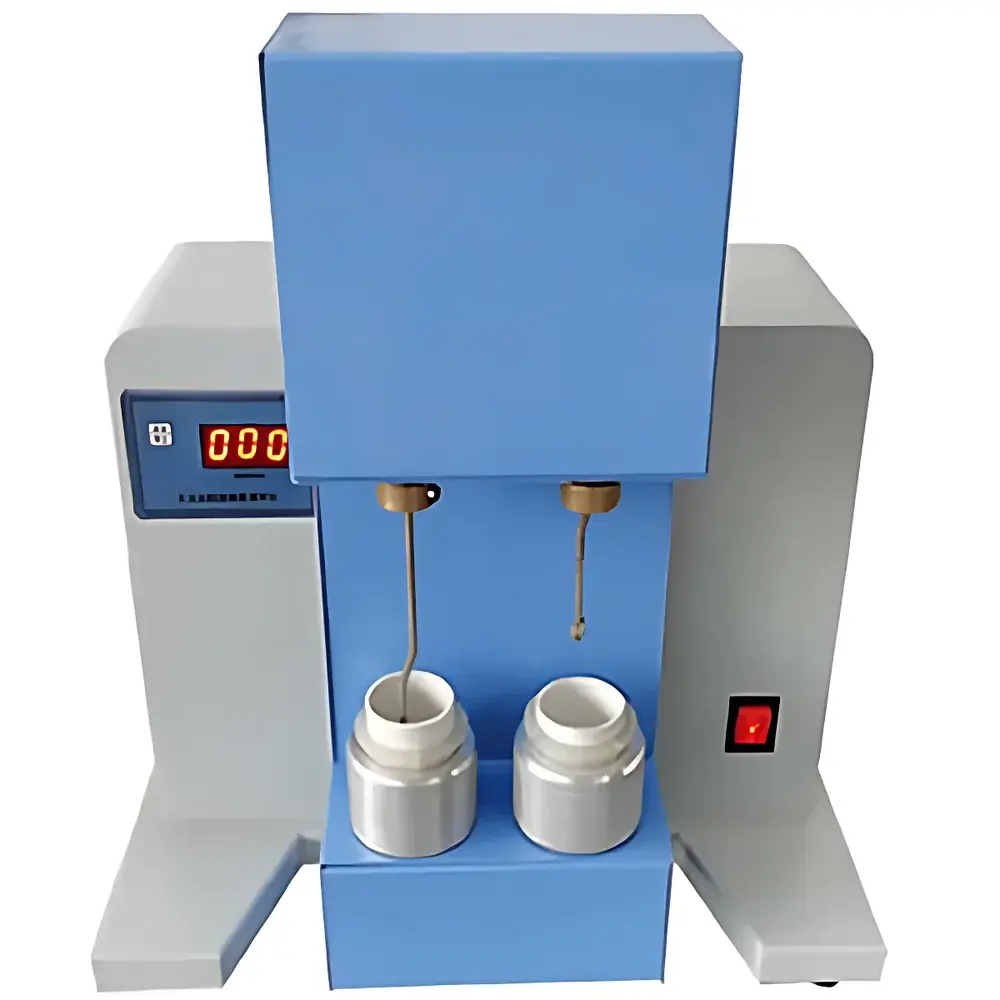
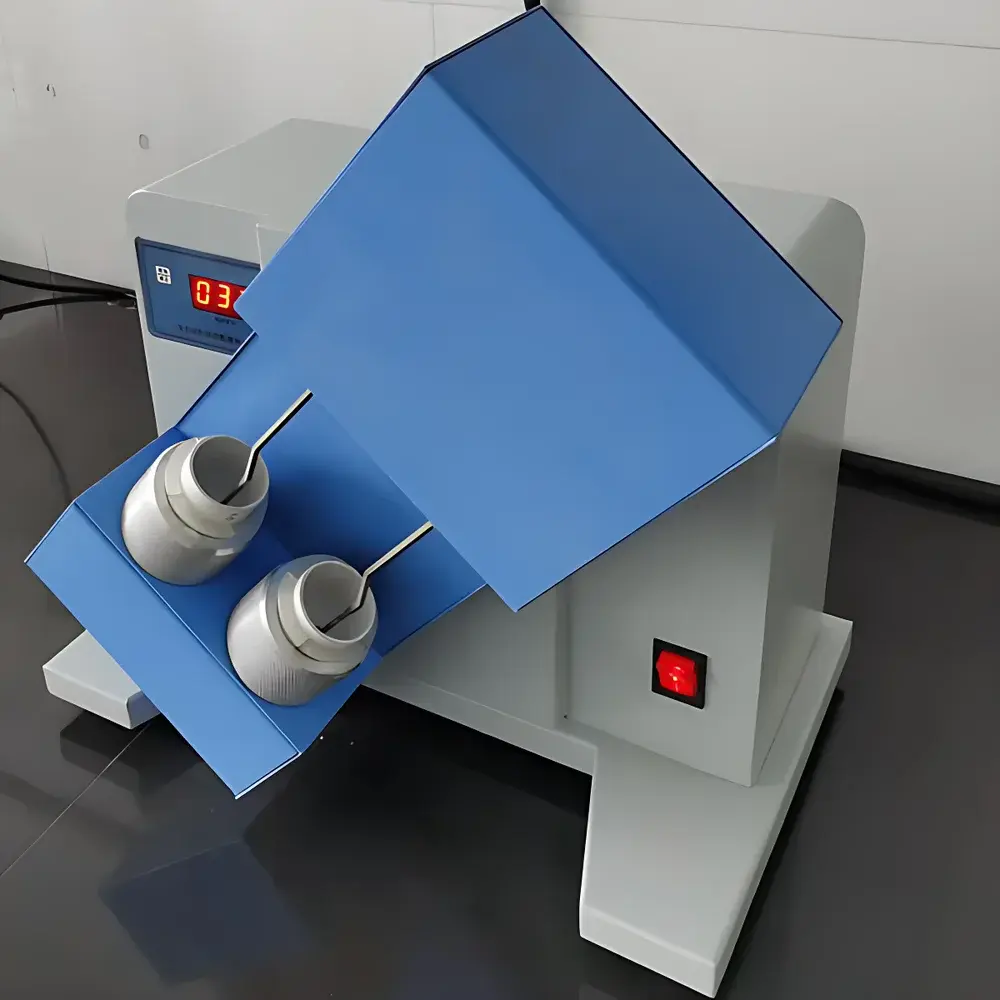
MingShen Science NJJB-2 Automatic Gieseler Caking Index Stirrer
| Brand | MingShen Science |
|---|---|
| Origin | Henan, China |
| Manufacturer Type | Authorized Distributor |
| Country of Manufacture | China |
| Model | NJJB-2 |
| Price | USD 320 (FOB) |
| Power Supply | 220 V, 50 Hz |
| Power Consumption | 30 W |
| Bend Plate Rotation Angle | 45° |
| Stirring Rod Speed | 150 rpm |
| Crucible Rotation Speed | 15 rpm |
| Stirring Duration at 45° | 105 s |
| Bend Plate Return Time (45° → Vertical) | 15 s |
| Display | 3-digit LED |
| Dimensions (L×W×H) | 235 × 322 × 305 mm |
| Weight | 5 kg |
Overview
The MingShen Science NJJB-2 Automatic Gieseler Caking Index Stirrer is a precision-engineered laboratory instrument designed exclusively for standardized coal caking index determination in accordance with GB/T 5447–2014, the Chinese national standard equivalent to ISO 501:2016 and ASTM D5084–22 for Gieseler plastometry. It implements a rigorously controlled dual-rotation protocol: simultaneous counter-rotating motion between the stirring rod (150 rpm) and the crucible (15 rpm), initiated only when the bend plate reaches the precisely calibrated 45° inclination. This synchronized kinematic sequence replicates the thermal-mechanical shear environment required to assess coal fluidity and plastic layer development during carbonization. The device features a robust aluminum-alloy chassis, sealed induction motors with thermal overload protection, and an integrated timing architecture that ensures ±0.5 s repeatability across all operational phases — critical for inter-laboratory comparability and regulatory compliance in coal quality certification.
Key Features
- Automated, fully sequenced operation compliant with GB/T 5447–2014 timing and motion profiles: 45° bend initiation, 105 s dual-rotation stirring, and 15 s return-to-vertical cycle
- Dual independent motor drive system: isolated control of stirrer rod (150 rpm) and crucible (15 rpm) to prevent torque coupling and ensure mechanical reproducibility
- Self-aligning vertical homing routine at power-on — verifies and corrects bend plate position prior to each test
- Three-digit LED display showing real-time elapsed time, stirrer rotations, and crucible revolutions — no external software required for basic operation
- Locking sleeve and pressure shaft mechanism enabling safe, repeatable insertion and axial positioning of the stirring rod with centric alignment tolerance ≤0.3 mm
- Compact footprint (235 × 322 × 305 mm) and lightweight design (5 kg) suitable for benchtop deployment in QC labs, coal preparation plants, and accreditation testing facilities
Sample Compatibility & Compliance
The NJJB-2 accepts standard 15-mm-diameter cylindrical crucibles conforming to GB/T 5447 specifications, accommodating coal samples prepared per ISO 1171 or ASTM D3174 protocols. All mechanical motions — including bend plate angular displacement, rotational speeds, and dwell times — are traceably calibrated against NIST-traceable rotary encoders and quartz-referenced timers. The instrument meets electromagnetic compatibility requirements per GB/T 18268.1–2010 (IEC 61326-1) and electrical safety standards per GB 4793.1–2007 (IEC 61010-1). Its operational sequence supports full auditability under GLP environments; manual log entries (time, sample ID, operator) may be linked to instrument timestamps for ISO/IEC 17025 documentation workflows.
Software & Data Management
The NJJB-2 operates as a standalone hardware controller with no embedded firmware or network interface. All timing and motor actuation logic is implemented in hardwired digital logic circuits — eliminating software validation burdens under FDA 21 CFR Part 11 or EU Annex 11. The LED display provides immediate visual feedback without reliance on external computers. For laboratories requiring electronic record retention, optional RS-232 or USB-to-serial adapters (sold separately) enable timestamped ASCII output of start time, duration, and completion signal to LIMS or Excel-based tracking systems. No proprietary drivers or cloud services are involved — data sovereignty and cybersecurity risks are inherently minimized.
Applications
- Routine caking index testing in coal blending optimization for coke oven feedstock formulation
- Quality control of run-of-mine (ROM) and washed coal batches prior to shipment or stockpiling
- Research-grade evaluation of coal rank, vitrinite reflectance correlation, and plasticity behavior under simulated carbonization conditions
- Interlaboratory round-robin studies supporting ISO/IEC 17043 proficiency testing programs
- Verification of coal substitution feasibility in metallurgical applications governed by JIS M 8812 or DIN 51700 standards
FAQ
Does the NJJB-2 require calibration certificates or annual recalibration?
No formal recalibration is mandated by GB/T 5447; however, users must verify bend plate angle (45° ± 0.5°), rotational speeds (±2 rpm), and timer accuracy (±0.5 s) before first use and after any mechanical servicing — using certified angle gauges, tachometers, and stopwatch standards.
Can the instrument operate continuously for multiple samples without cooling downtime?
Yes — its 30 W thermal load and passive aluminum heatsinking permit uninterrupted sequential testing of up to 20 samples per shift, provided ambient temperature remains below 35 °C and ventilation clearance ≥5 cm is maintained on all sides.
Is the stirring rod geometry standardized, and where can replacement rods be sourced?
Stirring rods conform to GB/T 5447 Fig. 1 dimensions (φ1.2 mm stainless steel wire, 25 mm loop diameter); OEM replacements (P/N: NJJB-2-ROD) are available directly from MingShen Science’s authorized service centers in Zhengzhou and Shanghai.
What safety certifications does the unit hold for international shipment?
It carries CE marking per EMC Directive 2014/30/EU and Low Voltage Directive 2014/35/EU, with test reports issued by SGS Shanghai (Report No. GZ01-2308171234-001). RoHS 3 compliance is documented in the Declaration of Conformity.
How is positional error of the stirrer rod detected and corrected during operation?
The pressure shaft incorporates a microswitch that confirms full downward engagement; if the loop fails to center within ±0.5 mm of crucible axis, motor current draw exceeds threshold and the system halts rotation with audible alert — preventing gear damage or misalignment-induced wear.






