
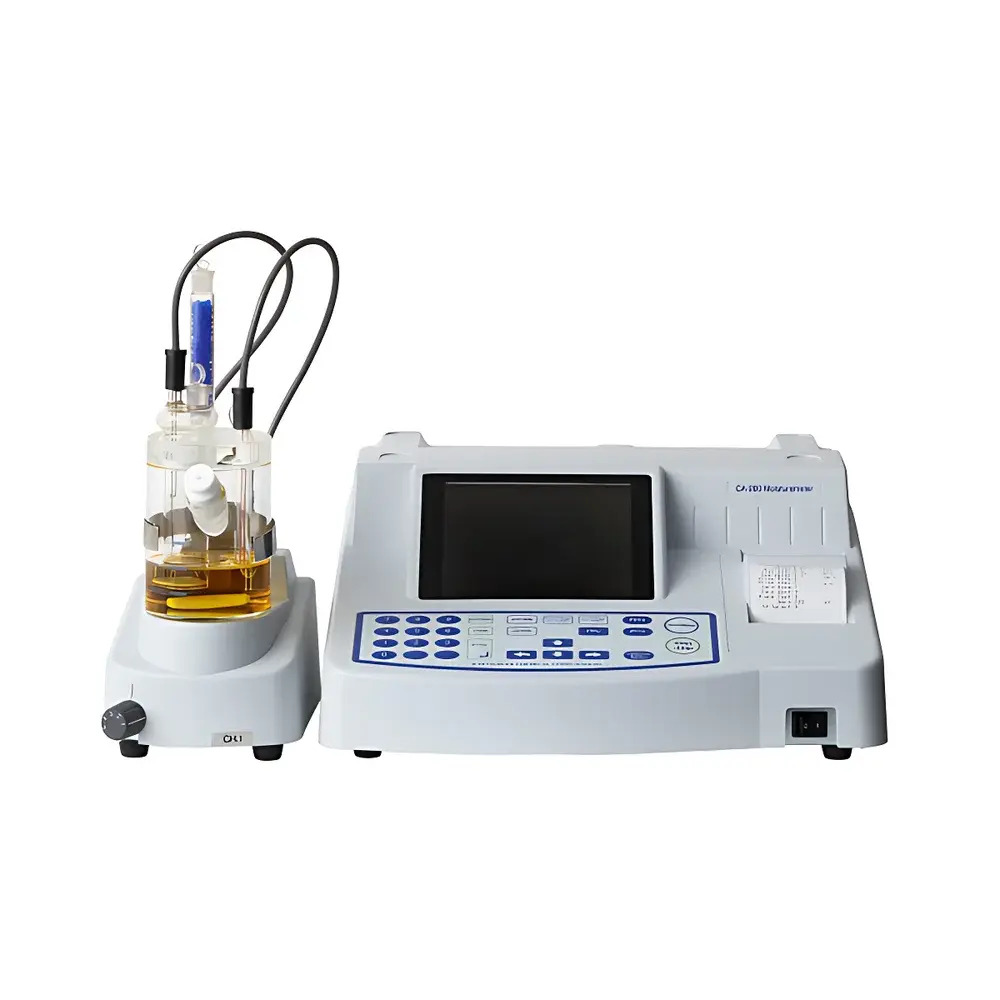
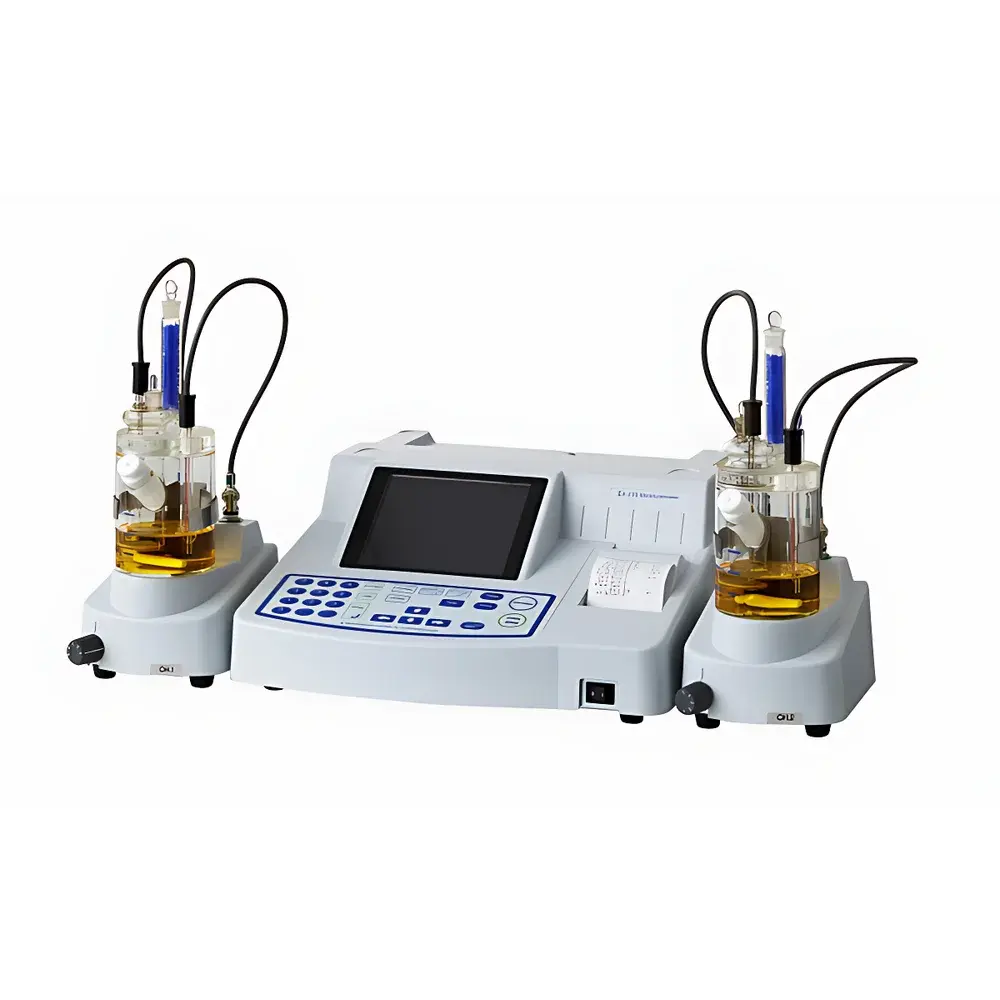
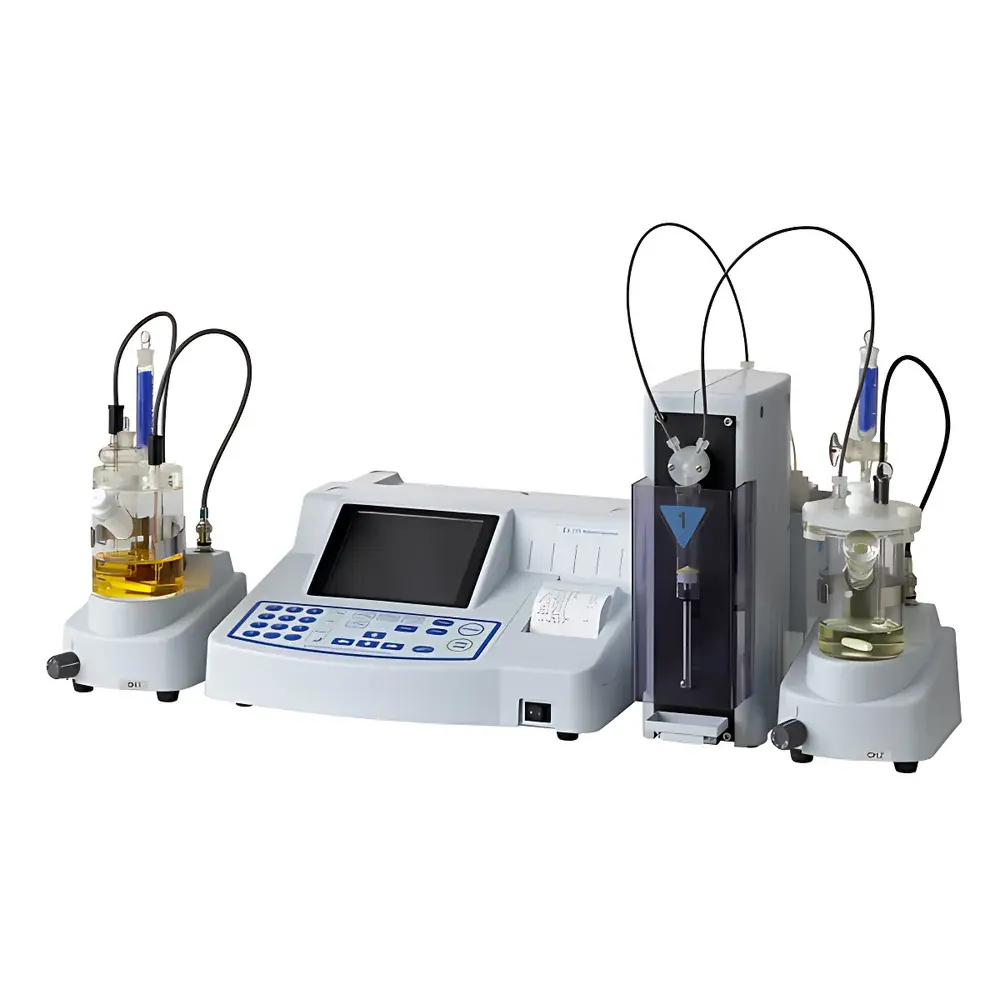
MITSUBISHI CHEMICAL CA-200 Coulometric Karl Fischer Moisture Analyzer for Insulating Oil
| Brand | MITSUBISHI CHEMICAL |
|---|---|
| Origin | Japan |
| Model | CA-200 |
| Measurement Principle | Coulometric Karl Fischer Titration |
| Measurement Range | 10 µg – 100 mg H₂O |
| Titration Speed | 2.2 mg H₂O/min (36 µg H₂O/sec) |
| Electrolysis Current | 430 mA |
| Precision | CV ≤ 0.3% for samples ≥ 1 mg H₂O (n = 10) |
| Display | 5.7-inch color LCD |
| Sample Capacity | Up to 33 samples with optional auto-sampler |
| Data Storage | 20 user-defined methods, each supporting 50 sub-files |
| Interface | RS-232C (optional), USB port for data export, balance input, internal/external communication ports |
| Power Supply | AC 100–120 V or 230–240 V, 50/60 Hz |
| Power Consumption | 80 VA (100–120 V), 310 VA (230–240 V) |
| Dimensions (Analyzer) | 220 × 350 × 360 mm (W×D×H) |
| Weight | ~5 kg |
| Stirrer Dimensions | 120 × 180 × 148 mm |
| Weight | ~1 kg |
Overview
The MITSUBISHI CHEMICAL CA-200 is a high-precision coulometric Karl Fischer moisture analyzer engineered specifically for trace and macro-level water quantification in insulating oils and other electrically sensitive dielectric fluids. It operates on the fundamental electrochemical principle of coulometric Karl Fischer titration—where iodine is generated *in situ* via controlled electrolysis of an iodide-containing reagent, reacting stoichiometrically with water according to the classic Karls Fischer reaction: I₂ + SO₂ + H₂O + 3RN + CH₃OH → 2RN·HI + RN·HSO₄CH₃. This method delivers exceptional selectivity for water over interfering volatiles and matrix components, making it the internationally recognized reference technique for moisture determination in transformer oils, turbine oils, and other high-value electrical insulation media. Unlike volumetric systems, the CA-200 eliminates burette calibration drift and reagent concentration uncertainty by directly correlating electrical charge (coulombs) to water mass via Faraday’s law—ensuring intrinsic accuracy across its full 10 µg to 100 mg H₂O measurement range.
Key Features
- Dual-Channel Expandability: Configurable with two independent coulometric cells, dual generator electrodes, or dual vaporizers—enabling parallel analysis or method cross-validation without hardware replacement.
- Intelligent Electrode Management: Automatic electrode polarization compensation and real-time background current correction eliminate manual cleaning cycles and mitigate drift from electrode fouling during extended runs.
- Programmable Stirring Control: Five-step magnetic stirrer with closed-loop speed regulation ensures consistent mixing kinetics across viscosity ranges—from low-viscosity naphthenic oils to high-viscosity ester-based insulating fluids—without vortex formation or splashing.
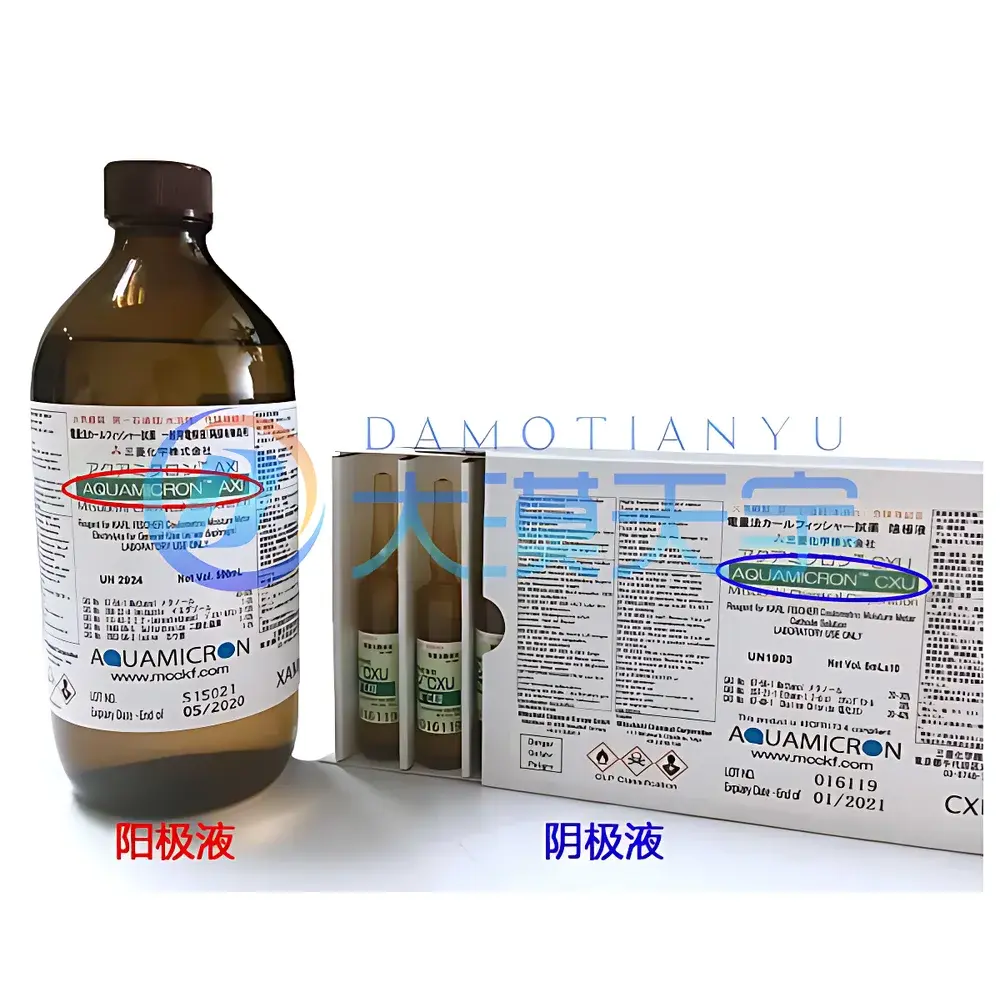
- Modular Reagent Handling: Optional reagent exchange unit enables one-touch evacuation of spent electrolyte and refill with fresh AQUAMICRON™ single-component reagent—minimizing operator exposure and downtime.
- Open-Formula Architecture: User-definable calculation templates support custom reporting units (e.g., ppm, % w/w, mg/kg), dilution factors, and multi-step normalization—essential for compliance with ASTM D6304, IEC 60814, and GB/T 7600.
- Integrated Thermal Printer: Prints timestamped reports containing method ID, sample ID, titration curve, endpoint detection logic, raw coulomb count, calculated water mass, and statistical validation flags—fully audit-ready for GLP/GMP environments.
Sample Compatibility & Compliance
The CA-200 accommodates liquid, solid, and gaseous matrices via interchangeable vaporization modules—including heated oven adapters for hygroscopic solids (e.g., cellulose pressboard, silica gel desiccants), gas diffusion cells for dissolved moisture in LPG or SF₆, and direct injection kits for volatile solvents. Its coulometric design inherently avoids interference from aldehydes, ketones, and acidic compounds when equipped with membrane-separated generator electrodes—critical for testing aged oil containing oxidation byproducts. The system meets ISO/IEC 17025 method validation requirements and supports 21 CFR Part 11-compliant electronic records when paired with validated laboratory information management system (LIMS) integration. Routine operation aligns with ASTM D1533 (for insulating oils), ASTM D6304 (for petroleum products), and IEC 60814 (for electrical insulating oils), ensuring regulatory acceptance in power generation, transmission, and distribution asset management workflows.
Software & Data Management
The embedded firmware provides 20 method folders, each holding 50 compound settings—allowing precise configuration of cell conditioning time, endpoint sensitivity thresholds, stirring delay intervals, and post-titration stabilization periods. All 200 most recent results are retained with full metadata: operator ID, environmental temperature/humidity (via optional sensor input), balance serial number, reagent lot traceability, and digital signature fields. USB export generates CSV-formatted datasets compatible with Excel, JMP, and statistical process control (SPC) platforms. RS-232C connectivity enables bidirectional command scripting for automated batch sequencing in unattended operation—particularly valuable for preventive maintenance labs performing scheduled transformer oil surveillance programs.
Applications
Primary use cases include moisture monitoring in mineral oil-filled power transformers (per IEEE C57.106), evaluation of ester-based biodegradable insulating fluids, QC release testing of new oil batches prior to commissioning, and forensic analysis of moisture ingress mechanisms in failed bushings or tap changers. Secondary applications span lubricant stability assessment in turbine systems, residual solvent quantification in pharmaceutical excipients, and moisture mapping in polymer film manufacturing—leveraging the instrument’s ability to resolve sub-20 µg water masses with repeatability <0.3% RSD. Its robust architecture supports continuous operation in ISO Class 8 cleanrooms and utility substation laboratories with ambient temperature fluctuations between 15–35°C.
FAQ
What distinguishes coulometric from volumetric Karl Fischer titration in insulating oil analysis?
Coulometric KF generates iodine electrochemically at the anode, eliminating reagent standardization errors and enabling superior precision below 100 µg water—critical for detecting early-stage hydrolysis in transformer oil.
Can the CA-200 comply with ASTM D6304 for petroleum products?
Yes—the system satisfies all instrumental performance criteria in ASTM D6304 Section 8, including endpoint detection reproducibility, reagent stability verification, and blank correction protocols.
Is GLP-compliant audit trail functionality built-in?
While native firmware logs operator actions and result history, full 21 CFR Part 11 compliance requires integration with a validated third-party LIMS or electronic lab notebook (ELN) platform.
What vaporization accessories are required for solid insulation materials like pressboard?
A programmable oven vaporizer (e.g., Mitsubishi MKA-210) with temperature ramping up to 250°C and inert gas purge is recommended for quantitative moisture release from cellulose-based dielectrics.
How often must the generator electrode be cleaned or replaced?
With automatic polarization compensation enabled, routine cleaning is unnecessary; typical service intervals exceed 6 months under standard oil testing conditions—verified by daily system suitability checks per USP .






