
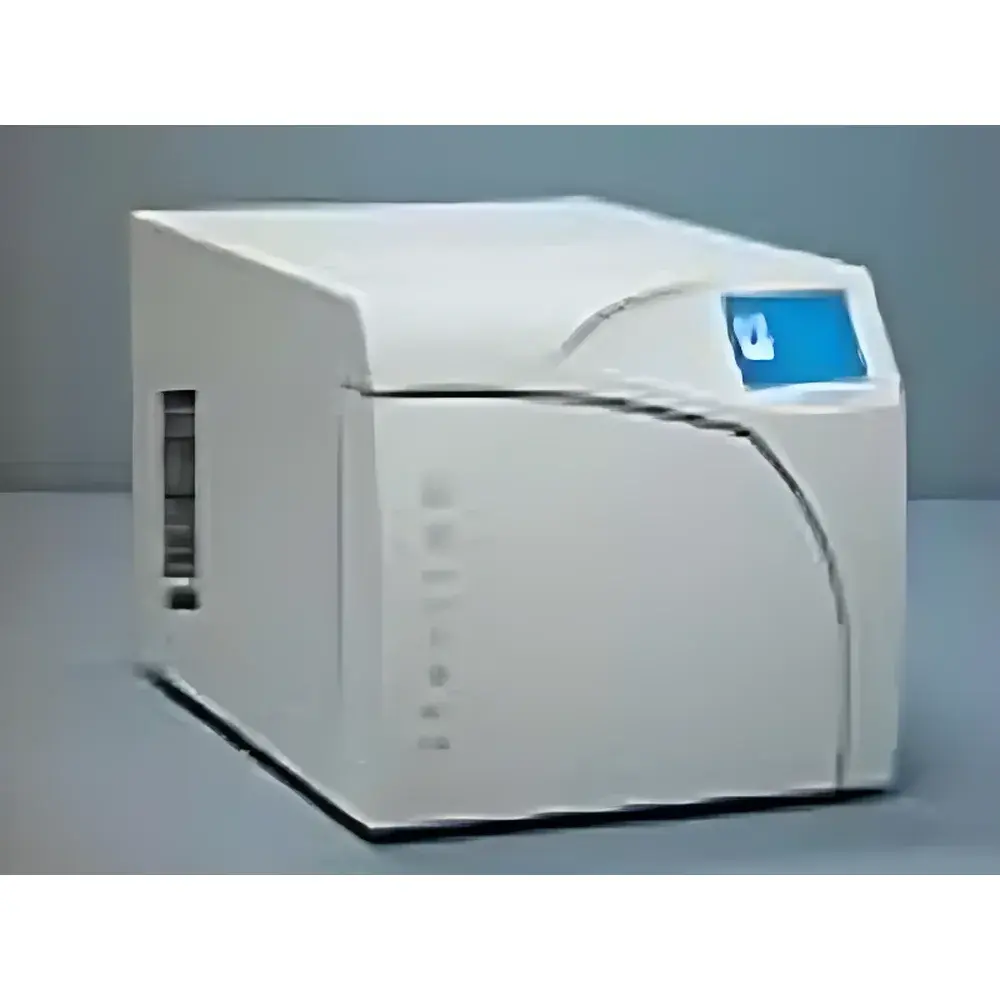
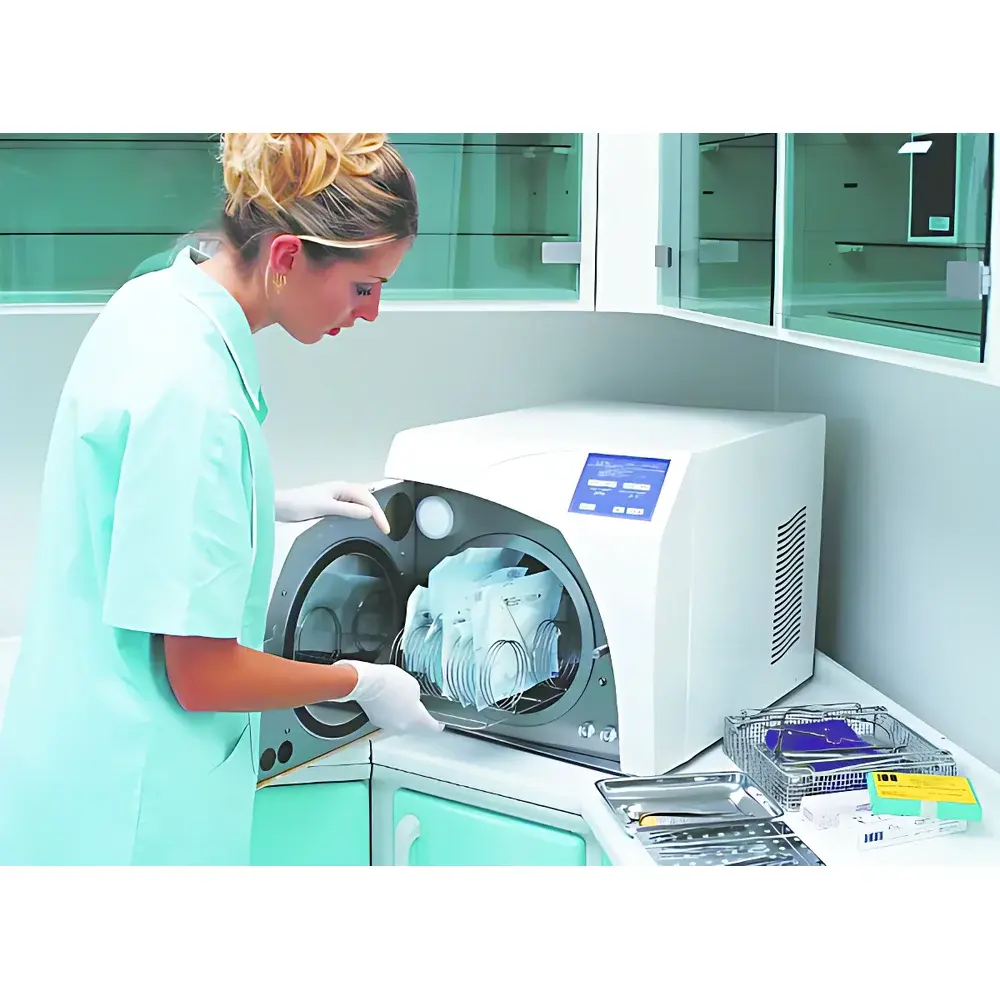
MMM Group STERIDENT / STERIMAT / STERILAB Desktop Steam Sterilizer Series
| Brand | MMM |
|---|---|
| Origin | Germany |
| Model Options | 15 L, 20 L, 25 L |
| Maximum Temperature | 134 °C |
| Maximum Pressure | 3.1 bar (g) |
| Chamber Dimensions | Ø238 mm × 430 mm (L) |
| External Dimensions | 460 mm × 720 mm × 430 mm (W×H×D) |
| Chamber Volume | 15 L / 20 L / 25 L |
| Sterilization Method | Pulsed Vacuum Steam Sterilization (STERIDENT & STERIMAT) |
| Vacuum System | Integrated diaphragm vacuum pump (max. –87 kPa) |
| Control Interface | Full-color TFT touchscreen |
| Chamber Material | AISI 316 stainless steel (EN 10088-1 compliant) |
| Compliance | prEN 13060:2023, EN 285, DIN 58950, DIN 58951, PED 2014/68/EU, Machinery Directive 2006/42/EU, FDA 21 CFR Part 11 (with optional audit trail), GMP/cGMP, GAMP 5 |
Overview
The MMM Group STERIDENT, STERIMAT, and STERILAB desktop steam sterilizers represent a class of compact, CE-marked Class B medical device sterilizers engineered for precision, repeatability, and regulatory compliance in research laboratories, biosafety level 2/3 (BSL-2/BSL-3) facilities, and quality-controlled pharmaceutical environments. These units operate on the fundamental principle of saturated steam under controlled pressure and temperature to achieve microbial inactivation—leveraging either pulsed vacuum (STERIDENT/STERIMAT) or gravity displacement (STERILAB) cycles to ensure complete air removal and uniform steam penetration into porous loads, wrapped instruments, and hollow devices. With maximum operating conditions of 134 °C at 3.1 bar (g), they exceed the thermal lethality thresholds required for sterilizing resistant spores (e.g., Geobacillus stearothermophilus) and enveloped viruses, fulfilling the stringent validation requirements of prEN 13060:2023—the current European harmonized standard for small steam sterilizers.
Key Features
- Integrated electric steam generator producing high-purity, low-endotoxin steam—eliminating dependency on external boiler systems and minimizing condensate contamination risk
- AISI 316 stainless steel chamber (EN 10088-1 certified) with electropolished interior surface for corrosion resistance, cleanability, and compliance with DIN 58951 hygienic design criteria
- Dual independent microprocessor control system (dual-CPU architecture) providing hardware-level redundancy for critical safety functions including temperature, pressure, and vacuum monitoring
- Full-color TFT touchscreen interface with multilingual support (English, German, French, Spanish, Chinese), intuitive workflow navigation, and real-time graphical cycle display
- Automated motorized door with safety interlock, torque-sensing closure verification, and emergency manual release mechanism meeting EN 12470-1 mechanical safety requirements
- Modular vacuum system: Diaphragm pump capable of achieving –87 kPa absolute pressure for deep air removal—enabling validated Bowie & Dick testing per ISO 11140-4 and Helix test execution
- Configurable standby mode with automatic pre-heating to 85 °C, reducing cycle start-up time and improving energy efficiency during intermittent use
- Separate fresh water reservoir and waste condensate collection tank with continuous level sensing and visual/audible low-water alerts
Sample Compatibility & Compliance
These sterilizers accommodate a broad range of load types—including unwrapped solid instruments, wrapped surgical kits, porous textiles, glassware, pipette tips, culture media bottles, and polymer-based lab consumables—without compromising sterility assurance. All models comply with international regulatory frameworks governing medical device reprocessing and pharmaceutical manufacturing: prEN 13060:2023 (Class B small steam sterilizers), EN 285 (large sterilizers, referenced for process validation methodology), PED 2014/68/EU (pressure equipment), and Machinery Directive 2006/42/EU. For regulated environments, optional software packages provide full 21 CFR Part 11 compliance—including electronic signatures, role-based access control, and immutable audit trails for all cycle parameters, alarms, and user actions. Validation documentation aligns with ISO 17665-1, ISO 11134, and EU Annex 1 requirements for sterile product manufacturing.
Software & Data Management
The embedded sterilizer control software supports up to nine user-configurable programs—including six validated sterilization cycles (P1–P6), three diagnostic routines (Bowie & Dick Test, Helix Test, Vacuum Integrity Test), and one custom program slot (P7). Cycle logs are stored internally with timestamps, operator ID, chamber temperature/pressure/vacuum profiles, and pass/fail status flags. Optional Ethernet or USB export enables integration with Laboratory Information Management Systems (LIMS) or Manufacturing Execution Systems (MES). Data export formats include CSV and PDF reports compatible with GLP/GMP documentation workflows. Firmware updates are performed via secure USB key with cryptographic signature verification to maintain system integrity.
Applications
- Routine decontamination of reusable laboratory glassware, metal tools, and plasticware in academic and industrial research labs
- Terminal sterilization of culture media, buffers, and reagents in microbiology and cell culture facilities
- Reprocessing of heat-stable medical devices and dental instruments under ISO 17664-compliant protocols
- Validation support activities including vacuum performance verification, steam penetration assessment, and leak testing in QA/QC departments
- Compliance-driven operations in GMP-certified cleanrooms, biotech pilot plants, and contract development and manufacturing organizations (CDMOs)
FAQ
What is the difference between STERIDENT, STERIMAT, and STERILAB models?
STERIDENT and STERIMAT utilize pulsed vacuum technology for optimal air removal from complex and porous loads; STERILAB employs gravity displacement, suitable for non-porous, unpackaged items.
Are these sterilizers suitable for BSL-3 laboratories?
Yes—when installed with appropriate exhaust routing and integrated biological indicator monitoring, they meet containment and validation requirements for BSL-3 facility sterilization workflows.
Can I validate the sterilizer according to ISO 17665-1?
Absolutely—the unit’s programmable cycle parameters, data logging fidelity, and traceable sensor calibration paths fully support installation qualification (IQ), operational qualification (OQ), and performance qualification (PQ) per ISO 17665-1 Annexes A–C.
Is third-party validation support available?
MMM Group partners with accredited validation service providers globally; IQ/OQ/PQ documentation templates and FAT/SAT protocols are supplied with each unit.
Does the system support remote monitoring?
With optional network module and MMM Connect software, real-time status, alarm notifications, and historical cycle review are accessible via secure web interface or mobile application.



