
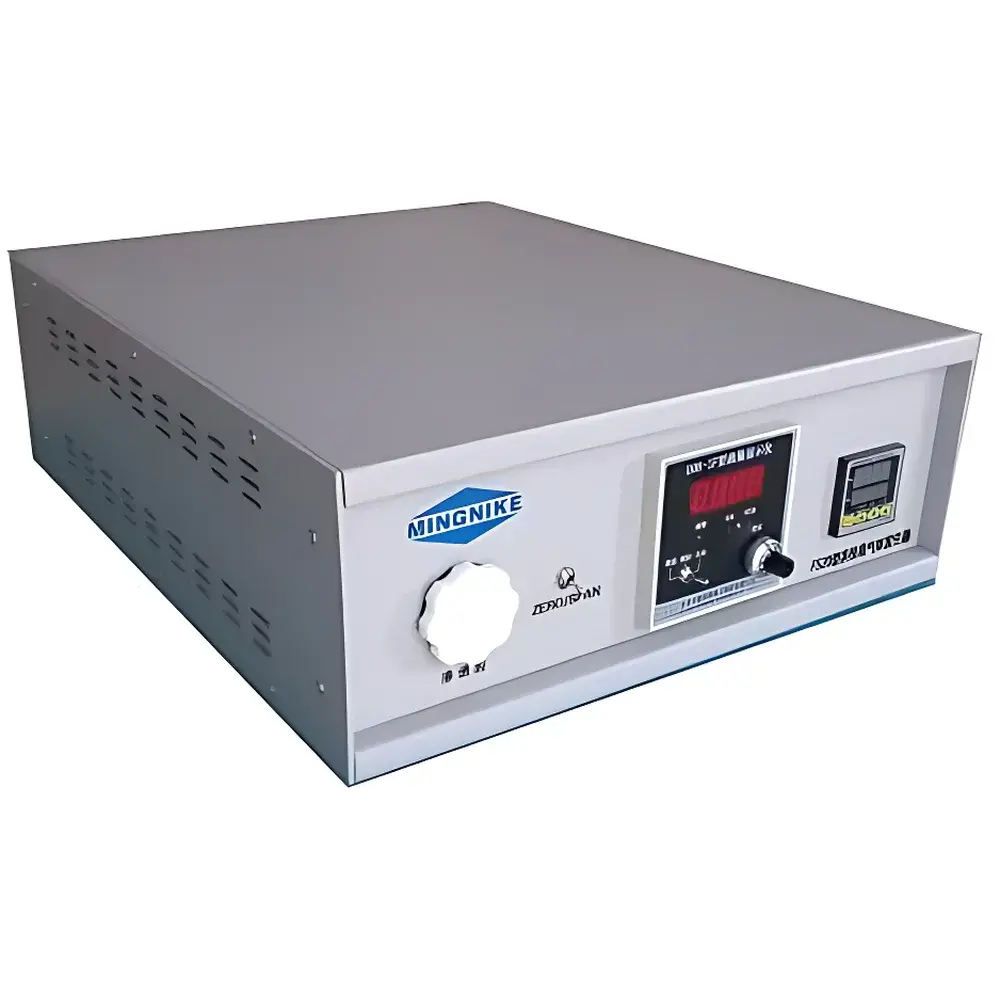
MNK MF620/MF630 Dual-Channel NIST-Traceable Mercury & Formaldehyde Permeation-Based Calibration Gas Generator
| Brand | MNK |
|---|---|
| Origin | Beijing, China |
| Model | MF620 (Hg) / MF630 (HCHO) |
| Calibration Traceability | NIST-Traceable Permeation Tubes |
| Concentration Range | 0.1 ppb – 500 ppm (adjustable for both Hg and HCHO) |
| Flow Control | Precision Mass Flow Controllers (MFCs), 0–1000 mL/min, user-programmable or panel-controlled |
| Carrier Gas | Compressed air, nitrogen, or custom gas (dual inlet optional) |
| Configuration | Benchtop with portable footprint (W×D×H: 320×380×220 mm) |
| Permeation Tube Capacity | Up to 4 independent permeation tubes (standard: 1 Hg + 1 HCHO |
| Dilution Architecture | Dual independent dilution paths with separate temperature-controlled permeation chambers (±0.1 °C stability) |
| Output Modes | Zero gas, span gas, or alternating zero/span sequences |
| Compliance | Designed for ISO/IEC 17025-compliant calibration workflows |
Overview
The MNK MF620/MF630 Dual-Channel Calibration Gas Generator is an engineered solution for the on-demand, traceable generation of mercury vapor (Hg⁰) and formaldehyde (HCHO) standard gases in laboratory, environmental monitoring, and instrument calibration settings. It operates on the principle of controlled thermal permeation—utilizing NIST-traceable permeation tubes housed in independently stabilized temperature chambers—to deliver thermodynamically predictable, gravimetrically validated analyte mass transfer rates. Unlike cylinder-based standards, this generator eliminates batch-to-batch variability and long-term stability drift, enabling continuous, real-time concentration adjustment across six orders of magnitude (0.1 ppb to 500 ppm). Its dual-channel architecture allows simultaneous or sequential output of Hg and HCHO standards—or co-generation with additional volatile organic compounds (VOCs) such as benzene and toluene—making it suitable for multi-parameter calibrations required by EPA Method 29, ASTM D6348, ISO 16017-1, and EN 13649-2.
Key Features
- NIST-traceable permeation tubes certified with individual gravimetric calibration reports and uncertainty budgets (k=2)
- Dual independent temperature-controlled permeation chambers (each with ±0.1 °C stability via PID-regulated Peltier elements)
- High-accuracy mass flow controllers (MFCs) compliant with ISO 15378 and calibrated per ISO/IEC 17025 requirements
- Benchtop form factor (320 × 380 × 220 mm) with integrated zero-gas purge pathway and electro-pneumatic valve sequencing
- Front-panel interface supporting manual mode, timed sequence programming (e.g., zero–span–zero cycles), and external TTL/RS-232/Modbus RTU control
- Expandable configuration: up to four permeation tube slots; optional dual-dilution manifold for independent carrier gas routing and cross-contamination mitigation
- Material compatibility: all-wetted parts constructed from electropolished 316L stainless steel, PFA, and Kalrez® seals to prevent adsorption or catalytic decomposition of HCHO and Hg⁰
Sample Compatibility & Compliance
The MF620/MF630 is validated for use with mercury cold vapor atomic absorption spectrometers (CV-AAS), mercury continuous emission monitors (CEMs), formaldehyde-specific electrochemical and DNPH-HPLC systems, and multi-gas photoionization detectors (PIDs). Its output meets stringent traceability requirements under ISO Guide 34 (reference material producers), ISO/IEC 17025 (testing and calibration laboratories), and US EPA 40 CFR Part 60 Appendix B performance specifications. The system supports full audit trails—including operator ID, timestamped parameter changes, chamber temperature logs, and MFC flow verification data—enabling compliance with FDA 21 CFR Part 11 (electronic records/signatures) when integrated with validated LIMS or CDS platforms.
Software & Data Management
While fully functional in standalone mode, the generator interfaces seamlessly with third-party calibration management software via industry-standard protocols. Raw operational metadata—including permeation tube lot numbers, certified emission rates, chamber setpoints, actual flow readings, and elapsed tube usage hours—is exportable in CSV or XML format. Optional firmware upgrade enables automated tube lifetime tracking based on cumulative thermal exposure and manufacturer-specified maximum duty cycles. All calibration events can be synchronized with instrument QC logs to fulfill GLP documentation requirements for method validation (e.g., ICH Q2(R2)) and regulatory submissions.
Applications
- Primary calibration of mercury analyzers used in coal-fired power plant stack testing and municipal waste incinerator compliance monitoring
- Preparation of formaldehyde reference standards for indoor air quality (IAQ) studies per ISO 16000-3 and ASTM D5197
- Multi-component calibration blends for VOC speciation systems (e.g., TO-15, TO-17) requiring simultaneous Hg/HCHO/benzene trace standards
- Method development and verification for EPA Method 30B (mercury) and Method 320 (formaldehyde) field instruments
- Reference gas supply for sensor drift correction in continuous ambient air monitoring networks (e.g., EEA Air Quality Directive reporting)
- Research-grade gas standard generation for kinetic studies of HCHO oxidation pathways or Hg⁰ heterogeneous reactions on catalyst surfaces
FAQ
How is NIST traceability maintained for the permeation tubes?
Each permeation tube is supplied with a NIST-traceable calibration certificate specifying its certified emission rate (ng/min), expanded uncertainty (k=2), reference temperature, and expiration date. Certificates are issued by an ISO/IEC 17025-accredited calibration laboratory.
Can the system generate mixed standards containing both mercury and formaldehyde simultaneously?
Yes—the dual-chamber design permits concurrent operation at independently optimized temperatures (e.g., 40 °C for Hg, 35 °C for HCHO), with precise MFC-controlled blending prior to outlet.
What maintenance intervals are recommended for long-term accuracy?
Permeation tubes require replacement per manufacturer’s stated lifetime (typically 6–12 months depending on operating temperature and duty cycle); MFCs should undergo annual recalibration per ISO/IEC 17025 procedures.
Is the generator compatible with inert carrier gases such as nitrogen or argon?
Yes—dual gas inlets support air, nitrogen, argon, or synthetic air; inert carriers are recommended for formaldehyde to minimize oxidative degradation.
Does the system support remote monitoring and control in unattended operation?
Via RS-232 or Modbus RTU, the generator transmits real-time status (chamber temps, flow rates, valve states) and accepts command sets for automated calibration sequences—enabling integration into 24/7 QA/QC routines.



