
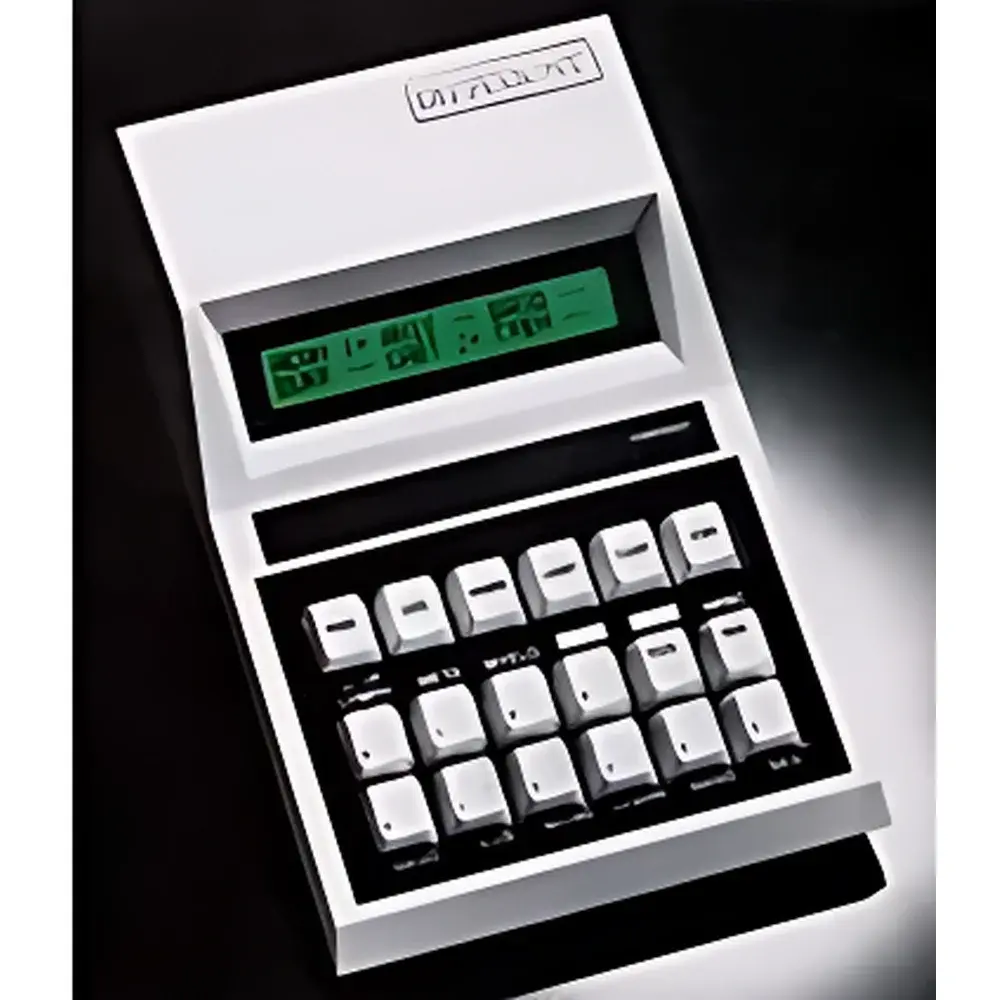
Modulus COMP-U-DIFF Differential Cell Counter
| Brand | Modulus |
|---|---|
| Origin | USA |
| Model | COMP-U-DIFF |
| Detection Time | 1 sec per channel |
| Detection Concentration Range | 5 × 10³ to 5 × 10⁶ cells/µL |
| Sample Volume | 5 µL |
| Throughput | 12 samples per batch |
| Detectable Cell Size Range | 1–25 µm |
| Display | Backlit LCD (simultaneous 12-channel numeric readout) |
| Memory Capacity | 127 sample records |
| Interface | RS-232 dual-port (PC + printer) |
| Output Formats | Horizontal (PC), Vertical with header (printer) |
| RBC Morphology Codes | 24 predefined 4-character descriptors (e.g., HYPO, P01K), 6-tier quantification scale |
| NRBC Channel | Dedicated non-inclusive counting channel |
| Count Correction | Per-channel manual override |
| Real-time % Calculation | Auto-updated during entry |
| Audible Prompt | Every 100 counts |
| Dimensions | 15.2 × 22.9 cm (6" × 9") |
Overview
The Modulus COMP-U-DIFF Differential Cell Counter is a dedicated, microprocessor-controlled workstation engineered for manual differential leukocyte and erythrocyte morphology assessment in clinical hematology laboratories. Unlike automated image-based or flow cytometric analyzers, the COMP-U-DIFF operates as a human-in-the-loop data capture interface—designed to standardize, accelerate, and audit the manual differential count process while preserving morphological interpretation by trained technologists. Its core function is the structured digital transcription of cell classifications observed under light microscopy, coupled with standardized RBC morphology annotations and technician-specific metadata. The device implements a deterministic, prompt-driven workflow via a backlit LCD display, ensuring procedural consistency across operators and shifts. It conforms to CLIA and ISO 15189 requirements for documented manual differential procedures and supports traceability through embedded sample ID, operator ID, and timestamp logging.
Key Features
- 12-Channel Simultaneous Display: All channels rendered in large-font, high-contrast numerals on a single backlit LCD—enabling rapid visual verification without scrolling or page navigation.
- Contamination-Resistant Sealed Keypad: IP65-rated tactile switches prevent fluid ingress and particulate accumulation, critical for high-volume clinical environments where reagent splashes and alcohol wipes are routine.
- Onboard Non-Volatile Memory: Stores up to 127 complete differential records—including WBC differentials, RBC morphology codes, platelet estimates, and custom annotations—without dependency on external computing infrastructure.
- Bi-Directional LIS Integration: RS-232 protocol support enables both query (pull) and push operations with laboratory information systems, allowing real-time retrieval of patient demographics, prior differentials, or peripheral smear images directly on the COMP-U-DIFF screen.
- Standardized RBC Morphology Input: Predefined 4-character morphology codes (e.g., “ACAN”, “TARGET”, “SPHR”) mapped to six severity levels (0–5), aligning with WHO and CAP morphology lexicons for inter-laboratory comparability.
- Dedicated NRBC & Abnormal Cell Channel: A configurable “non-total” counter permits independent enumeration of nucleated red blood cells, blasts, or other atypical populations without affecting the primary 100-cell differential denominator.
- Real-Time Percentage Recalculation: Percentages update dynamically as counts are entered or corrected—eliminating post-entry arithmetic errors and supporting immediate QC review.
- Audible Counting Feedback: Programmable tone triggers every 100 cells counted, reducing cognitive load and minimizing tally fatigue during extended sessions.
Sample Compatibility & Compliance
The COMP-U-DIFF accepts standard Wright- or Giemsa-stained peripheral blood smears prepared per CLSI H20-A2 guidelines. It does not perform optical analysis; rather, it digitizes morphologic interpretations made by certified medical laboratory scientists (MLS) or hematopathologists. As such, it complies with FDA 21 CFR Part 11 when deployed with validated electronic signature protocols and audit-trail-enabled LIS interfaces. Data integrity is ensured through immutable record timestamps, operator ID binding, and checksum-verified serial transmission. The device meets IEC 61000-4 electromagnetic compatibility standards and carries UL 61010-1 certification for laboratory electrical safety.
Software & Data Management
Data export occurs via ASCII-formatted RS-232 streams compatible with all major LIS platforms (e.g., SunQuest, Cerner CoPath, Epic Beaker). Two native output formats are supported: horizontal tab-delimited strings for direct database ingestion, and vertically formatted printable reports with header blocks containing accession number, date/time, operator ID, and instrument serial number. Batch transfer mode enables secure transmission of up to 127 records in a single session—ideal for offline processing or disaster recovery scenarios. Internal status diagnostics (baud rate, parity, stop bits) are accessible via the Status Screen menu, facilitating rapid troubleshooting without external configuration tools.
Applications
- Clinical hematology labs performing manual differentials per CAP checklist HEM.31230 and CLIA §493.1253(b)(1).
- Reference laboratories validating automated differential results requiring morphologic correlation.
- Training programs documenting competency in peripheral smear interpretation with time-stamped, operator-verified entries.
- Research studies requiring standardized RBC morphology scoring across multi-site trials (e.g., thalassemia, hereditary spherocytosis cohorts).
- Laboratories undergoing GLP/GMP audits where raw differential data must be preserved in its original entry format—not as processed LIS fields.
FAQ
Does the COMP-U-DIFF perform automated cell recognition or image analysis?
No. It is a manual data entry workstation only. All cell classifications and morphology assessments must be performed visually by a qualified technologist using a light microscope.
Can the device operate independently of a LIS or computer?
Yes. Its 127-record internal memory allows full standalone operation—including differential entry, morphology coding, and local report printing—for up to 127 samples without network connectivity.
Is the RBC morphology coding system customizable?
No. The 24 predefined 4-character codes and their associated 6-tier severity scale are fixed per the manufacturer’s clinical lexicon and cannot be modified to maintain regulatory alignment.
What is the maximum sample volume required per differential?
The device itself does not consume sample; it records counts derived from standard 100-cell manual differentials performed on conventional blood smears. No liquid handling or aspiration is involved.
How is data security maintained during RS-232 transmission?
Transmission uses hardware handshaking (RTS/CTS) and optional software-level checksum validation. When integrated with LIS systems supporting 21 CFR Part 11, electronic signatures and audit trails are enforced at the host application layer—not within the COMP-U-DIFF firmware.




