
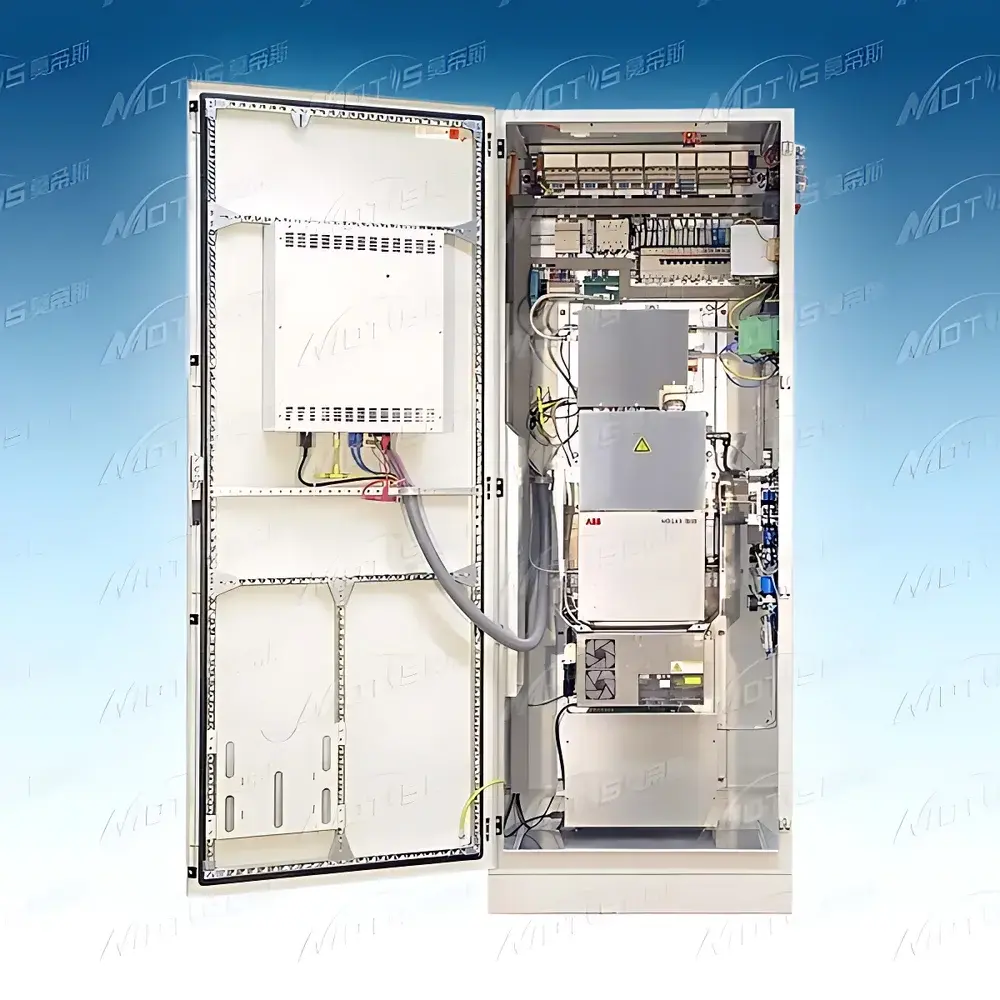
MOTIS FTIR Fourier Transform Infrared Smoke Toxicity Analysis System
| Brand | MOTIS |
|---|---|
| Origin | Jiangsu, China |
| Instrument Type | Online FTIR Spectrometer |
| Wavenumber Range | 490–8500 cm⁻¹ |
| Resolution | 1 cm⁻¹ |
| Scan Speed | ≤3 s per spectrum |
| Signal-to-Noise Ratio | 15,000:1 |
| Optical Path Design | Low-volume, heated long/short-path gas cell |
| Gas Cell Temperature Control | ±1 °C |
| Operating Ambient | IP50 (optional IP53) |
| Power Supply | 100–240 VAC ±10%, 50–60 Hz ±3 Hz |
| Power Consumption | 550 W (startup), 200 W (steady-state), +400 W (gas cell heater max) |
| Sample Gas Flow Rate | 0–10 LPM |
| Calibration Gas Requirements | Certified standard gases traceable to NIST or equivalent |
Overview
The MOTIS FTIR Fourier Transform Infrared Smoke Toxicity Analysis System is an online, real-time gas analyzer engineered for regulatory-compliant measurement of combustion-derived toxicants in flue and smoke gases. It operates on the principle of Fourier Transform Infrared (FTIR) spectroscopy—where broadband infrared radiation passes through a heated, pressurized gas sample, and spectral absorption features are resolved via interferometric detection and fast Fourier transformation. This enables simultaneous, quantitative identification and concentration determination of up to 30+ gaseous species—including CO, CO₂, NO, NO₂, SO₂, HCl, HF, HCN, NH₃, CH₄, C₂H₂, formaldehyde, acrolein, and other volatile organic compounds (VOCs) and acidic gases—without chemical derivatization or chromatographic separation. Designed specifically for continuous emissions monitoring (CEM) in fire testing laboratories, incineration facilities, and industrial combustion R&D, the system meets the stringent optical stability, repeatability, and dynamic range requirements of EN 15267-3:2008–3 for certified automatic measuring systems.
Key Features
- Online, real-time operation: Continuous spectral acquisition at ≤3-second scan intervals with embedded spectral processing, enabling sub-minute response to transient combustion events.
- Heated, low-volume gas cell: Dual-path (long/short) thermally stabilized cell (±1 °C control) minimizes condensation, preserves reactive species integrity, and ensures rapid equilibration—critical for accurate quantification of water-soluble or thermally labile analytes (e.g., HCl, HCN).
- Zero-sample-prep sampling: Hot/wet extraction design eliminates need for dilution, drying, or chemical scrubbing; particulate filtration only—preserving stoichiometric composition and avoiding analyte loss or artifact formation.
- Modular, service-oriented architecture: Interchangeable optical modules, field-replaceable IR source (long-life ceramic emitter), and maintenance-free Michelson interferometer reduce downtime and extend mean time between failures (MTBF) to >3 years under preventive maintenance schedules.
- Embedded analytical engine: Onboard processor executes preloaded, EN 15267-3–validated multicomponent calibration models; outputs engineering units (ppm, mg/m³ @ STP) directly—no external PC required for routine operation.
- Robust environmental resilience: IP50-rated enclosure (upgradable to IP53), 99%+ annual uptime, and self-diagnostic firmware that continuously monitors laser alignment, detector responsivity, and optical throughput—flagging drift or degradation before data integrity is compromised.
Sample Compatibility & Compliance
The system is validated for direct analysis of hot, humid, particulate-laden combustion effluents from cone calorimeters, room-corner tests, and full-scale fire scenarios. It complies with EN 15267-3:2008–3 for performance certification of automated emission monitoring systems, including requirements for linearity (R² ≥ 0.999), repeatability (<2% RSD), zero/span drift (<2% FS/7 days), and interference rejection (e.g., water vapor cross-sensitivity compensated algorithmically). All calibrations are traceable to NIST-certified reference standards. Electrical safety conforms to IEC/EN 61010-1 and UL 61010-1; laser classification meets IEC/EN 60825-1 (Class 1); EMC compliance covers EN 61326-1, EN 55022, EN 55024, FCC Part 15B, and ICES-003. RoHS 2011/65/EU and WEEE 2012/19/EU directives are fully implemented. Optional 21 CFR Part 11–compliant audit trail and electronic signature modules are available for GLP/GMP-regulated laboratories.
Software & Data Management
The embedded firmware supports configurable measurement cycles, multi-range calibration switching, and automatic baseline correction using reference spectra acquired during zero-gas purges. Data export formats include CSV, XML, and industry-standard EPA Method 320-compliant .spc files. Optional PC-based software provides advanced spectral library matching (NIST, EPA, and custom fire toxicant libraries), multivariate curve resolution (MCR), and drift-compensated quantification algorithms. Audit logs record all user actions, calibration events, and instrument status changes with timestamped, immutable entries—meeting GLP documentation rigor. Remote diagnostics and firmware updates are supported via secure TLS-encrypted Ethernet or optional cellular modem interface.
Applications
- Regulatory fire toxicity testing per ISO 13344, ASTM E1354, NFPA 269, and GB/T 20284
- Real-time smoke gas profiling during cone calorimeter, SBI, and room-corner fire experiments
- Incinerator stack emissions monitoring for HCl, HF, SO₂, NOₓ, and dioxin precursor screening
- R&D of flame-retardant materials and low-toxicity polymer formulations
- Validation of computational fire models with experimental speciation data
- Occupational exposure assessment in fire investigation and post-flashover reconstruction
FAQ
Does the system require external cooling or chilled water?
No—the optical bench and detector operate at ambient-stabilized temperatures; no cryogenic or active liquid cooling is needed.
Can it measure formaldehyde and other carbonyls in humid smoke?
Yes—its heated gas cell and high signal-to-noise ratio (15,000:1) enable reliable quantification of formaldehyde down to sub-ppm levels without condensation artifacts.
Is method validation support provided for ISO 13344 or ASTM E1354 compliance?
Yes—MOTIS supplies application notes, calibration verification protocols, and third-party validation reports aligned with these standards.
What maintenance is required beyond filter replacement?
Annual optical alignment verification and biannual source/detector performance checks are recommended; the interferometer requires no periodic adjustment.
Can the system be integrated into existing SCADA or LabVIEW environments?
Yes—it supports Modbus TCP, OPC UA, and ASCII serial protocols for seamless integration with industrial control systems and data acquisition platforms.






