
MSA ST300 Leather Softness Tester
| Origin | UK |
|---|---|
| Manufacturer Type | Authorized Distributor |
| Origin Category | Imported |
| Model | ST300 |
| Pricing | Upon Request |
Overview
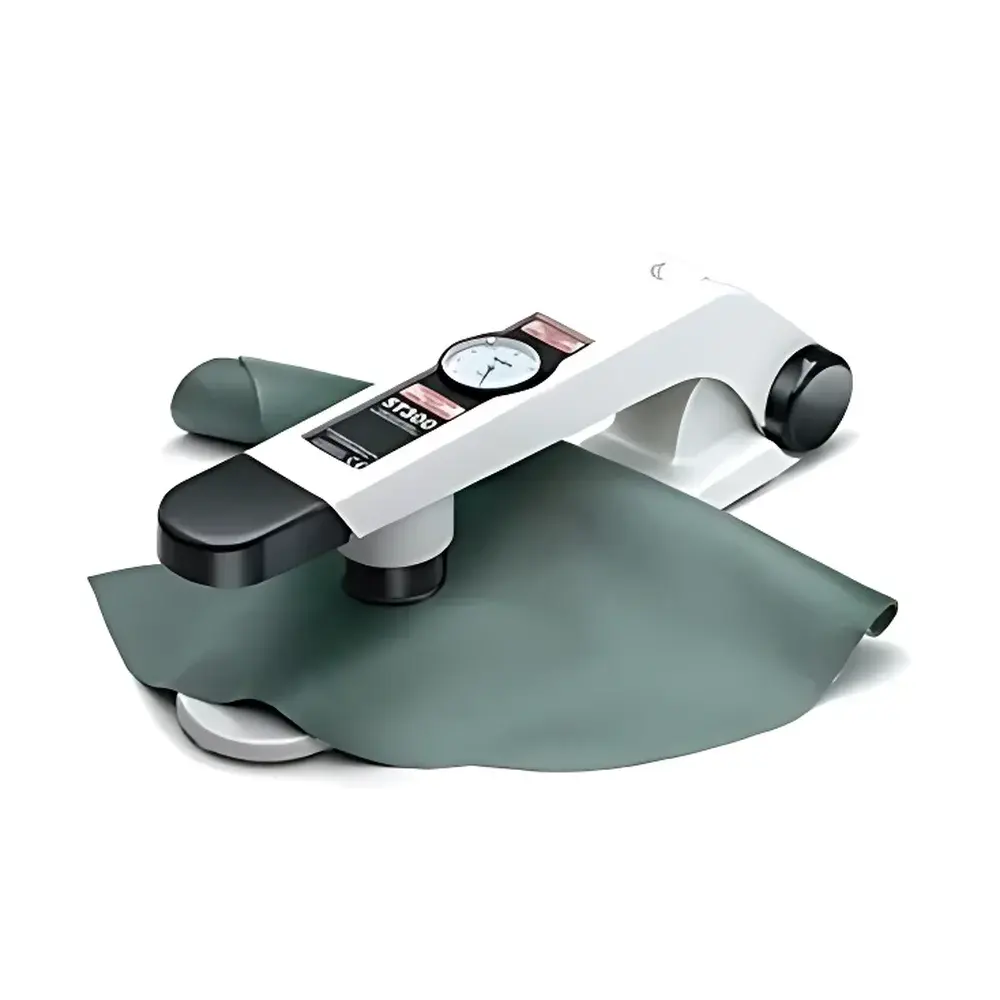
The MSA ST300 Leather Softness Tester is a precision-engineered instrument designed specifically for objective, repeatable assessment of flexural resistance in leather, coated textiles, and other flexible sheet materials. It operates on the principle of controlled indentation under standardized load conditions—applying a calibrated 530 ± 10 g force via a pneumatic actuator (air bladder system) onto a specimen clamped over a fixed-diameter orifice. The resulting deflection—measured as vertical displacement (0.1–6.6 mm) using a high-resolution analog dial gauge—is directly correlated to material softness: greater deflection indicates lower flexural rigidity and higher perceived softness. Developed jointly by MSA Instruments (USA) and the BLC Leather Technology Centre (UK), the ST300 complies with internationally recognized test standards including IUP/36 and EN ISO 17235:2002, ensuring methodological consistency across global supply chains in footwear, automotive upholstery, luxury goods, and technical textile manufacturing.
Key Features
- Non-destructive testing architecture: Open-frame sample placement eliminates the need for cutting specimens, preserving surface integrity and enabling in-situ evaluation of full hides or large-format panels.
- Pneumatically actuated loading system: Delivers precise, vibration-free 530 ± 10 g force without mechanical backlash or operator-induced variability.
- High-accuracy analog dial indicator: 0.1 mm resolution over 0.1–6.6 mm measurement range, factory-calibrated and traceable to NPL (UK) reference standards.
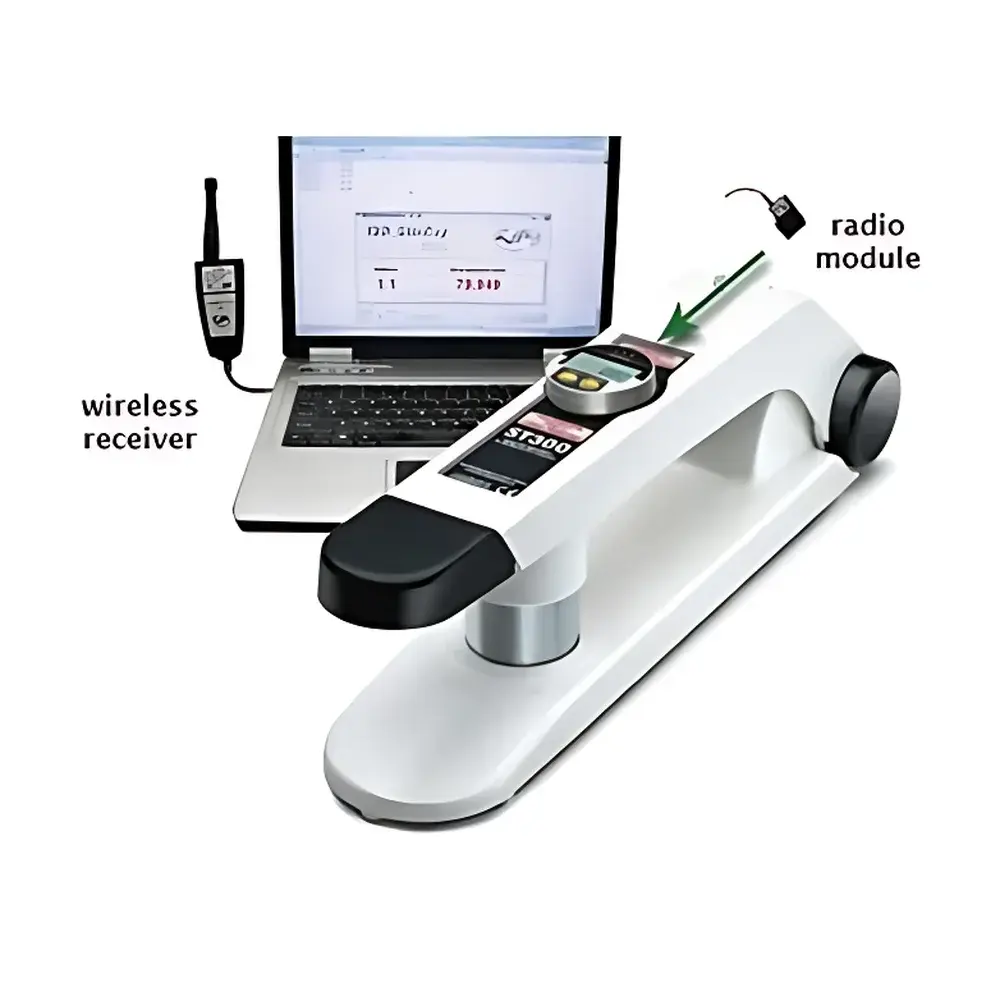
- Wireless data transmission capability: Integrated 2.4 GHz RF module enables real-time telemetry up to 200 m line-of-sight; USB interface supports direct connection to host PCs for firmware updates and calibration logging.
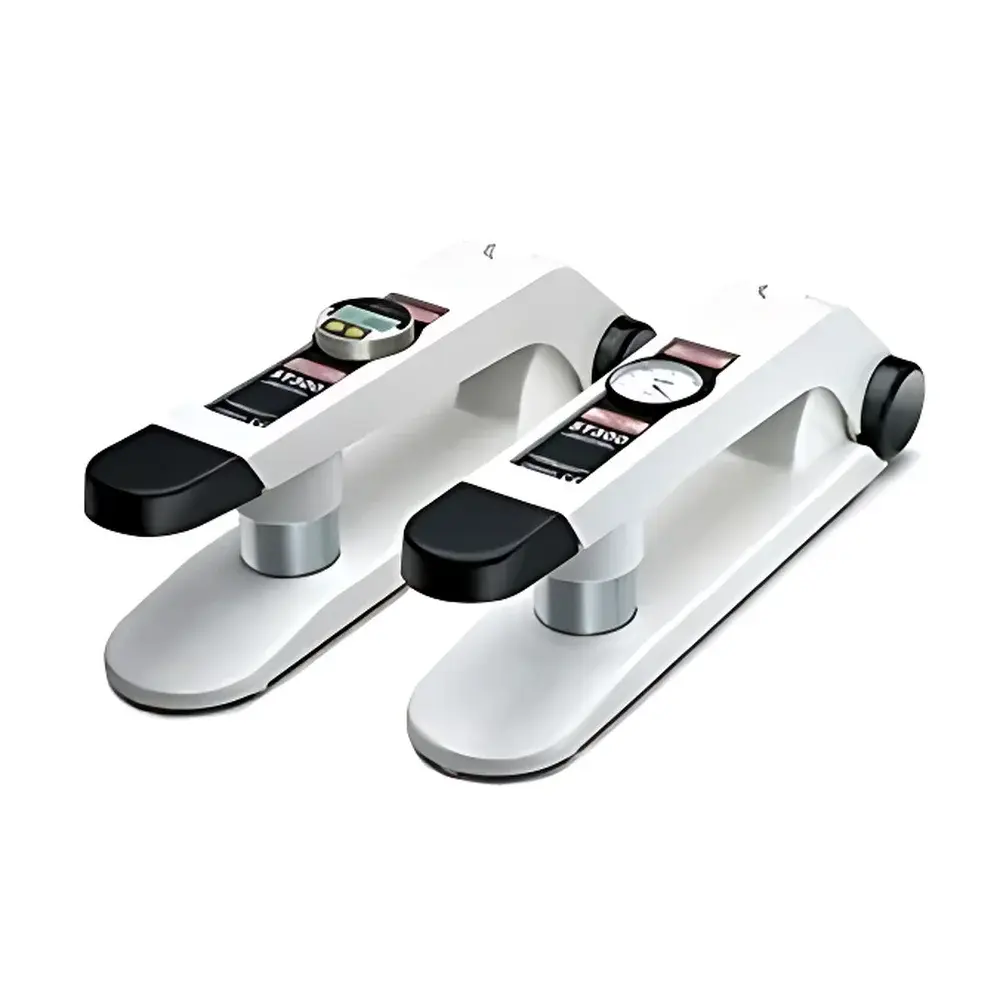
- Modular configuration options: Available in analog pointer-only configuration or digital display variant with optional PC-based software for automated data capture, statistical analysis (mean, SD, CV%), and audit-ready reporting.
- Compact benchtop footprint: Dimensions 12 × 49 × 16 cm (W × D × H); net weight 5.5 kg—designed for integration into QC labs, tannery floor stations, or mobile inspection carts.
Sample Compatibility & Compliance
The ST300 accommodates flat, non-stretchy sheet materials ranging from 0.5 mm to 4.0 mm thickness, including bovine, ovine, and synthetic leathers; PU- and PVC-coated fabrics; nubuck; and suede. Its open-clamp geometry accepts irregularly shaped samples up to 150 mm × 150 mm without trimming. All test procedures conform to EN ISO 17235:2002 (determination of softness of leather by flexing resistance) and IUP/36 (BLC standard for softness evaluation). Instrument validation documentation—including calibration certificates, uncertainty budgets, and traceability statements—is provided per ISO/IEC 17025 requirements. For regulated environments, the digital version supports 21 CFR Part 11-compliant electronic signatures and audit trails when used with validated software.
Software & Data Management
The optional ST300 Digital Control Software (v3.2+) runs on Windows 10/11 and provides real-time graphical display of deflection curves, automatic pass/fail flagging against user-defined tolerance bands, and export to CSV, PDF, or XML formats. Data files include embedded metadata: operator ID, timestamp, ambient temperature/humidity (via optional external sensor input), sample ID, and instrument serial number. All raw measurements are stored locally with SHA-256 hashing to prevent tampering. Software installation packages include IQ/OQ documentation templates aligned with GLP and GMP quality systems.
Applications
- Batch uniformity verification: Quantifying softness variation across hides from the same tanning lot to identify processing inconsistencies.
- Zonal mapping: Assessing regional softness gradients (e.g., shoulder vs. belly areas) to inform cutting yield optimization and grading protocols.
- Coating process validation: Monitoring softness changes during finishing stages (e.g., fatliquoring, retanning, topcoating) to ensure target hand-feel specifications.
- Supplier qualification: Enabling objective, third-party auditable softness benchmarks between tanners, converters, and brand OEMs.
- R&D formulation testing: Evaluating impact of novel softening agents, crosslinkers, or bio-based tanning systems on final leather performance.
FAQ
Does the ST300 require sample cutting prior to testing?
No—the open-clamp design allows direct placement of intact hides or large panels without sectioning.
Is calibration traceable to national standards?
Yes—each unit ships with a UKAS-accredited calibration certificate referencing NPL primary standards.
Can the wireless module operate through walls or metal enclosures?
Line-of-sight range is 200 m; reinforced concrete or steel structures reduce effective range—site survey recommended.
What accessories are included as standard?
Zero-adjustment shim, certified softness reference gel, two pressure rings, and operating manual.
Is the instrument suitable for ISO 17025-accredited laboratories?
Yes—full metrological documentation, uncertainty analysis, and maintenance logs are supplied upon request.






