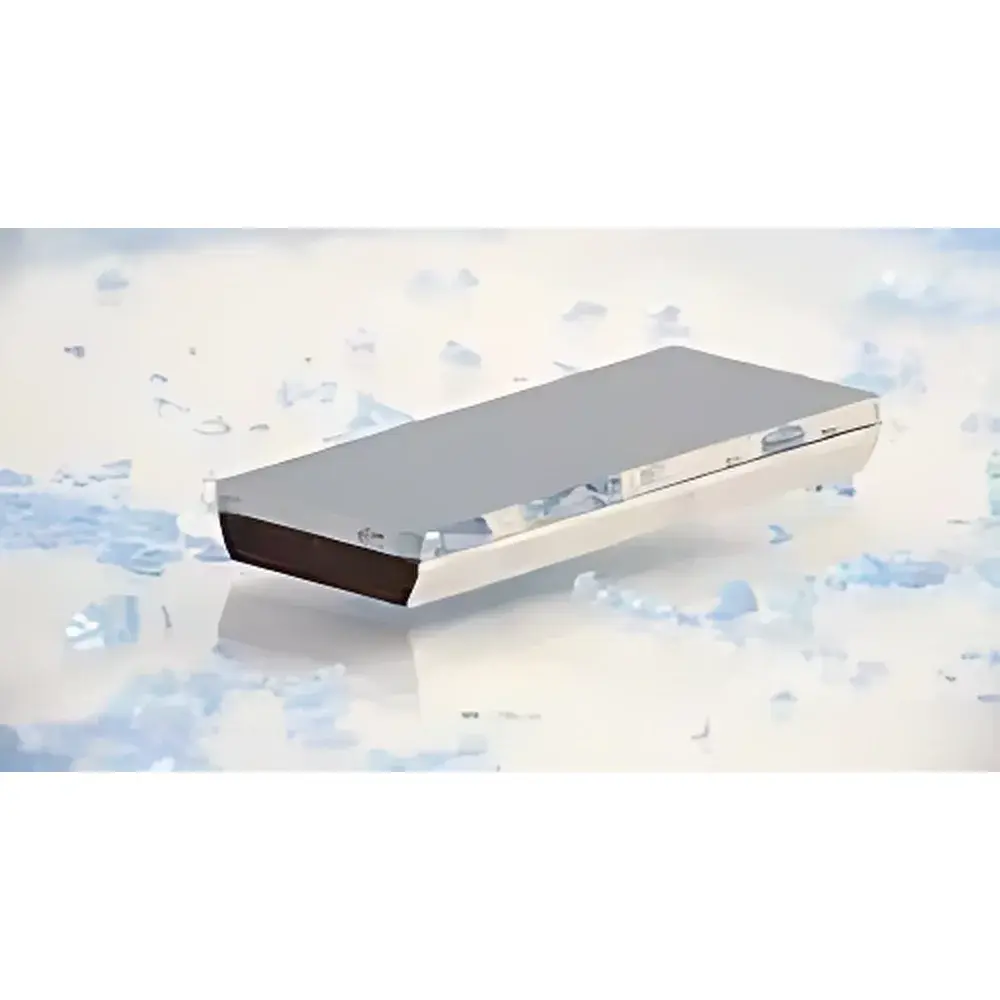
Multilayer XRF Analyzing Crystals – Incoatec XS-55, XS-N, XS-C, XS-B

| Brand | Incoatec |
|---|---|
| Origin | Germany |
| Model Series | XS-55, XS-N, XS-C, XS-B |
| 2d-spacing (XS-55) | 5.5 nm |
| Target Elements (XS-55) | C–Br (including F, Na, Mg as standard) |
| Crystal Type | Artificial Synthetic Multilayer |
| Substrate Material | Typically Si or glass |
| Reflectivity | High (optimized for soft X-ray range) |
| Resolution | Moderate (vs. natural crystals) |
| Application Domain | Wavelength-Dispersive X-ray Fluorescence (WDXRF) Spectrometry |
Ask about pricing, availability and specifications.
Overview
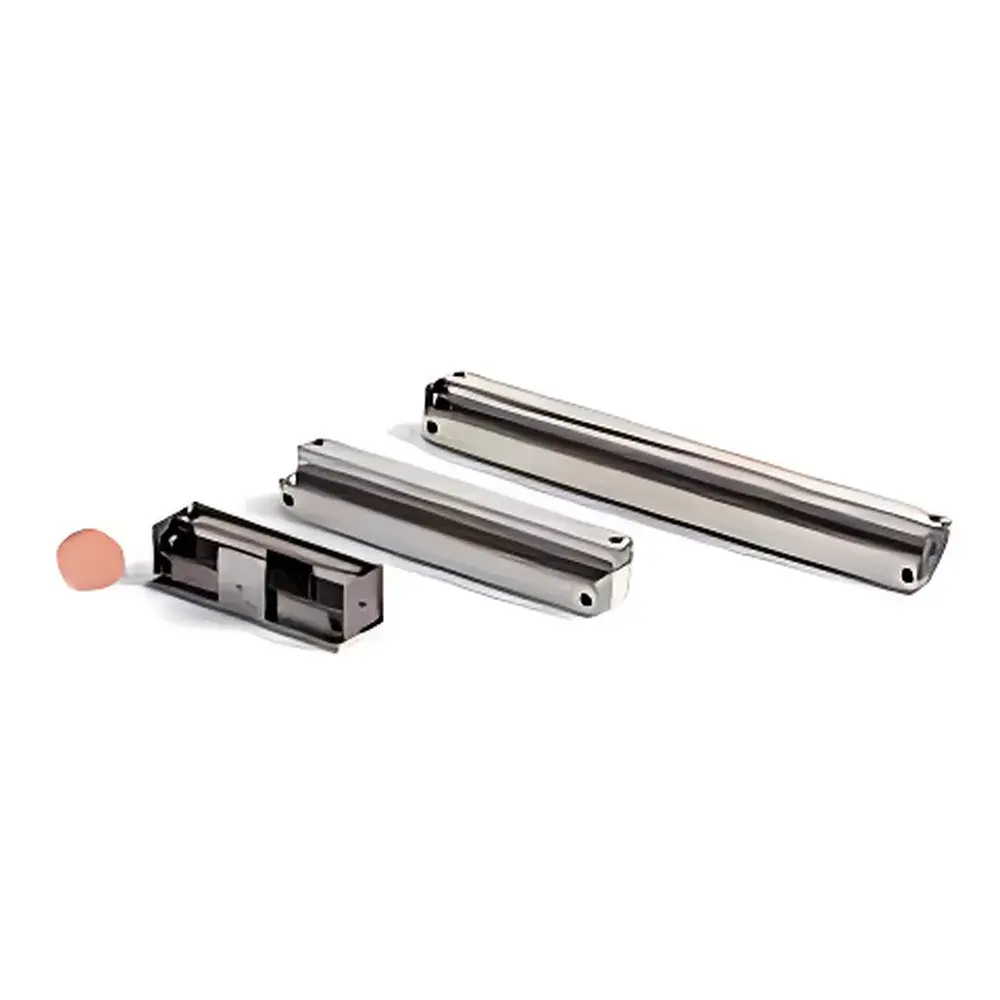
Incoatec multilayer XRF analyzing crystals—designated XS-55, XS-N, XS-C, and XS-B—are engineered synthetic optical components specifically developed for high-efficiency wavelength dispersion in laboratory and industrial WDXRF spectrometers. Unlike natural single-crystal analyzers (e.g., LiF, PET, TAP), these multilayers are fabricated using physical vapor deposition (PVD) to deposit alternating nanoscale layers of two contrasting materials—commonly W/Si, Ni/C, or Mo/B4C—onto ultra-flat substrates such as single-crystal silicon or fused silica. This artificial periodic structure establishes a well-defined effective lattice plane spacing (2d), enabling Bragg diffraction of characteristic X-rays in the soft to medium energy range (≈0.1–3.0 keV). The XS-55 variant, with its precisely controlled 2d = 5.5 nm spacing, is optimized for quantitative analysis of light elements from carbon (C, 0.277 keV) through bromine (Br, 11.9 keV), with particular sensitivity and linearity for fluorine (F Kα), sodium (Na Kα), and magnesium (Mg Kα)—making it a de facto standard in cement, catalyst, polymer, and environmental sample analysis.
Key Features
- Engineered Bragg reflectivity >60% at optimal incidence angles for target emission lines (e.g., F Kα at ~6.8° 2θ on XS-55)
- Thermally stable architecture with low interlayer diffusion, ensuring long-term calibration stability under continuous X-ray tube operation
- Customizable substrate curvature (flat, Johann, Johansson, or von Hámos geometry) to match spectrometer optical design requirements
- Low intrinsic background and minimal higher-order interference due to precise layer thickness control (±0.2% thickness uniformity across 25 mm aperture)
- Compatibility with high-power sealed-tube and microfocus X-ray sources (up to 4 kW anode loading)
- Available with protective capping layers (e.g., SiO2 or B4C) for enhanced oxidation resistance in ambient or vacuum environments
Sample Compatibility & Compliance
These multilayer crystals are integral to ISO 21043-1:2021 (XRF spectrometry — Part 1: General requirements) and ASTM E1361-22 (Standard Guide for X-Ray Spectrometry). Their use supports GLP-compliant elemental quantification workflows when deployed in validated WDXRF platforms (e.g., Rigaku ZSX Primus, PANalytical Axios, Bruker S8 TIGER). Each crystal batch undergoes spectral verification via synchrotron beamline calibration (e.g., BESSY II QXM beamline) to confirm d-spacing accuracy and rocking curve full width at half maximum (FWHM). No regulatory restrictions apply to their installation; however, proper alignment per IEC 61000-6-3 (EMC) and ISO 14644-1 (cleanroom Class 5 handling during installation) is recommended to preserve optical integrity.
Software & Data Management
Crystal-specific diffraction parameters (2d-value, Darwin width, integrated reflectivity) are embedded in instrument control software libraries (e.g., SpectraCollector, SuperQ, WinTrace) to enable automatic peak position correction and intensity normalization. All Incoatec multilayers ship with NIST-traceable certificate of calibration, including measured rocking curves and angular acceptance profiles. For audit readiness, raw diffraction data files (in .raw or .tdf format) retain metadata tags indicating crystal ID, date of characterization, and beamline reference. Full compliance with FDA 21 CFR Part 11 is achievable when used within validated LIMS-integrated spectrometer systems supporting electronic signatures and audit trails for calibration history.
Applications
- Quantitative determination of F, Na, Mg, Al, Si, P, S, Cl in Portland cement clinker and supplementary cementitious materials (per EN 196-2)
- Light-element mapping in battery cathode precursors (e.g., Ni-rich NMC, LiCoO2) using scanning WDXRF
- Thin-film thickness and composition analysis of multi-layered optical coatings and semiconductor gate stacks
- Speciation-independent total sulfur measurement in low-sulfur diesel fuels (ASTM D2622)
- Non-destructive certification of halogen content (Cl, Br) in RoHS-compliant electronics assemblies
- High-resolution trace analysis of B, C, N, O in geological borosilicate glasses and meteoritic samples
FAQ
What distinguishes XS-55 from XS-N, XS-C, and XS-B?
XS-55 (2d = 5.5 nm) targets mid-Z light elements; XS-N (2d ≈ 3.8 nm) enhances resolution for C–F; XS-C (2d ≈ 7.2 nm) extends low-energy response to B–O; XS-B (2d ≈ 12.0 nm) enables ultra-soft X-ray analysis down to Be Kα (0.108 keV).
Can these multilayers be used in vacuum or helium-purged optics?
Yes—all variants are rated for operation in high vacuum (≤1×10⁻⁶ mbar) and helium atmospheres; optional hermetic sealing is available for extended service life in reactive gas environments.
Is angular recalibration required after crystal replacement?
Yes—each multilayer has unique Bragg angle offsets; automated crystal recognition protocols in modern spectrometers (e.g., Rigaku’s AutoCrystal) reduce recalibration time to <90 seconds using built-in reference lines.