
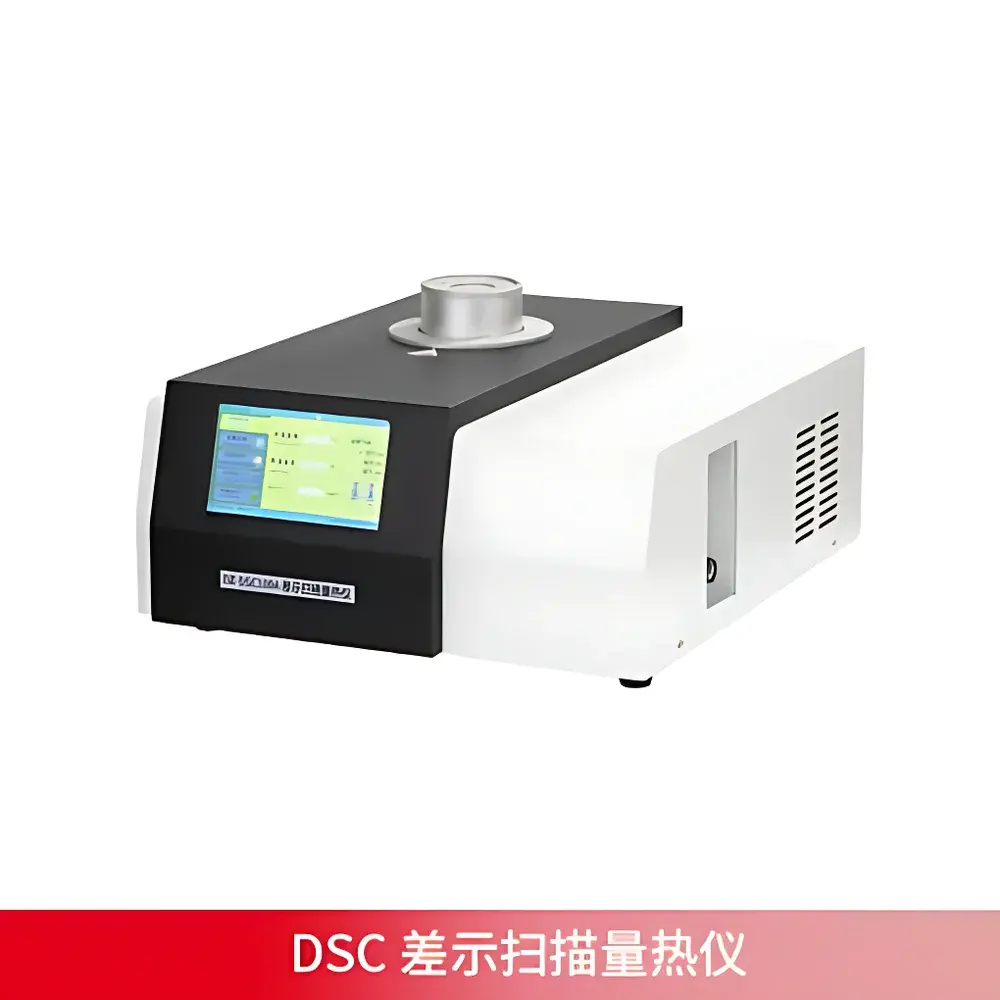
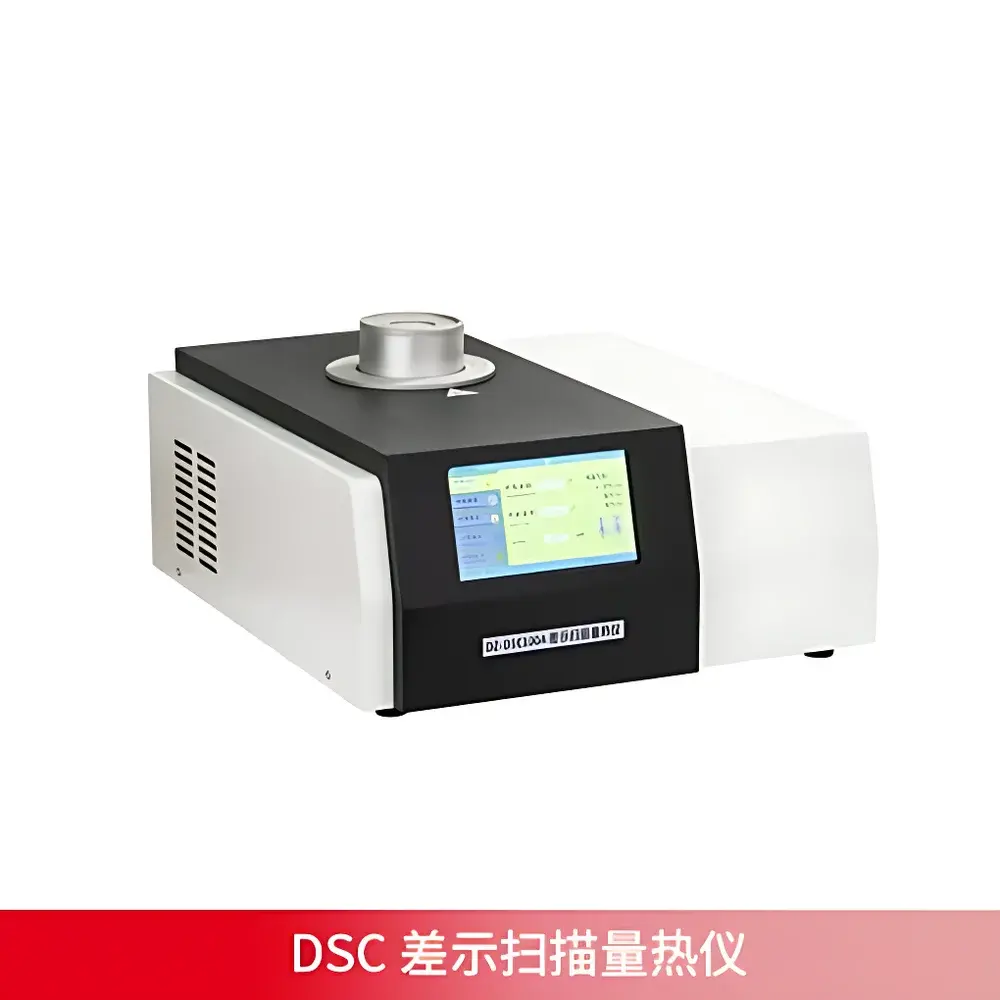
Nanjing Dazhan DZ-DSC100A Differential Scanning Calorimeter
| Brand | Nanjing Dazhan |
|---|---|
| Origin | Jiangsu, China |
| Manufacturer Type | Direct Manufacturer |
| Product Origin | Domestic (China) |
| Model | DZ-DSC100A |
| Sample Capacity | Single-sample configuration |
| Instrument Type | Differential Scanning Calorimeter (DSC) |
| Temperature Range | Ambient to 600 °C |
| Heating/Cooling Rate | 0.1–100 K/min |
| DSC Heat Flow Range | 0 to ±600 mW |
| Temperature Stability | ±0.01 °C |
| Temperature Resolution | 0.01 °C |
| Temperature Repeatability | ±0.1 °C |
| DSC Noise Level | 0.01 μW |
| DSC Sensitivity | 0.001 mW |
| DSC Resolution | 0.01 μW |
Overview
The Nanjing Dazhan DZ-DSC100A Differential Scanning Calorimeter is a precision thermal analysis instrument engineered for quantitative measurement of heat flow differences between a sample and inert reference as a function of temperature or time. Based on the principle of power-compensated DSC, it delivers high-fidelity thermograms essential for characterizing endothermic and exothermic transitions in solid and semi-crystalline materials. Designed for routine laboratory use in R&D, quality assurance, and regulatory-compliant material evaluation, the DZ-DSC100A operates across a broad thermal window—from ambient conditions up to 600 °C—with programmable heating and cooling rates spanning 0.1 to 100 K/min. Its core architecture integrates a high-stability furnace with optimized thermal symmetry, enabling reproducible detection of subtle thermal events including glass transition (Tg), cold crystallization, melting enthalpy (ΔHf), crystallization onset, oxidative induction time (OIT), oxidative induction temperature (OITT), specific heat capacity (Cp), and crosslinking kinetics. The system meets foundational requirements for method development under ISO 11357, ASTM E794, and USP <1163> thermal analysis guidelines.
Key Features
- Power-compensated DSC design with dual-sensor alloy construction—resistant to oxidation and corrosion for extended sensor lifetime and signal integrity.
- Advanced furnace architecture featuring improved thermal homogeneity, baseline stability, and resolution—critical for detecting low-energy transitions and overlapping peaks.
- Cortex-M3 ARM-based embedded controller enabling real-time PID temperature regulation, fast data acquisition (≥10 Hz sampling), and deterministic thermal program execution.
- Digital mass flow control for purge gas (N2, O2, Ar)—gas flow rate logged directly into measurement metadata with traceable timestamping.
- 7-inch 24-bit color capacitive touchscreen interface with intuitive icon-driven navigation—supports standalone operation without external PC.
- USB 2.0 bidirectional communication protocol compliant with Windows-based host software—enables remote instrument control, live data streaming, and synchronized firmware updates.
- Integrated hardware-level calibration support: includes certified reference materials (e.g., high-purity indium, tin, zinc) and one-click auto-calibration routines for temperature and enthalpy axes per ISO 11357-2.
Sample Compatibility & Compliance
The DZ-DSC100A accommodates standard aluminum, gold-plated aluminum, and hermetic stainless-steel crucibles (40 µL and 80 µL volumes), supporting solids, powders, films, fibers, and small-volume polymer pellets (≤25 mg). It is compatible with inert (N2, Ar), oxidative (air, O2), and dynamic or static purge atmospheres—configurable via software-defined gas switching logic. All thermal data files include embedded metadata (operator ID, instrument serial, calibration status, gas type/flow, ramp rate), satisfying GLP documentation requirements. The system supports audit-trail-enabled data recording when used with validated third-party software compliant with FDA 21 CFR Part 11 (electronic records/signatures) and EU Annex 11 principles.
Software & Data Management
The instrument ships with DZ-ThermalAnalysis Suite—a native Windows application supporting multi-step temperature programming, peak integration (tangent, onset, peak max), baseline correction (linear, polynomial, spline), Cp calculation via step-heating method, and comparative overlay of up to 16 curves. Raw data are stored in ASCII-compatible .DSC format with full parameter retention; export options include CSV, PDF, and image (PNG/SVG). Software features built-in report templates aligned with ISO 11357 reporting conventions and allows user-defined pass/fail criteria for automated QA release. Data integrity safeguards include write-protected archives, checksum validation, and optional networked storage with role-based access control.
Applications
- Thermal characterization of polymers: Tg determination in amorphous thermoplastics (e.g., PS, PC), crystallinity assessment in semi-crystalline systems (e.g., PP, PE), degradation onset in flame-retardant composites.
- Pharmaceutical solid-state analysis: polymorph screening, hydrate/anhydrate transitions, excipient compatibility studies, and stability-indicating assay development.
- Metallurgical and ceramic research: eutectic melting behavior, phase diagram validation, sintering kinetics, and heat treatment optimization.
- Food science: starch gelatinization, fat crystallization profiles, protein denaturation temperatures, and shelf-life prediction via oxidative induction testing.
- Quality control laboratories: batch-to-batch consistency verification, raw material qualification, and release testing per internal SOPs aligned with ASTM D3418 or ICH Q5C.
FAQ
What reference materials are supplied with the DZ-DSC100A for calibration?
Indium (99.999% purity, Tm = 156.60 °C, ΔHf = 28.45 J/g), tin (Tm = 231.93 °C), and zinc (Tm = 419.53 °C) are included. Calibration certificates traceable to NIM (National Institute of Metrology, China) accompany each set.
Does the instrument support modulated DSC (MDSC) or only conventional DSC?
The DZ-DSC100A implements conventional (heat-flux) DSC only. It does not support MDSC, AC modulation, or TMDSC capabilities.
Can the system operate under vacuum or reduced pressure?
No. The DZ-DSC100A is designed exclusively for atmospheric or positive-pressure purge gas environments. Vacuum operation is not supported.
Is the software validated for GMP environments?
The base software is not pre-validated. However, its architecture supports IQ/OQ/PQ protocols, and customers may perform vendor-supported validation using documented test scripts and electronic signature modules compliant with 21 CFR Part 11.
What is the recommended maintenance interval for the sensor and furnace?
Sensor performance should be verified quarterly using reference materials; furnace cleaning is advised after every 200 runs involving volatile or residue-forming samples. Full calibration is recommended annually or after any mechanical impact or thermal shock event.



