
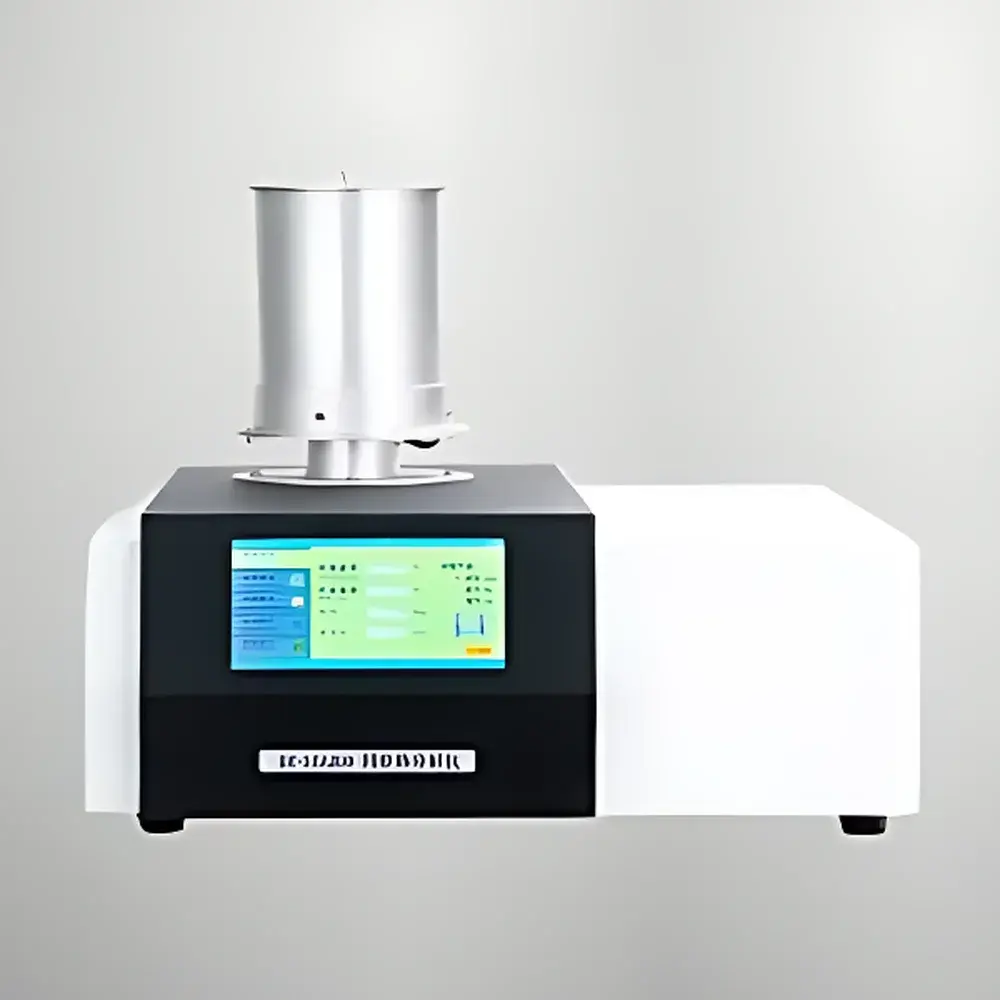
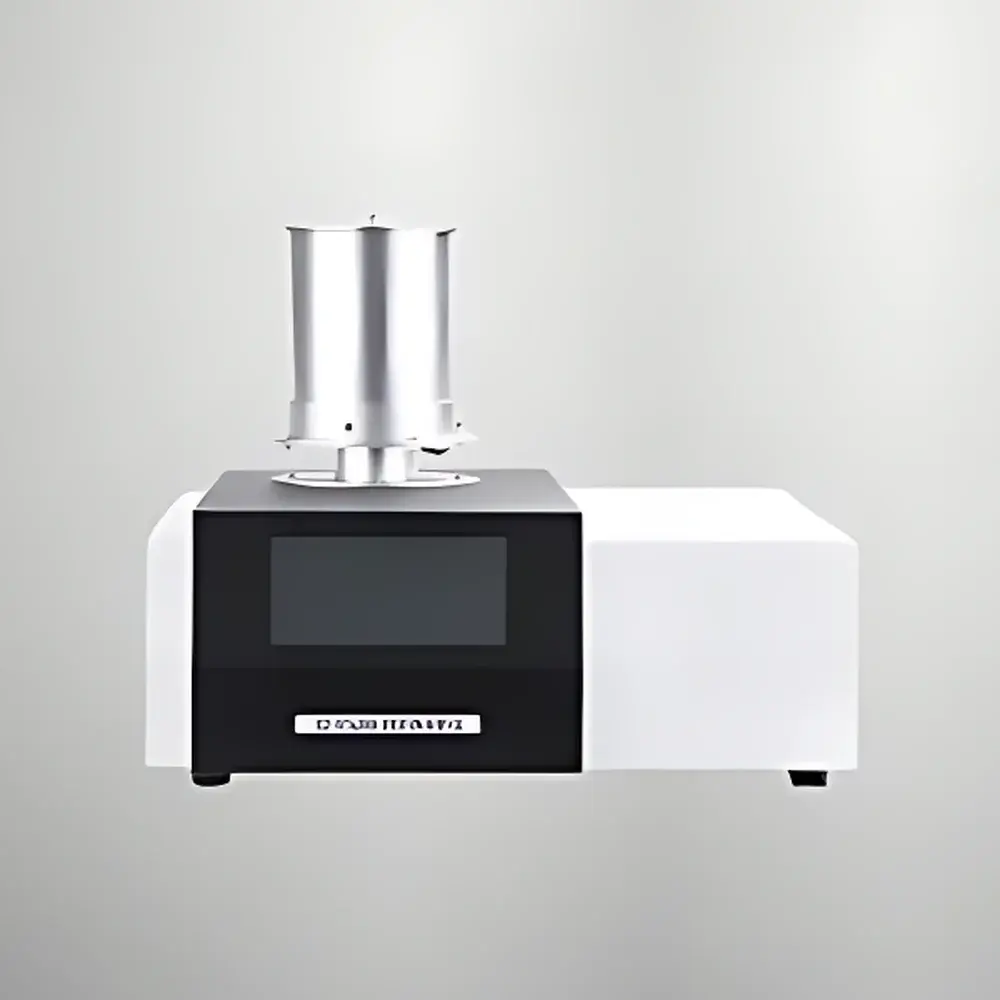
Nanjing Dazhan DZ-STA200 Simultaneous Thermal Analyzer
| Brand | Nanjing Dazhan |
|---|---|
| Origin | Jiangsu, China |
| Manufacturer Type | Direct Manufacturer |
| Product Origin | Domestic (China) |
| Model | DZ-STA200 |
| Price Range | USD 9,800–13,900 (FOB) |
| Temperature Range | Ambient to 1200 °C |
| Heating Rate | 0.1–100 °C/min |
| Maximum Sample Mass | 2 g (expandable to 5 g) |
| Atmosphere Control | Inert, oxidizing, reducing |
| TG Resolution | 0.1 µg |
| TG Accuracy | 0.01 mg |
| DSC Range | ±1000 mW |
| DSC Resolution | 0.1 µW |
| DSC Accuracy | 0.01 mW |
| Temperature Resolution | 0.01 °C |
| Temperature Stability | ±0.1 °C |
| Cooling Time (1000 °C → 100 °C) | ≤15 min |
| Calibration | Multi-point temperature & enthalpy calibration |
| Gas Control | Dual-channel mass flow control with integrated digital flow meters |
| Display | 7-inch 24-bit color LCD touchscreen |
| Data Interface | Standard USB 2.0 |
| Power Supply | AC 220 V, 50 Hz |
| Crucible Options | Al₂O₃ ceramic, aluminum, platinum (optional) |
Overview
The Nanjing Dazhan DZ-STA200 Simultaneous Thermal Analyzer is an integrated thermogravimetric-differential scanning calorimetry (TG-DSC) or thermogravimetric-differential thermal analysis (TG-DTA) instrument engineered for high-precision, real-time correlation of mass change and thermal energy flow under controlled atmospheric conditions. Based on the principle of simultaneous measurement—where a single sample experiences identical thermal history while undergoing concurrent gravimetric and calorimetric detection—the DZ-STA200 eliminates inter-sample variability and temporal misalignment inherent in sequential analyses. Its dual-sensor architecture employs a high-stability microbalance with sub-microgram resolution and a symmetric heat-flux DSC sensor calibrated across multiple reference points (e.g., In, Sn, Zn, Al), enabling quantitative determination of decomposition onset temperatures, phase transitions, reaction enthalpies, oxidative stability, and kinetic parameters (e.g., activation energy via Kissinger or Ozawa-Flynn-Wall methods). Designed for routine QC, R&D, and regulatory-compliant testing, the system operates from ambient to 1200 °C with programmable heating rates spanning three orders of magnitude (0.1–100 °C/min), supporting both rapid screening and high-resolution slow-scan protocols.
Key Features
- High-temperature furnace with dual-wound precious-metal alloy heating elements ensuring uniform radial temperature distribution and minimized electromagnetic interference.
- Ceramic rod–based sample suspension system offering exceptional thermal stability, oxidation resistance, and chemical inertness up to 1200 °C—critical for corrosive or reactive atmospheres.
- Physically decoupled power supply and forced-air cooling modules reduce mechanical vibration and thermal crosstalk to the microbalance, enhancing long-term baseline stability and signal-to-noise ratio.
- Top-loading furnace design with motor-assisted lid actuation enables rapid sample insertion, crucible exchange, and maintenance access without re-alignment.
- Multi-layer passive thermal shielding isolates the balance chamber and electronics from radiant and conductive heat leakage, maintaining ambient-equivalent operating conditions for sensitive components.
- Modular furnace platform supports optional upgrades—including high-vacuum compatibility (<10⁻³ mbar), extended temperature range (up to 1500 °C with custom configuration), and interchangeable sensor heads for TG-DTA or TG-DSC modes.
Sample Compatibility & Compliance
The DZ-STA200 accommodates solid, powdered, and thin-film specimens in standard alumina, aluminum, or platinum crucibles (diameter: 5–7 mm; depth: 3–5 mm), with maximum loading capacity of 2 g (extendable to 5 g using low-mass ceramic pans). It supports fully configurable gas environments—including nitrogen, argon, helium, air, oxygen, hydrogen, and forming gas—with independent mass flow controllers (MFCs) for two channels, enabling precise switching between inert/oxidizing/reducing atmospheres and seamless transition between static and dynamic purge modes (flow rates: 0–200 mL/min per channel, digitally regulated). The system complies with ASTM E1131 (standard test method for compositional analysis by DSC), ISO 11357 series (plastics—DSC), and USP <1163> (thermal analysis in pharmaceutical development). All thermal calibration data—including temperature, enthalpy, and sensitivity—adhere to NIST-traceable standards and are documented in audit-ready format per GLP/GMP requirements.
Software & Data Management
The embedded intelligent software suite (v3.2+) runs natively on the integrated 7-inch capacitive touchscreen and supports full instrument control, real-time curve visualization (TG, DTG, DSC, ΔCp), and post-run analysis without external PC dependency. Raw data are stored in vendor-neutral ASCII (.txt) and universal .csv formats; processed results—including peak identification, derivative calculations, integration, baseline correction, and kinetic modeling—are exportable to Excel-compatible spreadsheets and PDF reports with customizable templates, header metadata, and electronic signature fields. The software implements full 21 CFR Part 11 compliance features: role-based user accounts, password-protected method editing, immutable audit trails (timestamped operator actions, parameter changes, calibration events), and encrypted data archiving. Optional network connectivity enables remote monitoring, centralized data backup, and integration into LIMS environments via OPC UA or TCP/IP protocols.
Applications
- Decomposition kinetics and thermal stability assessment of polymers, composites, and battery cathode materials (e.g., LiCoO₂, NMC).
- Quantification of filler content, moisture loss, solvent residue, and organic/inorganic ratios in pharmaceutical excipients and APIs.
- Phase transition mapping of shape-memory alloys, metallic glasses, and ferroelectric ceramics.
- Oxidation onset temperature (OOT) and activation energy determination for lubricants, coatings, and carbon-based nanomaterials.
- Reaction stoichiometry and enthalpy validation in catalytic synthesis, solid-state reactions, and pyrolysis studies.
- Quality control of incoming raw materials and finished goods against thermal fingerprint specifications in aerospace, electronics, and medical device manufacturing.
FAQ
What types of calibration standards are supported?
The system includes pre-loaded calibration routines for indium, tin, zinc, and aluminum—covering temperature (±0.1 °C accuracy) and enthalpy (±1% deviation) across the full operational range. Custom calibration with user-supplied standards is also supported.
Can the instrument operate under vacuum or controlled partial pressure?
Yes—vacuum-compatible furnace variants (≤10⁻³ mbar) and pressure-regulated gas modules (0.1–5 bar absolute) are available as factory-installed options.
Is third-party software integration possible?
The DZ-STA200 provides open API documentation and DLL libraries for integration with MATLAB, Python (via PySerial or LabVIEW drivers), and enterprise QA/QC platforms.
What maintenance intervals are recommended for optimal performance?
Routine cleaning of the furnace chamber and crucible holder is advised after every 50 runs; annual recalibration and sensor verification are recommended per ISO/IEC 17025 guidelines.
Are platinum crucibles included in the base configuration?
No—alumina crucibles are standard. Platinum crucibles (99.95% purity, 5 mm OD × 3 mm depth) are offered as optional accessories for high-temperature or corrosive applications.



