
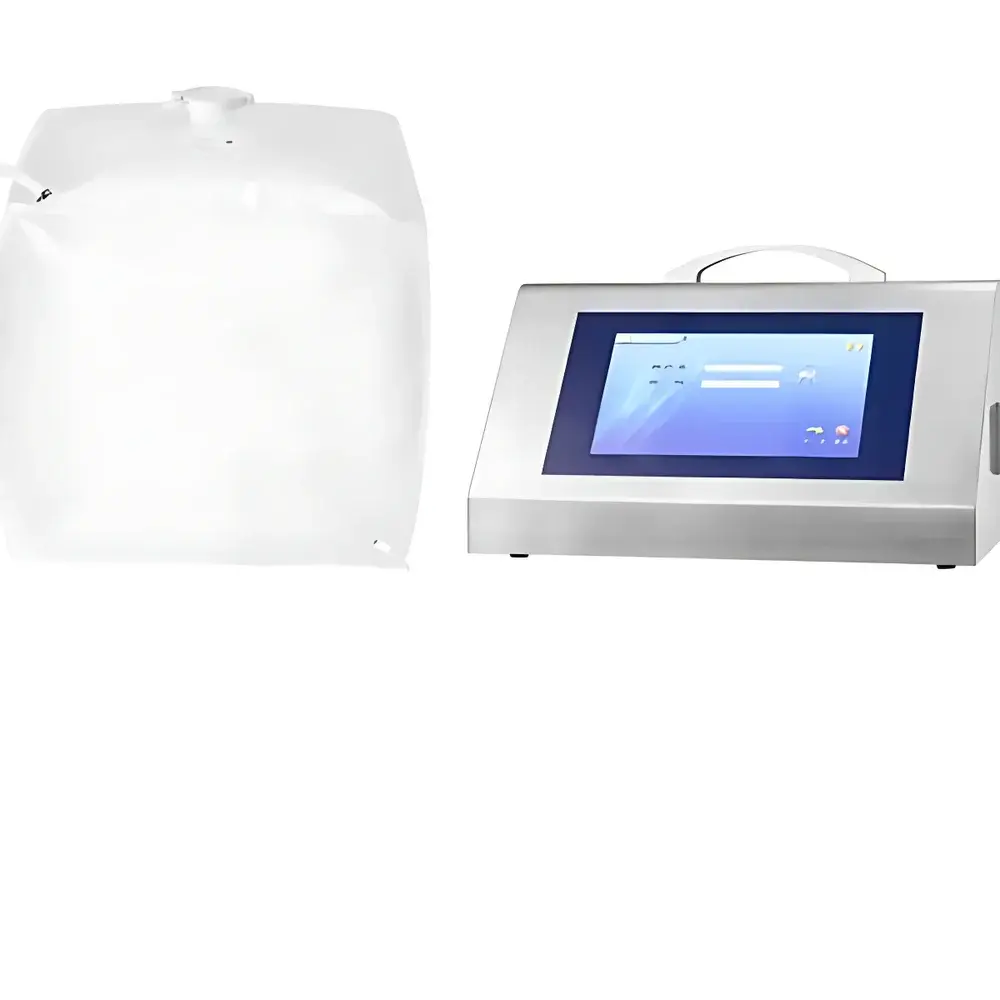
NeuronBC BGT-120 Bag Integrity Tester
| Brand | NeuronBC |
|---|---|
| Model | BGT-120 |
| Principle | Pressure Decay Method (ASTM F2095-01) |
| Power Supply | AC 220 V, 50 Hz with Li-ion backup |
| Rated Power | 120 W |
| Test Duration | 2–8 min |
| Pressure Range | 0–5000 Pa |
| Pressure Resolution | 0.1 Pa |
| Response Threshold | ≤50 Pa |
| Noise Level | ≤50 dB(A) |
| Data Storage Capacity | ≥10,000 test records |
| Dimensions | 370 × 220 × 210 mm |
| Weight | 4.5 kg |
| Audit Trail | Optional |
| Compliance | ASTM F2095-01, FDA 21 CFR Part 11 (electronic records & signatures), GMP-aligned validation support (IQ/OQ/PQ/SOP) |
Overview
The NeuronBC BGT-120 Bag Integrity Tester is a compact, benchtop instrument engineered for deterministic non-destructive integrity verification of flexible pharmaceutical packaging—specifically pre-filled bags, IV bags, and sterile barrier systems used in aseptic manufacturing and compounding. It operates on the pressure decay principle per ASTM F2095-01, a standardized method validated for detecting leaks as small as 0.5–5 µm in diameter under controlled pressurization. Unlike probabilistic bubble emission or dye ingress tests, pressure decay quantifies minute pressure differentials over time within a sealed, gas-filled system—enabling objective pass/fail assessment traceable to first principles of fluid dynamics and gas law. The BGT-120 is designed for integration into quality control laboratories operating under current Good Manufacturing Practice (cGMP) environments and supports full regulatory alignment through configurable electronic record architecture, user access controls, and optional audit trail functionality.
Key Features
- Pressure decay measurement with 0.1 Pa resolution and ≤50 Pa system response threshold, ensuring high sensitivity to micro-leaks without false positives from thermal drift or ambient fluctuations.
- Intelligent pneumatic control system utilizing low-flow, pulsed gas injection—minimizing bag deformation and preventing false failures caused by membrane stress or transient pressure overshoot.
- 7-inch color capacitive touchscreen interface with intuitive workflow navigation, real-time pressure curve visualization, and auto-adaptive test protocol selection based on bag volume, material compliance, and target leak size.
- Onboard lithium-ion battery backup enabling uninterrupted operation during brief power interruptions; suitable for mobile QC deployment across cleanroom zones (Grade C/D) without reliance on fixed utility points.
- Integrated thermal printer for immediate hardcopy generation of test reports—including timestamp, operator ID, batch/lot number, test parameters, raw pressure vs. time data, and final pass/fail verdict—formatted per internal SOP requirements.
- Configurable user roles (Administrator, Operator, Reviewer) with password protection, electronic signature capture, and 21 CFR Part 11–compliant authentication logs for all critical actions (test initiation, parameter modification, result approval).
Sample Compatibility & Compliance
The BGT-120 accommodates standard medical-grade flexible containers ranging from 50 mL to 5 L, including PVC, polyolefin, multilayer co-extruded films, and ethylene vinyl acetate (EVA) laminates. It accepts compressed air, nitrogen, or other inert gases (≤0.5 MPa inlet pressure) as test media—ensuring compatibility with oxygen-sensitive formulations. All hardware and firmware comply with IEC 61000-6-3 (EMC) and IEC 61010-1 (safety). Validation documentation packages—including IQ/OQ/PQ protocols, risk assessments (per ISO 14971), and SOP templates—are provided to support qualification under FDA, EMA, PMDA, and WHO-GMP frameworks. Optional audit trail module meets ALCOA+ data integrity criteria and enables retrospective review of all data modifications with immutable timestamps and user attribution.
Software & Data Management
Data is stored locally in encrypted binary format with SHA-256 hashing to prevent tampering. The system retains ≥10,000 complete test records, each containing metadata (operator, date/time, environmental conditions), raw sensor output, and annotated pass/fail logic. Export options include CSV and PDF formats compatible with LIMS integration via USB or optional Ethernet/Wi-Fi module. Electronic signatures adhere to 21 CFR Part 11 Subpart B requirements—including biometric or token-based second-factor authentication where enabled—and enforce “four-eyes” review workflows for critical release decisions. All software updates are digitally signed and verified prior to installation to maintain validated state.
Applications
- Final container closure integrity testing (CCIT) of pre-filled IV bags prior to sterilization or distribution.
- In-process verification of bag weld integrity during filling line setup or changeover.
- Stability study monitoring—repeated integrity assessment of aged or stressed packaging under accelerated conditions.
- Root cause analysis of seal failure modes in collaboration with packaging engineers using trended pressure decay slope data.
- Supporting Annex 1 (EU GMP) requirements for periodic requalification of sterile barrier systems.
FAQ
What standards does the BGT-120 comply with?
ASTM F2095-01 (Standard Test Method for Determining Leak Rates Using Pressure Decay), ISO 11607-2 (Packaging for terminally sterilized medical devices), and FDA guidance on CCIT for sterile products.
Can the instrument be qualified for use in regulated environments?
Yes—full IQ/OQ/PQ documentation, traceable calibration certificates, and vendor-supported validation services are available upon request.
Is external compressed air required?
Yes; supply must be oil-free, dry, and regulated to ≤0.5 MPa. Nitrogen or argon may be substituted for oxygen-sensitive products.
How is data security ensured?
Local encryption, role-based access control, electronic signatures, and optional audit trail ensure compliance with 21 CFR Part 11 and EU Annex 11 data integrity expectations.
What maintenance is required?
Annual sensor recalibration (traceable to NIST standards) and routine leak checks of pneumatic fittings; no consumables or scheduled part replacements are needed within the first five years of operation.





