
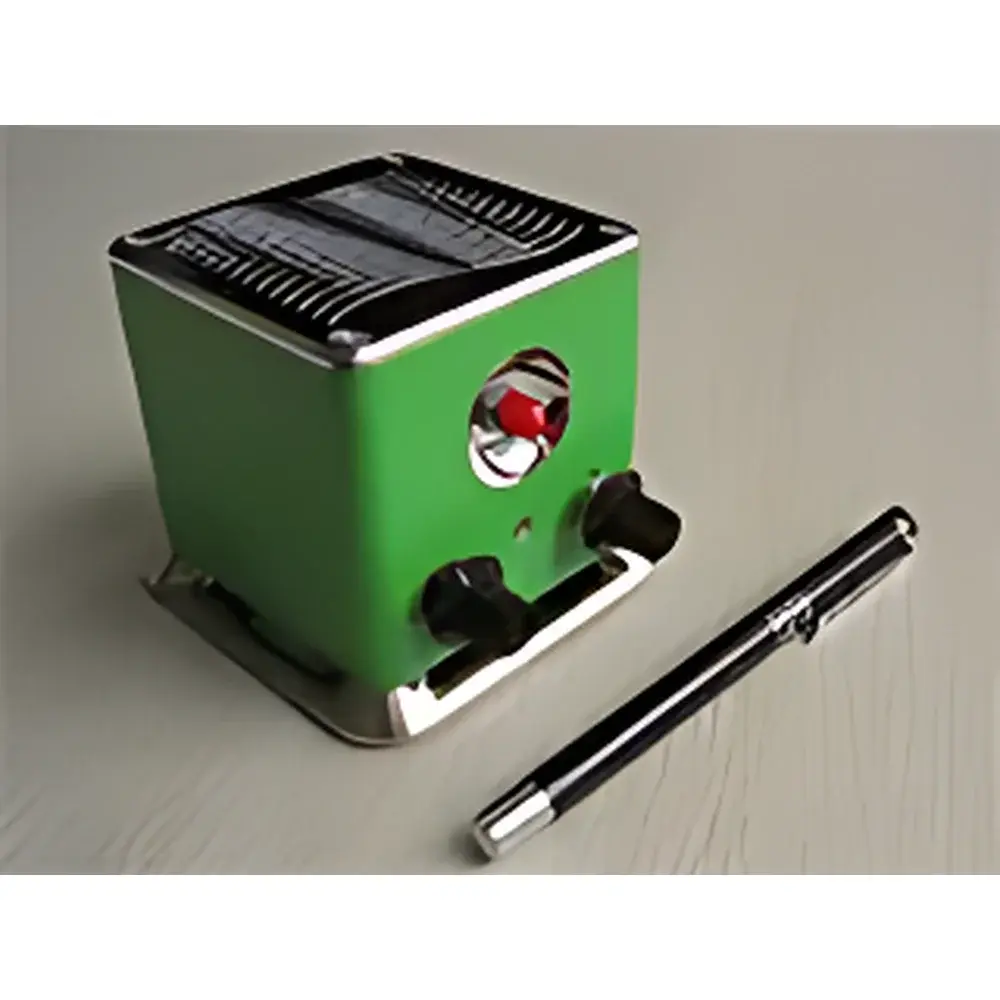
NewOpto LLS-LEDs Fiber-Coupled LED Light Source
| Brand | NewOpto |
|---|---|
| Origin | Zhejiang, China |
| Manufacturer Type | Authorized Distributor |
| Product Origin | Domestic (China) |
| Model | LLS-LEDs |
| Light Source Type | Solid-State LED |
| Illumination Mode | External Illumination |
| Connector Type | SMA 905 |
| Wavelength Range | 240 nm – 2100 nm |
| Spectral Options | UV, Visible, NIR, Broadband White (3000K–6500K CCT) |
| Coupling | FC/PC or SMA fiber-coupled output |
| Compliance | RoHS-compliant construction, CE-marked for laboratory use |
Overview
The NewOpto LLS-LEDs Fiber-Coupled LED Light Source is a modular, spectrally stable solid-state illumination platform engineered for precision optical excitation and broadband spectral applications. Unlike arc-lamp-based sources, this system employs high-brightness, narrow-spectrum LEDs—each individually thermally stabilized and current-regulated—to deliver consistent radiometric output over time and temperature. The light is efficiently coupled into multimode optical fibers (typically 400 µm or 600 µm core diameter, NA 0.22) via optimized aspheric collimation and alignment optics, enabling flexible delivery to microscopes, spectrometers, flow cells, or custom optical setups. Designed for integration into automated or benchtop analytical systems, the LLS-LEDs series supports both continuous-wave (CW) and TTL-triggered modulation (up to 10 kHz), making it suitable for time-resolved fluorescence, lock-in detection, and synchronized acquisition protocols.
Key Features
- Wide spectral coverage: discrete UV models from 240 nm to 365 nm (including 265 nm and 280 nm for protein/tryptophan excitation), visible options from 405 nm to 627 nm, NIR up to 2100 nm, and tunable white-light variants (3000K, 4100K, and 6500K correlated color temperature)
- Fiber-coupled output with SMA 905 interface—compatible with standard silica/silica or UV-grade fused silica fibers
- Active thermal management using Peltier-cooled heatsinks ensures wavelength stability (10,000 h typical L70)
- Low-noise constant-current drivers with analog (0–5 V) and digital (RS-232, USB virtual COM) control interfaces
- Interchangeable LED modules allow field-upgradeability without recalibration; each module is factory-aligned and characterized for radiant flux (mW/nm) and spectral FWHM
- EMI-shielded metal enclosure with IEC 61000-4-3 compliant design for operation in regulated laboratory environments
Sample Compatibility & Compliance
The LLS-LEDs platform is compatible with standard optical components used in spectroscopy, fluorescence microscopy, and photobiomodulation research. Its UV models meet ISO 17025 traceable calibration requirements when paired with NIST-traceable power meters (e.g., Thorlabs S120VC). All units conform to IEC 61000-6-3 (emissions) and IEC 61000-6-2 (immunity) standards. For regulated environments—including GLP-compliant QC labs—the system supports audit-ready operational logs when integrated with NewOpto’s optional LogMaster software (data timestamping, user authentication, change history). While not intrinsically safe, the LLS-LEDs series complies with EN 62471 (Photobiological Safety) for Risk Group 1 (exempt) or Group 2 (low-risk) classification depending on wavelength and output power configuration.
Software & Data Management
NewOpto provides the LLS-Control Suite—a cross-platform application (Windows/macOS/Linux) supporting real-time intensity monitoring, multi-channel sequencing, and script-based automation via Python SDK. The software enables full parameter logging (intensity, temperature, drive current, uptime) with CSV export and optional SQLite database archiving. When deployed in FDA-regulated settings, the suite can be configured to comply with 21 CFR Part 11 requirements—including electronic signatures, audit trails, and role-based access control—upon validation documentation request. Firmware updates are delivered via signed binary packages with SHA-256 verification.
Applications
- Fluorescence excitation in confocal, widefield, and TIRF microscopy—especially for UV-sensitive dyes (DAPI, Hoechst), quantum dots, and lanthanide chelates
- UV-Vis-NIR absorbance and reflectance spectroscopy in material science and thin-film characterization
- Fiber-optic sensor interrogation (e.g., FBG, LPG, SPR transducers)
- Photocatalysis and photochemical reaction monitoring under controlled irradiance
- Calibration of CCD/CMOS detectors and spectrometer linearity verification
- Machine vision lighting for semiconductor wafer inspection and biomedical imaging systems
FAQ
What fiber types are recommended for UV models below 280 nm?
Fused silica or solarization-resistant UV-grade fibers (e.g., Ocean Insight QP400-UV-VIS) are required; standard silica fibers exhibit significant transmission loss and degradation below 300 nm.
Can multiple LLS-LEDs units be synchronized for multi-wavelength excitation?
Yes—via external TTL triggering or master-slave RS-232 daisy-chaining; jitter is < 100 ns between channels when using the optional SyncBox accessory.
Is spectral calibration data provided with each unit?
Each shipped module includes a NIST-traceable spectral irradiance certificate (measured at fiber output using an Optronic OL 750 spectroradiometer), valid for 12 months from date of shipment.
What is the maximum allowable back-reflection into the output port?
< –30 dB to prevent LED facet damage; an optional inline isolator (LLS-ISO-UV/VIS/NIR) is available for high-reflectivity sample configurations.
Do you offer OEM integration support?
Yes—NewOpto provides mechanical drawings (STEP/IGES), electrical interface schematics, and SDK documentation under NDA for embedded system integration.






