
NewOpto Microchip Laser Series – Passively Q-Switched Solid-State Laser System
| Brand | NewOpto |
|---|---|
| Origin | Zhejiang, China |
| Manufacturer Type | Authorized Distributor |
| Origin Category | Domestic (China) |
| Model | NewOpto Lasers |
| Core Technology | Monolithic Nd:YAG/Nd:YVO₄-based Passive Q-Switching |
| Key Specifications | Single Longitudinal Mode (SLM), Polarization Ratio >100:1, Spectral Linewidth ≤0.2 nm (FWHM), Repetition Rates from Single-Shot to 100 kHz, Pulse Widths from 350 ps to 2.5 ns, Output Wavelengths at 266, 355, 473, 532, 946, and 1064 nm |
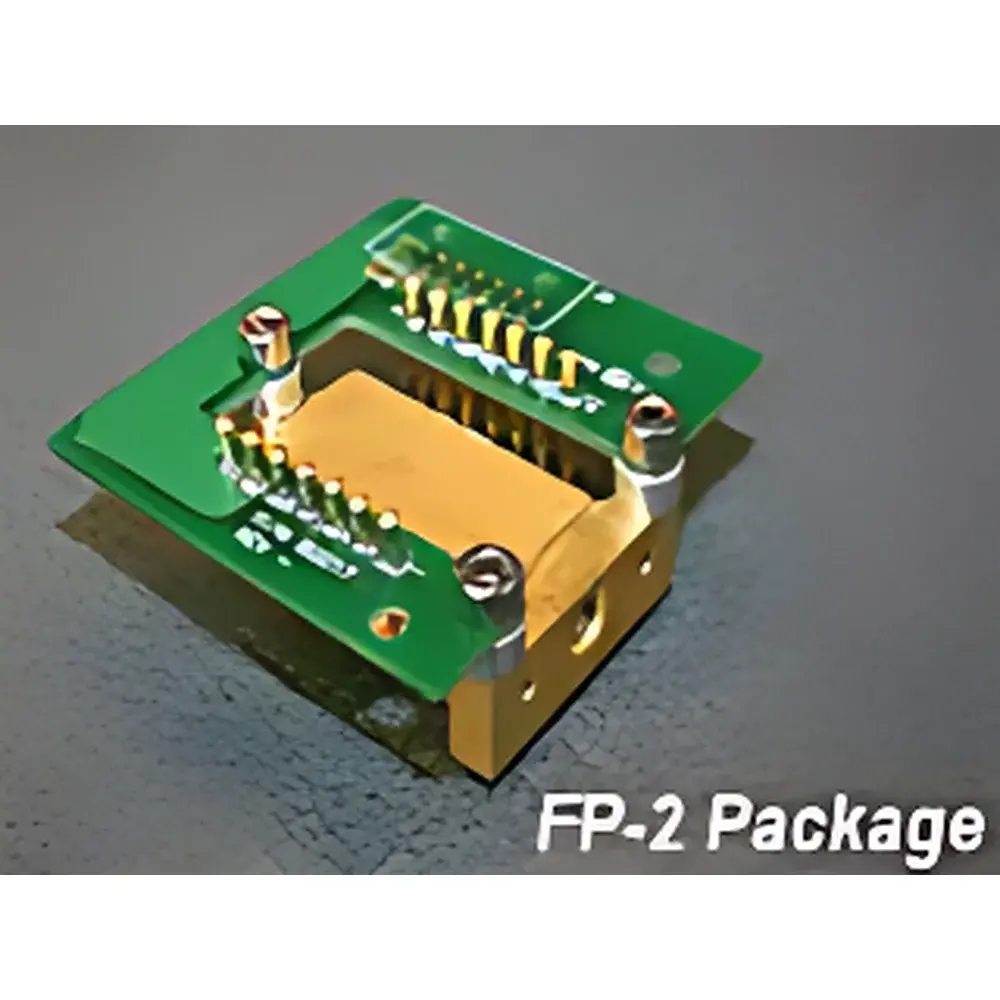
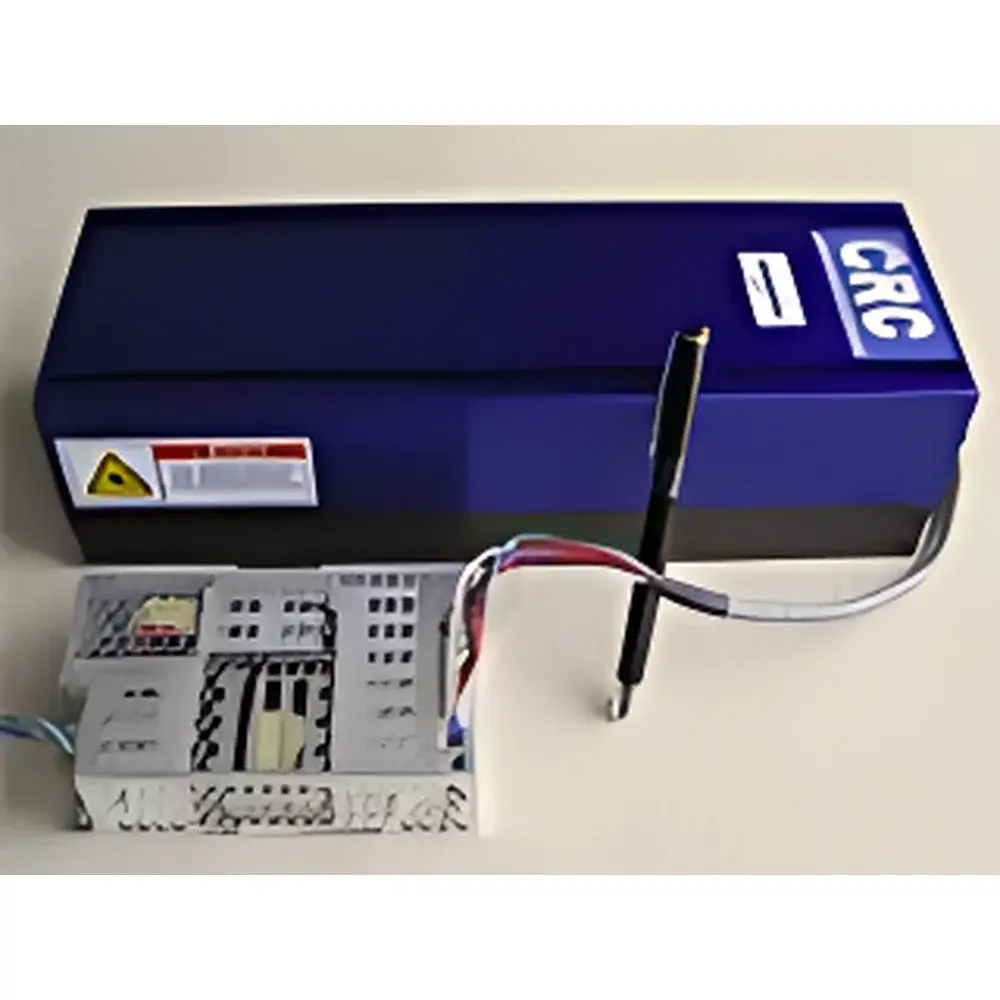
| Package Options | SP (Standard Package), FP2 (Fiber-Pigtailed Compact Module), TO3 (TO-Can Style), ILM (Integrated Laboratory Module with Controller, Power Supply & Housing) |
| Dimensions | SP: 167.1×88.9×73.9 mm |
| FP2 | 50.5×34.0×25.5 mm |
| TO3 | 39.2×26.0×33.8 mm |
| ILM | 1315.0×114.3×86.4 mm |
Overview
The NewOpto Microchip Laser Series is a family of compact, monolithic solid-state lasers engineered for high-stability, single longitudinal mode (SLM) operation via passive Q-switching. Based on diffusion-bonded Nd:YAG or Nd:YVO₄ gain media with saturable absorbers (e.g., Cr⁴⁺:YAG), these lasers generate nanosecond-to-sub-nanosecond pulses with exceptional temporal coherence, narrow spectral bandwidth (<0.2 nm FWHM), and polarization extinction ratios exceeding 100:1. Unlike conventional lamp-pumped or fiber-coupled systems, the microchip architecture integrates the laser cavity—mirror coatings, gain medium, and absorber—into a single, alignment-free chip, delivering intrinsic mechanical robustness, thermal stability, and long-term pulse-to-pulse reproducibility. Designed for integration into OEM instrumentation and laboratory-grade systems, this series supports fundamental and applied research in time-resolved spectroscopy, laser-induced breakdown spectroscopy (LIBS), photoacoustic imaging, fluorescence lifetime measurement, and precision ranging applications where compact footprint, low timing jitter, and deterministic pulse emission are critical.
Key Features
- Monolithic microchip design eliminates optical realignment requirements and enhances shock/vibration tolerance
- Passive Q-switching enables self-starting, jitter-free pulse generation without external electronics or RF drivers
- Single longitudinal mode (SLM) output ensures high temporal coherence and minimal chirp—essential for interferometric and heterodyne detection
- Polarization-maintaining output with >100:1 extinction ratio supports polarization-sensitive experiments including ellipsometry and SHG microscopy
- Wavelength versatility across deep UV (266 nm), visible (355 nm, 473 nm, 532 nm), NIR (946 nm), and fundamental IR (1064 nm) bands via harmonic generation or direct lasing
- Flexible packaging: SP (benchtop module), FP2 (fiber-pigtailed for system integration), TO3 (compact semiconductor-style can), and ILM (full turnkey laboratory system with controller, power supply, and thermal management)
- Pulse energy range from 0.3 μJ to 8 mJ; repetition rates scalable from single-shot to 100 kHz; pulse widths tunable between 350 ps and 2.5 ns depending on configuration
Sample Compatibility & Compliance
The NewOpto Microchip Laser Series is compatible with standard optical tables, breadboard-mounted optomechanics, and OEM integration platforms requiring Class 4 laser safety compliance per IEC 60825-1:2014. All models meet RoHS Directive 2011/65/EU and CE marking requirements for electromagnetic compatibility (EN 61326-1) and low-voltage safety (EN 61010-1). While not certified for medical device use under ISO 13485 or FDA 21 CFR Part 820, the ILM variant includes hardware-enforced interlock circuits, shutter control, and analog/digital TTL triggering interfaces suitable for GLP-compliant experimental setups. Pulse timing stability (jitter <100 ps RMS) and energy stability (<±3% over 8 hours, temperature-controlled) support quantitative measurements aligned with ASTM E2847 (laser pulse characterization) and ISO 11554 (laser beam parameter measurement).
Software & Data Management
The ILM configuration includes a dedicated USB- and Ethernet-enabled controller with embedded firmware supporting remote parameter adjustment (repetition rate, burst mode, delay triggering) via SCPI command set. Real-time monitoring of diode current, crystal temperature, and pulse energy (via integrated photodiode feedback) is logged with timestamped metadata in CSV or HDF5 format. The controller complies with basic audit-trail functionality required under GLP environments: all configuration changes are recorded with user ID, timestamp, and previous/current values. Optional LabVIEW™ and Python SDKs provide API-level access for custom automation in MATLAB®, Python-based data acquisition pipelines, or integration with commercial DAQ systems (e.g., National Instruments PXI). No cloud connectivity or proprietary cloud services are implemented—data remains local by default.
Applications
- Laser ranging and time-of-flight (ToF) lidar systems requiring picosecond-level timing precision and stable pulse energy
- Photoacoustic tomography (PAT) excitation sources where narrow linewidth and high peak power enable selective chromophore excitation
- Fluorescence lifetime imaging (FLIM) and time-correlated single-photon counting (TCSPC) seed lasers
- Micro-machining and laser marking of polymers, thin-film solar cells, and biomedical devices using sub-ns pulses to minimize thermal damage
- Seed sources for optical parametric oscillators (OPOs) and amplifier chains requiring SLM injection seeding
- Calibration of ultrafast photodetectors and streak cameras via known pulse width and jitter specifications
- Atmospheric sensing and differential absorption lidar (DIAL) using dual-wavelength (e.g., 532/1064 nm) configurations
FAQ
What cooling method is required for continuous operation?
Air-cooling is sufficient for all SP, FP2, and TO3 packages up to their specified average power limits. The ILM includes a thermoelectric cooler (TEC) with closed-loop temperature control (±0.1°C stability) for extended duty cycles.
Can the laser be synchronized with external equipment?
Yes—all models feature TTL-compatible trigger input (negative/positive edge selectable) with <5 ns delay uncertainty relative to pulse emission. ILM adds programmable delay generators (0–10 ms resolution) and dual-channel sync outputs.
Is wavelength tuning possible within a given model?
No—each model is factory-optimized for a fixed wavelength. Tuning requires discrete replacement of the nonlinear crystal or gain medium, which is not user-serviceable.
What is the typical M² value for these lasers?
Beam quality is diffraction-limited: M² < 1.2 for all SP and ILM configurations; FP2 modules maintain M² < 1.3 due to optimized fiber coupling optics.
Do you provide calibration certificates traceable to NIST standards?
Upon request, NewOpto issues factory calibration reports for pulse energy (traceable to NIST-calibrated pyroelectric sensors) and center wavelength (using calibrated wavemeters), valid for 12 months from date of shipment.




