
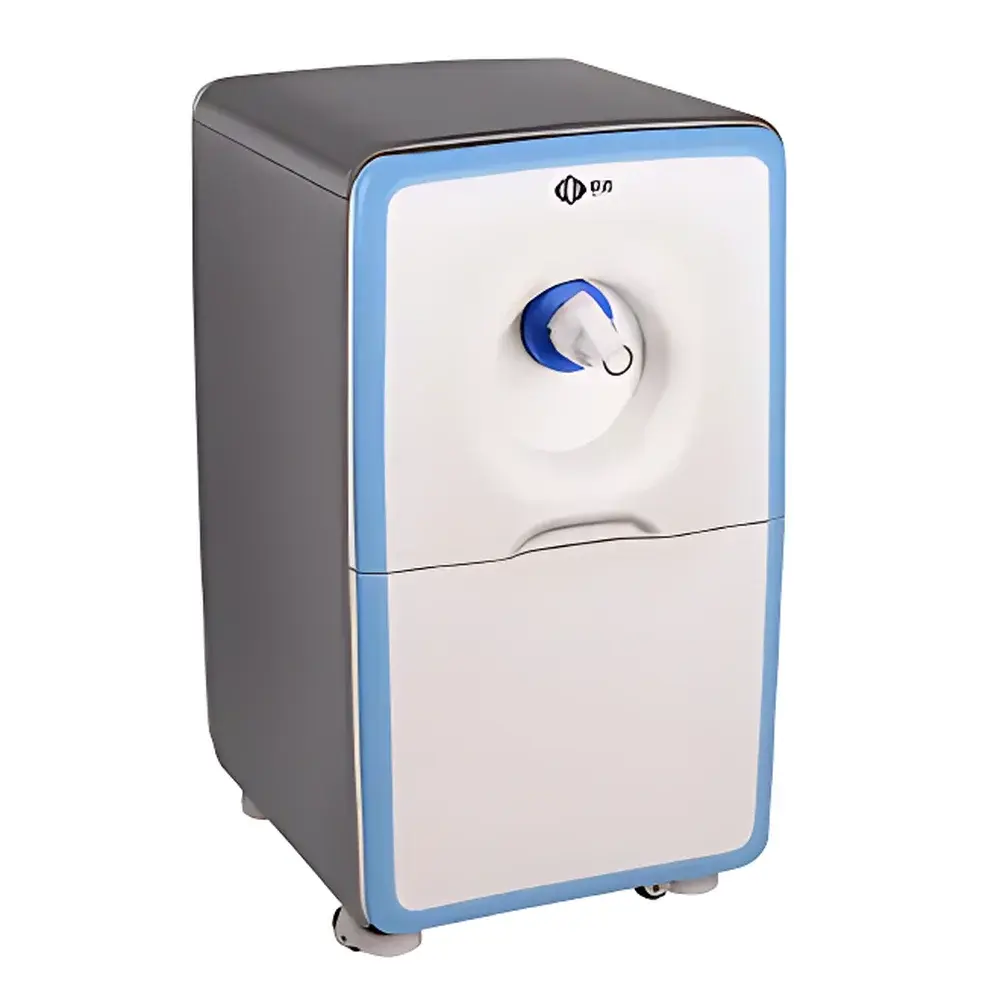
NIUMAG QMR06-090H-PRO Small Animal Body Composition Analyzer
| Brand | NIUMAG |
|---|---|
| Origin | Jiangsu, China |
| Manufacturer Type | Authorized Distributor |
| Product Category | Domestic |
| Model | QMR06-090H-PRO |
| Instrument Type | Research-Grade Small Rodent Analyzer |
| Sample Capacity | 800 g |
| Magnet Type | Permanent Magnet |
| Measurement Principle | Low-Field Nuclear Magnetic Resonance (LF-NMR) |
| Species Compatibility | Live Rats, Mice, and Rabbits |
| Measurement Time | ≤ 60 s per sample |
| Measured Parameters | Fat Mass, Lean Body Mass, Free Water Content |
| Sample Preparation | Non-invasive, No Anesthesia or Euthanasia Required |
| Software | Integrated LF-NMR Acquisition & Quantification Suite with GLP-Compliant Audit Trail |
Overview
The NIUMAG QMR06-090H-PRO Small Animal Body Composition Analyzer is a dedicated low-field nuclear magnetic resonance (LF-NMR) instrument engineered for non-invasive, quantitative assessment of body composition in live small laboratory animals. Operating at a static magnetic field strength typical of permanent-magnet-based systems (typically 0.05–0.1 T), the analyzer exploits the differential relaxation behavior of hydrogen nuclei (1H) in adipose tissue versus lean tissue and free water compartments. By applying optimized pulse sequences—including CPMG (Carr–Purcell–Meiboom–Gill) acquisition—the system resolves transverse relaxation decay curves and applies multi-exponential fitting algorithms to isolate signal contributions from fat, lean mass, and mobile water fractions. Designed specifically for preclinical metabolic research, the QMR06-090H-PRO delivers rapid, repeatable, and operator-independent quantification without requiring animal sacrifice, sedation, or contrast agents—making it suitable for longitudinal studies under IACUC-compliant protocols.
Key Features
- Non-invasive, in vivo measurement: Enables repeated assessments on the same animal across timepoints, supporting longitudinal monitoring of obesity, cachexia, diabetes, or dietary intervention studies.
- Single-session analysis completed in ≤ 60 seconds: High-throughput capability ideal for cohort-based screening in academic and pharmaceutical research settings.
- No sample preparation required: Eliminates anesthesia-related physiological stress, surgical artifacts, or post-mortem compositional drift—preserving biological fidelity.
- Robust permanent magnet architecture: Delivers stable field homogeneity over extended operation cycles with minimal maintenance and zero cryogen dependency.
- Integrated hardware-software co-design: RF coil geometry, gradient performance, and receiver bandwidth are optimized for rodent-scale samples (up to 800 g), ensuring high signal-to-noise ratio and reproducible quantification.
- Calibration traceability: Factory-calibrated using NIST-traceable phantoms; optional user calibration kits available for routine verification per ISO/IEC 17025 guidelines.
Sample Compatibility & Compliance
The QMR06-090H-PRO accommodates live rodents—including Sprague-Dawley and Wistar rats, C57BL/6 and BALB/c mice—and New Zealand white rabbits within its 800 g maximum payload limit. Animals are positioned in standardized, non-restrictive cradles aligned coaxially with the RF coil. The system complies with international standards for preclinical instrumentation: data integrity adheres to ALCOA+ principles (Attributable, Legible, Contemporaneous, Original, Accurate, Complete, Consistent, Enduring, Available); software audit trails meet FDA 21 CFR Part 11 requirements for electronic records and signatures when configured with user authentication and role-based access control. All measurement protocols align with OECD Test Guidelines 452 (Chronic Toxicity Studies) and NIH Office of Laboratory Animal Welfare (OLAW) recommendations for minimally invasive phenotyping.
Software & Data Management
The proprietary QMR Analysis Suite provides a validated, Windows-based interface with dual-mode operation: guided workflow mode for novice users and advanced parameter-editing mode for method development. Key modules include Pulse Sequence Manager (for CPMG echo train customization), Relaxometry Fitting Engine (using constrained non-linear least-squares algorithms), and Composition Quantification Module (applying species-specific calibration models). Raw FID and decay data are stored in HDF5 format with embedded metadata (operator ID, timestamp, animal ID, sequence parameters). Export options include CSV, Excel, and PDF reports compliant with GLP documentation standards. Optional integration with LIMS platforms via RESTful API supports automated data ingestion into enterprise research informatics ecosystems.
Applications
- Preclinical evaluation of anti-obesity therapeutics: Monitoring dynamic changes in fat mass percentage during chronic dosing regimens.
- Nutritional intervention studies: Quantifying lean mass preservation under protein-restricted or ketogenic diets.
- Cancer cachexia modeling: Tracking progressive loss of lean tissue independent of total body weight decline.
- Aging research: Assessing sarcopenia onset and adipose redistribution across murine lifespan cohorts.
- Toxicology screening: Detecting early metabolic shifts preceding histopathological changes in liver or muscle.
- Genetic phenotyping: Validating body composition phenotypes in transgenic/knockout models (e.g., leptin-deficient ob/ob mice).
FAQ
What animal species and weight ranges are supported?
The QMR06-090H-PRO is validated for live rats (up to 500 g), mice (15–60 g), and rabbits (up to 800 g). Optimal signal uniformity is achieved within these ranges using included anatomical positioning aids.
Is anesthesia required during scanning?
No. The system operates silently and without vibration; conscious, unrestrained animals yield reliable data. Optional light restraint devices are provided to minimize motion artifact without pharmacological intervention.
How is calibration maintained over time?
Daily system checks use built-in reference phantoms. Annual recalibration by NIUMAG-certified engineers includes field mapping, RF coil tuning, and relaxation time validation against traceable standards.
Can data be exported for statistical analysis in third-party software?
Yes. All quantitative outputs (fat %, lean mass g, free water g) export directly to CSV or MATLAB-compatible formats. Batch processing scripts are available upon request for high-throughput workflows.
Does the instrument support Good Laboratory Practice (GLP) compliance?
When deployed with enabled audit trail, electronic signature, and backup configuration, the system meets core GLP requirements for instrument qualification (IQ/OQ/PQ), data archiving, and change control as defined in OECD Principles of GLP.





