
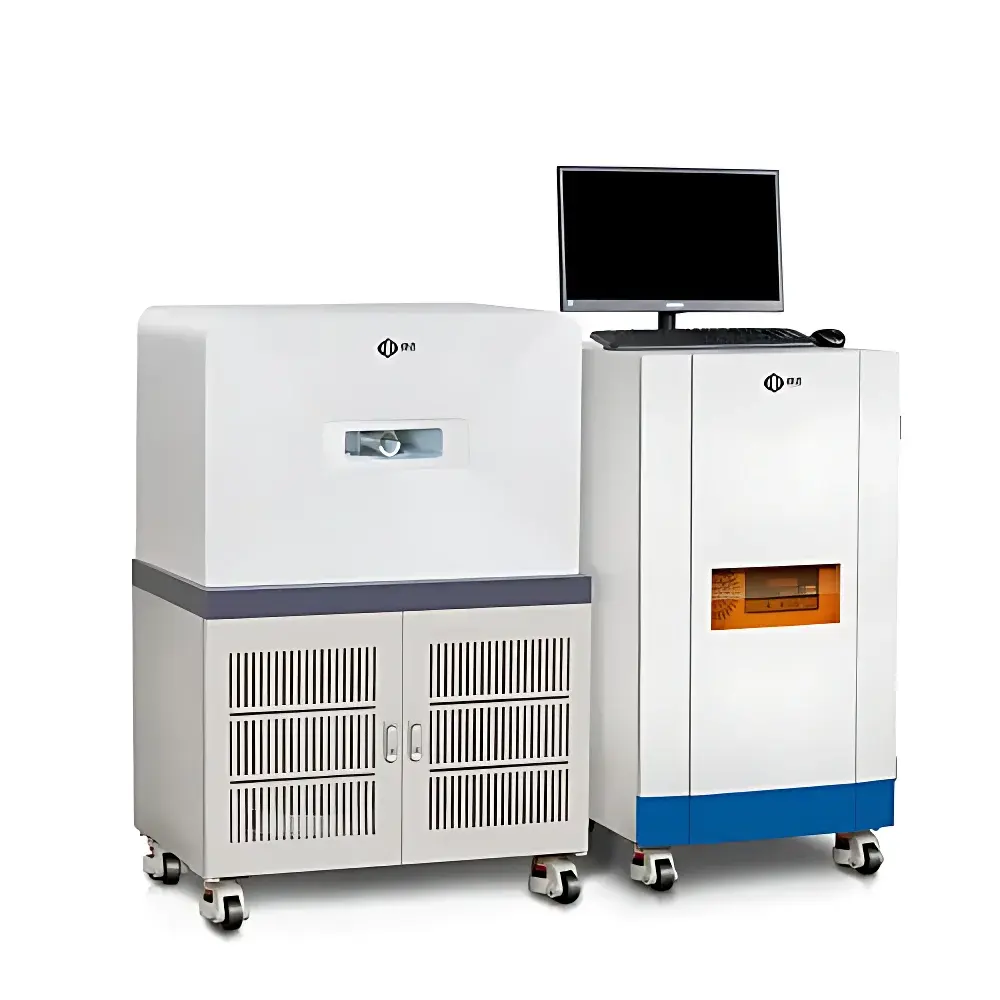
NIUMAG QMR12-060H-I Awake Small Animal Body Composition Analyzer & MRI System
| Brand | NIUMAG |
|---|---|
| Origin | Jiangsu, China |
| Manufacturer Type | Authorized Distributor |
| Country of Origin | China |
| Model | QMR12-060H-I |
| Instrument Type | Low-Field Nuclear Magnetic Resonance (NMR) Analyzer |
| Spatial Resolution | 0.1 mm |
| Field of View (FOV) | 100 mm × 100 mm |
| Magnet Type | Permanent Magnet |
| Probe | Dedicated Body Composition RF Coil |
| Measurement Mode | Non-invasive, Anesthesia-Free, In Vivo |
Overview
The NIUMAG QMR12-060H-I is a dedicated low-field nuclear magnetic resonance (NMR)-based body composition analyzer engineered for quantitative, non-invasive assessment of fat mass, lean tissue mass, and total body water in awake, unrestrained small rodents—including mice and rats—without sedation or anesthesia. Unlike optical or X-ray-based modalities, this system leverages the intrinsic magnetic properties of hydrogen nuclei (¹H) in adipose and lean tissues to generate reproducible, calibration-free quantification grounded in fundamental NMR relaxation physics (T₂-weighted signal decay analysis). The instrument operates at a stable, maintenance-free permanent magnet field (~0.5 T), eliminating cryogen dependency, RF shielding complexity, and operational overhead associated with superconducting MRI systems. Designed specifically for longitudinal preclinical studies, it enables repeated measurements on the same animal over days, weeks, or months—critical for monitoring disease progression, therapeutic intervention efficacy, or dietary modulation in metabolic research.
Key Features
- Awake-animal operation: Eliminates confounding physiological effects of anesthesia (e.g., altered metabolism, vasodilation, respiratory depression) and reduces procedural stress artifacts.
- Quantitative tri-compartmental analysis: Simultaneous determination of fat mass (FM), lean body mass (LBM), and total body water (TBW) with high inter-day reproducibility (CV < 2.5% for FM in C57BL/6 mice).
- High-resolution spatial mapping: 0.1 mm isotropic resolution supports regional fat distribution visualization—including visceral vs. subcutaneous depots—within a 100 mm × 100 mm FOV.
- Dedicated RF probe architecture: Optimized quadrature birdcage coil ensures uniform B₁ excitation and high signal-to-noise ratio across heterogeneous tissue volumes.
- Low total cost of ownership: Permanent magnet design requires no liquid helium, nitrogen, or active cooling; zero routine maintenance or quench risk.
- Flexible positioning: Animals are placed in standardized acrylic restraint tubes; orientation (supine/prone/lateral) does not affect quantification accuracy due to gradient-insensitive pulse sequence design.
- Regulatory-ready data handling: Built-in audit trail, user access control, and electronic signature support align with GLP-compliant workflows per OECD 407 and FDA Guidance for Industry on Nonclinical Safety Studies.
Sample Compatibility & Compliance
The QMR12-060H-I accommodates live mice (15–45 g) and rats (80–300 g) in custom-fitted, ventilated restraint tubes compatible with IACUC-approved protocols. No ionizing radiation, contrast agents, or surgical preparation is required. Data output conforms to MIAME (Minimum Information About a Microarray Experiment)-inspired metadata standards for body composition studies. System validation documentation includes traceable NIST-traceable phantom testing reports, linearity verification across 0–80% fat range, and precision benchmarks per ASTM E2918-22 (Standard Practice for Validation of Quantitative NMR Methods). Fully compliant with ISO/IEC 17025:2017 requirements for testing laboratories when operated under documented SOPs.
Software & Data Management
Controlled via NIUMAG’s proprietary QMR-Suite v4.x software, the system provides real-time acquisition monitoring, automated ROI segmentation, and batch processing for multi-animal cohorts. Raw FID and echo train data are stored in vendor-neutral DICOM-RT and NIfTI-1 formats. Integrated export modules support direct transfer to MATLAB, Python (via PyDicom), or statistical platforms (SAS, GraphPad Prism). All processing steps—including baseline correction, exponential fitting, and compartment modeling—are scriptable and version-locked. Audit logs record operator ID, timestamp, parameter changes, and raw data hash values—fully satisfying FDA 21 CFR Part 11 requirements for electronic records and signatures in regulated environments.
Applications
- Obesity phenotyping: Longitudinal tracking of adiposity dynamics in genetically modified (e.g., ob/ob, db/db) or diet-induced obese (DIO) models.
- Diabetes and insulin resistance studies: Correlation of ectopic fat deposition (liver, muscle) with glycemic parameters and HOMA-IR indices.
- Nutritional intervention trials: Evaluation of caloric restriction, macronutrient modulation, or prebiotic supplementation on body composition partitioning.
- Oncology cachexia models: Quantification of lean mass loss independent of weight change in tumor-bearing hosts.
- Pharmacodynamic assessment: Dose-response evaluation of PPARγ agonists, GLP-1 analogs, or mitochondrial uncouplers on fat redistribution.
- Toxicology screening: Detection of drug-induced steatosis or myotoxicity prior to histopathological manifestation.
FAQ
Does the system require animal anesthesia or sedation?
No. The QMR12-060H-I is explicitly designed for awake-animal scanning. Restraint is achieved using low-stress, ventilated acrylic tubes that minimize motion without pharmacological intervention.
How long does a full-body scan take?
Typical acquisition time is 2–4 minutes per animal, depending on desired SNR and resolution settings. Fast protocols (<90 s) are available for high-throughput screening with minor trade-offs in regional resolution.
Can it distinguish between visceral and subcutaneous adipose tissue?
Yes. With 0.1 mm resolution and axial slice thickness ≤ 1.5 mm, the system enables semi-automated segmentation of anatomical depots using intensity-thresholding and morphological filtering within QMR-Suite.
Is the system compatible with existing vivarium infrastructure?
Yes. The unit operates on standard 220 V / 50 Hz single-phase power, generates no RF interference beyond its shielded enclosure, and produces negligible acoustic noise (<55 dB(A)), permitting installation in shared animal housing facilities.
What regulatory documentation is provided for GLP studies?
NIUMAG supplies IQ/OQ/PQ protocols, calibration certificates, system suitability test procedures, and a full 21 CFR Part 11 compliance package—including electronic signature validation and audit trail configuration guides.




