
NLIR Measurement Kits – Fiber-Coupled Probe Kit, Reflection Kit, Transmission Kit
| Brand | NLIR |
|---|---|
| Origin | Denmark |
| Distributor Type | Authorized Distributor |
| Origin Category | Imported |
| Model | N/A |
| Pricing | Upon Request |
Overview
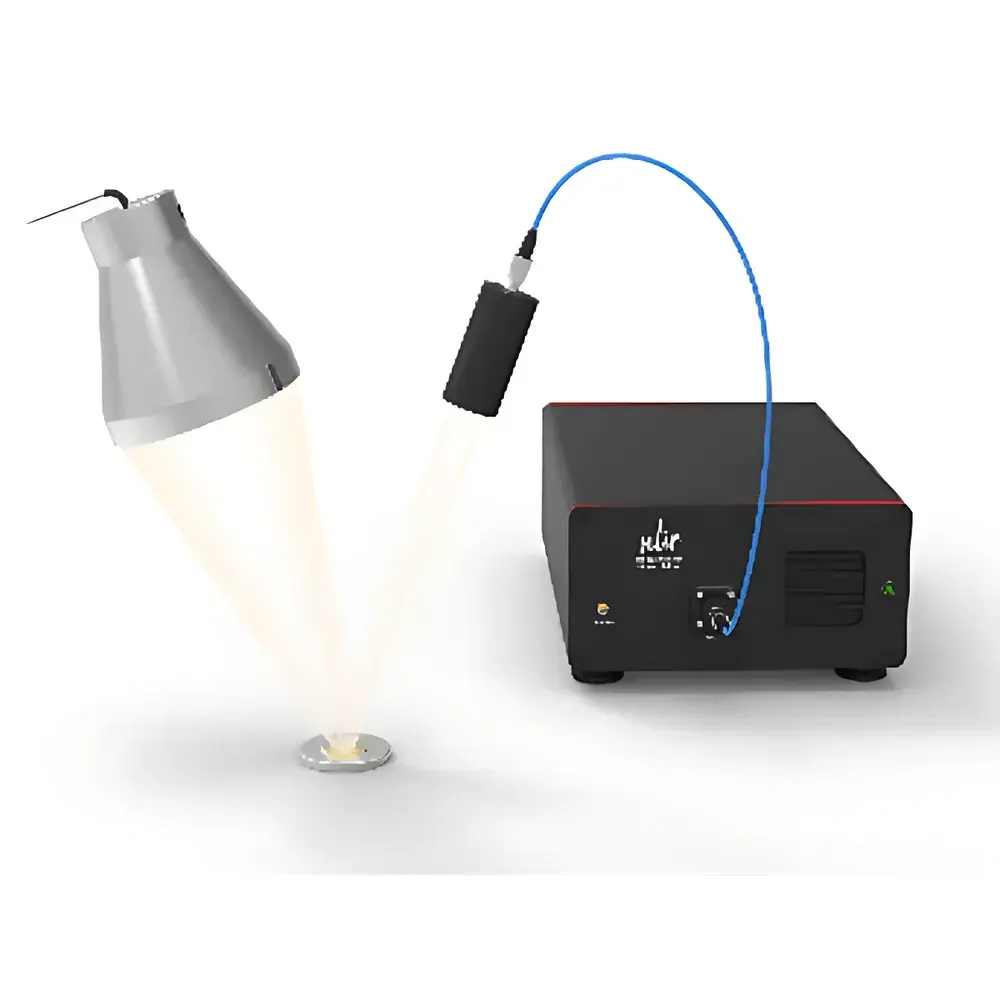
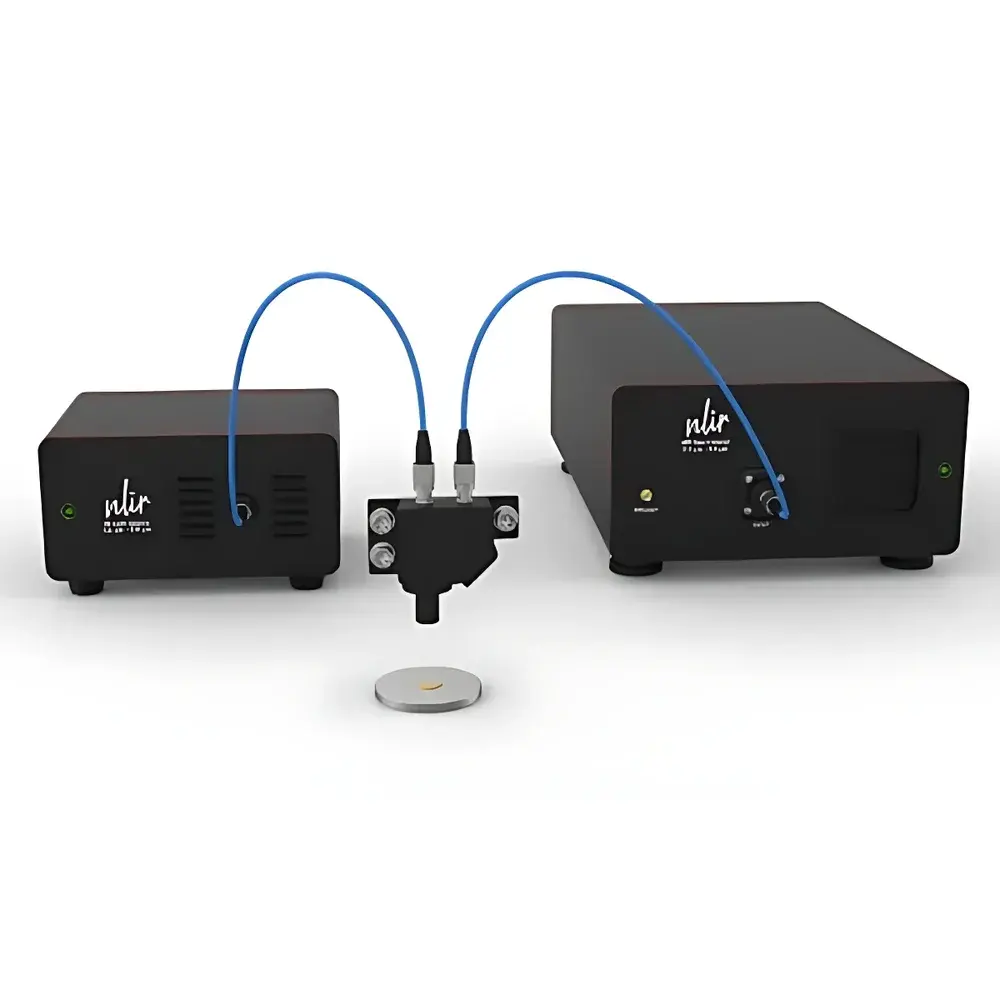
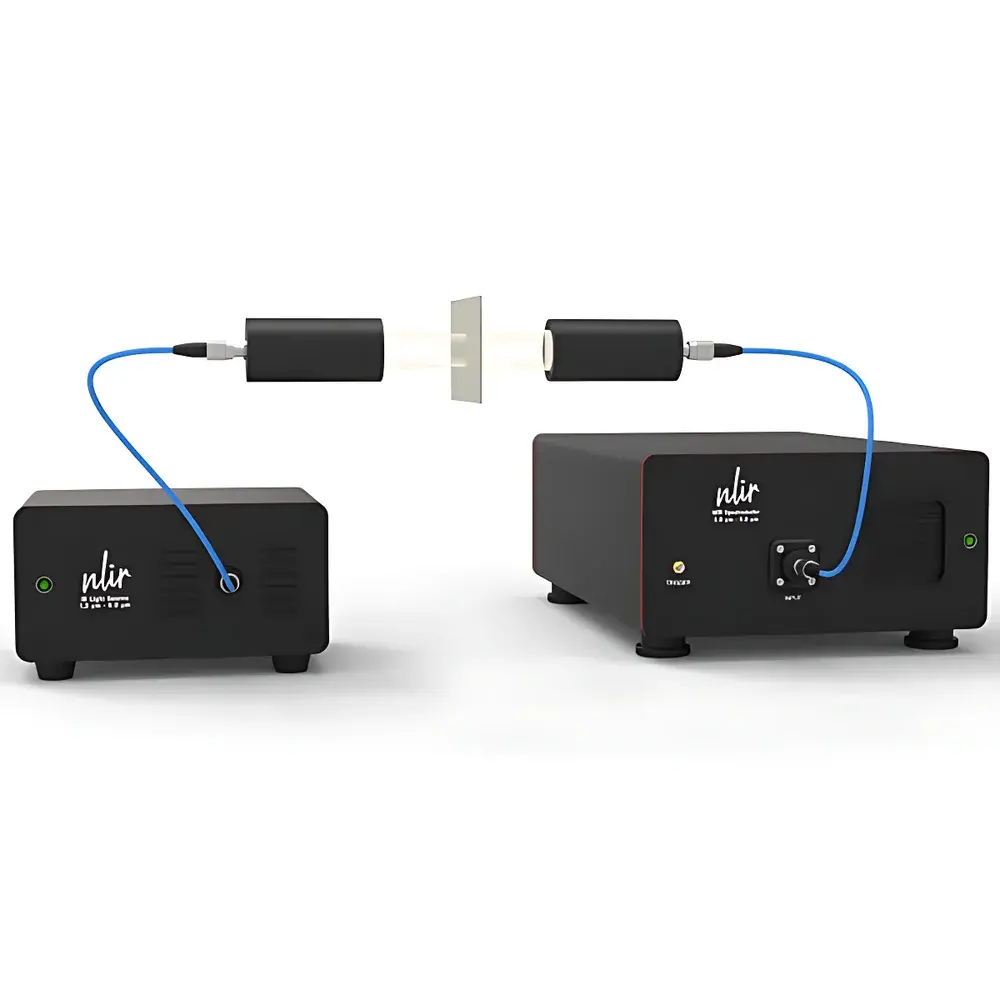
NLIR Measurement Kits are modular, application-optimized optical interface solutions designed to enable rapid, high-sensitivity mid-infrared (MIR) spectroscopy using NLIR’s patented upconversion detection technology. Unlike conventional Fourier-transform infrared (FTIR) spectrometers or cooled MCT-based systems, NLIR instruments convert incident MIR photons (2–20 µm) into near-visible light via nonlinear frequency upconversion in engineered crystals—enabling detection with high-speed, low-noise silicon-based sensors. This paradigm shift delivers spectral acquisition speeds up to three orders of magnitude faster than standard FTIR, with sub-millisecond temporal resolution and shot-noise-limited sensitivity at room temperature. The kits—Fiber-Coupled Probe Kit, Reflection Kit, and Transmission Kit—are not standalone instruments but purpose-built optical front-ends that bridge NLIR’s core spectrometers (e.g., NLIR 3.4, NLIR 5.2) to diverse sample geometries and physical states. Each kit maintains full compatibility with NLIR’s real-time spectral acquisition software and supports traceable, quantitative measurements under controlled laboratory or industrial process conditions.
Key Features
- Fiber-Coupled Probe Kit: Enables non-contact, localized MIR interrogation of micro-scale regions (diameter ≈ 200–500 µm); optimized for integrated photonics devices, semiconductor wafers, and microfluidic samples; features low-insertion-loss single-mode ZBLAN fiber coupling and kinematic probe housing for repeatable positioning.
- Reflection Kit: Integrates a high-power MIR source (≥100 mW output), elliptical off-axis reflector (focal length = 20 cm), and fiber-coupled collection head; provides uniform illumination over a 10 mm Ø measurement area; calibrated for diffuse and specular reflectance on opaque, non-transmissive materials including polymers, coated metals, and painted surfaces.
- Transmission Kit: Supports free-space or fiber-guided through-sample illumination; accommodates thin films, polymer foils (<1 mm thickness), liquid cells (with CaF2 or BaF2 windows), and dielectric coatings; includes adjustable collimation optics and alignment fiducials for reproducible beam path setup.
- All kits maintain full spectral fidelity across NLIR’s supported wavelength ranges (e.g., 3.0–4.2 µm, 4.5–5.5 µm) without introducing dispersion artifacts or polarization-dependent loss.
- Designed for seamless integration with NLIR’s USB 3.0 spectrometers and compatible with third-party motion stages, environmental chambers, and process control interfaces (TTL trigger I/O, analog voltage output).
Sample Compatibility & Compliance
The NLIR Measurement Kits address fundamental challenges in MIR spectroscopic sampling—particularly signal-to-noise ratio degradation due to scattering, absorption, or geometric mismatch. For highly reflective substrates (e.g., coated steel, Al mirrors), the Reflection Kit ensures >85% collection efficiency of specular return while minimizing stray light via baffled optics. For thin-film transmission, the Transmission Kit enables quantifiable absorbance measurements compliant with ASTM E1421–22 (Standard Practice for Describing and Measuring Performance of Fourier Transform Mid-Infrared (FT-MIR) Spectrometers). Powder and granular samples are measured in reflection mode using angle-resolved collection geometry validated per ISO 1833–17 (Textiles — Quantitative chemical analysis — Part 17: Mixtures of polyamide and other fibres). All kits operate within Class 1 laser safety limits per IEC 60825-1:2014 when used with NLIR-certified sources and are suitable for GLP-compliant environments where instrument configuration logs and spectral metadata (wavelength calibration, integration time, detector gain) are automatically embedded in HDF5-formatted data files.
Software & Data Management
Kits are fully supported by NLIR Spectroscopy Suite v4.x—a cross-platform (Windows/macOS/Linux), FDA 21 CFR Part 11–ready application featuring audit trail logging, electronic signature support, and role-based user access control. Real-time spectral acquisition allows frame rates up to 100 Hz (per kit configuration), with on-the-fly baseline correction, peak integration, and multivariate analysis (PCA, PLS regression). Data export supports CSV, ASCII, and vendor-neutral JCAMP-DX formats. Spectral libraries (e.g., polymer ID, pharmaceutical excipients) can be imported and matched using correlation coefficient or Mahalanobis distance algorithms. All hardware configurations—including fiber numerical aperture, source power level, and collection geometry—are stored as metadata tags and synchronized with each acquired spectrum, ensuring full traceability for ISO/IEC 17025-accredited laboratories.
Applications
- Industrial Process Monitoring: Real-time thickness mapping of polymer coatings on moving webs using Transmission Kit; inline identification of plastic resin blends in recycling streams via Reflection Kit.
- Photonics & Semiconductor QA: Spatially resolved MIR characterization of Si waveguide modes and III-V epitaxial layers using Fiber-Coupled Probe Kit with <10 µm positioning repeatability.
- Materials Science: In situ thermal degradation kinetics of flame-retardant composites monitored at 10 ms temporal resolution; hydration state analysis of hydrogels via ATR-compatible liquid cell adapters.
- Environmental & Chemical Analysis: Detection of trace VOCs in air streams using multipass gas cells coupled to Reflection Kit optics; microplastic particle identification from environmental filters using fiber-probe micro-sampling.
- Biomedical Research: Label-free histopathology of tissue sections (e.g., lipid/protein ratio mapping) with diffraction-limited spatial resolution enabled by the probe kit’s near-field coupling capability.
FAQ
Are these kits compatible with non-NLIR spectrometers?
No—NLIR Measurement Kits are engineered exclusively for use with NLIR upconversion spectrometers (e.g., NLIR 3.4, NLIR 5.2). Their optical design, spectral response calibration, and software drivers assume NLIR’s proprietary upconversion architecture and cannot be retrofitted to FTIR or quantum cascade laser (QCL)-based platforms.
Do the kits require cryogenic cooling or vacuum operation?
No—all components operate at ambient temperature and pressure. The upconversion detectors eliminate the need for liquid nitrogen or Stirling coolers, reducing system footprint and operational overhead.
Can the Fiber-Coupled Probe Kit be used in hazardous environments?
Yes—when paired with explosion-proof enclosures and intrinsically safe fiber feedthroughs, the probe kit has been deployed in ATEX Zone 2 industrial settings for real-time hydrocarbon vapor monitoring.
Is calibration documentation provided with each kit?
Yes—each shipment includes NIST-traceable reflectance/transmission calibration certificates, spectral responsivity curves, and mechanical alignment reports signed by NLIR’s DTU Fotonik–certified metrology team.
What is the typical lead time for custom optical interface development?
Standard kits ship within 4 weeks. Custom configurations (e.g., extended working distance probes, multi-angle reflection heads) follow NLIR’s Design Transfer Agreement (DTA) process and typically require 12–16 weeks from specification freeze to delivery.





