
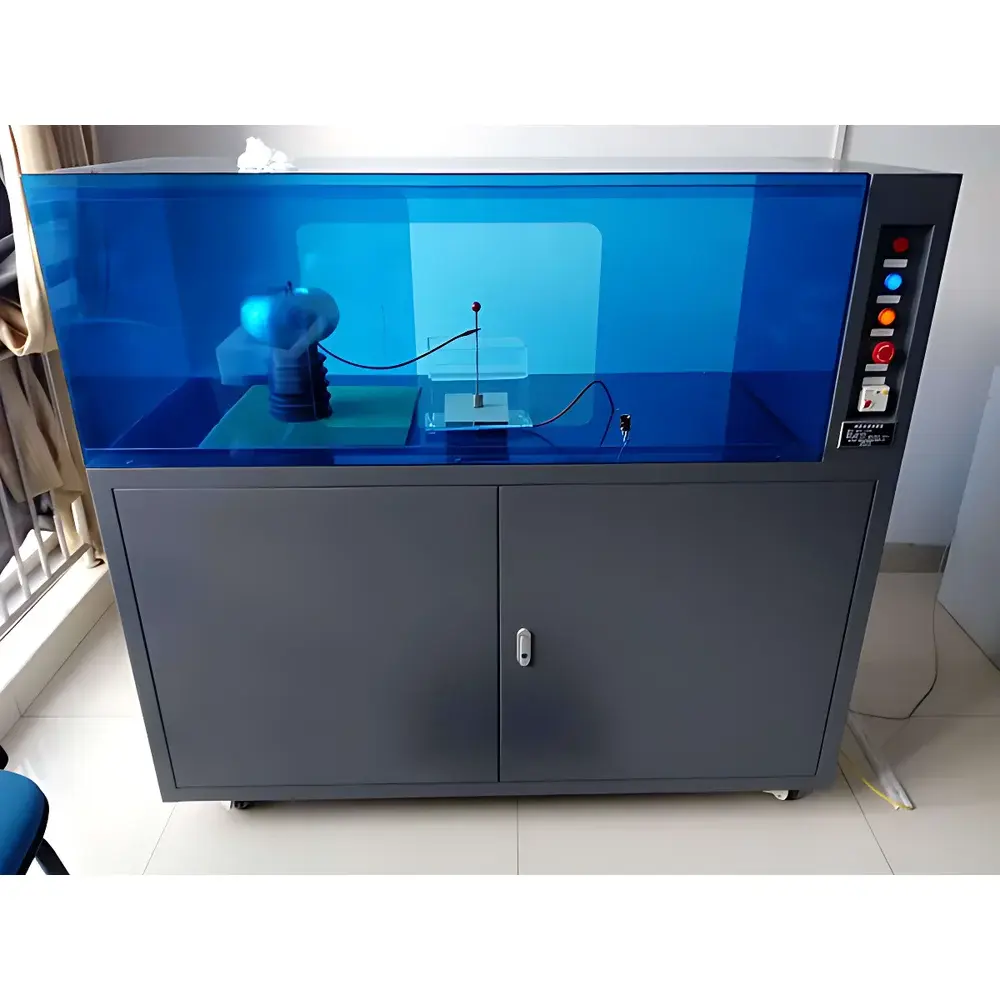
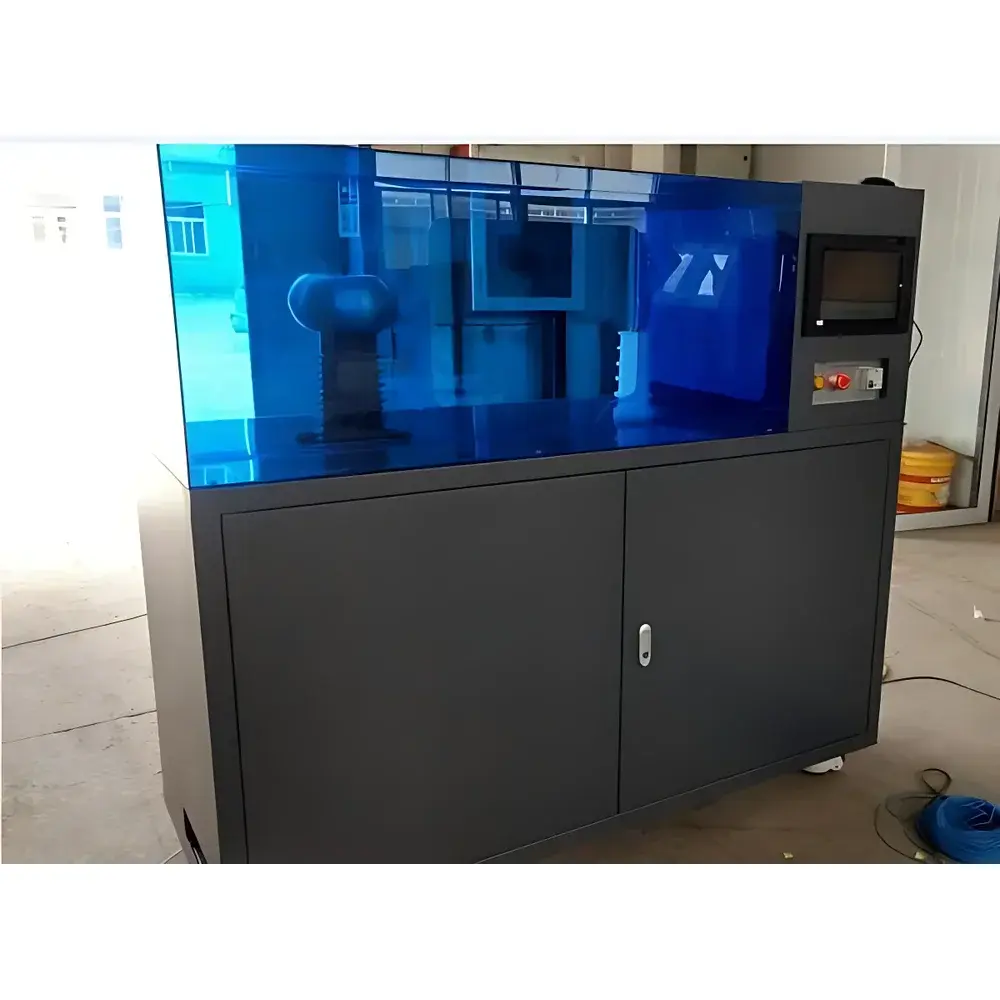
North Guang Precision BDJC Series-100kV Ceramic Dielectric Strength Tester
| Brand | North Guang Precision Instrument |
|---|---|
| Origin | Beijing, China |
| Manufacturer Type | Direct Manufacturer |
| Model | BDJC Series–100kV |
| Maximum Output Voltage | 100 kV AC/DC |
| Voltage Accuracy | ≤2% |
| Rising Rate Range | 0.1–5 kV/s (adjustable) |
| Test Modes | Stepwise Ramp, Continuous Ramp, Hold-at-Voltage (0–7 h), DC or AC |
| Test Medium | Air or Insulating Oil |
| Leakage Current Range | 0–100 mA |
| Input Power | 220 V ±10%, 50 Hz ±1% |
| Rated Capacity | 10 kVA |
| Compliance Standards | GB/T 1408.1–2006, GB/T 1695–2005, GB/T 3333–1999, HG/T 3330–2003, GB 12656–1990, ASTM D149–2022 |
Overview
The North Guang Precision BDJC Series–100kV Ceramic Dielectric Strength Tester is an industrial-grade high-voltage testing system engineered for precise determination of dielectric breakdown voltage, dielectric strength, and withstand voltage performance of solid and liquid insulating materials under power-frequency (50 Hz) conditions. Based on the fundamental principle of controlled voltage ramping until electrical breakdown occurs across a defined electrode gap, the instrument applies standardized electrostatic stress to evaluate material integrity under realistic service conditions. Designed specifically for ceramic, glass, polymer composites, laminates, varnishes, resins, and other non-conductive bulk or film specimens, it delivers repeatable, traceable results aligned with international electrotechnical safety and quality assurance protocols. Its third-generation architecture integrates PLC-based control with dual-channel (voltage + current) real-time acquisition, eliminating common false-trigger or post-breakdown continuation errors observed in legacy relay-driven systems.
Key Features
- True bidirectional acquisition: Simultaneous high-fidelity monitoring of applied voltage and leakage current enables accurate identification of onset of partial discharge and definitive breakdown point.
- Touchscreen-integrated Windows platform software: Intuitive GUI supports dynamic real-time curve plotting during test execution, with timestamped waveform logging at ≥1 kHz sampling rate.
- Programmable voltage ramp profiles: Selectable modes include linear ramp (0.1–5 kV/s), stepwise incremental ramp, and extended hold-at-voltage (up to 7 hours), all fully configurable via software interface.
- Robust high-voltage generation: Solid-state, contactless voltage regulation ensures stable output across full 0–100 kV AC/DC range with ≤2% measurement uncertainty per IEC 61000-4-30 Class A calibration reference.
- Dual-dielectric test environment: Switchable test chambers support both ambient air and transformer oil immersion—critical for evaluating ceramics with surface contamination sensitivity or low-surface-resistivity glazes.
- User-access-level management: Role-based login (administrator/operator) enforces data integrity, audit trail compliance, and procedural separation of duties in regulated environments.
Sample Compatibility & Compliance
The BDJC–100kV accommodates standard-compliant specimen geometries per GB/T 1408.1 (discs: Ø25 mm × 3 mm; bars: 100 mm × 10 mm × 3 mm) and ASTM D149 (6.35 mm diameter electrodes, 2 mm gap). It supports flat, curved, and irregularly shaped ceramic substrates—including glazed tiles, alumina insulators, zirconia bioceramics, and sintered ferrites—when mounted using standardized brass or stainless-steel electrode assemblies. The system meets essential requirements for GLP-compliant laboratories: electronic signature support, immutable audit trails, version-controlled method templates, and 21 CFR Part 11–ready data export (CSV, XLSX, PDF report packages). All firmware and software revisions are documented per ISO/IEC 17025:2017 Clause 7.7.1 for measurement traceability.
Software & Data Management
The embedded Windows-based application provides full lifecycle test management—from parameter initialization (electrode type, ramp rate, dwell time, pass/fail thresholds) to post-test analysis. Raw voltage/current datasets are stored in binary .DAT format with metadata headers (operator ID, timestamp, environmental temperature/humidity, calibration certificate ID). Export functions include direct Excel-compatible CSV dumps, customizable report templates (with company logo, test standard header, statistical summary), and PNG/SVG vector plots. Automated pass/fail logic applies user-defined criteria (e.g., “breakdown must occur within ±5% of target voltage” or “leakage current >10 mA sustained for >2 s triggers abort”). All actions—including parameter edits, test starts/stops, and report generation—are logged with ISO 8601 timestamps and operator credentials.
Applications
This tester serves critical quality control and R&D functions across multiple sectors: evaluation of high-purity alumina and silicon nitride substrates for HVDC bushings; validation of dielectric coatings on piezoelectric ceramics; qualification of insulating layers in multilayer ceramic capacitors (MLCCs); comparative screening of glaze formulations for outdoor porcelain insulators; and failure analysis of cracked or thermally cycled structural ceramics. In academic settings, it supports studies on Townsend avalanche mechanisms in polycrystalline oxides and space-charge-limited conduction modeling under alternating stress fields. Its compatibility with ASTM D149 and GB/T 1408.1 makes it suitable for supplier qualification audits and third-party certification testing per IEC 60674-2.
FAQ
What electrode configurations are supported for ceramic testing?
Standard configurations include spherical–spherical (for curved surfaces), parallel-plate (for flat discs/tiles), and needle–plane (for localized defect sensitivity). Custom electrodes can be integrated upon request.
Does the system support automated pre-test insulation resistance measurement?
Yes—integrated megohmmeter function (100 V–1 kV DC) performs pre-breakdown insulation resistance checks per IEC 60243-1 Annex B prior to high-voltage ramp initiation.
How is calibration traceability maintained?
Each unit ships with NIST-traceable calibration certificate (voltage divider + current shunt), valid for 12 months. Internal self-diagnostic routines verify sensor linearity before every test sequence.
Can test sequences be scheduled for unattended operation?
Yes—batch mode allows up to 99 sequential tests with independent parameter sets, automatic sample indexing, and fault-recovery resume capability after power interruption.
Is remote monitoring or integration with LIMS possible?
The system exposes OPC UA server interface (IEC 62541) for real-time data streaming and command control, enabling seamless integration with laboratory information management systems and MES platforms.
Related Products



