
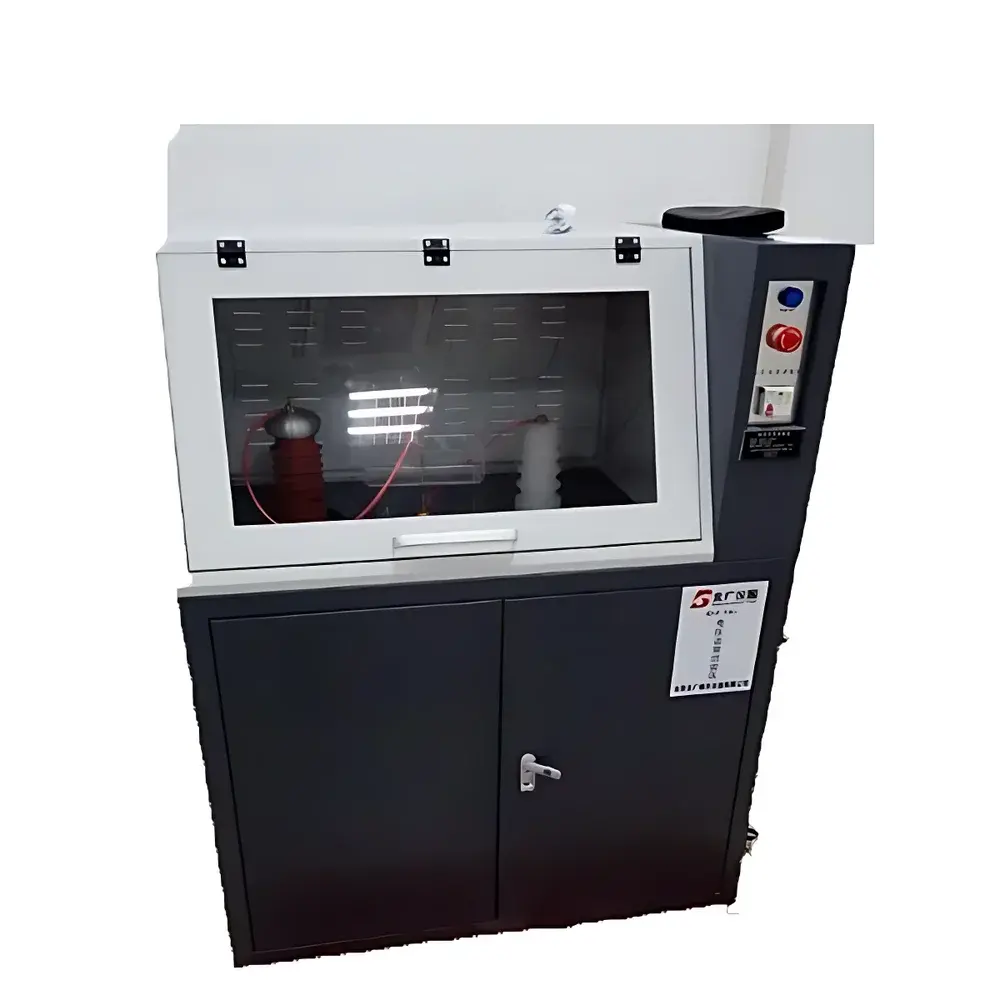
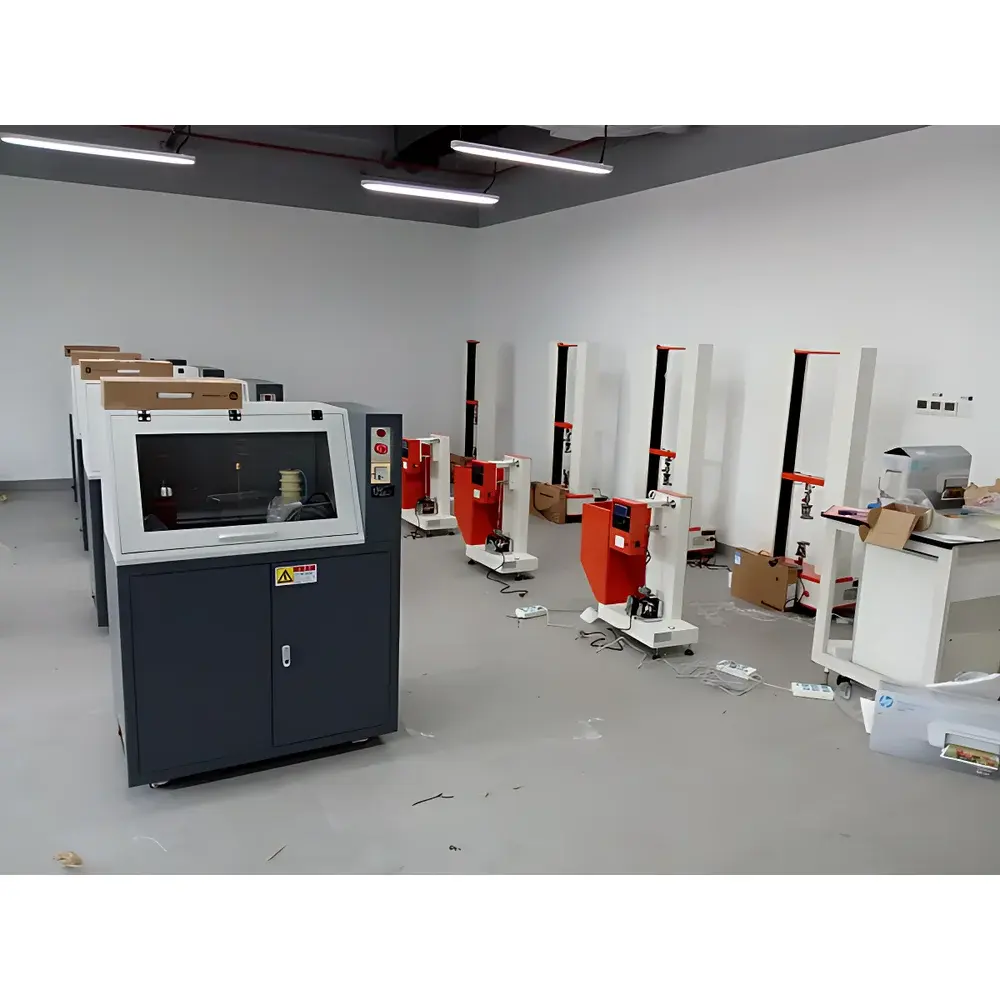
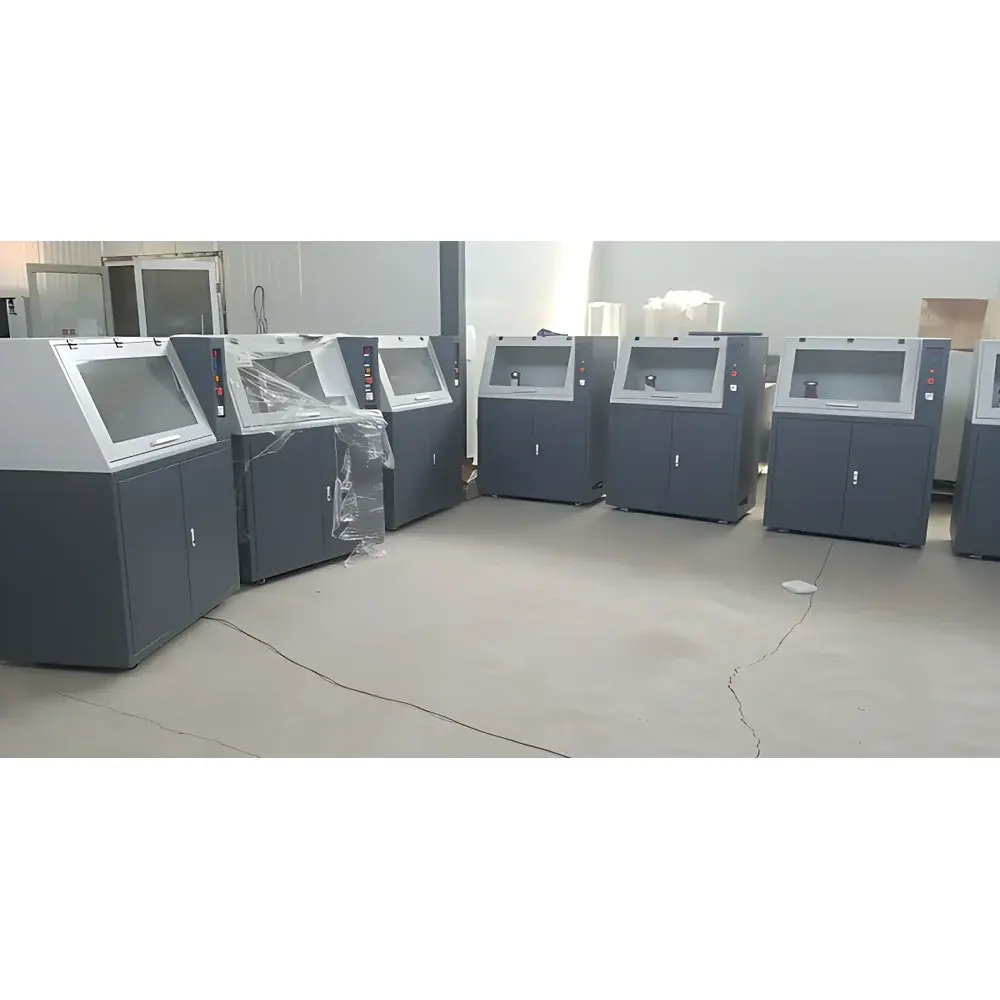
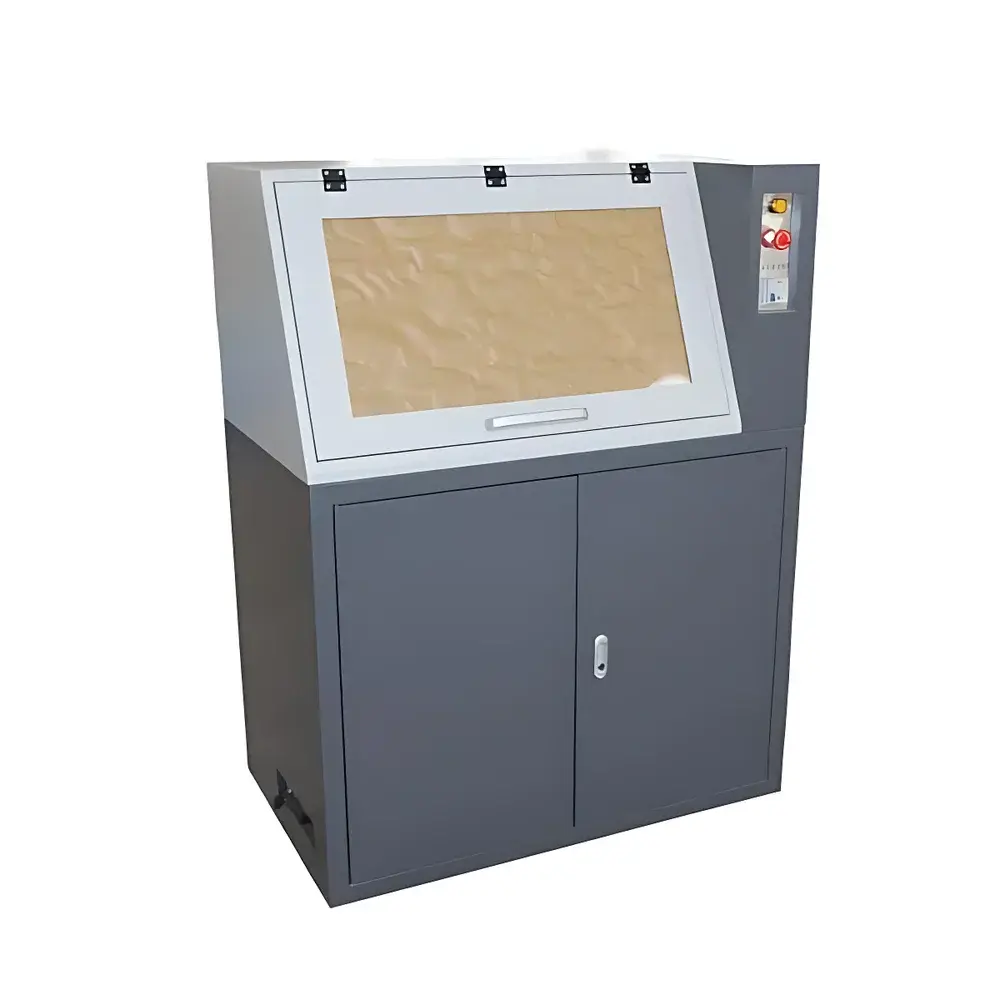
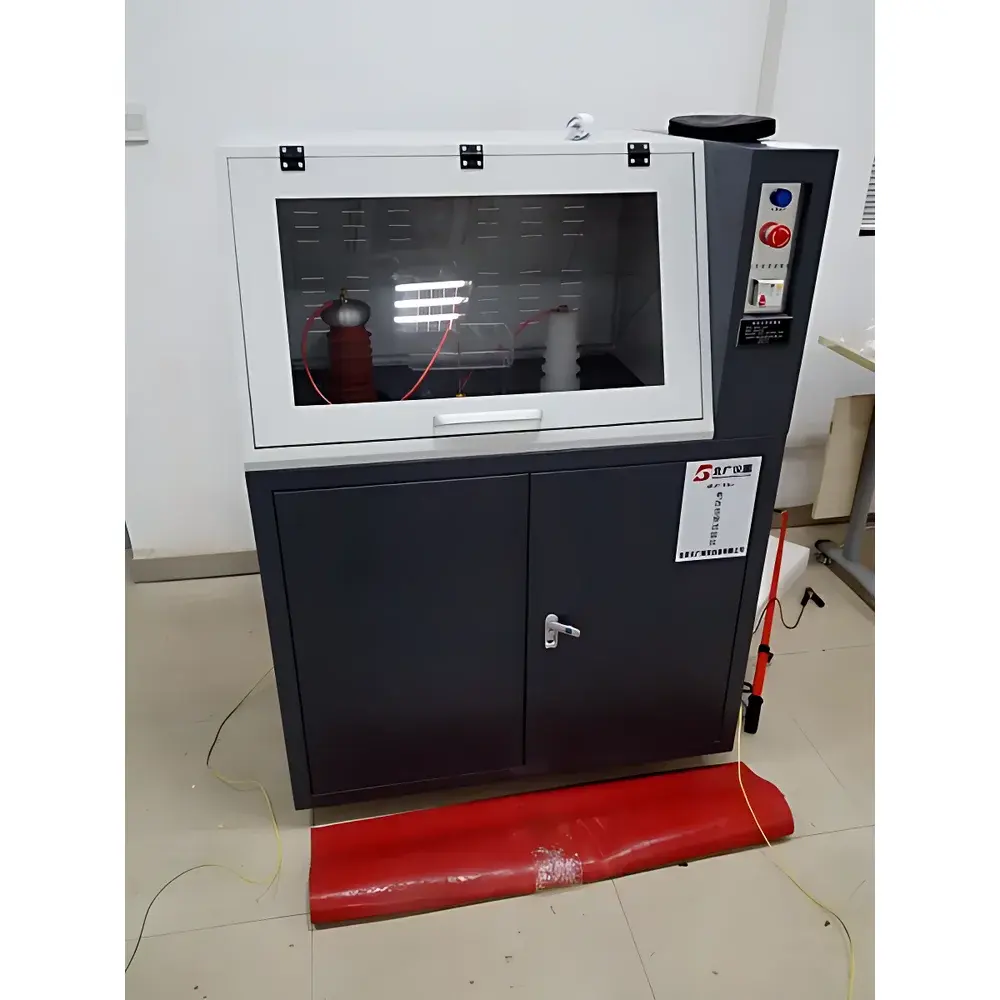
North Guang Precision BDJC Series Rubber Dielectric Breakdown Strength Tester
| Brand | North Guang Precision Instrument |
|---|---|
| Origin | Beijing, China |
| Manufacturer Type | OEM Manufacturer |
| Country of Origin | China |
| Model | BDJC Series |
| Breakdown Voltage | 50 kV |
| Input Voltage | AC 220 V ±10%, 50 Hz ±1% |
| Output Voltage Range | AC/DC 0–100 kV (fully adjustable) |
| Voltage Accuracy | ≤1% |
| Rise Rate | 0.1–10 kV/s (programmable) |
| Current Resolution | mA-level real-time acquisition |
| Protection Response Time | <0.05 s |
| Compliance Standards | GB 1408.1–2006, GB/T 1695–2005, ASTM D149, IEC 60243-1, HG/T 3330, GB/T 3333, GB 12656 |
Overview
The North Guang Precision BDJC Series Rubber Dielectric Breakdown Strength Tester is a high-voltage, microprocessor-controlled testing system engineered for precise determination of dielectric strength and electrical breakdown voltage in solid insulating materials—including vulcanized rubber, elastomers, plastics, laminates, and composites. Operating on the principle of controlled voltage ramping under standardized electrode configurations (per IEC 60243-1 and ASTM D149), the instrument applies either AC or DC voltage across a conditioned test specimen until electrical breakdown occurs. The resulting breakdown voltage—normalized to specimen thickness—yields dielectric strength (kV/mm), a critical parameter for material qualification in automotive sealing systems, power cable insulation, aerospace gaskets, and high-voltage component manufacturing. Designed for laboratory and QC environments, the BDJC platform integrates a Siemens-based embedded CPU control unit with PC-hosted software for traceable, repeatable, and auditable test execution.
Key Features
- Programmable voltage output: AC/DC 0–100 kV, fully adjustable in fine increments; dual-range configuration supports both low-voltage R&D screening (e.g., 10 kV) and high-stress validation (up to 100 kV)
- Precision rise-rate control: 0.1–10 kV/s, digitally stabilized via contactless solid-state voltage regulation—eliminating mechanical variac drift and ensuring compliance with ASTM D149 ramp tolerances
- Real-time current monitoring: High-fidelity mA-level current acquisition synchronized with voltage waveform; enables detection of pre-breakdown leakage trends and partial discharge onset
- Dual protection architecture: Hardware-based overcurrent cutoff (<0.05 s response) + software-triggered emergency shutdown; includes interlocked safety door, zero-voltage reset, grounding verification, and automatic post-test discharge
- Flexible test modes: Uniform ramp, stepwise gradient, and timed dielectric withstand (0–6 h); supports both air and transformer oil immersion per GB/T 1695–2005
- Wireless Bluetooth control option: Enables true operator separation—remote operation up to 15 m without signal latency; also supports USB 2.0 (3 MB/s throughput) and RS-232 interfaces
- Stainless steel (SUS304) enclosure with EMI-filtered power supply; modular oil bath assembly (dual tanks included) for standardized electrode immersion per GB 1408.1
Sample Compatibility & Compliance
The BDJC Series accommodates flat-sheet specimens (thickness 0.5–10 mm), molded rubber parts, extruded profiles, and cast polymer slabs. Electrode geometries conform to ASTM D149 Type 1 (cylindrical, 25 mm diameter) and Type 2 (ring electrode), with optional custom fixtures for irregular geometries. Test media include ambient air (IEC 60243-1) and refined mineral oil (GB/T 1695–2005). All firmware and calibration protocols adhere to ISO/IEC 17025 requirements for testing laboratories. The system supports full audit trails compliant with FDA 21 CFR Part 11 when configured with user-access controls, electronic signatures, and immutable data logging. Certified calibration reports are issued by CNAS-accredited metrology institutes upon request.
Software & Data Management
The proprietary BDJC Control Suite (v4.2+) runs on Windows OS and provides role-based access control—multiple users with unique credentials, password-protected parameter locks, and session-specific data segregation. Test parameters (rise rate, hold time, trip threshold, electrode type) are stored in encrypted XML templates. Real-time voltage–current curves are plotted with auto-scaling axes; raw data streams (100 Hz sampling) are saved in CSV and proprietary .BDJ binary format. Post-test analysis includes statistical summaries (mean, SD, CV%), comparative overlay of up to five test curves with color-coded legends, and customizable PDF report generation (including lab header, operator ID, calibration status, and pass/fail flag per GB 1408.1 criteria). Data export supports LIMS integration via ODBC drivers.
Applications
This tester is routinely deployed in R&D labs developing EPDM seals for EV battery enclosures, QC departments validating silicone insulators for photovoltaic junction boxes, and certification bodies verifying halogen-free flame-retardant compounds per UL 94 and IEC 60695. It supports accelerated aging studies (pre/post-thermal/humidity cycling), comparative screening of nanofiller-reinforced rubber composites, and failure mode analysis of extruded cable jackets. In academic settings, it serves materials science curricula covering dielectric theory, space charge dynamics, and Townsend avalanche modeling. Its adaptability to both AC and DC stress makes it suitable for evaluating DC-link capacitor films and HVDC cable insulation systems.
FAQ
Does the BDJC Series comply with international standards for dielectric testing?
Yes—it is designed and verified against ASTM D149, IEC 60243-1, GB 1408.1–2006, and GB/T 1695–2005, with full documentation available for regulatory submissions.
Can the system perform both AC and DC breakdown tests?
Yes—dual-mode output delivers sinusoidal AC (50/60 Hz) and ripple-free DC (full-wave rectified) at identical voltage ranges and accuracy specifications.
Is calibration traceable to national metrology institutes?
Each unit ships with a factory calibration certificate; optional on-site calibration by CNAS-accredited providers ensures traceability to SI units per ISO/IEC 17025.
What safety certifications does the instrument carry?
The enclosure meets IP2X ingress protection; electrical design complies with GB/T 18211–2000 (safety of measuring equipment) and IEC 61010-1 for laboratory instruments.
Can test data be integrated into enterprise quality management systems?
Yes—CSV export, ODBC connectivity, and configurable metadata fields enable direct ingestion into QMS platforms such as MasterControl, TrackWise, or ETQ Reliance.



