
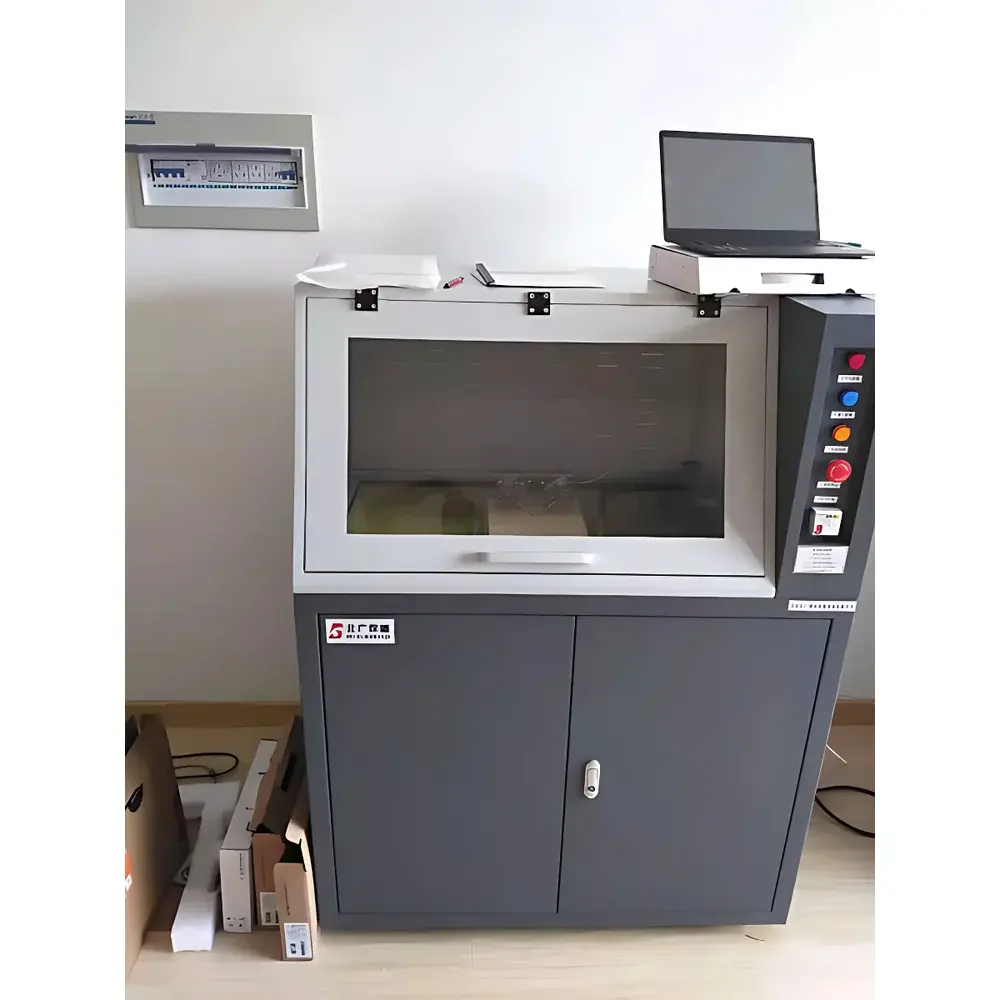
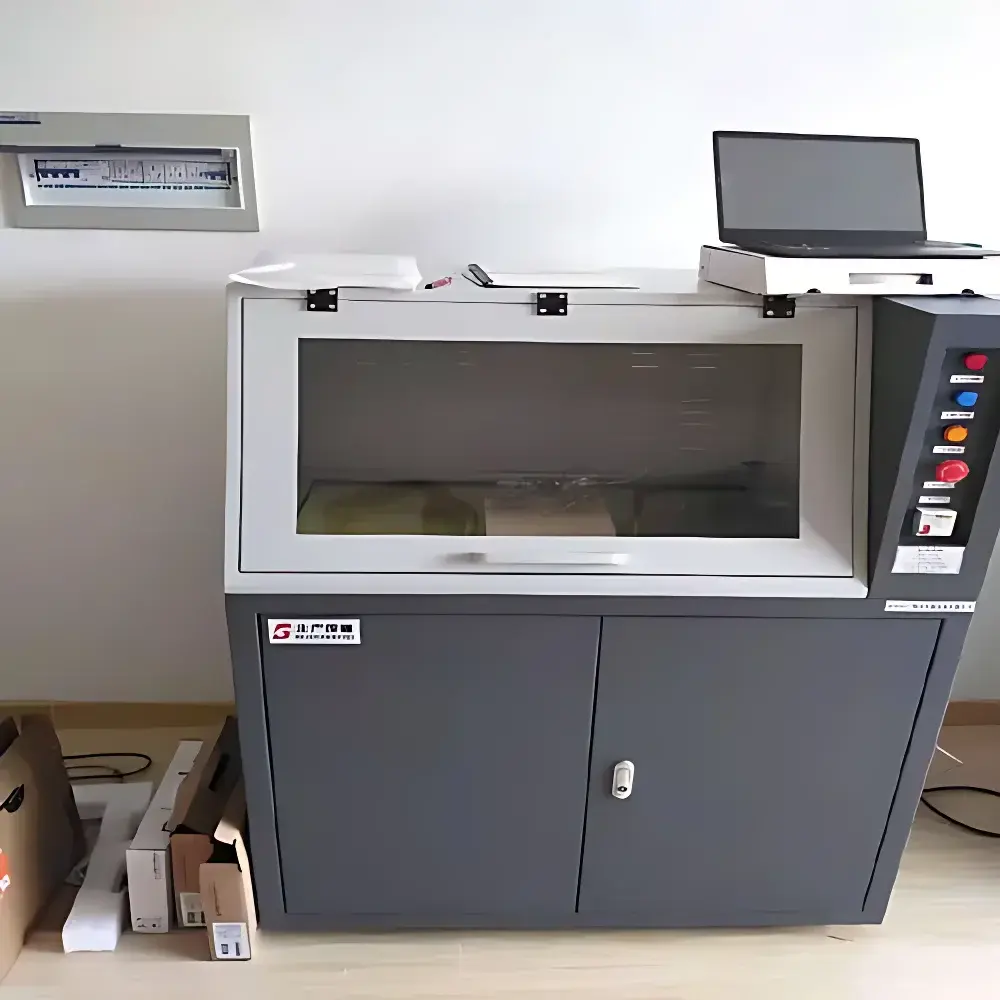
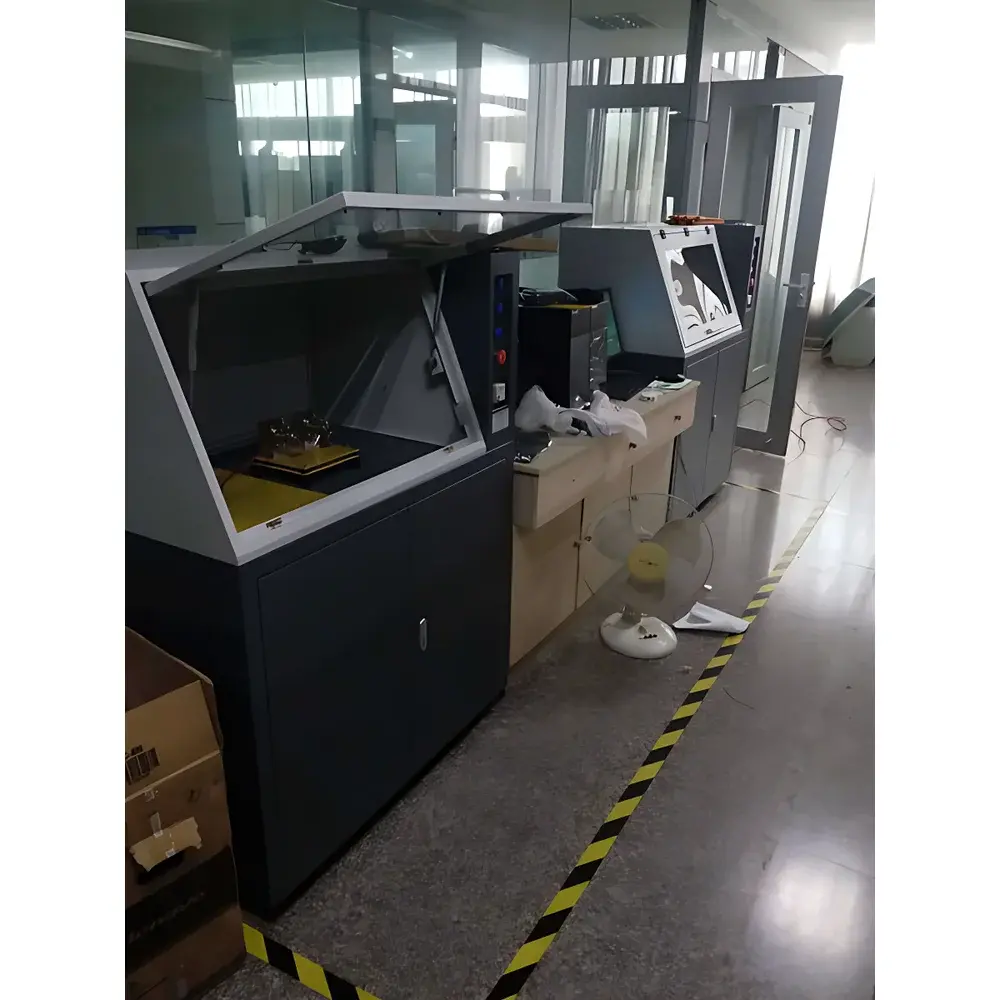
North Guang Precision Instrument BH-Series 20 kV Arc Resistance Tester for Silicone Rubber
| Brand | North Guang Precision Instrument / All Precision Instrument |
|---|---|
| Origin | Beijing, China |
| Manufacturer Type | Direct Manufacturer |
| Product Origin | Domestic (China) |
| Model | BH-Series-20KV |
| Price | USD 2,800 (FOB Beijing) |
| Input Voltage | AC 220 V ±10%, 50 Hz ±1% |
| Output Voltage Range | 0–20 kV AC, continuously adjustable |
| Power Rating | 1.5 kVA |
| Arc Current Settings | 10 mA / 20 mA / 30 mA / 40 mA (selectable) |
| Voltage Regulation Accuracy | ≤ ±1% |
| Arc On/Off Timing Error | < 5 ms |
| Electrode Types | Stainless steel plate electrodes (25.4 mm × 12.7 mm × 0.15 mm) |
| Electrode angle | 110° |
| Electrode force on specimen | 0.5 ± 0.05 N |
| Control System | Siemens-based embedded CPU + PC host via USB 2.0 (data throughput up to 3 MB/s) |
| Compliance Standards | GB/T 1411–2002 (replaces GB 1411–78), ASTM D495–22, IEC 61621:1997 |
| Calibration | Traceable to national metrology institute (CNAS-accredited certificate available upon request) |
Overview
The North Guang Precision Instrument BH-Series 20 kV Arc Resistance Tester is a fully automated, microprocessor-controlled system engineered for precise evaluation of arc resistance and tracking behavior in silicone rubber and other polymeric insulating materials. Based on the principle of controlled high-voltage surface arcing under standardized electrode geometry and mechanical loading, the instrument subjects specimens to repeated or continuous electric arcs between two precisely aligned electrodes—generating localized thermal degradation, carbonization, and surface tracking. This enables quantitative assessment of key dielectric performance indicators including Comparative Tracking Index (CTI), Proof Tracking Index (PTI), erosion depth, char length, and time-to-failure under defined current levels (10–40 mA). Designed in strict accordance with GB/T 1411–2002, ASTM D495–22, and IEC 61621:1997, the system delivers repeatable, traceable, and auditable test outcomes essential for quality assurance in high-reliability electrical insulation applications—from EV battery enclosures to aerospace wiring harnesses and medical device housings.
Key Features
- High-stability 20 kV AC output generator with digital voltage regulation (≤ ±1% error) and seamless 0–20 kV continuous adjustment via solid-state, contactless step-up control—eliminating mechanical variac wear and drift.
- Electrode assembly engineered to IEC 61621:1997 specifications: tungsten carbide rods (Ø2.4 mm × 70 mm) mounted at fixed 110° angle; precision spring-loaded mechanism ensures consistent 0.5 ± 0.05 N normal force on specimen surface.
- Dual-mode arc operation: programmable intermittent arcing (on/off cycles) and uninterrupted continuous arcing—both configurable per ASTM D495 Annex A1 and GB/T 1411 Clause 6.3.
- Real-time acquisition of leakage current at milliamp resolution (1 mA minimum step) synchronized with voltage ramping; data logged at ≥1 kHz sampling rate for accurate arc initiation and extinction detection.
- Integrated dual-alarm architecture: hardware-level overvoltage/overcurrent cutoff plus software-triggered visual-audible alerts on PC interface—ensuring operator safety during short-circuit or flashover events.
- USB 2.0 high-speed interface (up to 3 MB/s) replaces legacy RS-232, enabling zero-latency communication between Siemens embedded CPU and host PC—critical for maintaining linear voltage ramp rates (e.g., 500 V/s ±2%).
- Stainless steel (SUS304) chassis with EMI-shielded enclosure, supporting remote operation via LAN or Bluetooth (optional)—enabling safe human-machine separation during high-energy testing.
Sample Compatibility & Compliance
The BH-Series accommodates flat, rigid specimens up to 150 mm × 150 mm × 12 mm (L × W × H), including molded silicone elastomers, RTV gels, LSR compounds, EPDM, and filled thermoplastics. Specimen mounting fixtures ensure flatness tolerance ≤ 0.1 mm across the electrode contact zone. All test parameters—including arc duration, pause interval, current level, and voltage ramp profile—are preloaded from standard-compliant test templates. The system supports full audit trails required under GLP environments: timestamped raw data files (CSV/ASCII), operator ID logging, calibration history linkage, and electronic signature capability compatible with FDA 21 CFR Part 11–aligned validation packages. Optional CNAS-accredited calibration certificates are issued by authorized national metrology laboratories (e.g., BIPM-traceable primary standards).
Software & Data Management
The proprietary ArcTest Pro v3.2 software suite runs on Windows 10/11 and provides real-time visualization of voltage, current, and arc status via synchronized waveform plots. Each test session auto-generates a structured XML metadata file containing test method ID, environmental conditions (temperature/humidity), electrode configuration, pass/fail logic flags, and raw sensor timestamps. Data export supports direct integration with LIMS platforms via ODBC or REST API. Curve overlay tools enable comparative analysis across batches—color-coded traces distinguish CTI results at 10 mA vs. 40 mA stress levels. All datasets are stored with SHA-256 checksums; modification history is immutably recorded in SQLite audit logs. Firmware updates—including compliance patches for newly released revisions of ASTM D495 or IEC 60112—are delivered via secure OTA protocol.
Applications
This tester serves R&D labs and QC departments validating silicone-based insulation systems for: high-voltage connectors in electric vehicle powertrains; potting compounds in photovoltaic junction boxes; encapsulants for railway signaling electronics; biocompatible housings in implantable diagnostic devices; and flame-retardant gaskets in industrial switchgear. It is routinely deployed to support UL 746A, IEC 60695-2-10, and ISO 21370 qualification protocols—particularly where surface tracking resistance directly correlates with long-term field reliability under humid, contaminated service conditions.
FAQ
Does the system comply with the latest revision of ASTM D495?
Yes—the firmware and test templates conform to ASTM D495–22 and include backward compatibility for D495–18. Automatic update notifications alert users when new standard versions are certified.
Can the instrument be integrated into an existing MES or SAP QA module?
Yes—via configurable CSV/XML export, OPC-UA server option, or custom API integration supported by our Application Engineering team.
Is third-party calibration documentation included with shipment?
A factory calibration report is provided; optional CNAS-accredited certification (per JJG 1085–2013) is available at additional cost and requires 10 business days lead time.
What maintenance intervals are recommended for the high-voltage transformer?
No scheduled maintenance is required for the oil-free, air-cooled 20 kV transformer. Annual verification of electrode wear (using supplied micrometer gauge) and insulation resistance (>100 MΩ at 1 kV DC) is advised.
Is remote diagnostics supported?
Yes—through encrypted TeamViewer QuickSupport sessions initiated from the embedded controller, allowing our technical team to verify firmware integrity, review error logs, and validate parameter configurations without site visit.



