
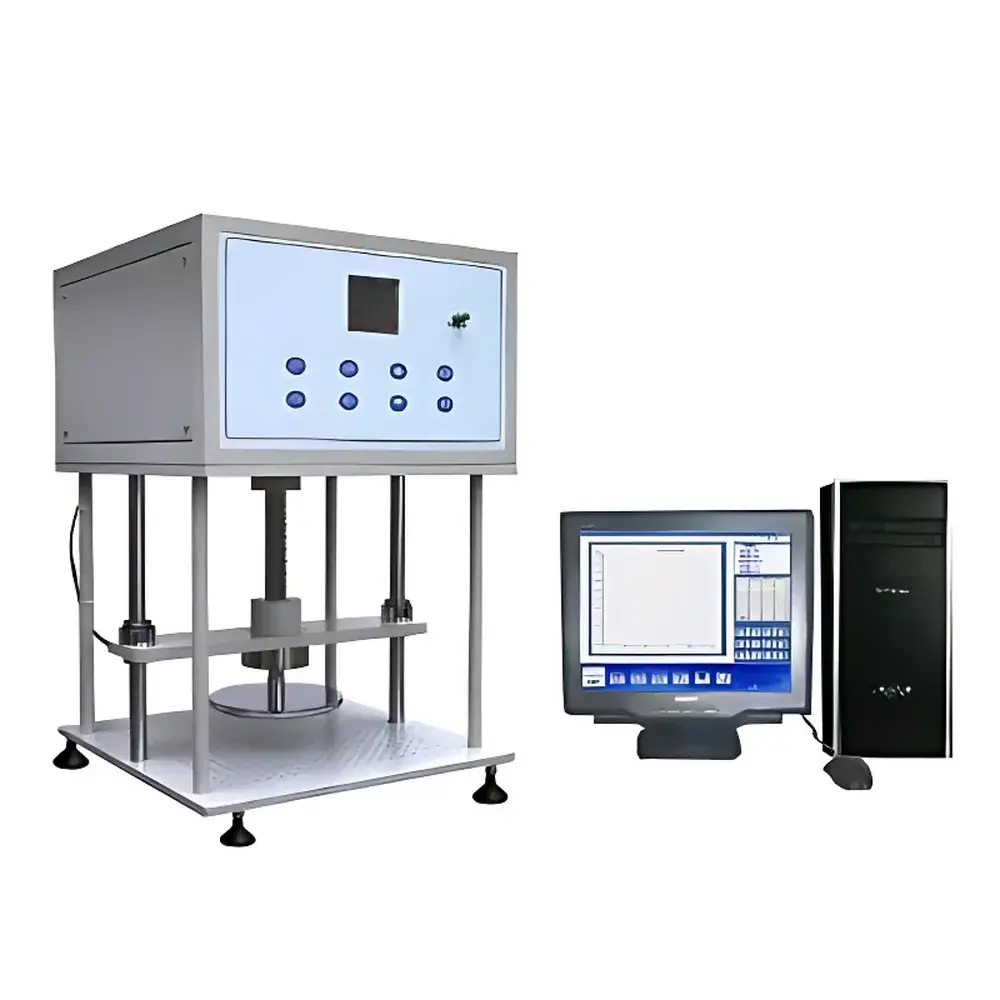
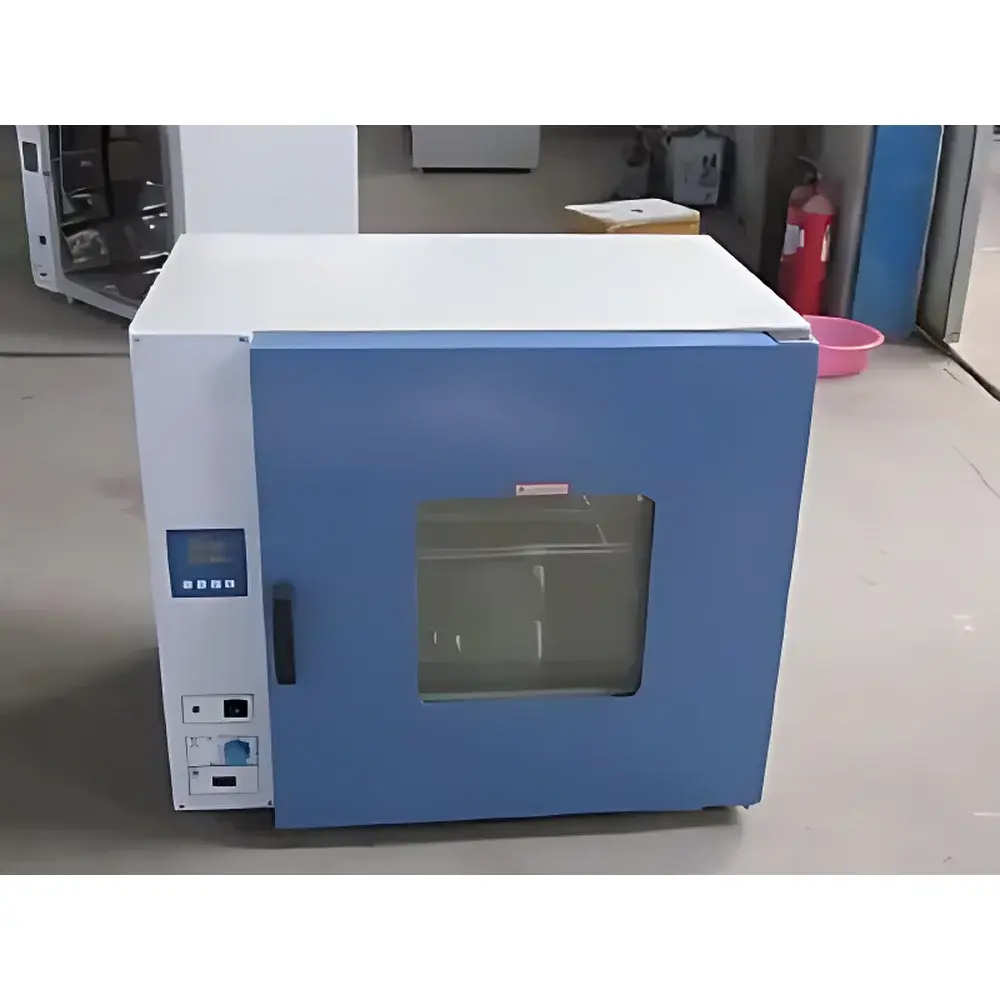
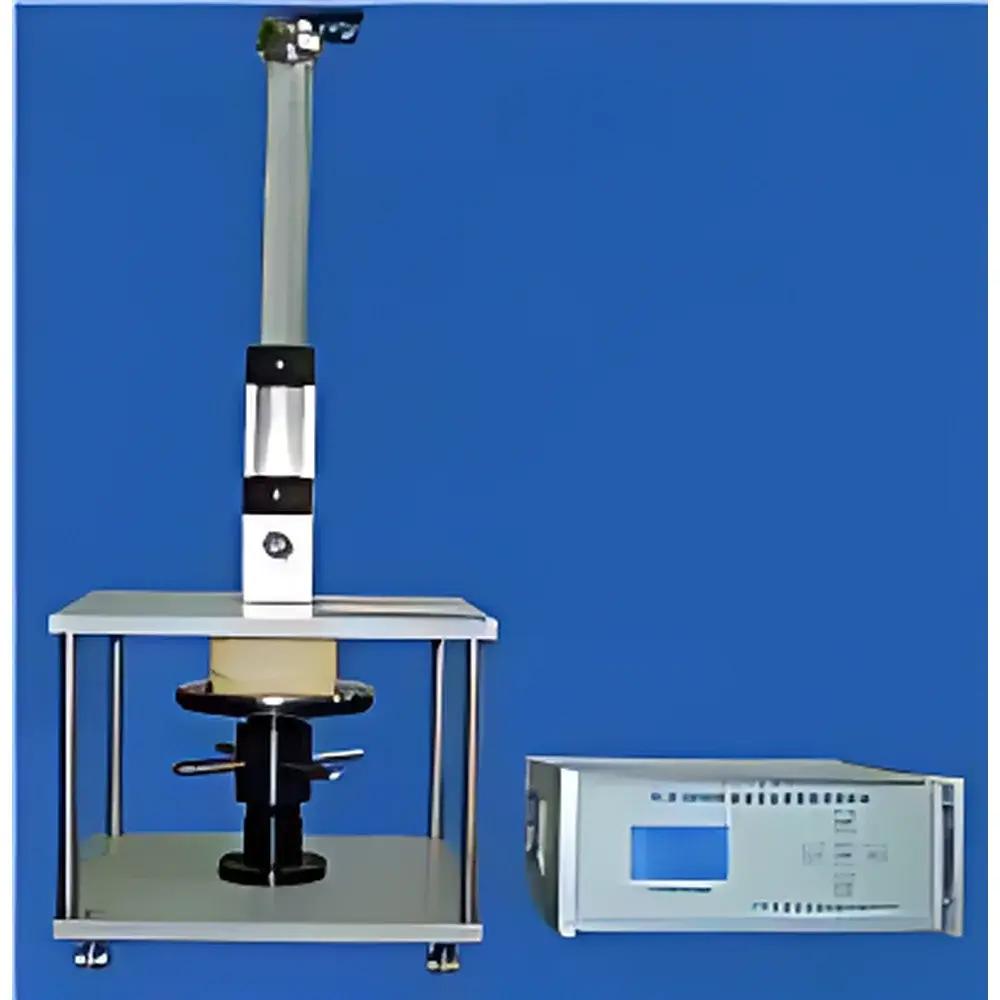
North Guang Precision Instruments HMYX-2000 Foam Indentation Hardness Tester
| Brand | North Guang Precision Instruments / All Precision Instrument |
|---|---|
| Origin | Beijing, China |
| Manufacturer Type | Direct Manufacturer |
| Country of Origin | China |
| Model | HMYX-2000 |
| Indentation Force Range | 0–2000 N |
| Force Resolution | 0.2 N |
| Indentation Speed | 100 mm/min |
| Compliance Standards | GB/T 10807–2006, GB/T 10802 |
| Control System | PC-based with Data Acquisition Card |
| Load Cell | 200 kg spoke-type load cell |
| Auto Functions | Auto-zero, auto-return, auto-range switching, programmable speed control, overload protection, mechanical & software limit switches |
| Data Output | Real-time force–displacement curve display, curve traversal, statistical analysis, report generation (PDF/print) |
Overview
The North Guang Precision Instruments HMYX-2000 Foam Indentation Hardness Tester is an electromechanical testing system engineered for precise determination of indentation hardness in flexible polymeric foams—primarily polyurethane (PU), polyester, and viscoelastic open-cell foams used in seating, bedding, automotive interiors, and packaging applications. It operates on the principle of controlled quasi-static compression, where a standardized cylindrical indenter applies a defined displacement at a constant rate (100 mm/min) to a conditioned foam specimen of specified geometry (typically 380 mm × 380 mm × 50 mm per GB/T 10807–2006). The instrument measures the reaction force required to achieve prescribed indentation depths—40%, 65%, or 75% of original thickness—as defined in Methods A, B, and C respectively. This quantifies material resistance to localized deformation under sustained load, directly correlating with perceived comfort, support, and long-term resilience in end-use environments.
Key Features
- Compliant with national standard GB/T 10807–2006 “Flexible Cellular Polymeric Materials – Determination of Indentation Hardness” and GB/T 10802 “Flexible Polyurethane Foam for Furniture”.
- High-accuracy spoke-type 200 kg load cell with 0.2 N force resolution and <1% full-scale measurement error (per ISO 7500-1 Class 1 calibration traceability).
- Programmable indentation speed (fixed at 100 mm/min per standard, with optional user-defined velocity for R&D screening).
- Integrated PC-based control architecture featuring real-time bidirectional force–displacement curve visualization, dynamic parameter overlay, and synchronized data logging at ≥100 Hz sampling rate.
- Automated test sequence execution: automatic zeroing upon test initiation, programmable hold times, auto-return to initial position post-test, and hardware/software dual-limit safety interlocks.
- Multi-range force sensing with auto-ranging capability ensures optimal signal-to-noise ratio across the full 0–2000 N operating span.
- Full digital calibration support: internal force calibration verification via reference weights; software-assisted sensor offset and gain adjustment with audit trail logging.
- Modular design enables future expansion—compatible with auxiliary fixtures for tensile, tear, or compression set testing when paired with optional load cells and grips.
Sample Compatibility & Compliance
The HMYX-2000 accommodates standard foam specimens conforming to GB/T 10807–2006 dimensions and conditioning requirements (23 ± 2°C, 50 ± 5% RH, ≥16 h equilibration). It supports Method A (40% indentation), Method B (65%), and Method C (75%)—each requiring distinct pre-load stabilization and dwell protocols. The system’s rigid frame and low-deflection crosshead ensure minimal parasitic compliance, critical for reproducible results across batch testing. All firmware and data handling comply with GLP-aligned practices: timestamped raw data files (CSV/ASCII), uneditable test logs, and electronic signatures for operator authentication. While not FDA 21 CFR Part 11-certified out-of-box, the architecture supports validation documentation packages for regulated QA/QC labs performing internal method verification per ISO/IEC 17025.
Software & Data Management
The proprietary Windows-based control software provides intuitive workflow navigation—from test method selection and parameter setup to real-time monitoring and post-test analysis. Each test generates a timestamped project folder containing raw force/displacement arrays, processed hardness values (N), graphical overlays (including ASTM D3574-style comparative plots), and customizable PDF reports with lab header, sample ID, environmental conditions, operator name, and calibration status. Curve traversal tools allow pixel-level interrogation of any point on the force–displacement plot, exporting interpolated values for statistical evaluation (mean, SD, CV%). Data export supports CSV, Excel, and XML formats for integration into LIMS or enterprise QA databases. Audit trails record all user actions—including parameter edits, calibration events, and report modifications—with immutable timestamps.
Applications
- Quality assurance of PU foam slabs in furniture and mattress manufacturing.
- R&D evaluation of formulation changes (e.g., catalysts, surfactants, filler content) on indentation response.
- Batch release testing against customer-specified hardness tolerances (e.g., 120–140 N @ 40% for automotive seat cushions).
- Correlation studies between indentation hardness and dynamic cushioning metrics (e.g., ILD vs. shock absorption).
- Supplier qualification and incoming inspection per OEM technical specifications referencing GB/T 10807 or equivalent ISO 2439 protocols.
- Failure analysis of foam degradation (e.g., compression set-induced softening) through longitudinal hardness trending.
FAQ
What standards does the HMYX-2000 fully support?
It is configured and validated for GB/T 10807–2006 (Methods A, B, C) and GB/T 10802. Optional firmware modules can extend support to ISO 2439 and ASTM D3574 upon request.
Is the system suitable for non-standard specimen geometries?
Yes—while optimized for standard 380 × 380 × 50 mm samples, custom platens and fixture adapters are available for smaller cutouts or irregular shapes, subject to force capacity and stability constraints.
How is calibration maintained over time?
The system includes built-in calibration verification routines using certified deadweights; annual third-party recalibration of the load cell and displacement encoder is recommended per ISO/IEC 17025 guidelines.
Can test data be exported to external statistical analysis platforms?
Yes—raw time-series data exports in CSV format are fully compatible with JMP, Minitab, Python (Pandas), and MATLAB for advanced regression modeling or SPC charting.
Does the instrument support multi-user access with role-based permissions?
The current software version supports operator-level login; administrator-level configuration locks (e.g., method editing, calibration access) require optional enterprise license activation.
Related Products



