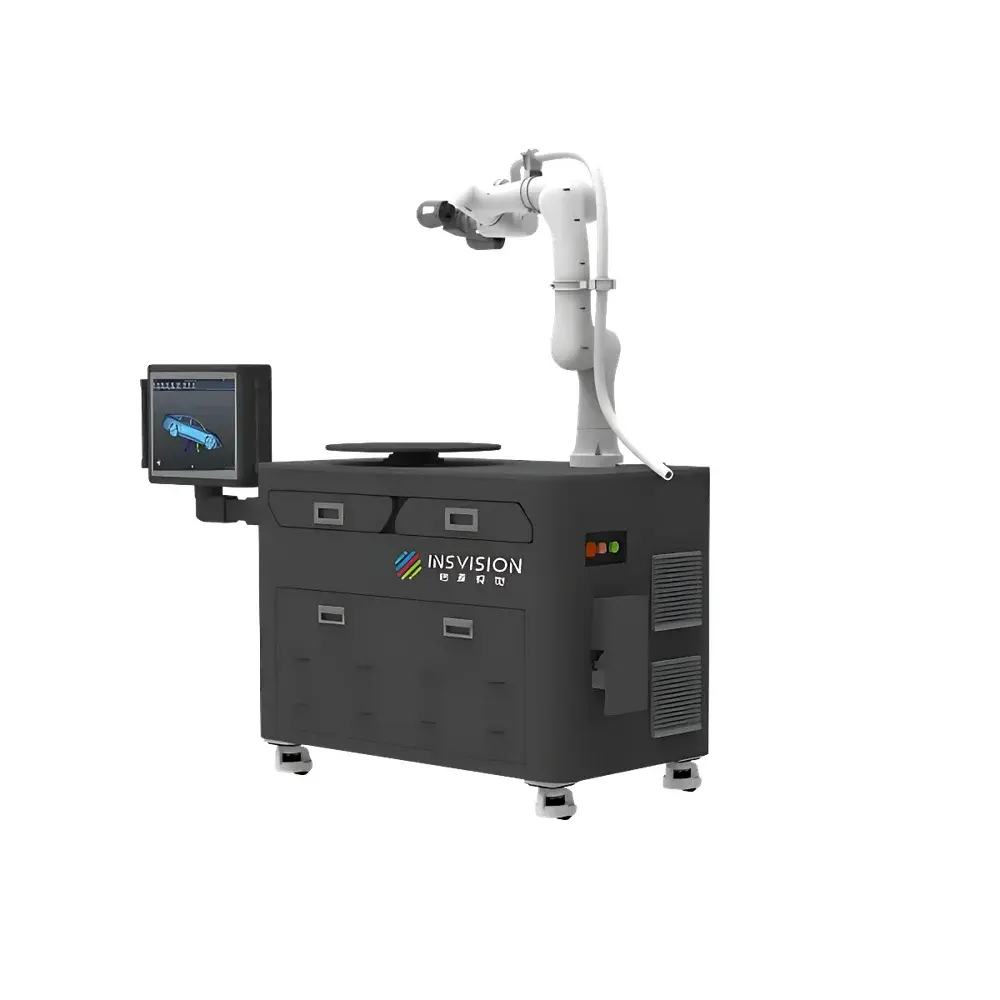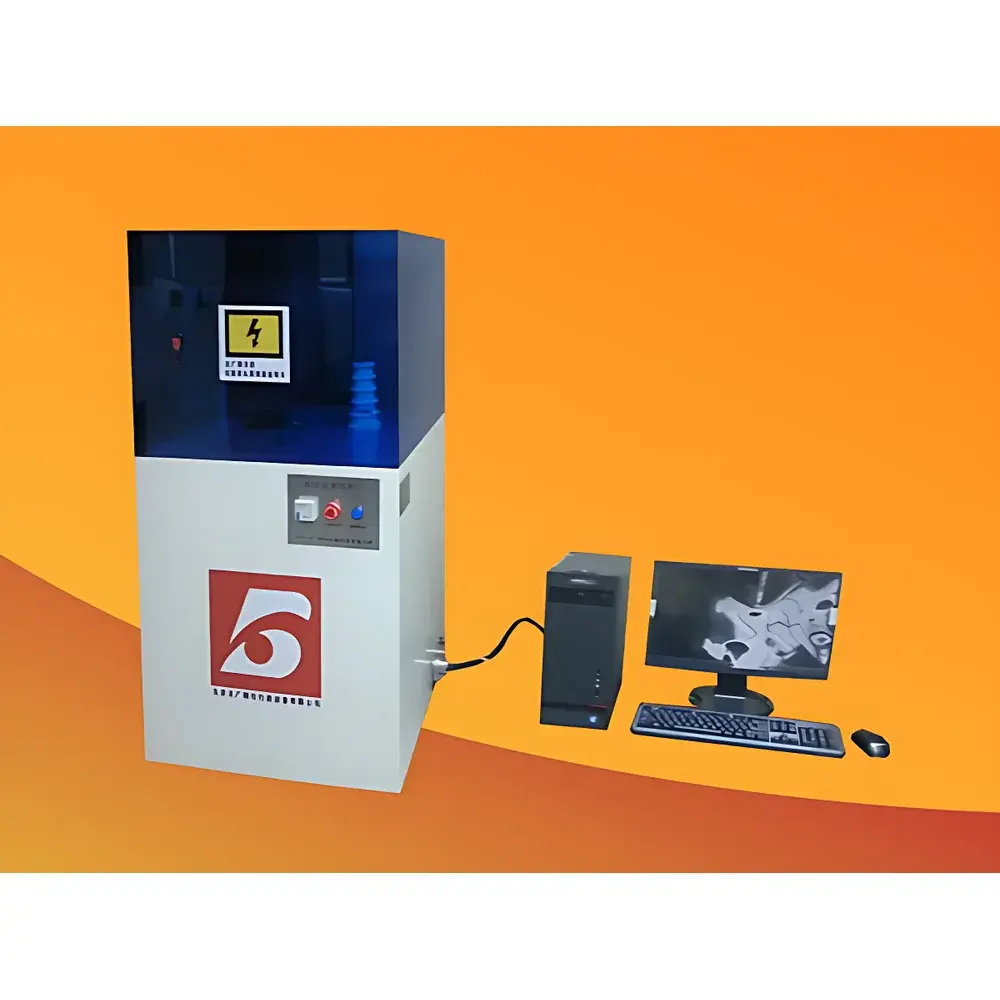
North Guangjingyi BD-JC-50KV Dielectric Breakdown Voltage Tester
| Brand | North Guangjingyi / All Precision Instrument |
|---|---|
| Origin | Beijing, China |
| Manufacturer Type | Manufacturer |
| Product Origin | Domestic (China) |
| Model | BD-JC-50KV |
| Voltage Output | AC/DC 0–50 kV |
| Power Rating | 10 kVA |
| Input Voltage | AC 220 V ±10%, 50 Hz ±1% |
| Rise Rate | 0.1–5.0 kV/s (adjustable) |
| Test Modes | AC/DC Ramp-up, Step-wise, and Hold (Dielectric Withstand) |
| Test Media | Air or Transformer Oil |
| Electrode Set | Two Φ25 mm × 25 mm |
| Protection | Overcurrent, Overvoltage, Undervoltage, Short-Circuit, Leakage Current, and Dual-Stage (Local + PC) Fault Alarm |
| Safety Discharge Distance | <200 mm at 50 kV |
| Dimensions (L×W×H) | 700 × 800 × 1650 mm |
| Weight | 100 kg |
| Operating Environment | 15–30 °C, 30–85% RH |
| Grounding Requirement | Dedicated earth ground, ≤4 Ω resistance |
Overview
The North Guangjingyi BD-JC-50KV Dielectric Breakdown Voltage Tester is an engineered precision instrument designed to determine the dielectric strength and breakdown voltage of solid insulating materials under standardized AC and DC electric stress conditions. It operates on the fundamental principle of applying a controlled, continuously increasing (or stepwise) voltage across a specimen until electrical breakdown occurs—defined as the formation of a conductive path through the material, resulting in a rapid, uncontrolled current surge. This measurement is governed by internationally recognized test standards including ASTM D149–2009 (Standard Test Method for Dielectric Breakdown Voltage of Solid Electrical Insulating Materials at Commercial Power Frequencies) and GB/T 1408.1–2006 (Methods for Determination of Electric Strength of Insulating Materials — Part 1: Tests at Power Frequencies). The system supports testing at frequencies from 25 Hz to 800 Hz, with default operation at 50/60 Hz, ensuring compatibility with both North American and global power grid references. Its design prioritizes metrological integrity, operator safety, and reproducibility—critical for quality assurance in cable insulation, transformer bushings, polymer composites, printed circuit board substrates, and high-voltage encapsulants.
Key Features
- Dual-mode high-voltage generation: AC and DC output up to 50 kV, independently selectable and calibrated per IEC 60270 and IEEE Std 930 requirements.
- Precision motor-driven voltage ramp control with adjustable rise rates (0.1–5.0 kV/s), enabling compliance with ASTM D149 Methods A (Rapid), B (Step), and C (Slow Rate) protocols.
- Integrated dual-stage protection architecture: hardware-level overcurrent cutoff (<0.05 s response), overvoltage clamping, loss-of-voltage detection, short-circuit isolation, and leakage monitoring—fully compliant with IEC 61010-1 safety requirements for laboratory equipment.
- Shielded test chamber with grounded metallic enclosure; safe touch potential maintained below 36 V even at full 50 kV output due to equipotential bonding between HV transformer secondary tail and chassis ground.
- Modular electrode system supplied with three standardized electrodes (two Φ25 mm × 25 mm flat discs and one Φ75 mm × 25 mm disc), conforming to dimensional tolerances specified in GB/T 1408.1 and ASTM D149 Annex A1.
- Real-time analog signal acquisition via high-isolation instrumentation amplifiers, digitized at ≥16-bit resolution and synchronized with event-triggered logging for breakdown time, peak voltage, and current transient capture.
Sample Compatibility & Compliance
The BD-JC-50KV accommodates rigid and semi-rigid sheet, film, and molded specimens up to 10 mm thickness, provided surface preparation adheres to ASTM D149 Section 7 (cleaning, drying, conditioning at 23 °C ±2 °C and 50% RH ±5% for ≥48 h unless otherwise specified). Testing may be conducted in ambient air or dielectric oil (e.g., ASTM D877-compliant mineral oil), with environmental parameters logged and traceable per GLP requirements. The instrument meets electromagnetic compatibility (EMC) criteria per EN 61326-1 and carries CE marking for conformity with EU Low Voltage and EMC Directives. All calibration records—including HV divider ratio, current sensor linearity, and timing accuracy—are traceable to national metrology institutes (NIM, China) and NIST-traceable reference standards. Full audit trails—including user logins, parameter changes, test start/stop timestamps, and pass/fail determinations—are retained locally and exportable in CSV/Excel format to support FDA 21 CFR Part 11–compliant workflows.
Software & Data Management
The proprietary Windows-based control software provides intuitive test sequence definition, real-time voltage/current waveform visualization, automatic breakpoint detection, and statistical reporting per batch or individual specimen. It supports configurable pass/fail thresholds based on pre-set voltage hold duration (e.g., 60 s withstand at 30 kV), current trip limits (10–100 mA range), and response latency (≤10 ms). All raw data—including analog channel sampling at 10 kHz, digital I/O states, and environmental sensor inputs—is stored in encrypted binary archives with SHA-256 checksums. Export functions include PDF test reports with embedded metadata (operator ID, calibration due date, electrode ID, ambient T/RH), XML for LIMS integration, and .CSV for third-party statistical analysis (e.g., Weibull distribution fitting per IEC 60243-1). Audit logs record every configuration change, test execution, and result modification—with immutable timestamps and user authentication required for any override.
Applications
This tester serves critical roles across R&D, production QA, and regulatory submission laboratories. Typical use cases include comparative evaluation of polymeric insulation formulations (e.g., silicone rubber vs. ethylene propylene diene monomer), validation of curing process consistency in epoxy resin systems, incoming inspection of ceramic spacers for medium-voltage switchgear, accelerated aging studies per IEC 60216, and qualification of laminated busbar insulation for EV battery enclosures. In certification labs, it supports UL 746C, IEC 60674-2, and GB/T 507 testing for material classification under IEC 60085 thermal classes. Its robust architecture enables continuous operation in ISO/IEC 17025-accredited environments where measurement uncertainty budgets must account for HV source stability (±0.5% full scale), voltage divider ratio drift (<0.02%/°C), and electrode edge field distortion correction factors.
FAQ
What standards does the BD-JC-50KV comply with?
ASTM D149–2009, GB/T 1408.1–2006, IEC 60243-1, and UL 746C for solid dielectric testing.
Can the instrument perform both AC and DC breakdown tests?
Yes—it delivers fully isolated, independently regulated AC (50/60 Hz) and DC outputs up to 50 kV, each with dedicated protection circuits and waveform fidelity verification.
Is oil immersion testing supported?
Yes; the chamber accommodates standard ASTM D877-grade transformer oil, with optional oil-level and temperature sensors available for automated environmental compensation.
How is calibration traceability maintained?
HV output is verified using a NIST-traceable resistive divider and calibrated electrostatic voltmeter; current sensing uses shunt-based measurement validated against Fluke 5520A multifunction calibrators.
Does the system meet FDA 21 CFR Part 11 requirements?
Yes—the software implements role-based access control, electronic signatures, audit trail archiving, and data integrity safeguards required for regulated pharmaceutical and medical device applications.