
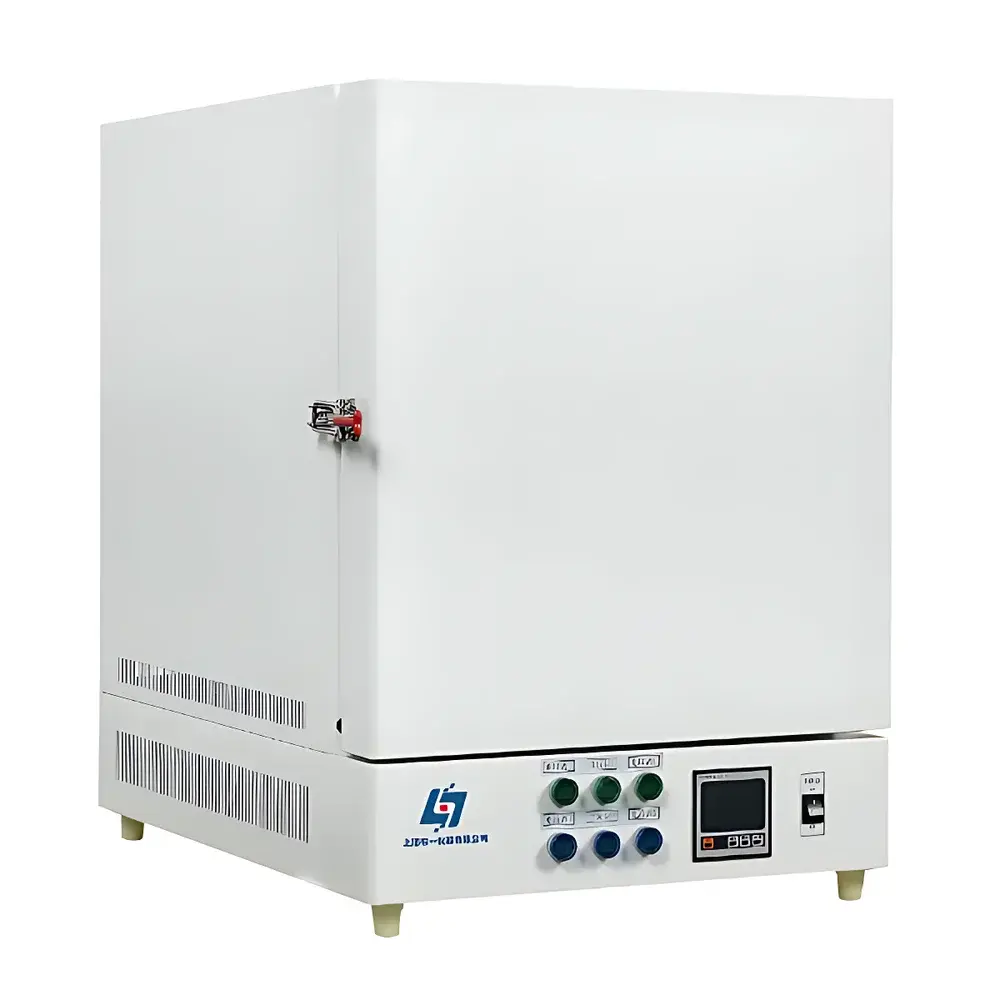
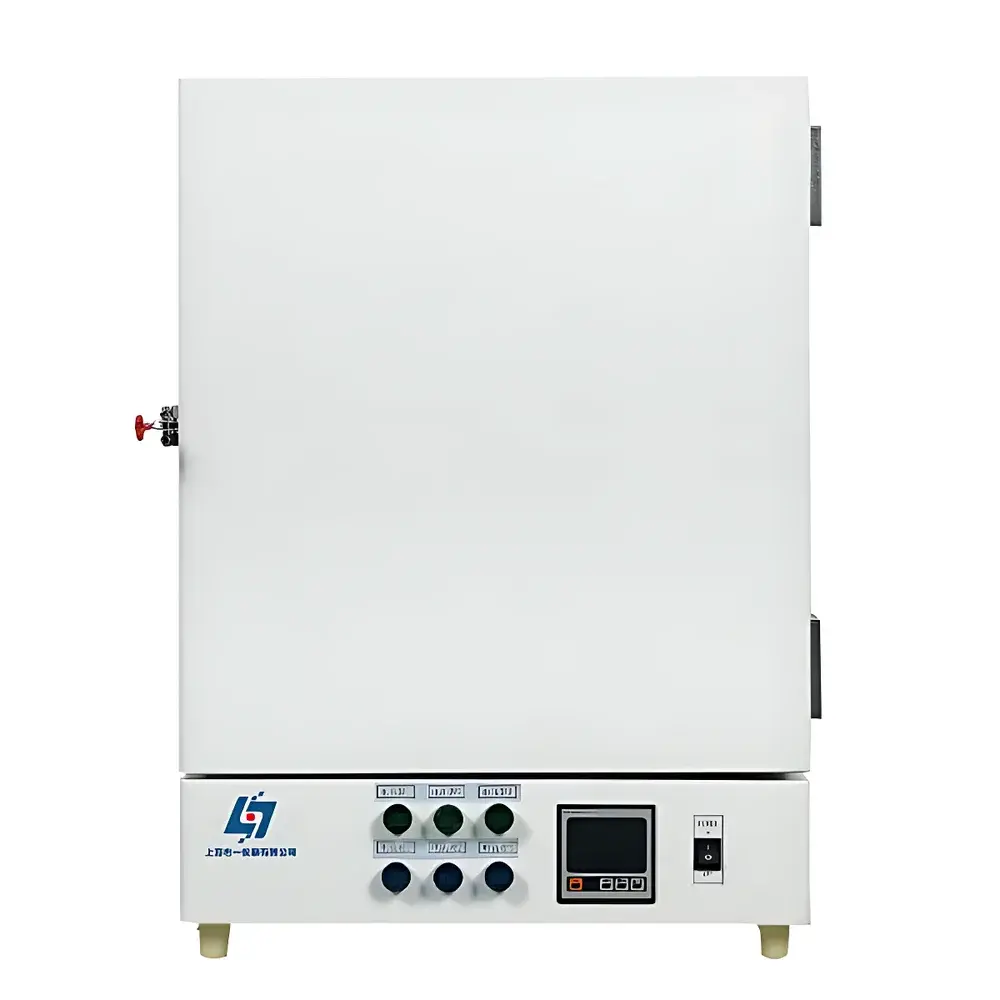
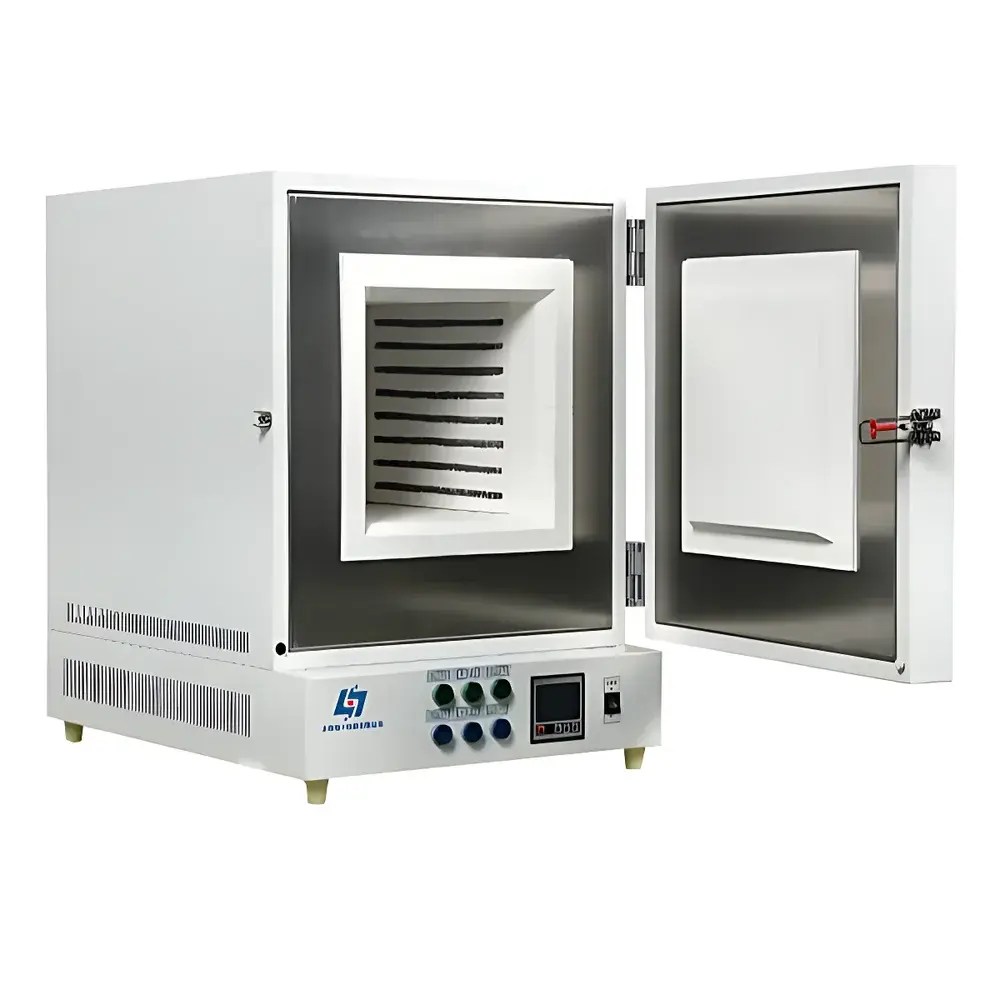
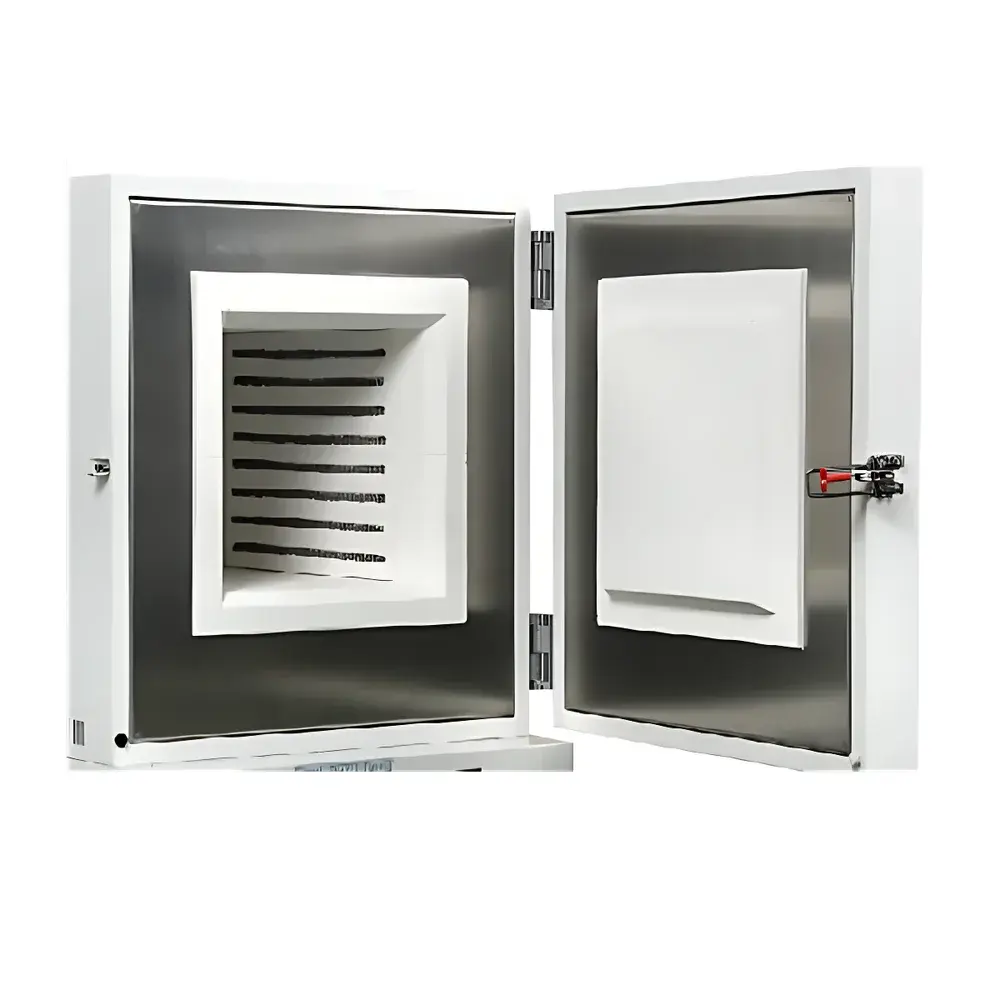
Yoyi SX2-10-12A 1200°C Ceramic Fiber Muffle Furnace (16 L Box-Type Resistance Furnace)
| Brand | Yoyi |
|---|---|
| Origin | Shanghai, China |
| Manufacturer Type | Direct Manufacturer |
| Instrument Type | Box-Type Muffle Furnace |
| Max Temperature | 1200°C |
| Temperature Control Accuracy | ±1°C |
| Rated Power | 10 kW |
| Heating Element | Ni-Cr Alloy Wire (Mo-doped for 1200°C stability) |
| Internal Chamber Dimensions | 250 × 400 × 160 mm |
| Nominal Volume | 16 L |
| Voltage | 380 V AC |
| Insulation | Dual-layer Ceramic Fiber Board (High-purity Al₂O₃–SiO₂, ≤1200°C service limit) |
Overview
The Yoyi SX2-10-12A is a high-performance, 16-liter ceramic fiber muffle furnace engineered for precise thermal processing in research laboratories, materials science facilities, and quality control environments. Operating on resistive heating principles, it utilizes Mo-doped nickel-chromium (Ni-Cr) alloy wire elements embedded within a low-density, high-purity alumina-silica ceramic fiber insulation matrix. This architecture enables rapid thermal response, exceptional energy efficiency (≈60% reduction in power consumption versus conventional brick-lined furnaces), and uniform temperature distribution across the working zone—critical for reproducible sintering, ashing, annealing, and heat-treatment protocols. Designed to meet ISO/IEC 17025-compliant laboratory infrastructure requirements, the SX2-10-12A delivers stable operation at up to 1200°C with minimal thermal lag and negligible external surface heating—surface temperature remains below 50°C at 1000°C internal setpoint, ensuring safe proximity handling and reduced HVAC load.
Key Features
- Ultra-lightweight ceramic fiber chamber (density ≈ 220 kg/m³) reduces total unit mass by >50% versus refractory brick equivalents, enabling flexible benchtop or mobile cart integration;
- Dual-layer insulation system: inner ceramic fiber board (1260°C grade) + outer high-efficiency fiber blanket, minimizing radial heat loss and maintaining <50°C external skin temperature at 1000°C hold;
- Microprocessor-based PID temperature controller with 0.1°C resolution, programmable ramp/soak profiles, real-time deviation monitoring, and automatic over-temperature cutoff (cut-off threshold adjustable between 1210–1250°C);
- Robust cold-rolled steel enclosure with phosphate conversion coating and electrostatic epoxy powder finish—resistant to corrosion, abrasion, and repeated thermal cycling;
- Comprehensive electrical safety suite: integrated over-current, over-voltage, ground-fault leakage detection, short-circuit protection, and thermal fuse backup;
- Intelligent data retention: non-volatile memory preserves all setpoints, ramp rates, soak durations, and alarm history during unexpected power interruption; auto-resume functionality restores prior operational state upon re-energization;
- Backlit LCD interface with intuitive menu navigation—simultaneously displays set temperature, actual chamber temperature, elapsed time, remaining hold time, and active alarm status.
Sample Compatibility & Compliance
The SX2-10-12A accommodates standard crucibles (alumina, quartz, silicon carbide), ceramic setters, metal samples up to 1.5 kg, and powdered specimens in controlled-atmosphere applications (when used with optional inert gas purge kits). Its uniform ±3°C temperature uniformity (measured per ASTM E220 at 1000°C, 3-point probe method) supports compliance with ASTM C865 (ceramic sintering), ISO 5660-1 (fire testing), USP (heavy metals residue ashing), and ISO 1171 (ash content determination). The furnace’s construction adheres to IEC 61000-6-3 (EMC emission limits) and IEC 61000-6-2 (immunity standards), and its control architecture supports audit-ready electronic records when paired with RS485-enabled data logging systems compliant with FDA 21 CFR Part 11 requirements.
Software & Data Management
Equipped with standard RS485 Modbus RTU interface (optional add-on), the SX2-10-12A integrates seamlessly with LabVIEW, MATLAB, or custom SCADA platforms for centralized thermal process monitoring. Optional communication software provides timestamped CSV export of temperature/time logs, configurable alarm notifications (email/SMS via gateway), and GLP/GMP-compliant electronic signature support. All firmware updates are delivered via USB port without hardware modification. The controller maintains full audit trail capability—including user login events, parameter changes, and alarm acknowledgments—with tamper-evident timestamps traceable to NIST-traceable RTC.
Applications
- Materials synthesis: solid-state reaction of oxide precursors, lithium-ion cathode calcination (e.g., LiCoO₂, NMC), and ferrite sintering;
- Thermal analysis sample preparation: quantitative ashing of polymers, foodstuffs, and environmental filters per EPA Method 1695;
- Metallurgical processing: stress-relief annealing of tool steels, tempering of hardened components, and microstructure stabilization of superalloys;
- Ceramics & glass R&D: glaze firing simulation, nucleation-controlled devitrification studies, and controlled crystallization of bioactive glasses;
- Quality assurance: LOI (loss on ignition) testing per ASTM C114, residue-on-ignition validation for pharmaceutical excipients, and binder burnout in investment casting patterns.
FAQ
What is the maximum continuous operating temperature of the SX2-10-12A?
The furnace is rated for continuous operation at 1200°C; short-term excursions to 1220°C are permissible but not recommended for routine use.
Can this furnace be used under inert or reducing atmospheres?
Yes—when fitted with an optional quartz or stainless-steel gas inlet/outlet kit and compatible flow controller, it supports N₂, Ar, or forming gas (5% H₂/95% N₂) purging; however, prolonged H₂ exposure above 800°C requires upgraded element shielding.
Is the temperature uniformity validated per international standards?
Yes—uniformity is verified per ASTM E220 Annex A3 using three calibrated Pt/Pd thermocouples; typical uniformity is ±3°C at 1000°C across the central 70% of the chamber volume.
Does the controller support multi-step programmable ramps?
Yes—the standard PID controller supports up to 30 segments with independent ramp rate (0.1–60°C/min), soak time (1 sec–99 h 59 min), and target temperature settings.
What maintenance is required for long-term reliability?
Annual verification of thermocouple calibration (Type K, Class 1), visual inspection of ceramic fiber integrity, and cleaning of air intake vents; no lubrication or element replacement is needed under normal usage conditions for ≥5 years.



