
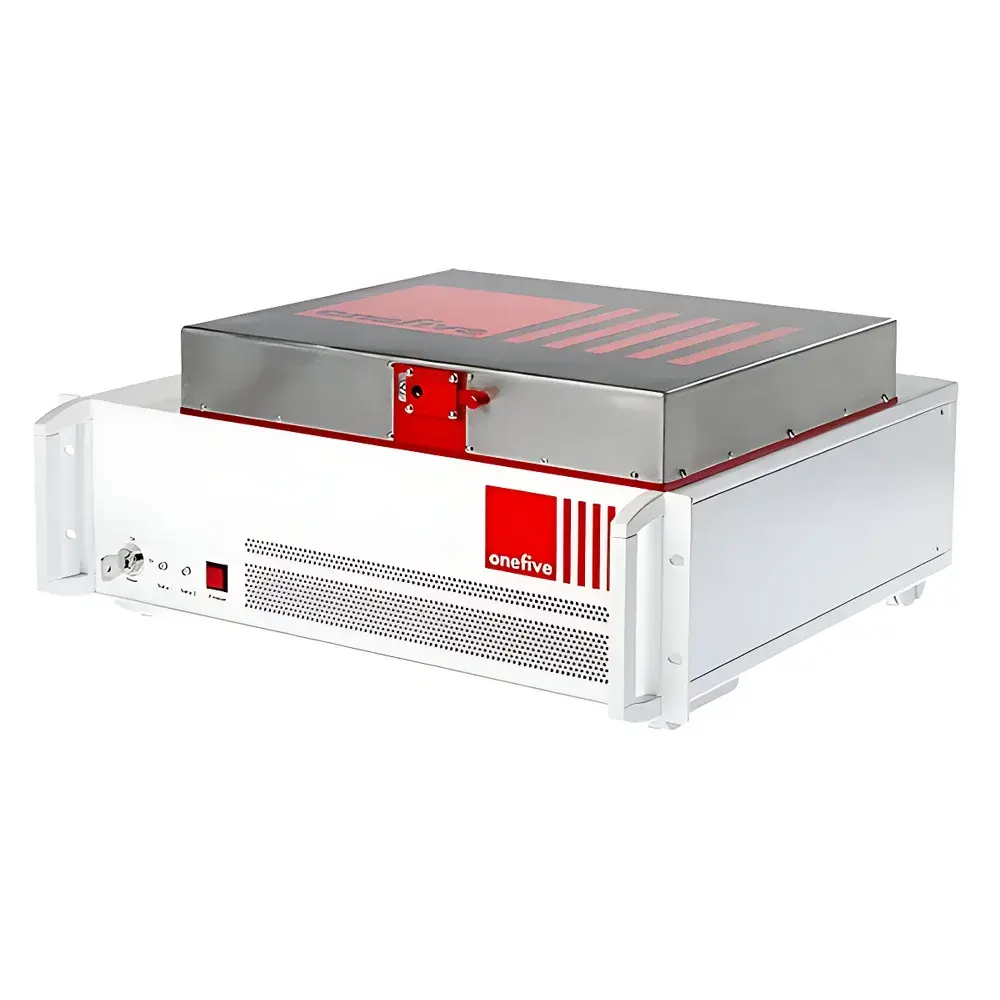
Onefive Genki-HP High-Power Picosecond Laser System
| Brand | Onefive |
|---|---|
| Origin | Switzerland |
| Model | Genki-HP |
| Wavelength Range | 1030–1064 nm |
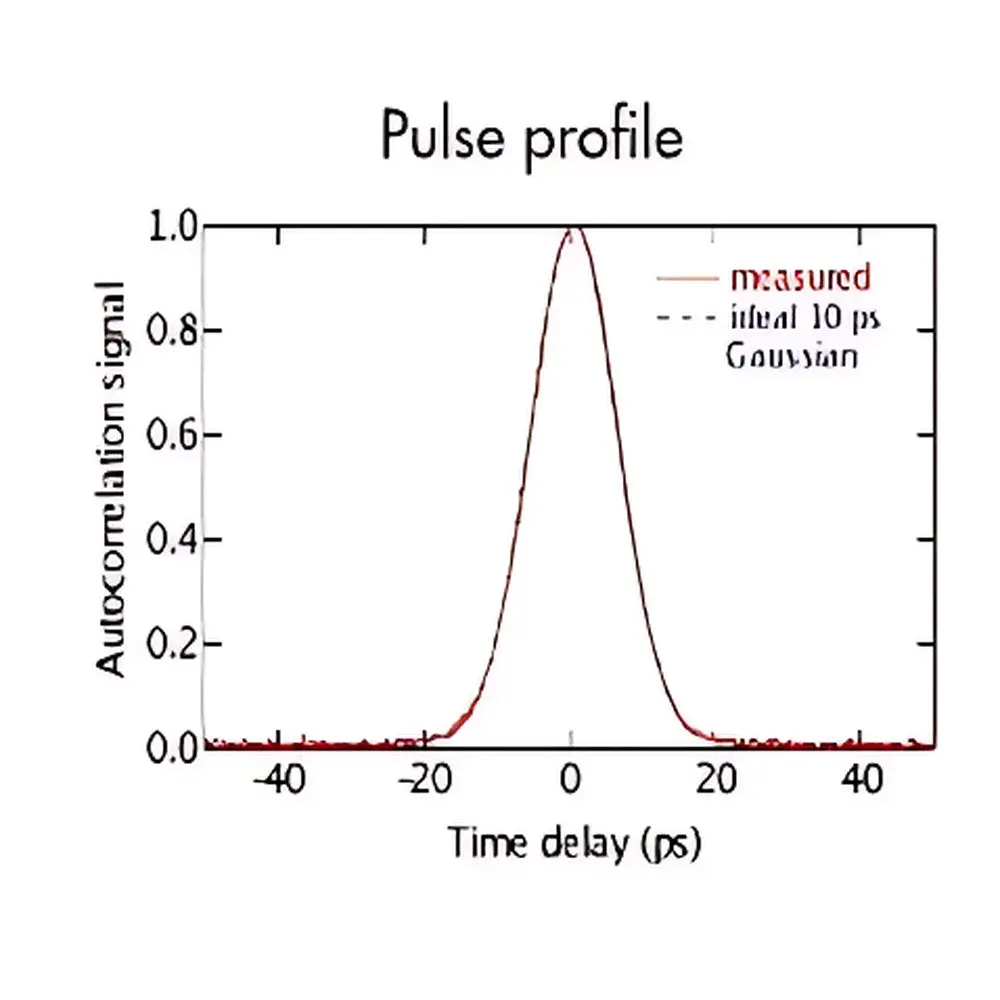
| Pulse Width | 4–45 ps |
| Avg. Power | Up to 20 W |
| Pulse Energy | Up to 500 nJ |
| Repetition Rate | Single-shot to 100 MHz |
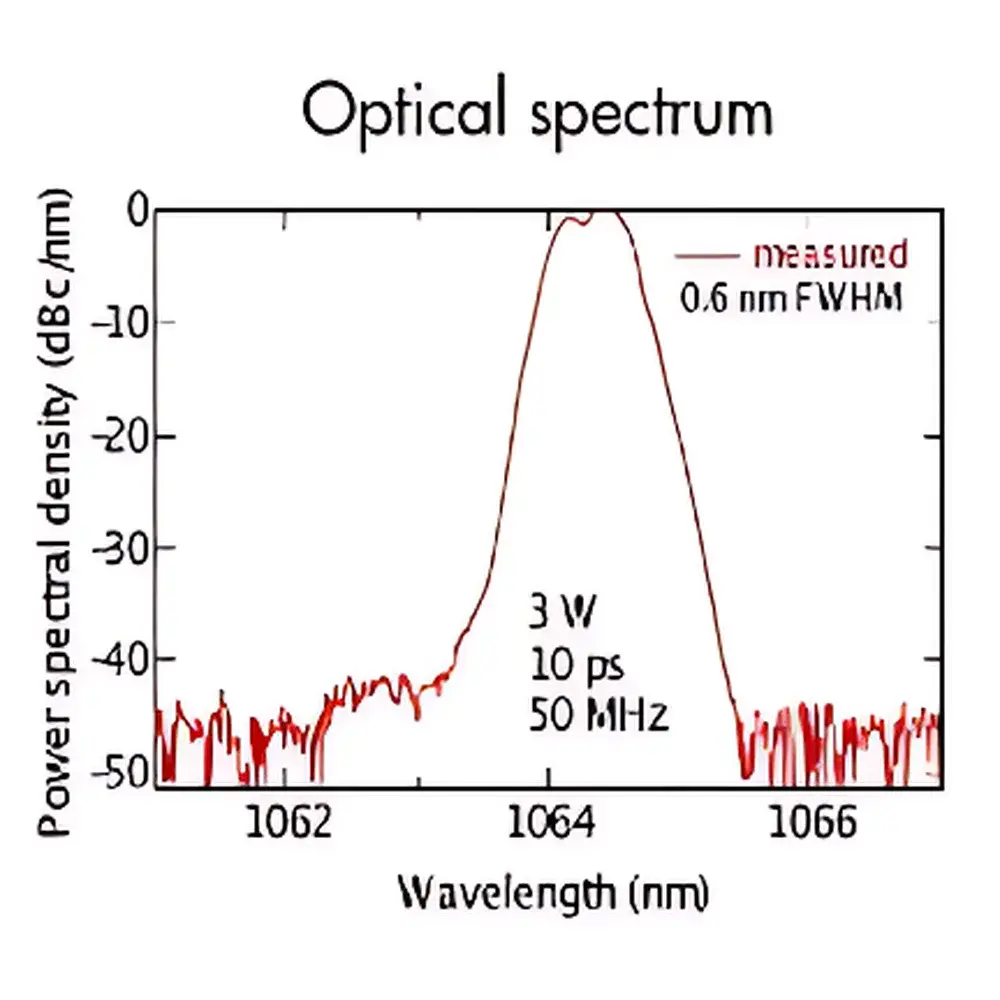
| Spectral Bandwidth | <5 nm |
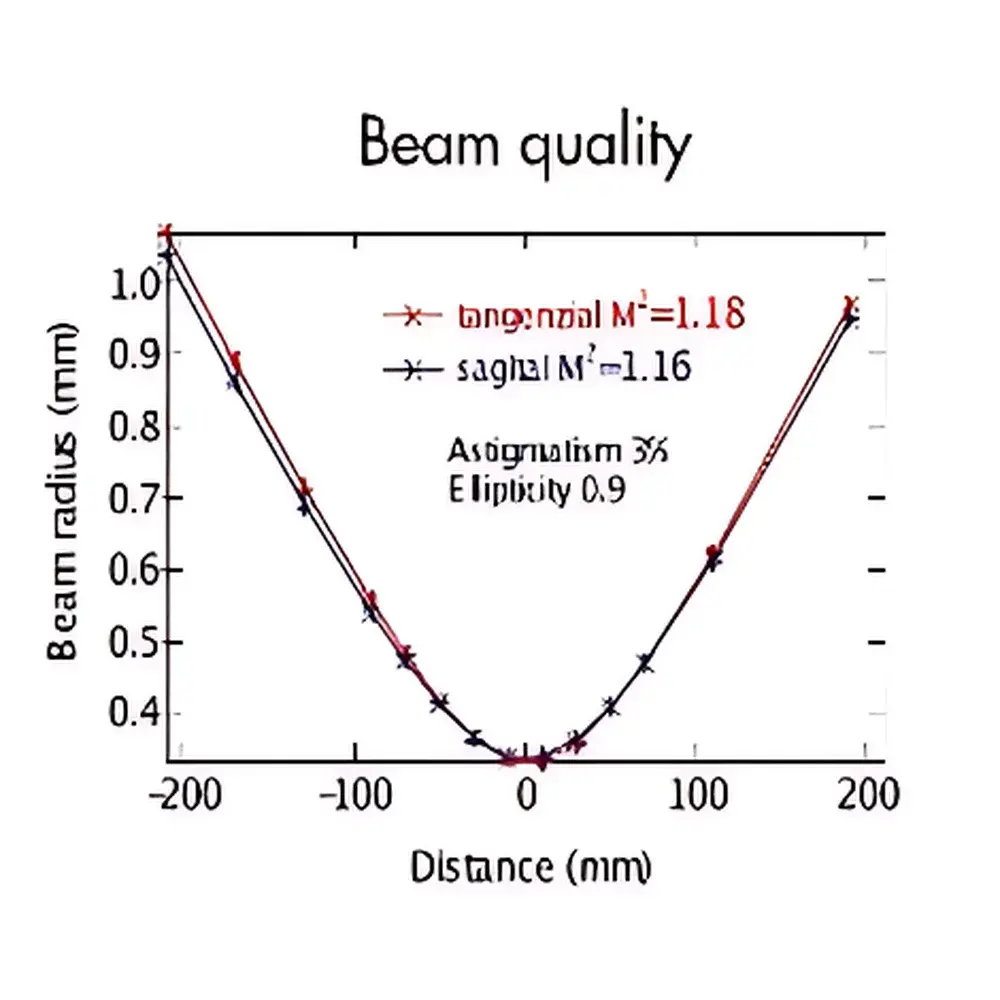
| Beam Quality | M² < 1.2, TEM₀₀ |
| Polarization Extinction Ratio | >20 dB |
| Amplitude Noise | <1% RMS (24 h), <3% pk-pk |
| Wavelength Drift | <0.1 nm pk-pk (per hour) |
| Warm-up Time | <15 min |
| Operating Temperature | 18–32 °C |
| Storage Temperature | −20 to +65 °C |
| Laser Head Dimensions | 125 × 420 × 260 mm³ |
| Laser Head Weight | 15 kg |
| Controller Dimensions | 133 × 483 × 400 mm³ |
| Controller Weight | 7 kg |
| Power Supply | 24 VDC/9 A or 90–264 VAC, 47–63 Hz |
| Max. Power Consumption | <500 W |
| Cooling | Air-cooled (laser head & controller) |
| Environmental Compliance | IEC 60068-2-6 (vibration), IEC 60068-2-27 (shock), IEC 60068-2-29 (robustness) |
Overview
The Onefive Genki-HP is a turnkey, industrial-grade high-power picosecond laser system engineered for demanding applications requiring exceptional pulse fidelity, spectral purity, and long-term operational stability. Based on a hybrid architecture integrating solid-state gain media with advanced fiber-coupled pump delivery and monolithic cavity design, the Genki-HP delivers near-transform-limited pulses with diffraction-limited beam quality (M² < 1.2) and narrow spectral bandwidth (<5 nm). Its core operating principle relies on passive mode-locking in a diode-pumped Nd:YVO₄ or Yb-doped crystal oscillator, followed by regenerative or multipass amplification stages optimized for picosecond pulse preservation. Designed for 24/7 deployment in production environments and research laboratories alike, the system maintains full parameter stability across ambient temperatures from 18 °C to 32 °C without active thermal stabilization—enabled by Onefive’s proprietary hermetic packaging and low-thermal-drift mechanical design.
Key Features
- Integrated pulse picker enabling flexible repetition rate selection from single-shot to 100 MHz under external TTL or internal clock triggering
- Ultra-low amplitude noise: <1% RMS over 24 hours, critical for quantitative time-resolved measurements and nonlinear frequency conversion efficiency
- Hermetically sealed, vibration-resistant optomechanical platform compliant with IEC 60068-2-6 (sinusoidal vibration), IEC 60068-2-27 (shock), and IEC 60068-2-29 (robustness)
- Zero-maintenance architecture: no realignment required; factory-optimized cavity alignment retained over >10,000 power cycles
- Dual-output configuration support: free-space collimated beam (with pointing stability <5 µrad) and polarization-maintaining fiber-coupled output (optional)
- Remote operation via Ethernet (TCP/IP) and USB 2.0 interfaces; full SCPI command set compatible with LabVIEW, Python, MATLAB, and EPICS
- Onboard diagnostics including real-time pulse energy monitoring, temperature logging, and interlock status reporting
Sample Compatibility & Compliance
The Genki-HP is designed for integration into ISO/IEC 17025-accredited testing laboratories and GMP-compliant manufacturing lines. Its optical output meets Class 4 laser safety requirements per IEC 60825-1:2014 and is compatible with standard OEM integration protocols used in semiconductor inspection tools and ultrafast microscopy platforms. The system supports traceable calibration workflows and includes built-in audit trails for operational parameters (e.g., pulse energy, repetition rate, temperature), aligning with FDA 21 CFR Part 11 data integrity expectations when paired with validated software environments. Optional harmonic generation modules (515–532 nm green, 343–355 nm UVA, 258–266 nm UVC) are CE-marked and conform to EN 60825-1 and EN 61000-6-3 (EMC immunity).
Software & Data Management
Onefive provides the Genki Control Suite—a cross-platform application supporting Windows, Linux, and macOS—for local GUI-based configuration, real-time monitoring, and automated sequence scripting. All device states—including laser diode current, thermistor readings, pulse energy feedback, and interlock status—are logged with timestamp resolution ≤100 ms and exported in HDF5 or CSV format for post-processing. The embedded web server enables remote health monitoring without additional drivers. For enterprise integration, RESTful API endpoints allow seamless incorporation into MES (Manufacturing Execution Systems) and LIMS (Laboratory Information Management Systems), with configurable JSON payloads for alarm notification and parameter synchronization.
Applications
- High-throughput micromachining of transparent dielectrics, metals, and polymers—leveraging high peak power (>1 MW) and minimal heat-affected zones
- Time-resolved photoluminescence (TRPL) and transient absorption spectroscopy, where sub-10 ps timing jitter and <0.1 nm wavelength stability ensure reproducible kinetics analysis
- Pump-probe experiments in attosecond science infrastructure, serving as a stable seed source for optical parametric chirped-pulse amplification (OPCPA)
- Supercontinuum generation in nonlinear photonic crystal fibers, enabled by high spectral brightness and near-Fourier-transform-limited pulse profiles
- Automated wafer inspection and defect localization in semiconductor fabs, integrated via OEM SDKs into AOI (Automated Optical Inspection) platforms
- Two-photon polymerization and multiphoton lithography systems requiring high spatial coherence and pulse-to-pulse consistency
FAQ
What is the typical warm-up time before achieving full spectral and power stability?
The Genki-HP achieves specified amplitude and pointing stability within 15 minutes of cold start under nominal ambient conditions (20–25 °C).
Can the repetition rate be changed dynamically during operation?
Yes—the integrated pulse picker supports real-time TTL-triggered burst-mode operation and software-defined repetition rate switching without interrupting lasing.
Is harmonic generation supported natively or only via external modules?
Harmonic wavelengths (515–532 nm, 343–355 nm, 258–266 nm) are available as factory-integrated options with optimized phase-matching and beam delivery optics.
Does the system comply with FDA 21 CFR Part 11 for electronic records and signatures?
While the hardware itself does not implement electronic signatures, its data logging architecture—including immutable timestamps, user-access logs, and exportable audit trails—meets foundational requirements for Part 11 compliance when deployed within a validated software environment.
What cooling infrastructure is required for continuous operation?
Air cooling is fully sufficient; no water chillers or external heat exchangers are needed. The system operates reliably at ambient temperatures up to 32 °C with standard convection airflow.




