
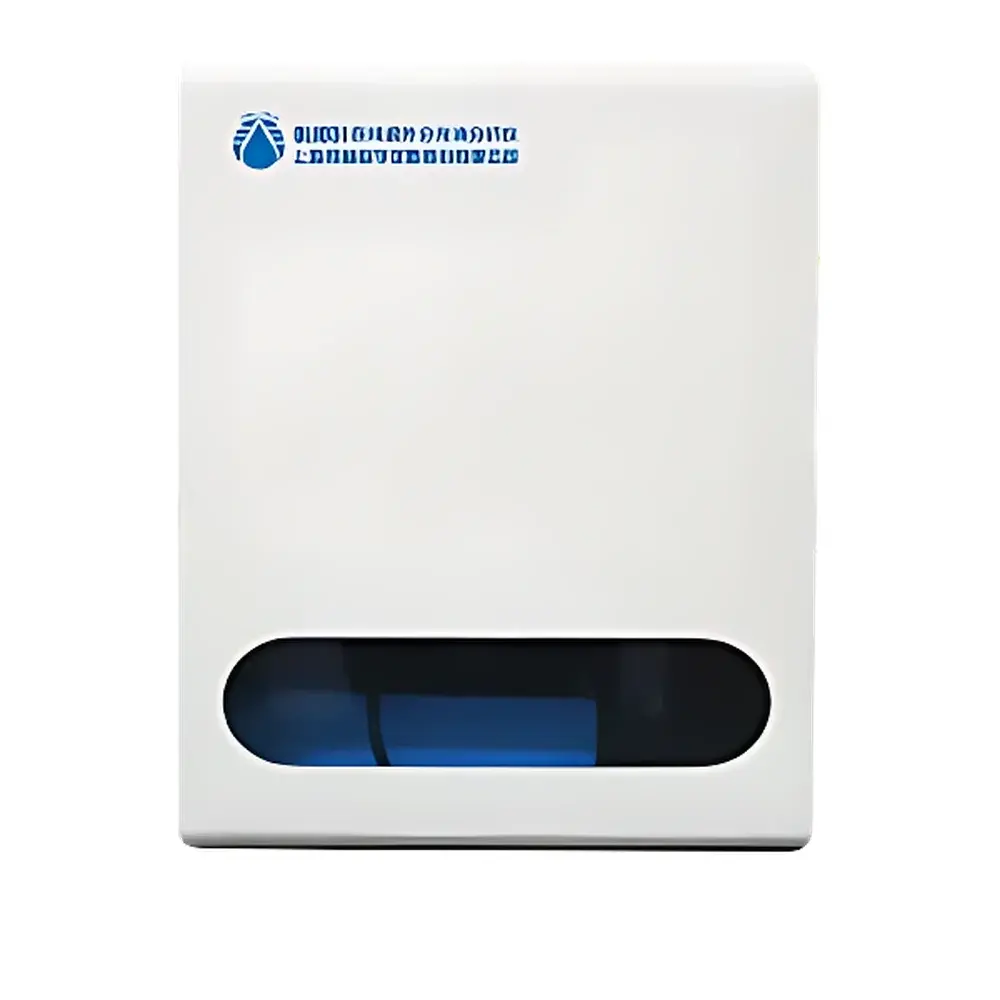
Online Instrument OL1031 Online UV Spectrophotometric Oil Analyzer
| Brand | Online Instrument |
|---|---|
| Origin | Shanghai, China |
| Manufacturer Type | OEM Manufacturer |
| Country of Origin | China |
| Model | OL1031 |
| Pricing | Upon Request |
Overview
The Online Instrument OL1031 Online UV Spectrophotometric Oil Analyzer is an industrial-grade, fully automated water quality monitoring system engineered for continuous, unattended quantification of petroleum hydrocarbons—including mineral oil, diesel, lubricants, and residual fuel oil—in aqueous matrices. It operates on the principle of ultraviolet absorption spectroscopy (UV-Vis), specifically targeting the characteristic absorbance bands of aromatic and unsaturated hydrocarbon compounds in the 220–280 nm range following solvent extraction. Unlike discrete lab-based methods, the OL1031 integrates sample homogenization, solid-phase adsorption cleanup, liquid–liquid extraction, phase separation, and optical detection into a single robust platform—enabling real-time, trace-level oil-in-water measurement with minimal operator intervention. Designed for deployment in environmental monitoring networks, wastewater treatment plants, offshore platforms, and coastal observatories, the system complies with foundational methodological frameworks under ISO 9377-2 (petroleum hydrocarbons in water—part 2: UV spectrometric method) and aligns with technical requirements for continuous emission monitoring systems (CEMS) per national environmental regulatory protocols.
Key Features
- Fully automated sample processing: integrated mechanical homogenizer ensures molecular-level uniformity for heterogeneous water samples containing suspended oil droplets or particulate-bound hydrocarbons.
- Dual-stage cleanup: magnesium silicate (MgSiO₃) adsorption column selectively retains polar interferents (e.g., chlorophyll, humic substances), with real-time column depletion monitoring via embedded conductivity and pressure sensors.
- Controlled solvent extraction: n-hexane is metered precisely and recirculated under programmable pressure to maximize extraction efficiency while minimizing reagent consumption.
- Phase separation architecture: employs hydrophobic membrane filtration combined with anhydrous sodium sulfate (Na₂SO₄) drying cartridges to eliminate residual water from the organic extract—critical for optical clarity and baseline stability.
- Self-cleaning separation module: reverse-pressure n-hexane flush prevents channeling, resin fouling, and carryover between analyses—ensuring high reproducibility over extended unattended operation.
- Hermetic fluidic design: all solvent handling occurs within sealed, corrosion-resistant PTFE/PFA tubing; volatile organic emissions are captured by activated carbon canisters compliant with ISO 16000-6 indoor air quality standards.
- Remote operability: web-enabled embedded controller supports secure HTTPS access, real-time data streaming via Modbus TCP or MQTT, and over-the-air firmware updates.
Sample Compatibility & Compliance
The OL1031 accepts raw water samples across a broad physicochemical spectrum: surface water (rivers, lakes), groundwater (wells, aquifers), seawater (including estuarine and nearshore marine environments), and treated effluent. It accommodates turbidities up to 500 NTU and total suspended solids (TSS) ≤ 200 mg/L without pre-filtration. Temperature tolerance spans 0–90 °C, supporting deployment in both arctic outfalls and geothermally influenced discharge points. The system meets IP65 ingress protection for outdoor wall-mount installation and conforms to electromagnetic compatibility (EMC) standards IEC 61326-1. Data integrity adheres to ALCOA+ principles: audit trails, electronic signatures, and configurable retention policies support GLP-compliant operations; optional 21 CFR Part 11 compliance package available upon request.
Software & Data Management
The embedded Linux-based control software provides intuitive configuration of measurement intervals (1 min to 24 h), calibration frequency, cleaning cycles, and alarm thresholds. All spectral acquisitions, peak integration parameters, and background correction routines are logged with timestamped metadata. Raw absorbance spectra and processed concentration values (mg/L as oil) are exportable in CSV/JSON formats. Cloud synchronization enables centralized dashboard visualization across multi-site deployments. Historical datasets integrate seamlessly with SCADA systems and third-party LIMS platforms via standardized RESTful APIs. Calibration validation includes standard curve linearity assessment (R² ≥ 0.999), blank drift monitoring (< ±0.002 AU/h), and recovery verification using certified reference materials (CRM) traceable to NIST SRM 2781.
Applications
- Real-time surveillance of petroleum hydrocarbon discharges at industrial outfalls and refinery boundaries.
- Early-warning detection of oil spills in navigable waterways and sensitive marine habitats.
- Performance evaluation of oil–water separators and API skimmers in wastewater treatment facilities.
- Long-term trend analysis of hydrocarbon loading in groundwater plumes adjacent to UST sites.
- Regulatory compliance reporting for national water quality standards (e.g., China’s GB 3838-2002 Class III limits, EU WFD priority substance monitoring).
FAQ
What extraction solvent is required, and is it compatible with automated reagent handling?
n-Hexane is the specified extraction solvent; the system includes a dedicated, temperature-controlled reagent reservoir with level sensing and leak-detection interlocks.
How frequently must the magnesium silicate column be replaced?
Column lifetime is application-dependent but typically ranges from 100–300 extractions; the system triggers maintenance alerts based on cumulative flow and pressure differential thresholds.
Can the instrument operate without network connectivity?
Yes—the onboard controller maintains full autonomous operation, storing >30 days of high-resolution data locally; synchronization resumes automatically upon network restoration.
Is method validation documentation provided for regulatory submissions?
Yes—each unit ships with a Factory Acceptance Test (FAT) report, including precision (RSD ≤ 3.5%), limit of detection (LOD < 0.01 mg/L), and inter-laboratory comparison data aligned with ISO/IEC 17025 guidelines.







