
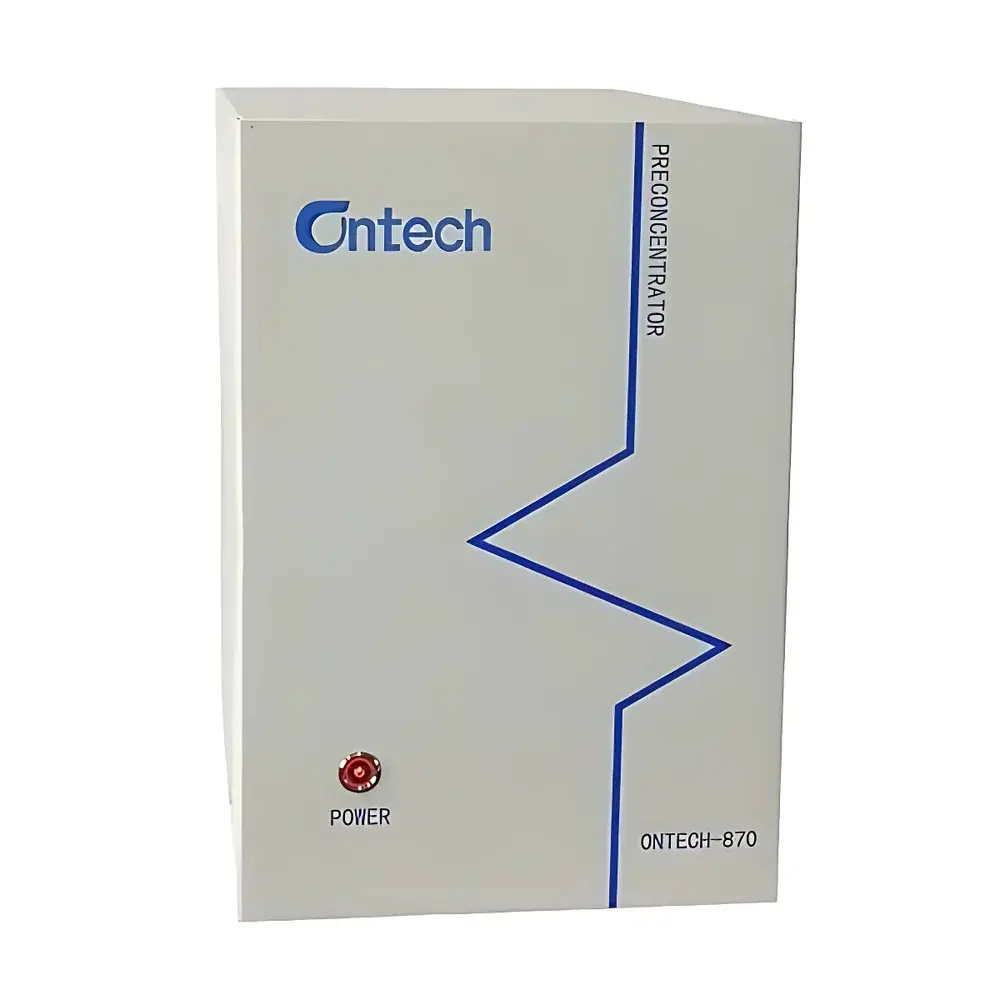
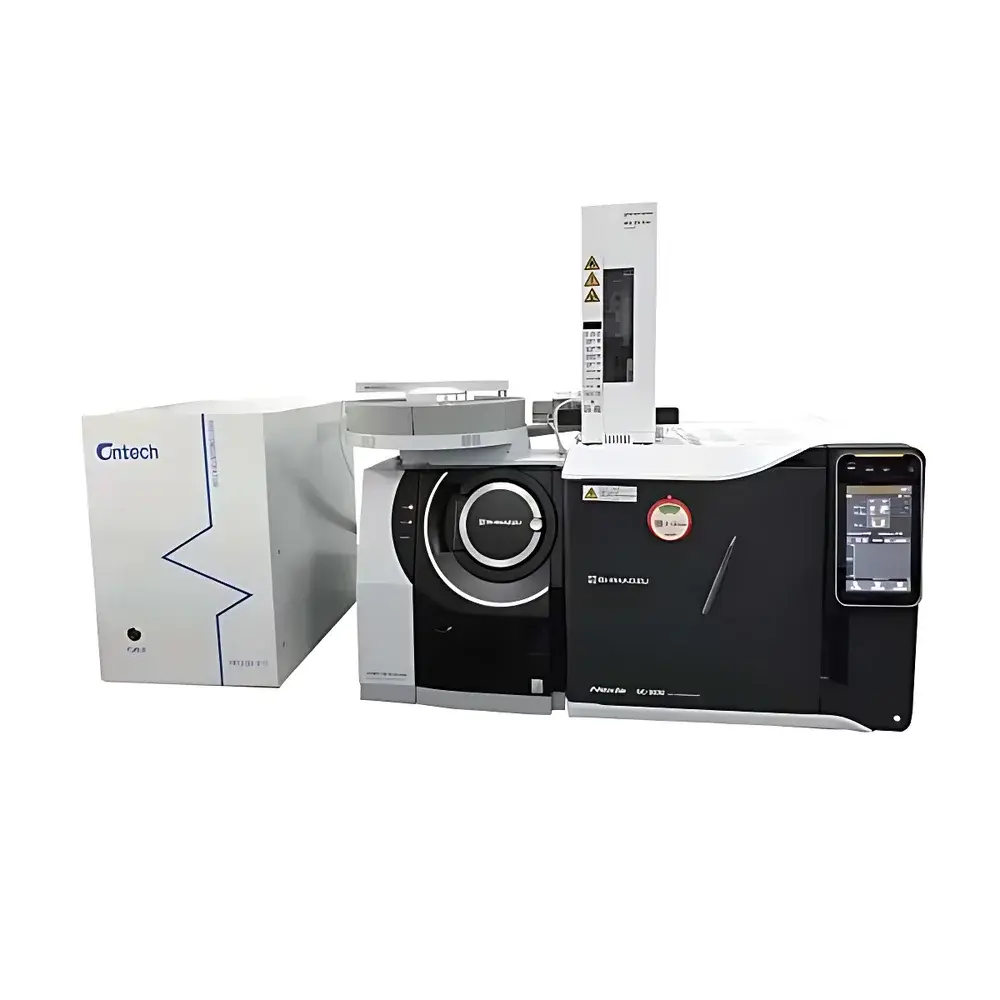
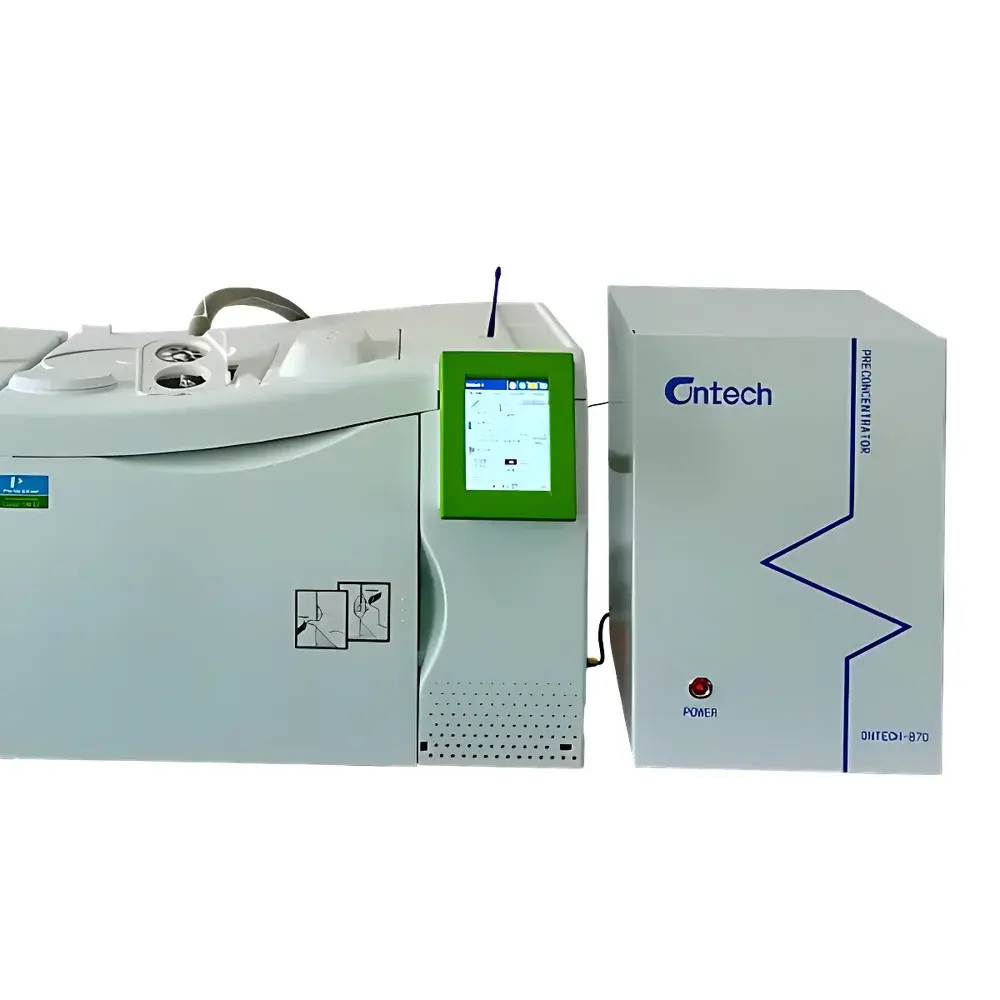
Ontech 870 Triple-Liquid-Nitrogen-Cooled Atmospheric Pre-concentrator
| Brand | Ontech |
|---|---|
| Model | ONTECH 870 |
| Cooling Stages | Triple-stage liquid nitrogen cryogenic trapping |
| Compliance | HJ 759–2023, EPA TO-15, EPA TO-14A, HJ 1012–2018, GB/T 14678–1993, HJ 1078–2019, HJ/T 194–2005 |
| Sample Volume Range | 1–2000 mL (with mass flow controller integration) |
| Cold Trap Configuration | Three-tier cryofocusing system (dehydration trap, adsorption trap, focusing trap) |
| Software | Ontech EcoSuite v3.x with method library (TO-15, PAMS, HJ 759–2023), real-time graphical workflow monitoring, dual hardware/software temperature safety interlocks, GC-MS vendor-agnostic control interface |
| Connectivity | Ethernet-based LAN interoperability across Ontech analytical platform |
Overview
The Ontech 870 Triple-Liquid-Nitrogen-Cooled Atmospheric Pre-concentrator is a high-fidelity sample introduction system engineered for trace-level volatile organic compound (VOC) analysis in ambient air and stack emission matrices. It operates on the principle of cryogenic pre-concentration—using sequential liquid nitrogen–cooled traps to selectively remove water vapor, adsorb target analytes across a broad volatility range (C2–C12), and thermally focus them into narrow, reproducible bands prior to transfer into gas chromatography (GC) or GC–mass spectrometry (GC–MS) systems. Designed explicitly for compliance with Chinese national standards—including HJ 759–2023 (determination of VOCs in ambient air via canister sampling and GC–MS) and HJ 1012–2018—as well as U.S. EPA methodologies (TO-15, TO-14A), the instrument delivers robust performance in fixed-source monitoring, fence-line surveillance, and regional air quality networks. Its triple-stage architecture enables quantitative recovery of polar, reactive, and low-boiling compounds—including formaldehyde precursors, sulfur-containing VOCs (e.g., methanethiol, dimethyl sulfide), and aromatic hydrocarbons—without breakthrough or fractional condensation artifacts.
Key Features
- Triple-cryotrap architecture: Stage 1 removes bulk moisture using a heated desiccant or chilled silica gel trap; Stage 2 employs a dual-bed adsorbent (e.g., Tenax TA + Carbopack B) optimized for high-capacity, low-breakthrough capture of C2–C12 VOCs; Stage 3 serves as a cryofocusing trap cooled to ≤ –160 °C, enabling sharp thermal desorption at >30 °C/s ramp rates.
- Integrated mass flow controller (MFC)-based volumetric sampling: Supports programmable, pressure-compensated intake from 1 mL to 2000 mL per analysis cycle, with real-time volume accumulation and auto-correction for temperature/pressure drift.
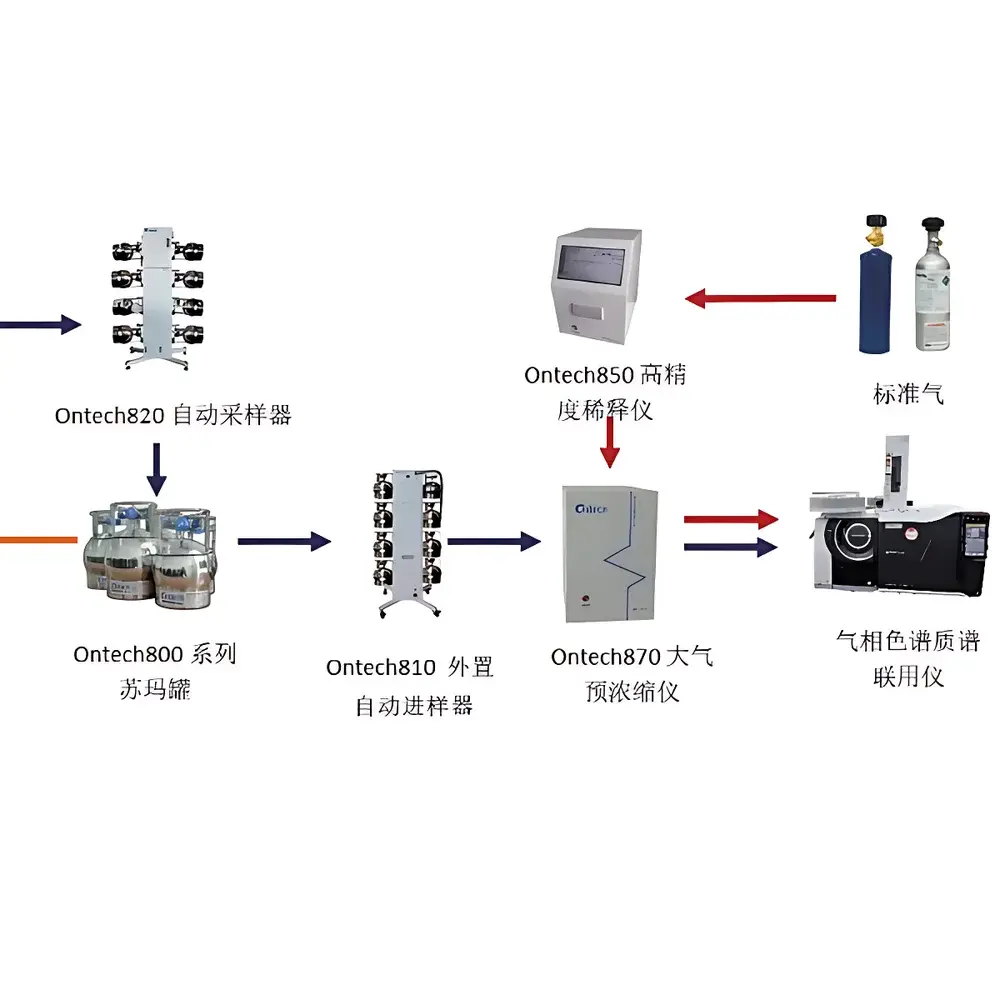
- Onboard auto-sampler compatibility: Built-in 16-position canister rack eliminates need for external autosamplers; supports both electropolished stainless-steel SUMMA canisters and custom inert-coated sampling vessels.
- Energy-efficient cryogenics: Optimized cold trap geometry and insulation reduce liquid nitrogen consumption by ~20% versus conventional triple-trap systems—verified under continuous 24/7 operation at 100 mL/min flow rate.
- Dual-layer thermal safety: Hardware-level thermocouple cutoffs (fail-safe) combined with software-monitored thermal profiles prevent overcooling, ice formation, or cold trap fracture during extended runs.
Sample Compatibility & Compliance
The Ontech 870 accommodates gaseous samples collected via evacuated canisters (SUMMA, SilcoCan), Tedlar bags, and direct-stack probes. It maintains quantitative recovery for analytes specified in HJ 759–2023 (117 target VOCs), EPA TO-15 (97 compounds), and HJ 1078–2019 (8 sulfur organics). Validation data confirm <95% recovery for methyl ethyl ketone, isoprene, acetaldehyde, and hydrogen sulfide across 10–1000 pptv concentration ranges. The system meets GLP audit requirements through full electronic log generation—including timestamped method execution, temperature setpoint history, MFC calibration records, and cold trap cooldown/heat-up profiles—all exportable in CSV or PDF. All firmware and software comply with 21 CFR Part 11–ready configurations (user access control, audit trail, electronic signature support) when deployed in regulated environmental testing laboratories.
Software & Data Management
Ontech EcoSuite v3.x provides a unified, browser-accessible interface for instrument control, method development, and QC reporting. Preloaded method templates include TO-15 (EPA), PAMS (Ozone Transport Commission), and HJ 759–2023 workflows—with configurable hold times, trap temperatures, desorption ramps, and GC trigger logic. Real-time graphical display shows active trap status, MFC flow stability, LN2 level, and step-by-step progress bars for each analysis phase. Data files are structured in ASTM E1947-compliant format and integrate seamlessly with LIMS platforms via OPC UA or RESTful API. Remote diagnostics, firmware updates, and method synchronization across multiple Ontech instruments (e.g., 870 + 890 GC–MS prep modules) are supported over secure LAN infrastructure.
Applications
- Ambient air monitoring networks: Continuous unattended operation at national reference stations, regional air quality sites, and urban background locations per HJ/T 194–2005 protocols.
- Fence-line and community air monitoring: Quantitative detection of fugitive emissions near petrochemical facilities, landfills, and wastewater treatment plants.
- Source apportionment studies: High-temporal-resolution sampling (e.g., hourly canister sets) coupled with GC–MS speciation for receptor modeling inputs.
- Method validation and proficiency testing: Certified reference material (CRM) analysis, spike recovery experiments, and inter-laboratory comparison exercises under ISO/IEC 17025 frameworks.
- Regulatory compliance reporting: Generation of auditable datasets for provincial ecological environment departments and China’s Ministry of Ecology and Environment (MEE) submissions.
FAQ
Does the Ontech 870 support direct connection to third-party GC–MS systems?
Yes—it features universal analog/digital I/O and Ethernet-based command protocols compatible with Agilent, Thermo Fisher, Shimadzu, and PerkinElmer GC–MS platforms.
Is liquid nitrogen refilling automated?
No—LN2 reservoirs require manual replenishment, but integrated level sensors and predictive low-level alerts minimize operational interruption.
Can the system perform unattended multi-day operation?
Yes—validated for 168-hour continuous runtime with scheduled canister exchange, thermal cycling, and QC checks embedded in method sequences.
What maintenance intervals are recommended?
Cold trap refurbishment every 12 months; MFC recalibration every 6 months; adsorbent bed replacement after 500 analyses or breakthrough verification.
Is remote troubleshooting supported?
Yes—via encrypted SSH tunnel and shared-screen session capability through Ontech’s authorized service portal.



