
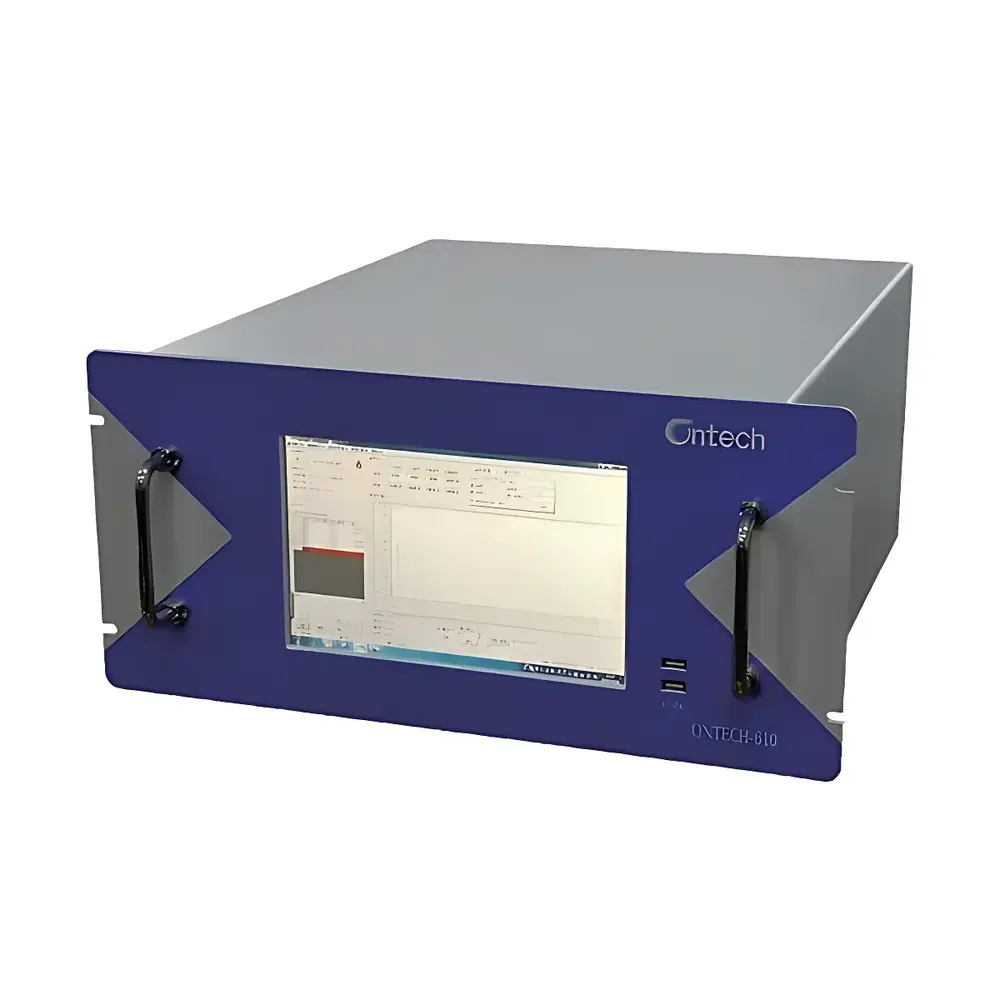
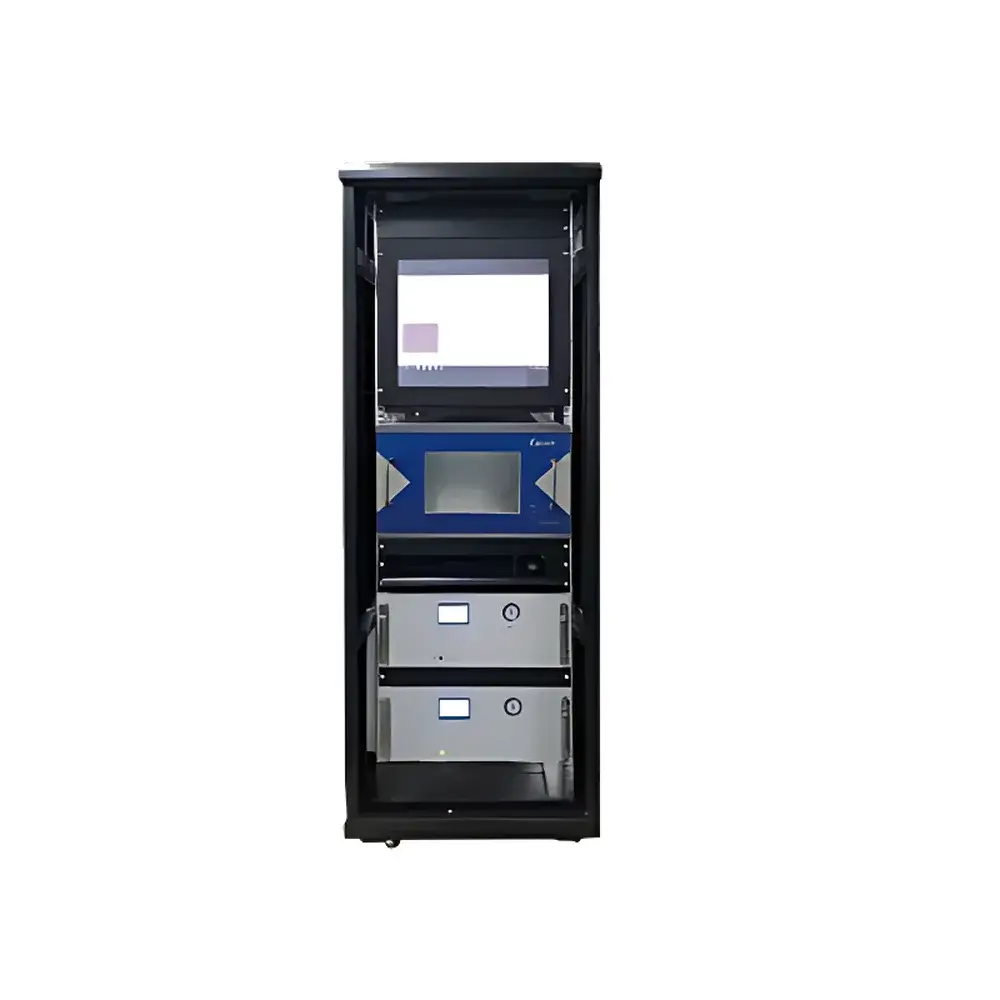
Ontech610 Online Gas Chromatograph for VOC Monitoring at Fixed Pollution Sources
| Brand | Ontech |
|---|---|
| Model | Ontech610 |
| Type | Online Gas Chromatograph |
| Application | Environmental Emission Monitoring |
| Compliance | HJ 38-2017, HJ 212-2017 |
| Sampling Method | Quantitative Loop Injection |
| Valve Configuration | 12-Position Multiport Valve |
| Column Technology | Dual-Column System with Heart-Cut and Back-Flush |
| Pressure Control | Electronic Pressure Control (EPC) |
| Detection | FID (Flame Ionization Detector) |
| Target Analytes | Total Hydrocarbons (THC), Methane (CH₄), Non-Methane Hydrocarbons (NMHC), BTEX (Benzene, Toluene, Ethylbenzene, Xylenes) |
| Enclosure Rating | IP54 |
| Operating Temperature Range | 5–40 °C |
| Power Supply | 220 V AC, 50 Hz |
| Data Output | RS485, Ethernet, 4–20 mA Analog Outputs |
| Communication Protocol | HJ 212-2017 Compliant Data Transmission |
Overview
The Ontech610 Online Gas Chromatograph is an engineered solution for continuous, unattended measurement of volatile organic compounds (VOCs) in exhaust gas streams from fixed emission sources. Designed explicitly to meet the technical requirements of China’s HJ 38-2017 standard—“Determination of Total Hydrocarbons, Methane, and Non-Methane Hydrocarbons in Exhaust Gas from Stationary Sources by Gas Chromatography”—the system employs a dual-column gas chromatographic architecture with heart-cut and back-flush functionality. This configuration enables precise separation and quantification of methane, non-methane hydrocarbons (NMHC), total hydrocarbons (THC), and aromatic compounds including benzene, toluene, ethylbenzene, and xylenes (BTEX). The instrument utilizes flame ionization detection (FID), providing high sensitivity and linear dynamic range across low-ppm to mid-ppm concentration levels typical of stack emissions. Its fully automated operation—including quantitative loop sampling, programmable multiport valve sequencing, and EPC-regulated carrier gas flow—ensures analytical reproducibility and long-term stability under industrial field conditions.
Key Features
- Quantitative loop injection with a robust 12-position multiport valve for repeatable sample introduction and minimal carryover
- Dual-column GC system featuring dedicated separation columns optimized for hydrocarbon speciation, incorporating heart-cut transfer and back-flush for rapid column regeneration and extended service life
- Full electronic pressure control (EPC) across all pneumatic lines—carrier, make-up, and detector gases—ensuring retention time stability and method transferability
- Integrated thermal management system maintaining column oven temperature uniformity within ±0.1 °C over 35–200 °C operating range
- Real-time hardware diagnostics and self-monitoring alarms for critical subsystems: column oven, detector status, valve actuation, gas supply pressure, and communication integrity
- IP54-rated enclosure suitable for installation in semi-outdoor or controlled indoor environments adjacent to stack sampling points
Sample Compatibility & Compliance
The Ontech610 accepts conditioned, filtered, and dried gas samples delivered via heated sample line (recommended ≥120 °C) from standard EPA Method 25A or HJ 38-2017-compliant extractive probe systems. It supports direct analysis of raw stack gas after appropriate particulate and moisture removal. All operational parameters—including injection volume, oven ramp profiles, valve timing, and detector settings—are programmable and stored as validated methods. The system complies with HJ 212-2017 for digital data packaging, timestamping, and secure transmission to environmental monitoring platforms. Audit trails, method versioning, and user access logs are maintained in accordance with GLP-aligned data integrity principles. While not certified to UL/CE for North American or EU regulatory use out-of-the-box, its architecture supports customization for alignment with ISO/IEC 17025 laboratory accreditation requirements and US EPA Method 25A equivalency validation protocols.
Software & Data Management
The Ontech610 operates with embedded Linux-based firmware and a web-accessible interface (HTTPS-enabled) for remote configuration, real-time chromatogram viewing, and alarm acknowledgment. Data acquisition software records peak area, retention time, calculated concentrations, and system diagnostic flags at user-defined intervals (default: 15-minute cycles). Raw chromatographic data (CSV and proprietary binary formats) and processed results are exportable via FTP, SFTP, or local USB storage. The platform supports HJ 212-2017-compliant packet structure, including device ID, data type identifiers (e.g., “NMHC”, “CH4”), quality flags (e.g., “valid”, “maintenance”, “calibration”), and digital signatures for data authenticity. Optional integration with SCADA or EMS platforms is enabled through Modbus TCP and OPC UA drivers.
Applications
- Petrochemical and refinery flare and vent stream monitoring for THC/NMHC compliance reporting
- Chemical manufacturing process off-gas analysis, including solvent recovery unit effluent verification
- Automotive and general industrial coating operations subject to VOC mass emission limits per local environmental ordinances
- Flexible packaging and publication printing facilities where toluene, xylene, and ethyl acetate are common solvents
- University research laboratories conducting method development for ambient air or source emission characterization
- Third-party environmental testing organizations performing stack testing services under CNAS-accredited scopes
FAQ
Does the Ontech610 support calibration verification using certified gas standards?
Yes—the system includes automated calibration sequence programming for zero/span checks using certified CH₄-in-air and propane-in-air reference gases; calibration events are logged with traceable timestamps and deviation metrics.
Can the method be modified to include additional VOCs beyond BTEX?
Method flexibility is supported via column selection, oven programming, and detector parameter adjustment; however, expansion to polar or reactive compounds (e.g., aldehydes, chlorinated VOCs) requires hardware modifications and revalidation per HJ 38-2017 Annex C.
What maintenance intervals are recommended for routine field operation?
FID nozzle cleaning and jet inspection every 90 days; GC column trimming or replacement every 6–12 months depending on sample matrix cleanliness; multiport valve seal replacement annually or after 50,000 actuations.
Is remote firmware update capability available?
Yes—secure over-the-air (OTA) updates are supported via authenticated HTTPS upload; all firmware revisions include version-controlled changelogs and rollback functionality.
How is data integrity ensured during network interruption?
Local SD card buffering retains up to 30 days of raw and processed data; upon connection restoration, queued packets are transmitted with sequence numbering and duplicate suppression per HJ 212-2017 Section 6.3.



