
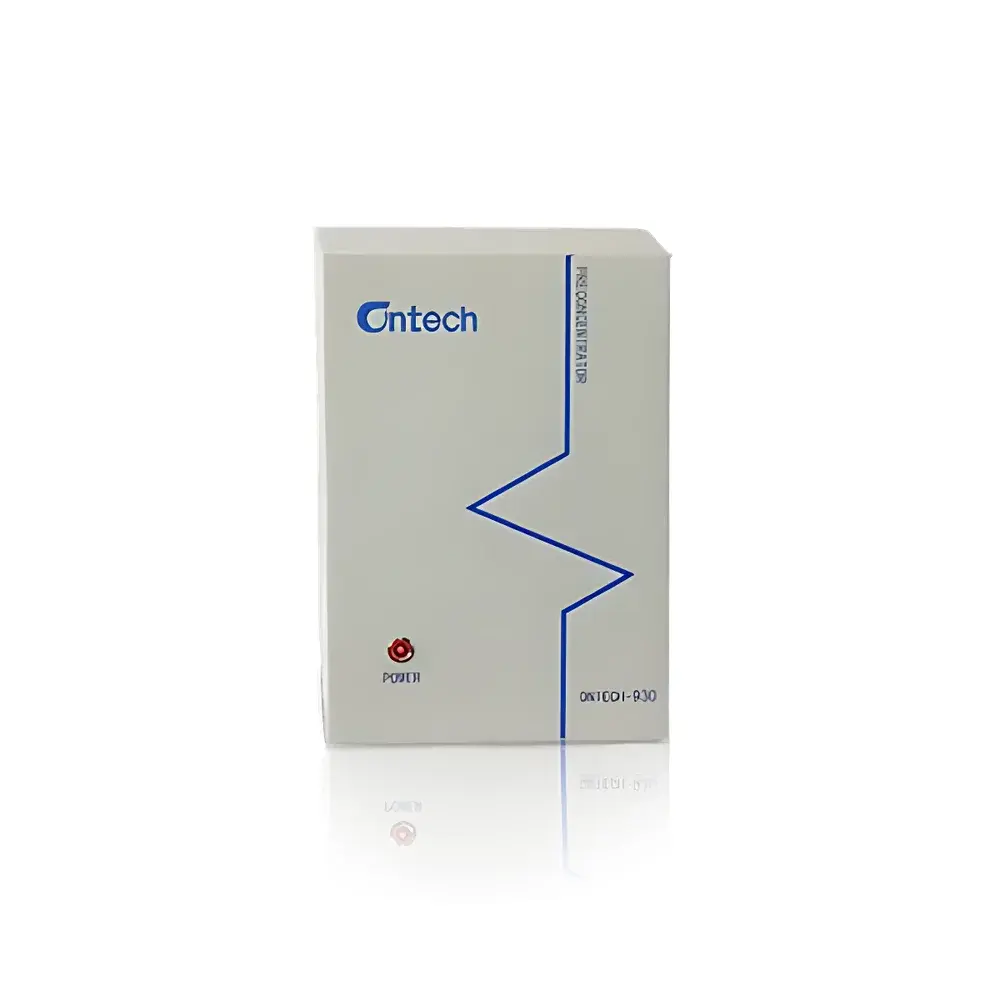
Ontech930 Kr-85 Separation and Concentration System
| Brand | Ontech |
|---|---|
| Origin | Guangdong, China |
| Manufacturer Type | Authorized Distributor |
| Country of Origin | China |
| Model | Ontech930 |
| Pricing | Available Upon Request |
Overview
The Ontech930 Kr-85 Separation and Concentration System is a purpose-built, automated gas purification and enrichment platform engineered for the selective isolation, purification, and quantitative concentration of krypton-85 (⁸⁵Kr) from complex nuclear effluent streams. It operates on a cryogenic trapping principle combined with gas chromatographic (GC) separation, enabling high-fidelity pre-concentration prior to low-level radioactivity detection—typically by beta scintillation counting or high-resolution gamma spectrometry. The system integrates three sequential liquid nitrogen–cooled cryo-traps (water removal trap, primary enrichment trap, secondary enrichment trap) with a temperature-programmable GC column module, allowing staged condensation, desorption, and chromatographic resolution of ⁸⁵Kr from major matrix interferences including H₂O, N₂, O₂, CO₂, and particulate aerosols. Designed for continuous unattended operation, it meets the stringent reproducibility and traceability requirements of environmental monitoring laboratories and nuclear facility stack emission programs.
Key Features
- Triple-stage cryogenic enrichment architecture: Dedicated water removal trap (−80 °C), primary Kr-85 capture trap (−160 °C), and secondary refinement trap (−196 °C), each independently temperature-controlled via liquid nitrogen delivery management.
- Integrated GC separation module with programmable oven: Supports both isothermal operation and multi-step temperature ramping (0.1–10 °C/min resolution) to optimize Kr/N₂/O₂ peak resolution and minimize co-elution artifacts.
- Optimized cryogen economy: Patented thermal shielding and trap geometry reduce LN₂ consumption by up to 35% compared to conventional single-stage cryo-concentrators under equivalent sample throughput conditions.
- Precision gas handling subsystem: Equipped with calibrated mass flow controllers (MFCs, ±1% FS accuracy) and corrosion-resistant diaphragm vacuum pumps (ultimate pressure ≤1 × 10⁻³ mbar), enabling precise control of sample introduction rate (10–500 mL/min) and volume (1–20 L per run).
- Modular inlet compatibility: Accepts standard 1–10 L electropolished stainless-steel sampling canisters, Tedlar® gas bags, and direct line coupling to stack sampling manifolds via Swagelok® fittings.
Sample Compatibility & Compliance
The Ontech930 is validated for use with gaseous effluents containing ≤5000 ppm H₂O, ≤21% O₂, ≤78% N₂, ≤1000 ppm CO₂, and suspended particulates <1 µm in diameter. It complies with IAEA Technical Reports Series No. 433 (Sampling and Analysis of Radioactive Gases) and supports implementation of ISO 2889:2010 (Monitoring of radioactive noble gases in the environment). All critical process parameters—including trap temperatures, MFC setpoints, valve actuation timing, and GC oven profiles—are logged with timestamped metadata to satisfy GLP audit requirements and facilitate 21 CFR Part 11–compliant data integrity workflows when paired with validated LIMS integration.
Software & Data Management
The Ontech930 Control Suite is a Windows-based application built on a deterministic real-time kernel, featuring dual-mode operation: fully automated method-driven runs and granular manual override for maintenance or troubleshooting. Method editor supports nested time-sequence logic (e.g., “hold at −80 °C for 10 min → ramp to −160 °C at 5 °C/min → hold for 5 min”) with user-defined safety interlocks. All raw sensor data (temperature, pressure, flow, valve status) are recorded at 1 Hz resolution and exported in CSV/Excel-compatible format. Audit trails include operator ID, method version, calibration certificate references, and electronic signatures—all configurable to align with laboratory SOPs and internal QA documentation standards.
Applications
- Continuous stack monitoring at nuclear power plants (NPPs) for regulatory compliance with national discharge limits (e.g., US NRC Regulatory Guide 1.21, Chinese HJ 61-2021).
- Environmental surveillance around reprocessing facilities and research reactors where ⁸⁵Kr serves as a tracer for atmospheric transport modeling.
- Reference material preparation in metrology labs accredited to ISO/IEC 17025 for certified activity concentration values.
- Method development and validation studies in university nuclear engineering departments focusing on noble gas separation thermodynamics and kinetic trapping efficiency.
FAQ
What is the typical Kr-85 recovery efficiency across different humidity levels?
Recovery exceeds 92% for samples with ≤1000 ppm H₂O; drops to 85–88% at 3000–5000 ppm H₂O due to competitive adsorption on trap surfaces—mitigated by extended pre-cooling and optimized purge cycles.
Can the system be integrated with third-party radiation detectors?
Yes—standard analog (0–10 V) and digital (RS-485/Modbus RTU) interfaces enable synchronization with scintillation counters, proportional counters, or HPGe spectrometers for trigger-based collection and decay-corrected quantification.
Is remote monitoring supported?
The system includes embedded Ethernet connectivity and optional VPN-enabled secure remote access for real-time status viewing, alarm notification (email/SMS), and supervised method updates—subject to site-specific cybersecurity policies.
What maintenance intervals are recommended for cryogenic components?
LN₂ delivery lines require quarterly visual inspection; cryo-trap O-rings and thermal interface pastes should be replaced annually or after 200 operational cycles, whichever occurs first.
Does the software support multi-language localization beyond Chinese?
English language UI and documentation are fully available; additional language packs (French, Spanish, Korean) may be deployed upon request and validated per ISO/IEC 17025 clause 5.9.2.



